

Skip to content
  • Facebook
  • X
  • Linkedin
  • WhatsApp
  • YouTube
  • Associate Journalism
  • About Us
  • Privacy Policy
  • 033-46046046
  • editor@artifex.news
Artifex.News

Artifex.News

Stay Connected. Stay Informed.

  • Breaking News
  • World
  • Nation
  • Sports
  • Business
  • Science
  • Entertainment
  • Lifestyle
  • Toggle search form
  • Work begins on Vyttila Jn. redevelopment project
    Work begins on Vyttila Jn. redevelopment project Nation
  • A strange intermittent radio signal from space has astronomers puzzled
    A strange intermittent radio signal from space has astronomers puzzled Science
  • India calls for global scrutiny over Pakistan’s ‘ruthless’ crackdown in PoK
    India calls for global scrutiny over Pakistan’s ‘ruthless’ crackdown in PoK World
  • When ‘misvestment’ has more facets than is known
    When ‘misvestment’ has more facets than is known Business
  • The Farakka Barrage Pact Amid ‘Fake News’ On Bangladesh Floods
    The Farakka Barrage Pact Amid ‘Fake News’ On Bangladesh Floods Nation
  • SaaS Fintech Zaggle raises ₹595 crore via QIP; eyes acquisitions
    SaaS Fintech Zaggle raises ₹595 crore via QIP; eyes acquisitions Business
  • Who was Hardeep Singh Nijjar, the Sikh activist whose killing has divided Canada and India?
    Who was Hardeep Singh Nijjar, the Sikh activist whose killing has divided Canada and India? World
  • Strike on Iran will show the world Israel’s might: Defence chief Yoav Gallant
    Strike on Iran will show the world Israel’s might: Defence chief Yoav Gallant World
Is India finally entering stage II of its nuclear programme? | Explained

Is India finally entering stage II of its nuclear programme? | Explained

Posted on March 4, 2024 By admin


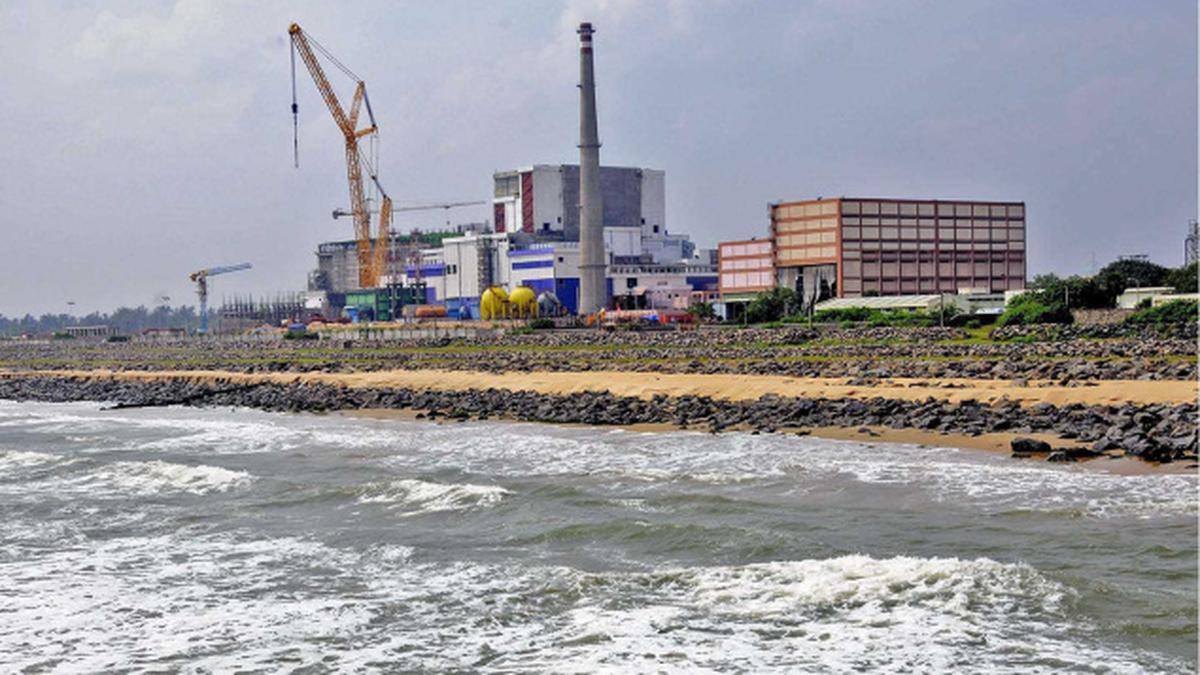
On March 4, Prime Minister Narendra Modi witnessed the start of the process of core-loading the indigenous prototype fast breeder reactor (PFBR) at the Madras Atomic Power Station in Kalpakkam, Tamil Nadu. A statement from his office called the occasion “a historic milestone in India’s nuclear power programme”.

What is the PFBR?

The PFBR is a machine that produces more nuclear fuel than it consumes. Its core-loading event is being hailed as a “milestone” because the operationalisation of the PFBR will mark the start of stage II of India’s three-stage nuclear power programme.

In the first, India used pressurised heavy water reactors (PHWRs) and natural uranium-238 (U-238), which contains minuscule amounts of U-235, as the fissile material.

In nuclear fission, the nucleus of an atom absorbs a neutron, destabilises, and breaks into two while releasing some energy. If the destabilised nucleus releases more neutrons, the reactor’s facilities will attempt to use them to instigate more fission reactions.

The heavy water in PHWR – water molecules containing the deuterium isotope of hydrogen – slows neutrons released by one fission reaction enough to be captured by other U-238 and U-235 nuclei and cause new fission. The heavy water is pressurised to keep it from boiling. The reactions produce plutonium-239 (Pu-239) and energy.

Only U-235, not U-238, can sustain a chain reaction but it is consumed fully in stage I. In stage II, India will use Pu-239 together with U-238 in the PFBR to produce energy, U-233, and more Pu-239. The Department of Atomic Energy (DAE) set up a special-purpose vehicle in 2003 called Bharatiya Nabhikiya Vidyut Nigam, Ltd. (BHAVINI) to implement stage II.

In stage III, Pu-239 will be combined with thorium-232 (Th-232) in reactors to produce energy and U-233. Homi J. Bhabha designed the three-stage programme because India hosts roughly a quarter of the world’s thorium. The three stages are expected to allow the country complete self-sufficiency in nuclear energy.

Why was the PFBR delayed?

The PFBR saga in India has been associated with numerous delays, cost overruns, and broken promises, and has accrued many critics.

The fast breeder test reactor (FBTR) at Kalpakkam is a testing ground for PFBR technologies. It was built by 1977 but sanctions against India’s ‘Smiling Buddha’ nuclear test forced the use of a mixed carbide fuel over enriched uranium (which France was to deliver). The former lowered the power output and changed operating conditions.

By the time the Indian government green-lit the PFBR in 2003, most people who worked on the FBTR were also nearing or had completed retirement.

The Indira Gandhi Centre for Atomic Research (IGCAR), Kalpakkam, designed the PFBR. Its original cost was Rs 3,492 crore and the original deadline, 2010. Six years later, the DAE sought more funds and an extended deadline, which the government granted in 2012: Rs 5,677 crore and commercial operations by March 2015.

Then the nuclear power establishment pushed the 2014 deadline to the next year, then the year after that, and so on until by March 2020, the new deadline to commercialise was October 2022. Even by 2019, its cost had also ballooned to Rs 6,800 crore.

In a 2014 audit, the Comptroller and Auditor General found BHAVINI had fumbled the procurement of some PFBR components by becoming inordinately dependent on the Nuclear Power Corporation of India, Ltd. The result: the placement of a hundred purchase orders had a “median delay” of 158 days per order.

Other causes of delay included technical difficulties with the reactor coolant.

How does the PFBR work?

PHWRs use natural or low-enriched U-238 as the fissile material and produce Pu-239 as a byproduct. This Pu-239 is combined with more U-238 into a mixed oxide and loaded into the core of a new reactor together with a blanket. This is a material the fission products in the core react with to produce more Pu-239.

A breeder reactor is a nuclear reactor that produces more fissile material than it consumes. In a ‘fast’ breeder reactor, the neutrons aren’t slowed, allowing them to trigger specific fission reactions.

The PFBR is designed to produce more Pu-239 than it consumes. It uses liquid sodium, a highly reactive substance, as coolant in two circuits. Coolant in the first circuit enters the reactor and leaves with (heat) energy and radioactivity. Via heat-exchangers, it transfers only the heat to the coolant in a secondary circuit. The latter transfers the heat to generators to produce electricity.

In a 2020 paper, former IGCAR scientist R.D. Kale wrote about several issues with getting this system to work as expected. For example, according to him, personnel working with the PFBR had expected the reactor vessel could be preheated to 150 degrees C in about a month based on theoretical calculations and tests with a mock-up. But the process took more than a year in reality.

What role can SMRs play?

The delays brooked another potential complication in the form of small modular reactors (SMRs). These reactor designs have a maximum capacity of 300 MW, require less land, and accommodate more safety features.

“Several countries are developing SMRs to complement conventional [facilities] since SMRs can be installed at reduced cost and time by repurposing … infrastructure in brownfield sites,” R. Srikanth, a professor at the National Institute of Advanced Studies, Bengaluru, told The Hindu. He added SMRs can work with low-enriched uranium, which India can import from the U.S. via its 123 Agreement.

According to him, increasing SMRs’ contribution would require, among other things, amendments to the Atomic Energy Act (1962) “and other related statutes” to allow private sector participation “under the oversight of the AERB, with both nuclear fuel and waste controlled by the DAE” according to international safeguards.

What is the value of stage II?

The PFBR has a capacity of 500 MWe. In 2019, the DAE proposed building four more fast breeder reactors (FBRs) of 600 MWe capacity each – two in Kalpakkam from 2021 and two from 2025, with sites to be selected. Experts have said the best way to moot work on stage II technologies is to press the reactors into commercial service.

The delays haven’t helped, however. In 2003, renewable sources of energy were a blip on the horizon. Today, the tariff for solar electricity is under Rs 2.5/kWh whereas nuclear electricity costs around Rs 4/kWh. The 2011 Fukushima Daiichi disaster also shifted public opinion worldwide against nuclear power, slowing work on new facilities.

Today nuclear power has a new lease of life thanks to the pressure on India to decarbonise, reduce its import of fossil fuels, and give its renewables sector some breathing space. In December 2023, NPCIL chairman B.C. Pathak told The Hindu the corporation plans to “commission a nuclear power reactor every year” from 2024.

What are the challenges of stage II?

On the flip side, bigger challenges await. FBRs are harder to handle than other reactor designs, whereas the DAE has acquired an unfavourable public reputation over its often heavy-handed response to safety concerns.

Further, the civilian nuclear programme’s nodal regulatory body, the Atomic Energy Regulatory Body (AERB), was set up by executive order and reports ultimately to the DAE secretary. In 2015, the International Atomic Energy Agency urged India to set up an independent statutory atomic regulator instead.

The DAE had responded to similar concerns with the Nuclear Safety Regulatory Authority (NSRA) Bill. It sought to replace the AERB with the NSRA. But it was criticised for allowing the Union government too much control over the NSRA’s composition.

Finally, among other products, the thorium fuel cycle produces caesium-137, actinium-227, radium-224, radium-228, and thorium-230, which are all radioactive in ways that complicate their handling and storage.


Source link

Science Tags:breeding blanket, Department of Atomic Energy, India nuclear power, India three stage nuclear power, liquid sodium coolant, plutonium 239 fissile material, plutonium fission, prototype fast breeder reactor, thorium fuel cycle, uranium fuel

Post navigation

Previous Post: Ranji Trophy semifinal | Yash Rathod’s unbeaten 97 leads Vidarbha’s spirited fightback against Madya Pradesh
Next Post: China downplays rising frictions with Asian neighbours; says BRI gaining momentum, trade booming

Related Posts

  • ‘Rest of the world rooting for Gaganyaan mission,’ says Group Captain Prasanth Balakrishnan Nair
    ‘Rest of the world rooting for Gaganyaan mission,’ says Group Captain Prasanth Balakrishnan Nair Science
  • Hold tight! How two hurricanes forced a lizard to change its grip
    Hold tight! How two hurricanes forced a lizard to change its grip Science
  • Chandrayaan-3 | Vikram generated halo on landing on moon
    Chandrayaan-3 | Vikram generated halo on landing on moon Science
  • PM congratulates ISRO on successful launch of Aditya-L1
    PM congratulates ISRO on successful launch of Aditya-L1 Science
  • RRI technique yields certified randomness with one qubit
    RRI technique yields certified randomness with one qubit Science
  • Science for all newsletter Did fire change the landscape of Tasmania with aboriginal migration?
    Science for all newsletter Did fire change the landscape of Tasmania with aboriginal migration? Science

More Related Articles

To live better, never stop learning To live better, never stop learning Science
Mega-canyon discovered beneath Greenland ice sheet Mega-canyon discovered beneath Greenland ice sheet Science
Experts meet as final global plastic treaty talks near Experts meet as final global plastic treaty talks near Science
One giant step: Moon race heats up One giant step: Moon race heats up Science
Researchers build synthetic materials that ‘learn’ to change shape Researchers build synthetic materials that ‘learn’ to change shape Science
OpenAI identifies security issue involving third-party tool, says user data was not accessed OpenAI identifies security issue involving third-party tool, says user data was not accessed Science
SiteLock

Archives

  • September 2026
  • August 2026
  • July 2026
  • June 2026
  • May 2026
  • April 2026
  • March 2026
  • February 2026
  • January 2026
  • December 2025
  • November 2025
  • October 2025
  • September 2025
  • August 2025
  • July 2025
  • June 2025
  • May 2025
  • April 2025
  • March 2025
  • February 2025
  • January 2025
  • December 2024
  • November 2024
  • October 2024
  • September 2024
  • August 2024
  • July 2024
  • June 2024
  • May 2024
  • April 2024
  • March 2024
  • February 2024
  • January 2024
  • December 2023
  • November 2023
  • October 2023
  • September 2023
  • August 2023
  • July 2023
  • June 2023
  • May 2023
  • April 2023
  • March 2023
  • February 2023
  • January 2023
  • December 2022
  • November 2022
  • October 2022
  • September 2022
  • August 2022
  • July 2022
  • June 2022
  • May 2022

Categories

  • Business
  • Nation
  • Science
  • Sports
  • World

Recent Posts

  • The Netherlands is bracing for potentially devastating U.S. sanctions against ICC
  • Mega DSC recruits cannot be branded ‘fake’, says Atchannaidu
  • CSK names Zaheer Khan as head coach for IPL 2027
  • Persons with disabilities, residents oppose each other over use of community hall as service centre in Erode
  • Russia’s ruling pro-Putin party wins wartime election with over 57% of vote, near-complete results show

Recent Comments

  1. Jerrylaw on UP Teacher Who Asked Students To Slap Muslim Classmate
  2. BrandonDib on UP Teacher Who Asked Students To Slap Muslim Classmate
  3. RichardSpout on UP Teacher Who Asked Students To Slap Muslim Classmate
  4. Daviddrire on UP Teacher Who Asked Students To Slap Muslim Classmate
  5. RaphaelInart on UP Teacher Who Asked Students To Slap Muslim Classmate
  • How to achieve universal health coverage across India
    How to achieve universal health coverage across India Science
  • From the doldrums to the top, Sunrisers’ stunning rise
    From the doldrums to the top, Sunrisers’ stunning rise Sports
  • Nepal flood survivors join rescue and relief operations as they grieve, search for their loved ones
    Nepal flood survivors join rescue and relief operations as they grieve, search for their loved ones World
  • United Nations calls for ‘urgent action’ to rein in AI in face of ‘unprecedented risks’
    United Nations calls for ‘urgent action’ to rein in AI in face of ‘unprecedented risks’ World
  • Flash floods triggered by heavy rains in Afghanistan kill at least 17 people
    Flash floods triggered by heavy rains in Afghanistan kill at least 17 people World
  • Indian top IT firms set for another tepid quarter on weak US demand, client spending
    Indian top IT firms set for another tepid quarter on weak US demand, client spending Business
  • IPL 2026: Not getting runs eats me up, was nervous after successive ducks, says Virat Kohli
    IPL 2026: Not getting runs eats me up, was nervous after successive ducks, says Virat Kohli Sports
  • Rupee falls 2 paise to close at 83.03 against U.S. dollar
    Rupee falls 2 paise to close at 83.03 against U.S. dollar Business

Editor-in-Chief:
Mohammad Ariff,
MSW, MAJMC, BSW, DTL, CTS, CNM, CCR, CAL, RSL, ASOC.
editor@artifex.news

Associate Editors:
1. Zenellis R. Tuba,
zenelis@artifex.news
2. Haris Daniyel
daniyel@artifex.news

Photograher:
Rohan Das
rohan@artifex.news

Artifex.News offers Online Paid Internships to college students from India and Abroad. Interns will get a PRESS CARD and other online offers.
Send your CV (Subjectline: Paid Internship) to internship@artifex.news

Links:
Associate Journalism
About Us
Privacy Policy

News Links:
Breaking News
World
Nation
Sports
Business
Entertainment
Lifestyle

Registered Office:
72/A, Elliot Road, Kolkata - 700016
Tel: 033-22277777, 033-22172217
Email: office@artifex.news

Editorial Office / News Desk:
No. 13, Mezzanine Floor, Esplanade Metro Rail Station,
12 J. L. Nehru Road, Kolkata - 700069.
(Entry from Gate No. 5)
Tel: 033-46011099, 033-46046046
Email: editor@artifex.news

Copyright © 2023 Artifex.News Newsportal designed by Artifex Infotech.