

Skip to content
  • Facebook
  • X
  • Linkedin
  • WhatsApp
  • YouTube
  • Associate Journalism
  • About Us
  • Privacy Policy
  • 033-46046046
  • editor@artifex.news
Artifex.News

Artifex.News

Stay Connected. Stay Informed.

  • Breaking News
  • World
  • Nation
  • Sports
  • Business
  • Science
  • Entertainment
  • Lifestyle
  • Toggle search form
  • Austria vs France LIVE, Euro Cup 2024: France Eye Winning Start Against Austria In Group D Clash
    Austria vs France LIVE, Euro Cup 2024: France Eye Winning Start Against Austria In Group D Clash Sports
  • Access Denied World
  • Access Denied Business
  • Access Denied World
  • Passenger plane catches fire at South Korean airport; all 176 people on board evacuated
    Passenger plane catches fire at South Korean airport; all 176 people on board evacuated World
  • Lebanon On Verge Of All-Out War, Warns UN Chief
    Lebanon On Verge Of All-Out War, Warns UN Chief World
  • 2 Dead, 1 Hospitalised After Inhaling Toxic Fumes From Coal Brazier In Delhi
    2 Dead, 1 Hospitalised After Inhaling Toxic Fumes From Coal Brazier In Delhi Nation
  • Former Crew Member Anil Sharma
    Former Crew Member Anil Sharma Nation
Strong geomagnetic storm hit earth – what causes them? | Explained

Strong geomagnetic storm hit earth – what causes them? | Explained

Posted on October 10, 2024 By admin


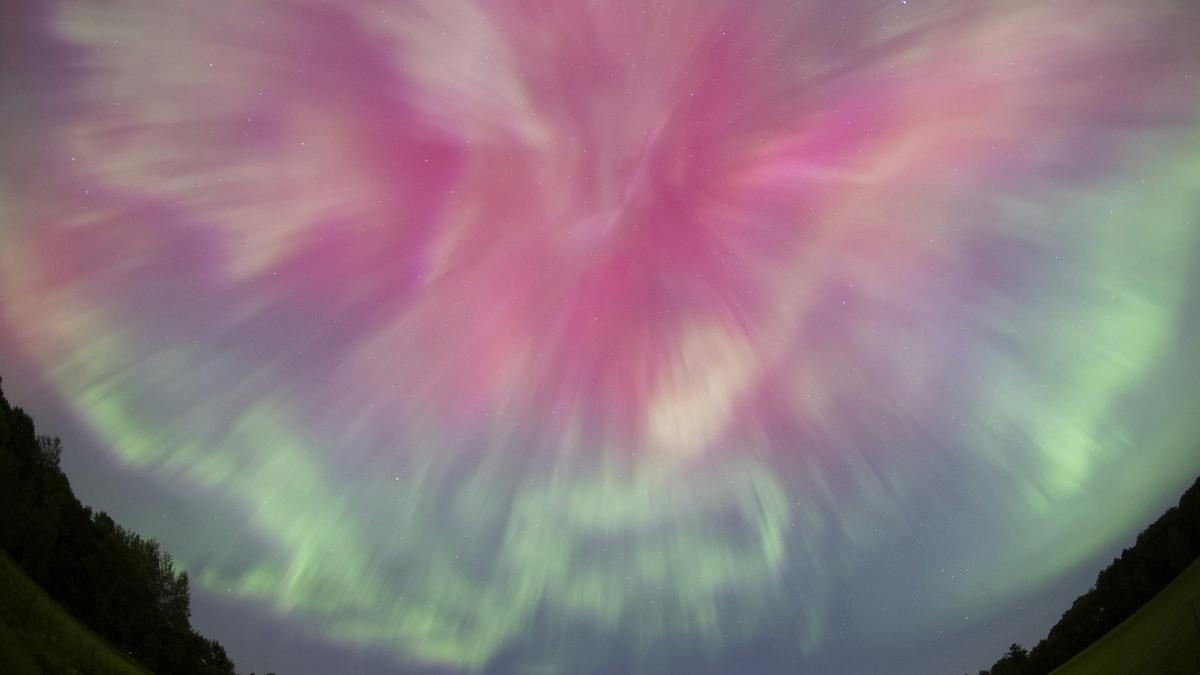
A geomagnetic storm lit up the night sky in parts of the US during the first weekend in October. South Africa’s National Space Agency (SANSA) told reporters that the storm had originated from a solar flare “that erupted from sunspot 3842 on October 3”. It said this was the strongest earth-facing solar flare recorded by SANSA in the past seven years and that the eruption briefly affected high-frequency radio communications, “resulting in a total radio blackout over the African region which lasted for up to 20 minutes”.

What is a geomagnetic storm? The Conversation Africa asked SANSA’s Amoré Elsje Nel, who researches geomagnetics, to explain.

What is a geomagnetic storm and how common are they?

A geomagnetic storm is a disturbance in the earth’s magnetic field caused by solar activity. There’s a reaction called nuclear fusion that occurs continuously deep within the Sun’s core. This generates massive amounts of energy. Some of the energy is released as light (sunlight), some as radiation (solar flares), and some as charged particles.

The Sun also continuously emits a stream of charged particles known as the solar wind. Occasionally, the Sun releases larger bursts of energy, called coronal mass ejections. It sends clouds of these charged particles, or plasma, hurtling through space. I like to explain it to children this way: the Sun sometimes drinks a soda too fast and then burps. This “burp” is the cloud of plasma which then travels through space. These emissions don’t always hit us. But when they do, they collide with the earth’s magnetic field, disrupt it, and lead to a geomagnetic storm.

The earth’s magnetic field is an invisible force that surrounds our planet, acting like a giant magnet with a north and south pole. It helps protect us from harmful solar radiation by deflecting charged particles from the Sun.

The solar flare from 3842 emitted both X-flares (radiation) and a coronal mass ejection. X-flares are radiation; they travel at almost the speed of light and reach the earth within minutes. That’s what caused the brief communications disruption SANSA mentioned on 3 October. But the coronal mass ejection takes much longer to reach us. We’d predicted it would do so over the past weekend but in fact it only reached us on the morning of 8 October.

Geomagnetic storms occur fairly often. Minor ones happen multiple times per year. The severity of a storm depends on how strong the solar event was that caused it. Larger, more intense storms are less common but can happen every few years. Solar events are closely tied to the Sun’s 11-year solar cycle, which has periods of high and low activity. During the peak of the cycle, called solar maximum, more sunspots and solar flares occur, increasing the likelihood of solar storms.

We are now heading towards the peak of Solar Cycle 25, which will be in July 2025. Solar maxima usually last between two and three years.

Are these storms dangerous? What damage can they cause?

Geomagnetic storms are not typically harmful to humans directly, but they can pose risks to modern technology and infrastructure. One of the most notable dangers is to power grids. Powerful storms can induce electric currents in power lines, potentially overloading transformers and causing blackouts, as happened in Quebec, Canada, in 1989.

Satellites in space are also vulnerable. A strong storm can damage electronics onboard, disrupt communication signals, and shorten the lifespan of the satellites themselves.

In aviation, geomagnetic storms can disrupt radio communication and GPS signals, which are vital for aircraft navigation. This is especially important for flights that pass near the polar regions, where the effects of geomagnetic storms are more pronounced. Astronauts and spacecraft are also at risk – the extra radiation can be dangerous for equipment and human health.

Are there any upsides to this phenomenon?

Aurorae are a visually stunning aspect of geomagnetic storms. These colourful displays in the night sky occur when charged particles from the Sun get captured in the earth’s magnetic field lines, and funnel down towards the poles. Here they interact with the earth’s atmosphere, releasing energy that produces shimmering lights.

Aurorae can be seen at both the north and south pole, aptly named the northern and southern lights. If storms are big enough, it’s possible to see them in regions much further away from the poles. This happened in South Africa on May 11, 2024.

Studying geomagnetic storms provides valuable insights into space weather. By understanding how the Sun’s activity affects the earth, scientists can better predict future storms and work to protect the technologies we rely on. The study of geomagnetic storms also contributes to our understanding of the Sun and space in general.

Can monitoring the storms mitigate the risks?

Geomagnetic storms are monitored using various instruments on the earth and in space. On the earth, magnetometers measure changes in the magnetic field, allowing scientists to track disturbances as they happen. SANSA operates a dense network of Global Navigation Satellite System receivers in Africa, and magnetometer stations in various parts of southern Africa, for this reason. The agency is currently setting up a magnetometer station in Ethiopia, too. This will improve our ability to monitor geomagnetic storms.

In space, satellites equipped with sensors monitor the Sun’s activity and detect solar flares or coronal mass ejections before they reach the earth. This data feeds into prediction models used in space weather centres across the globe.

Once a storm is detected, agencies like SANSA issue alerts and forecasts. These warnings help industries such as power grid operators, satellite companies and aviation authorities to prepare for a storm.

For example, power companies can temporarily shut down or reconfigure parts of the grid to avoid overloading during a storm. Satellite operators can place their spacecraft into safer operating modes, such as switching off electronic components, and airlines can reroute flights away from high-risk areas.

Monitoring alone can’t prevent all the damage caused by geomagnetic storms. But it can greatly reduce the risks. Thanks to early warning systems we can protect crucial infrastructure and minimise the effect these storms have on our daily lives.

Amoré Elsje Nel is applied geomagnetic researcher, South African National Space Agency. This article is republished from The Conversation.

Published – October 10, 2024 05:24 pm IST



Source link

Science

Post navigation

Previous Post: Ratan Tata’s Last Rites With State Honours, Thousands Pay Tribute
Next Post: England Great Explains What Makes Team India “Greatest In Their Conditions”

Related Posts

  • What is multi-messenger astronomy? – The Hindu
    What is multi-messenger astronomy? – The Hindu Science
  • Female right whales may never breed after run-ins with fishing gear
    Female right whales may never breed after run-ins with fishing gear Science
  • Dawn of artificial mummification pushed back 5,000 years
    Dawn of artificial mummification pushed back 5,000 years Science
  • The Science Quiz | The science of spice and vice versa
    The Science Quiz | The science of spice and vice versa Science
  • Why do microwave ovens sometimes overheat water?
    Why do microwave ovens sometimes overheat water? Science
  • How does the squirting cucumber squirt?
    How does the squirting cucumber squirt? Science

More Related Articles

Quantum test shows cause, effect need not follow a set order Quantum test shows cause, effect need not follow a set order Science
Watch: Is climate change driving people out of the Sunderbans? Watch: Is climate change driving people out of the Sunderbans? Science
Sci-Five | The Hindu Science Quiz: On Bioprinting Sci-Five | The Hindu Science Quiz: On Bioprinting Science
Does the Sun rotate? Does the Sun rotate? Science
China to double size of space station, touts alternative to NASA-led ISS China to double size of space station, touts alternative to NASA-led ISS Science
Using AI to classify neem fruits based on azadirachtin content Using AI to classify neem fruits based on azadirachtin content Science
SiteLock

Archives

  • May 2026
  • April 2026
  • March 2026
  • February 2026
  • January 2026
  • December 2025
  • November 2025
  • October 2025
  • September 2025
  • August 2025
  • July 2025
  • June 2025
  • May 2025
  • April 2025
  • March 2025
  • February 2025
  • January 2025
  • December 2024
  • November 2024
  • October 2024
  • September 2024
  • August 2024
  • July 2024
  • June 2024
  • May 2024
  • April 2024
  • March 2024
  • February 2024
  • January 2024
  • December 2023
  • November 2023
  • October 2023
  • September 2023
  • August 2023
  • July 2023
  • June 2023
  • May 2023
  • April 2023
  • March 2023
  • February 2023
  • January 2023
  • December 2022
  • November 2022
  • October 2022
  • September 2022
  • August 2022
  • July 2022
  • June 2022
  • May 2022

Categories

  • Business
  • Nation
  • Science
  • Sports
  • World

Recent Posts

  • CITU calls South Coast Railway zone a “betrayal” of Andhra Pradesh, flags revenue loss
  • Iran ceasefire tested as cargo ship catches fire after being hit off Qatar’s coast
  • ₹1,600-1,700 crore a day, ₹1 lakh crore in 10 weeks: Cost of insulating India from global energy shock
  • Israeli strikes in Gaza kill three, medics say, testing fragile ceasefire
  • IPL 2026: Chennai Super Kings elect to bowl against Lucknow Super Giants

Recent Comments

  1. DonaldStype on UP Teacher Who Asked Students To Slap Muslim Classmate
  2. RaymondMuh on UP Teacher Who Asked Students To Slap Muslim Classmate
  3. Williamdox on UP Teacher Who Asked Students To Slap Muslim Classmate
  4. JosephSpupE on UP Teacher Who Asked Students To Slap Muslim Classmate
  5. SteveTeF on UP Teacher Who Asked Students To Slap Muslim Classmate
  • Maldives purchases drones from Turkey to patrol country’s vast maritime area
    Maldives purchases drones from Turkey to patrol country’s vast maritime area World
  • Philippine president warns China against ‘acts of war’ amidst South China Sea standoff
    Philippine president warns China against ‘acts of war’ amidst South China Sea standoff World
  • 2 Cops Suspended For “Not Following Protocol” In Pune Porsche Crash Case
    2 Cops Suspended For “Not Following Protocol” In Pune Porsche Crash Case Nation
  • Pharma products make up nearly one-third of Telangana’s merchandise exports in 2023-24
    Pharma products make up nearly one-third of Telangana’s merchandise exports in 2023-24 Nation
  • Access Denied
    Access Denied Nation
  • Access Denied Business
  • Iran sets three conditions for ending war
    Iran sets three conditions for ending war World
  • Access Denied
    Access Denied Nation

Editor-in-Chief:
Mohammad Ariff,
MSW, MAJMC, BSW, DTL, CTS, CNM, CCR, CAL, RSL, ASOC.
editor@artifex.news

Associate Editors:
1. Zenellis R. Tuba,
zenelis@artifex.news
2. Haris Daniyel
daniyel@artifex.news

Photograher:
Rohan Das
rohan@artifex.news

Artifex.News offers Online Paid Internships to college students from India and Abroad. Interns will get a PRESS CARD and other online offers.
Send your CV (Subjectline: Paid Internship) to internship@artifex.news

Links:
Associate Journalism
About Us
Privacy Policy

News Links:
Breaking News
World
Nation
Sports
Business
Entertainment
Lifestyle

Registered Office:
72/A, Elliot Road, Kolkata - 700016
Tel: 033-22277777, 033-22172217
Email: office@artifex.news

Editorial Office / News Desk:
No. 13, Mezzanine Floor, Esplanade Metro Rail Station,
12 J. L. Nehru Road, Kolkata - 700069.
(Entry from Gate No. 5)
Tel: 033-46011099, 033-46046046
Email: editor@artifex.news

Copyright © 2023 Artifex.News Newsportal designed by Artifex Infotech.