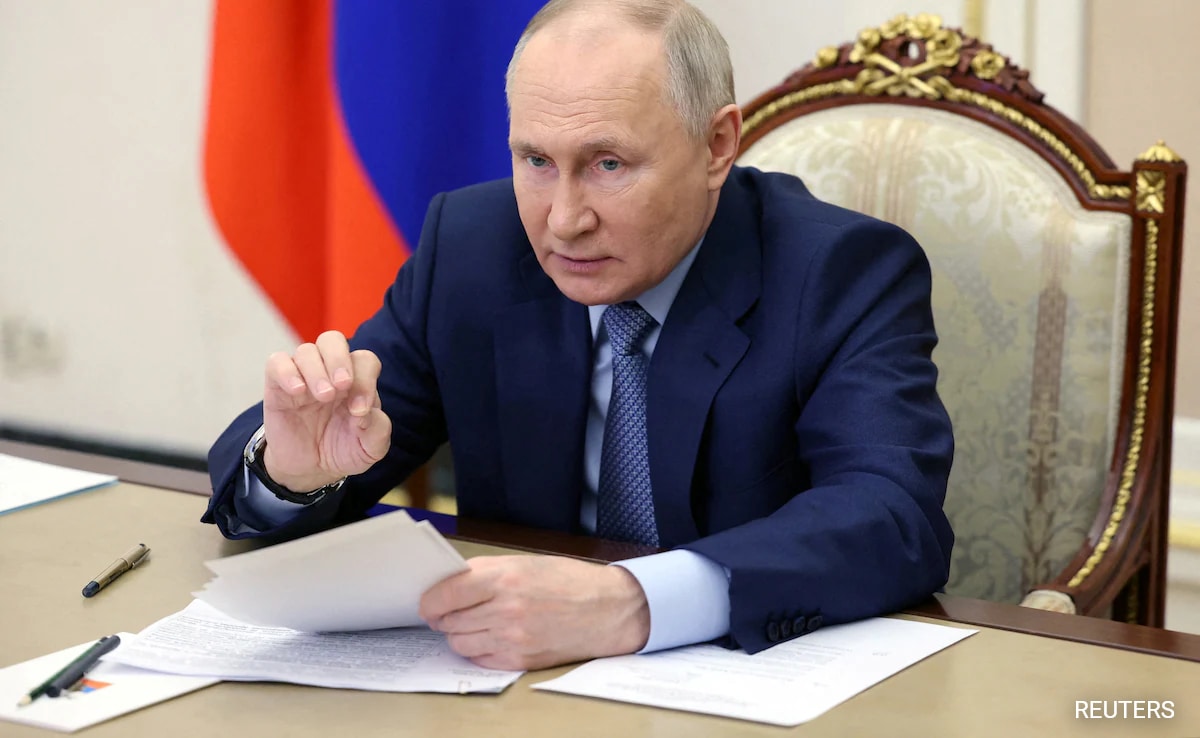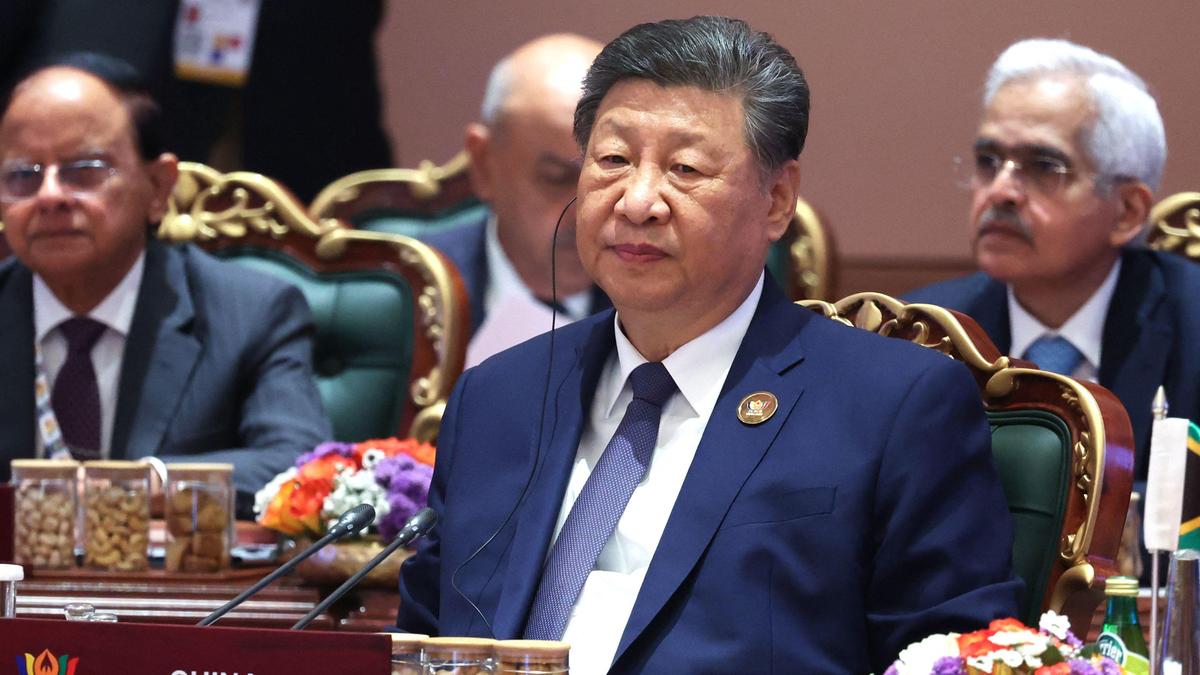


On October 17, Chinese President Xi Jinping will host more than a dozen world leaders in Beijing, including Russian President Vladimir Putin, for the third Belt and Road Forum, which will mark the 10 year anniversary of the Belt and Road Initiative (BRI).
The BRI, as it turns 10, stands at a crossroads. China has poured in billions of dollars into the plan, revitalising railway connections to Europe, investing in ports around Asia, and building high-speed railways in Africa and Southeast Asia, among other projects. Yet, on the anniversary, the project is also facing searching questions, particularly over the debt burdens faced by many BRI partners, from Sri Lanka to Zambia.
Alluding to those concerns, the Chinese government, on October 10, released a White Paper on the BRI’s past, present and future, pledging that the plan was “committed to the concept of open, green and clean cooperation…[has] zero tolerance for corruption, and promotes steady and high-quality growth.”
The BRI was launched by Mr. Xi in 2013 in his first year in office, comprising two parts: a land-based Silk Road Economic Belt focusing on energy, infrastructure and connectivity projects in Eurasia that was unveiled by Mr. Xi in Kazakhstan, and a Maritime Silk Road that was announced in Indonesia. The project was first named the ‘One Belt, One Road’ but then quickly renamed as the BRI to convey a more open and inclusive initiative as opposed to a Chinese-dominated one (the name in Chinese, however, remains ‘yi dai, yi lu’, or ‘One Belt, One Road’).
The land belt envisaged six corridors: the China-Pakistan Economic Corridor (CPEC), the New Eurasian Land Bridge Economic Corridor, the China-Indochina Peninsula Economic Corridor, the China-Mongolia-Russia Economic Corridor, the China-Central Asia-West Asia Economic Corridor and the Bangladesh-China-India-Myanmar (BCIM) Economic Corridor.
Launching the plan in 2013, China courted most of its neighbours in Central Asia, South Asia and Southeast Asia. India refrained from joining the BRI, voicing its opposition to the CPEC that runs from Xinjiang in China’s west, through Pakistan-occupied Kashmir (PoK), to the Arabian Sea port of Gwadar. With India staying out, the BCIM corridor has also stalled, and has been replaced by a later launched China-Myanmar Economic Corridor.
One of the biggest misconceptions about the BRI — one that is pervasive even a decade on — is that it is a monolith. This is, ironically, a perception that has been encouraged both by proponents and critics of the plan. For Beijing, arguably the BRI’s biggest success has involved the narrative around the plan, that has conveyed to the world a sense of Chinese ascendance and ambition. The BRI as an idea has resonated especially with countries in Asia, Africa and Latin America that have seen an infrastructure deficit.
The BRI has essentially brought under one umbrella what is a collection of mostly disparate bilateral projects — many of which pre-dated 2013 and were subsequently given a BRI stamp. It has thus been framed as a global, interconnected master plan, even if, in reality, a large chunk of the investment has gone into stand-alone energy or infrastructure projects in partner countries barring a few transnational projects. There is little that is multilateral about the BRI. For instance, unlike the China-hosted Asian Infrastructure Investment Bank (AIIB) in which India is a member (and second largest shareholder), the BRI has no governing structure as such. It is thus not a multilateral initiative, as commonly misconstrued, but a collection of disparate bilateral ones.
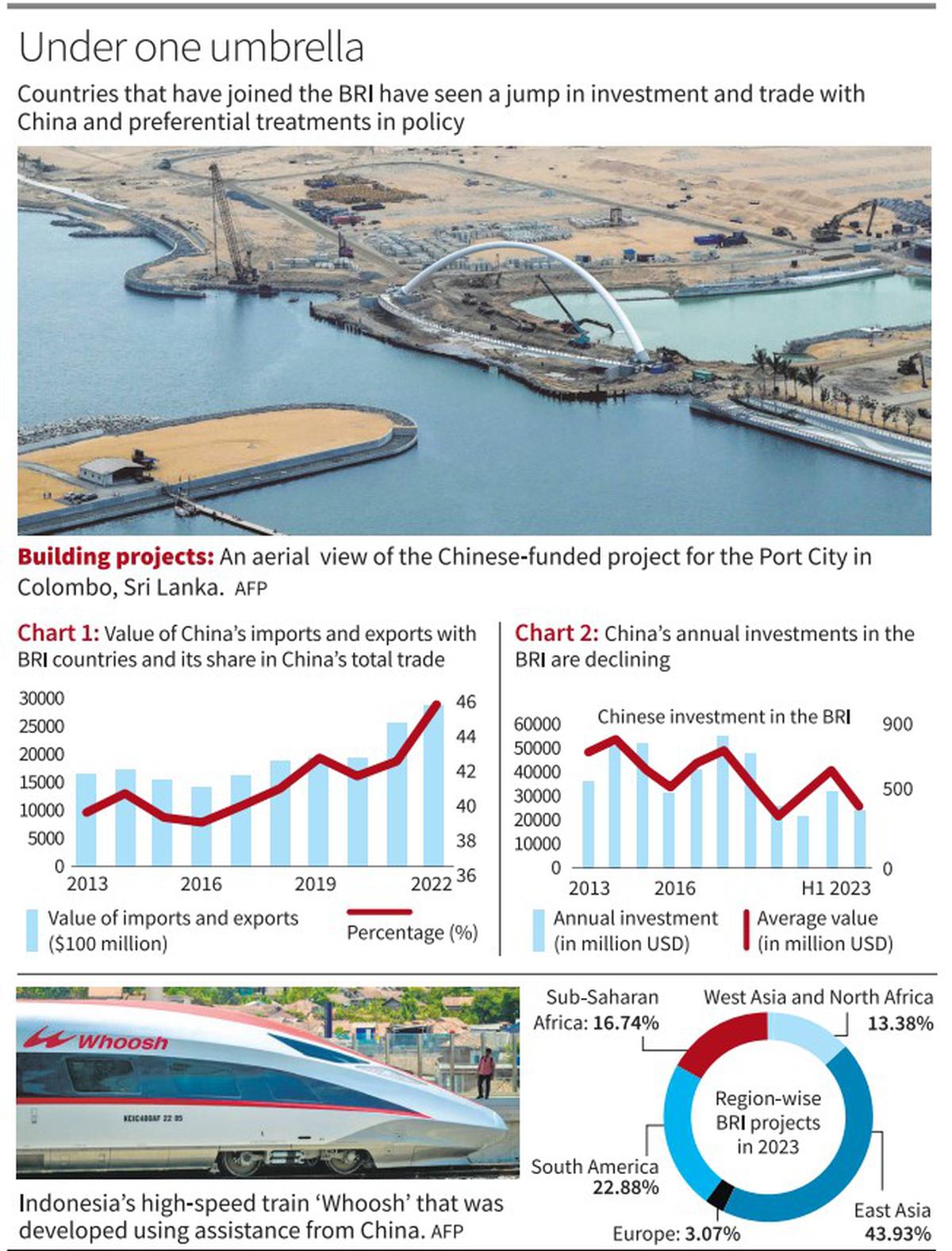
This is not to say that the BRI hasn’t had a discernible impact on China’s diplomacy and trade. Countries that have joined the BRI have seen a jump in investment and trade with China and preferential treatments in policy, although these are, again, enabled through bilateral arrangements. As the White Paper noted, between 2013 and 2022, trade with BRI partners grew 6.4% annually reaching $19.1 trillion while total investment reached $380 billion.
Detractors of the plan have similarly seen it as a monolith — one that some commentators have suggested was designed as a large “debt trap” to ensnare partners. The reality of the BRI, however, is far messier. In contrast to perceptions of a grand master plan, the rollout of the initiative since 2013 has often been uncoordinated and ad-hoc. Consider the financing. There is no one lender, instead a hodgepodge of multiple funders covering various state-owned banks, China’s EXIM bank, and other players across the spectrum of China’s financial system.
In the first years of the BRI, the weight put by Mr. Xi behind the plan saw political considerations trump economic ones as funds flowed to a range of projects. Even Chinese economists have later acknowledged due diligence was lacking in many projects that were governed by politics. The most glaring examples were the projects that former Sri Lankan President Mahinda Rajapaksa pushed in Hambantota, where today stands a gleaming China-built airport that sees few flights.
Second phase
Some analysts in Beijing have suggested the BRI is now entering a second phase. BRI 2.0 is seeing a sharp reduction in lending, and in October, reports citing the minutes of a high-level meeting of Chinese and Pakistani officials said Beijing had turned down requests for new projects there. The CPEC, a decade on, has had little of the transformative impact on the Pakistani economy that was initially hoped.
In 2023, as many as 26 BRI partners saw “a 100% drop in BRI engagement”, according to the Belt and Road Investment Report from the Green Finance and Development Centre at Shanghai’s Fudan University. BRI 2.0 is notably seeing fewer projects in South Asia, and more Chinese investments in East Asia, East Africa and Latin America, according to the report’s analysis of investments this year. The report also noted that in the first half of 2023, an increasing share of outbound investments from China is from private sector companies, which have tended to be more discerning than lending from the state.
Beyond big-ticket infrastructure projects that tend to yield little returns in the short-term, an increasing focus appears to be on roping BRI partners into closer ties with China on strategic sectors, including rolling out 5G networks through what’s being called the Digital Silk Road. The report said 2023 is likely to see more BRI deals on renewable energy and related technologies, manufacturing in new technologies such as batteries, trade-enabling infrastructure including pipelines, and a focus on Information and Communications Technology including 5G and setting up data centres, against the backdrop of the ongoing technology war between China and the U.S. In short, with a 48% decline in the average size of a deal compared to 2018, projects under the BRI are getting smaller, but more strategic.
In the weeks leading up to the BRI summit, attention has focused on debt problems in two BRI partners — Sri Lanka and Zambia. This week, Sri Lanka announced it had finally reached a deal with China to restructure $4.2 billion of debt after months of hard negotiations following the extraordinary economic crisis in the island and the default last year. According to official figures, half of Sri Lanka’s foreign debt is owed to China, which, in the BRI years, replaced India and Japan as the biggest lender. Zambia, meanwhile, facing its own debt crisis, reached a deal with its creditors to restructure $6.3 billion debt. China, which is owed $4.1 billion, is the biggest creditor.
Do these crises prove a “debt trap” theory to ensnare BRI partners? The evidence is thin. For one, Beijing is being forced to take a hit on many of these deals and to agree to restructuring that is far from ideal. There has been no state transfer of assets to pay off debts, as the theory posits. Moreover, the debts have prompted growing concern, rather than celebration, among Beijing’s lenders, especially as China deals with a worsening economic slowdown. The result is a significant rethink in the BRI as it turns 10.