







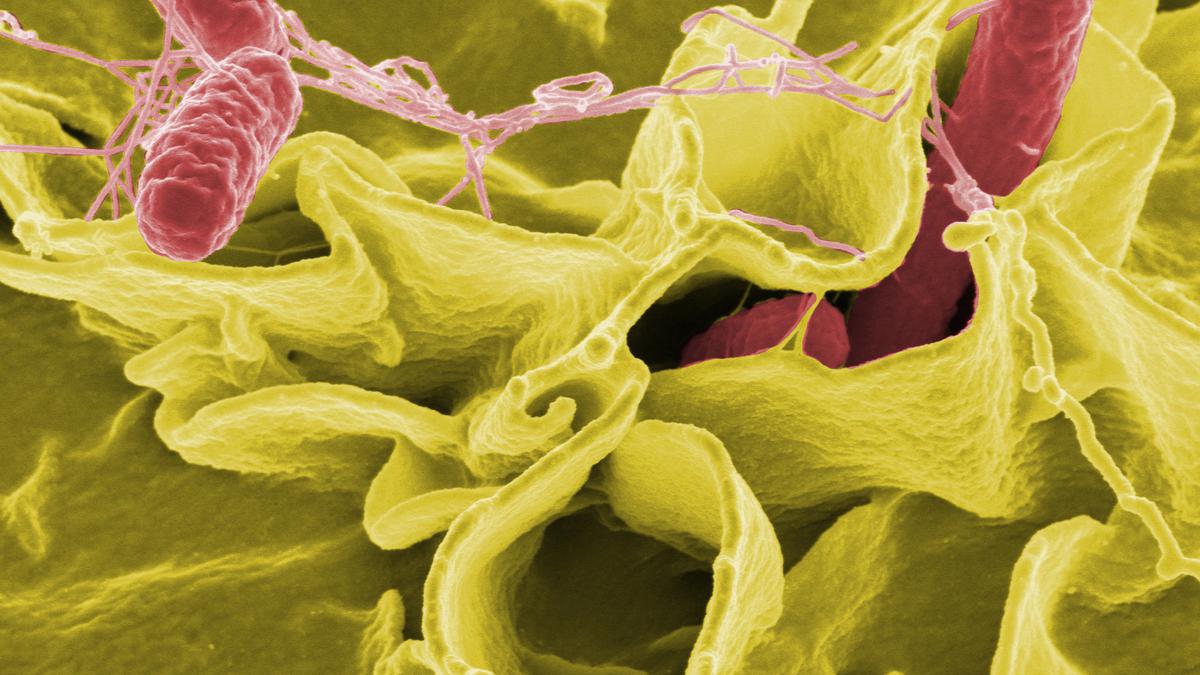
“You are more microbes than human.”
It is possible you have had this factoid thrown at you, with the thrower claiming that the microbes in our bodies outnumber our own cells 10 to one.
But according to an assessment published in Nature Microbiology, this is a myth. In a 2016 study the assessment’s authors cited, researchers from Israel and Canada estimated a 70 kg “reference man” to have 38 trillion bacterial cells and 30 trillion human cells. Most current estimates of the size of the gut microbiome are also based on adults living in the urban areas of high-income countries, they added.
The authors, Alan Walker, senior research fellow at the Rowett Institute, University of Aberdeen, and Lesly Hoyles, professor of microbiome and systems biology, Nottingham Trent University, poked holes into this and 11 other popular claims that assail the human microbiome – the community of microbes living in the human body.
In the last two decades, microbiome research has gone from a “niche subject area” to “one of the hottest topics in all of science,” Dr. Hoyles said. The flip side of this is “hype and a temptation to over-simplify the really complex microbial interactions and activities occurring in our guts”.
Varun Aggarwala, assistant professor of biomedical and life sciences at Jio Institute, Navi Mumbai, who studies microbiome therapeutics, described the assessment as a “timely intervention that can bring nuance to the field of microbiomes.”
Here are the 11 other claims the article checked:
1. The age of the field
One of the more benign misconceptions the assessment takes aim at is that microbiome research is a new field. But according to the authors, scientists had described bacteria inhabiting the gut, such as Escerichia coli and Bifidobacteria, and speculated on their benefits in the late 19th and early 20th centuries itself.
2. Who named the field?
Many have credited Joshua Lederberg, a medicine Nobel laureate, with naming the field in 2001. But researchers had used the term in its modern form more than a decade earlier. According to a June 2017 paper that the authors cite, Whipps J.M., Lewis K., and Cooke R.C. used the term in 1988 to describe a community of microbes in a book.
3. The real number of microbes
Some of the more prevalent and more harmful myths concern the size of the microbiome. The absolute microbial cell numbers in one gram of human faeces have been exaggerated 10- to 100-fold. The actual number is around 1010-1012, according to the authors.
4. The mass of the microbiome
Many research articles have stated that the human microbiota weigh 1-2 kg, but it only weighs about half a kg or less, the authors wrote. The 2016 study by Israeli and Canadian researchers estimated that it weighed about 200 grams.
5. From mother to child
Contrary to some opinions, mothers don’t pass their microbiomes to their children at birth. Some microorganisms are directly transferred during birth but they constitute a small fraction of the human microbiota. A smaller fraction of these microbes also survives and persists through the child’s life. “Every adult ends up with a unique microbiota configuration, even identical twins that are raised in the same household,” the authors noted.
6. Good or bad?
Some researchers have suggested (see here, here, and here, e.g.) that diseases are caused by undesirable interactions between microbial communities and our cells. But the authors wrote that whether a microbe and its metabolite are ‘good’ or ‘bad’ depends on the context. For example, most humans carry a species of bacteria called Clostridium difficile without any diseases for life. It causes problems only in the elderly or in people with compromised immune systems.
They acknowledged that diseases have been correlated with changes in the composition of the microbiome and that such changes could exacerbate some diseases (like inflammatory bowel disease). But they added that it is “extremely difficult” to implicate a specific profile of microbes, or changes to them, in a disease.
7. The firmicutes-bacteroidetes ratio
One myth correlates obesity with the ratio of two phyla of bacteria, firmicutes and bacteroidetes. The problem: the level of phyla is too broad to comment on effects with confidence. A phylum is a group within a kingdom. In the descending order of classifying organisms, a kingdom comprises different phyla; a phylum comprises classes; then there are orders, families, genuses, and, finally, species. Even within a bacterial species, several strains behave differently, causing the host to manifest different clinical symptoms.
8. Not redundant
Some researchers have swung the other way, claiming that different microbes are actually functionally redundant. But the authors wrote that while different bacteria in the human microbiome perform some common important functions, many functions are the preserve of a few species.
9. Sequencing is not necessarily unbiased
The authors noted that the notion that “sequencing is unbiased” is a misconception – that biases can be introduced at various stages of studies based on the microbes’ genetic material, from collecting samples to storing them, even in the choice of software to analyse sequence data.
10. The standards question
According to the authors, there is a common opinion in microbiome research that researchers need standardised methods so that they can compare the findings of different studies. But the assessment stressed that no methodology is perfect and that adopting one universal methodology would come at the cost of turning a blind eye to the limitations of the chosen method.
11. The culturable microbiome
Is it difficult to grow microbes from the human microbiome in the lab? Yes, many say, but the authors pointed to work in the 1970s when scientists cultured diverse microbiome species from the gut. “So current gaps in culture collections are at least in part attributable to a lack of previous effort rather than an inherent ‘unculturability’,” they noted.
Joel P. Joseph is a freelance science journalist and researcher.