


Skip to content
  • Facebook
  • X
  • Linkedin
  • WhatsApp
  • YouTube
  • Associate Journalism
  • About Us
  • Privacy Policy
  • 033-46046046
  • editor@artifex.news
Artifex.News

Artifex.News

Stay Connected. Stay Informed.

  • Breaking News
  • World
  • Nation
  • Sports
  • Business
  • Science
  • Entertainment
  • Lifestyle
  • Toggle search form
  • Access Denied
    Access Denied Nation
  • Access Denied World
  • Formidable South Africa wary of Bangladesh threat
    Formidable South Africa wary of Bangladesh threat Sports
  • Menorca and Miami Vice show out
    Menorca and Miami Vice show out Sports
  • Kapil Dev Says It Is Up To Virat Kohli How Fast He Can Bounce Back From Lean Patch
    Kapil Dev Says It Is Up To Virat Kohli How Fast He Can Bounce Back From Lean Patch Sports
  • Access Denied
    Access Denied Nation
  • Access Denied Sports
  • Protests held across Uttar Pradesh over NEET paper leak case and other examination irregularities
    Protests held across Uttar Pradesh over NEET paper leak case and other examination irregularities Nation
An unlikely mystery: studies shed new light on how genes are made

An unlikely mystery: studies shed new light on how genes are made

Posted on January 13, 2025 By admin


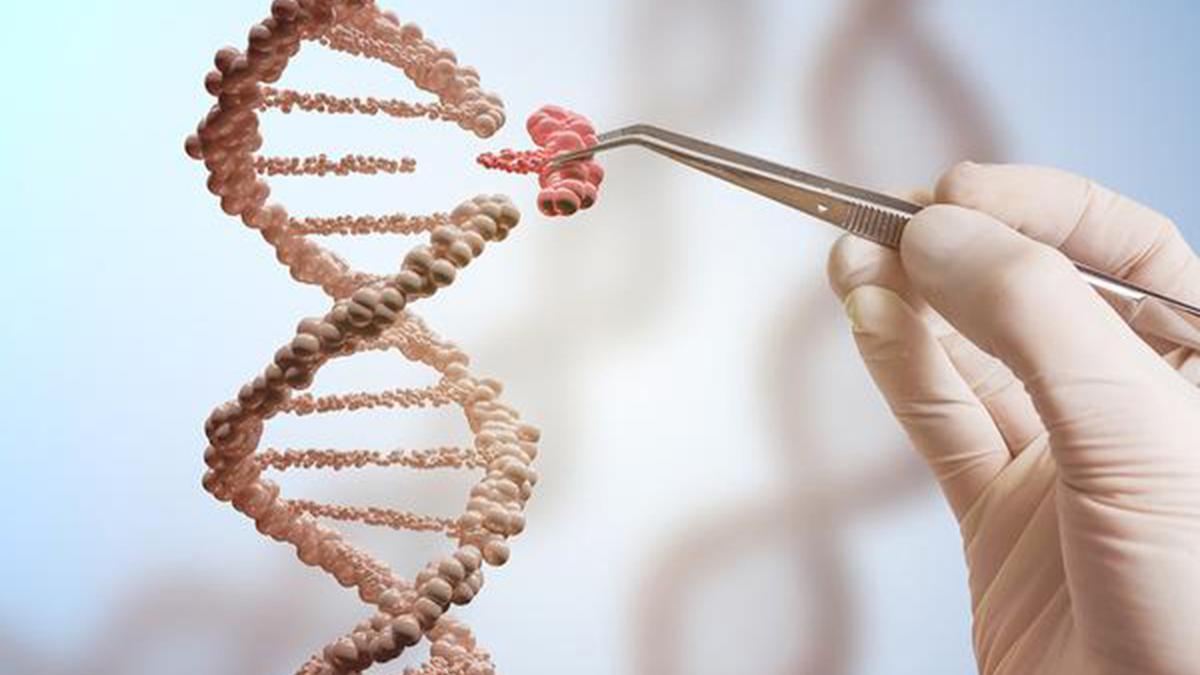
The alikeness of identical twins can be startling. They are alike because all their genes are alike. Genes are those segments of the genome where, if changes occur, the characteristics of an organism change. Non-identical twins vary in 50% of their genes and are much less alike. Thus, genes define our individuality in many ways.

In December 2024, two research groups addressed how new genes are created. The University of Nevada, Reno, group reported its findings in Molecular Biology and Evolution and the other, from the Max Planck Institute for Evolutionary Biology Plön, Germany, reported in Genome Biology and Evolution.

The 24 molecules

A group of 24 molecules of DNA gives identity to our 24 chromosomes. These are the chromosomes numbered 1 to 22 and the sex chromosomes X and Y.  Our cells contain two sets of the genome: one derived from the mother’s egg and the other from the father’s sperm. Eggs and sperm receive only one chromosome of each pair. When they fuse and form the zygote, the latter has two sets again. The zygote then multiplies to form a baby.

The cells in human bodies possess two copies of chromosomes 1-22. Biological females have two X chromosomes whereas biological males have an X chromosome and a Y chromosome.

Identical twins arise from a single zygote while non-identical twins from two zygotes produced simultaneously.

Each DNA molecule has two strands held together by bonds between compounds on the strands, called base pairs. Our genome contains 3.2 billion base-pairs. A gene is typically a few-thousand base-pair-long segment of a DNA.

When a gene is ‘expressed’, it means a cell will transcribe the underlying base pair sequence to a molecule called a messenger RNA (mRNA), and read the mRNA like a recipe to make a protein.

In the human genome, there are 20,000 protein-coding genes and 20,000 genes that cells use to create RNA that influences the expression of other genes. There are also some genes, called promoters and enhancers, which tell the cell when and where other genes are copied into mRNA.

Two compounds involved in forming the base pairs are cytosine and thymine. Sometimes the cytosine molecules bind to a methyl ion and are said to be methylated. A methylated cytosine molecule is likelier than an unmethylated one to mutate and become a thymine molecule.

Duplications create new genes

In 1970, Japanese-American biologist Susumu Ohno proposed that the main source of new genes is gene duplication. When the body’s genome has two copies of the same gene, one copy can continue to provide the original function while the other is free to mutate and acquire new functions.

Ohno’s proposal was simple but had one flaw: it didn’t explain how the organism’s cells would deal with producing twice the quantity of the same proteins as a result. Protein over-expression can lead to debilitating conditions. The University of Nevada, Reno, researchers addressed this problem.

Humans and mice last shared a common ancestor 75 million years ago. The researchers compared genes duplicated in human or mouse genomes, those duplicated in both, and those not duplicated in either.

They found the promoters of duplicated genes had more methylated DNA than the promoters of genes that hadn’t been duplicated. Increased methylation would have prevented the cells from manufacturing twice as many proteins, minimising the ill effects of duplication, and allowing the duplicate gene to survive long enough to acquire new functions.

The researchers reported that the higher rate of methylation also elevated the rate of mutation.

Random sequences to incipient genes

The Max Planck Institute group inserted exogenous DNA into a population of cells derived from a human. (Exogenous means the DNA came from sources separate from the cells.) The researchers were careful to insert the DNA at a specific site in the genome, and allowed the cells to make proteins with them.

The exogenous DNA had a chunk that consisted of a random sequence of base-pairs  — which means the proteins the cells made with it would be random as well.

The researchers put together a collection of cells of 3,708 types and nurtured them for 20 days. At regular intervals they checked the relative abundance of different cell types.

After 20 days, the team found that 53% of cell types had become less abundant, 8% more abundant, and 40% didn’t swing either way. That is, more often than not, random DNA sequences affected cell growth and thus became relevant for evolution to act upon.

In yet other words: the random DNA inserts behaved like incipient genes.

Keeping v. chucking a gene

For a genome to retain a gene, it must have some use or the genome allows it to mutate. But establishing a gene’s usefulness is challenging.

Consider blood groups. Individuals can have one of four groups — A, B, AB or O — depending on which variants of the ABO gene they’ve inherited. If a person receives A and A or A and O, they have the A blood type. If they have B and B or B and O, they have the B blood type. If they have A and B or O and O, then they have the AB or the O blood types, respectively.

In sum, every individual lacks either one or two of the variants, which means no variant is really essential. The O variant also encodes a protein with no known function and whose amino-acid sequence is markedly different from those encoded by A and B.

Primates and humans took different branches on the tree of evolution millions of years ago but share blood types — which is to say evolution both found a way and saw fit to retain all three variants in so many species for a very long amount of time.

Scientists don’t yet have a simple answer to why evolution has done this, but they aren’t complaining.

D.P. Kasbekar is a retired scientist.

Published – January 13, 2025 05:30 am IST


Source link

Science

Post navigation

Previous Post: Myanmar junta air strike kills 15 civilians: ethnic rebel group
Next Post: BC Association for 42% local body reservations 

Related Posts

  • 2,000 volunteers join a painstaking effort to restore massive skeleton of prehistoric predator
    2,000 volunteers join a painstaking effort to restore massive skeleton of prehistoric predator Science
  • Life pays universe a ‘heat tax’ to run precise chemical reactions
    Life pays universe a ‘heat tax’ to run precise chemical reactions Science
  • Japan’s ‘megaquake‘ warning | Explained
    Japan’s ‘megaquake‘ warning | Explained Science
  • Parched Philippine dam reveals centuries-old town, luring tourists
    Parched Philippine dam reveals centuries-old town, luring tourists Science
  • Spin Science: Explaining the Magnus effect
    Spin Science: Explaining the Magnus effect Science
  • New measurements reveal the enormous halos shrouding all galaxies
    New measurements reveal the enormous halos shrouding all galaxies Science

More Related Articles

PRAXIS: a NASA mission to graze planet rings PRAXIS: a NASA mission to graze planet rings Science
New type of host defence against Zika, dengue infections revealed New type of host defence against Zika, dengue infections revealed Science
Landmark study offers new insights into what protects against dengue Landmark study offers new insights into what protects against dengue Science
Aditya-L1 embarks on 110-day journey to L1 point Aditya-L1 embarks on 110-day journey to L1 point Science
Scientists trigger ‘controlled’ earthquakes under Swiss Alps Scientists trigger ‘controlled’ earthquakes under Swiss Alps Science
South Korean team develops ‘Iron Man’ robot that helps paraplegics walk South Korean team develops ‘Iron Man’ robot that helps paraplegics walk Science
SiteLock

Archives

  • October 2026
  • September 2026
  • August 2026
  • July 2026
  • June 2026
  • May 2026
  • April 2026
  • March 2026
  • February 2026
  • January 2026
  • December 2025
  • November 2025
  • October 2025
  • September 2025
  • August 2025
  • July 2025
  • June 2025
  • May 2025
  • April 2025
  • March 2025
  • February 2025
  • January 2025
  • December 2024
  • November 2024
  • October 2024
  • September 2024
  • August 2024
  • July 2024
  • June 2024
  • May 2024
  • April 2024
  • March 2024
  • February 2024
  • January 2024
  • December 2023
  • November 2023
  • October 2023
  • September 2023
  • August 2023
  • July 2023
  • June 2023
  • May 2023
  • April 2023
  • March 2023
  • February 2023
  • January 2023
  • December 2022
  • November 2022
  • October 2022
  • September 2022
  • August 2022
  • July 2022
  • June 2022
  • May 2022

Categories

  • Business
  • Nation
  • Science
  • Sports
  • World

Recent Posts

  • AIADMK, BJP leaders slam TVK-led Tamil Nadu government over electricity purchase at high rate
  • Women stage silent demonstration at Kathipara against police action on anti-CEC protesters in Delhi
  • DGCA bans specific power banks on flights
  • Saudi Supreme Court sets aside Sri Lankan migrant worker’s death penalty
  • Nedumbassery accident: CPI(M) stages protest march to police station over ‘indifference’ in handling of case

Recent Comments

  1. RobertTes on UP Teacher Who Asked Students To Slap Muslim Classmate
  2. Manuelret on UP Teacher Who Asked Students To Slap Muslim Classmate
  3. RobertTes on UP Teacher Who Asked Students To Slap Muslim Classmate
  4. RobertTes on UP Teacher Who Asked Students To Slap Muslim Classmate
  5. BrentWes on UP Teacher Who Asked Students To Slap Muslim Classmate
  • After 350 Years, Chhatrapati Shivaji’s ‘Tiger Claw’ Set For India Return
    After 350 Years, Chhatrapati Shivaji’s ‘Tiger Claw’ Set For India Return Nation
  • Zimbabwe vs India Live Score Ball by Ball, Zimbabwe vs India 2024 Live Cricket Score Of Today's Match on NDTV Sports
    Zimbabwe vs India Live Score Ball by Ball, Zimbabwe vs India 2024 Live Cricket Score Of Today's Match on NDTV Sports Sports
  • 14 Skeletons Found In Ruined 5,000-Year-Old Neolithic Tomb In Scotland
    14 Skeletons Found In Ruined 5,000-Year-Old Neolithic Tomb In Scotland World
  • Access Denied Business
  • Access Denied
    Access Denied Nation
  • Over 250 Nigerian School Students Released A Month After Being Kidnapped
    Over 250 Nigerian School Students Released A Month After Being Kidnapped World
  • ICC Announces Star-Studded Commentary Panel For men’s T20 World Cup
    ICC Announces Star-Studded Commentary Panel For men’s T20 World Cup Sports
  • Tropical rain destabilises oceans only when it falls lightly: study
    Tropical rain destabilises oceans only when it falls lightly: study Science

Editor-in-Chief:
Mohammad Ariff,
MSW, MAJMC, BSW, DTL, CTS, CNM, CCR, CAL, RSL, ASOC.
editor@artifex.news

Associate Editors:
1. Zenellis R. Tuba,
zenelis@artifex.news
2. Haris Daniyel
daniyel@artifex.news

Photograher:
Rohan Das
rohan@artifex.news

Associate Journalists
1. Subrata Paul - AN/2020/01
2. Quamruz Zaman - AN/2021/22
3. Ahmed Sha - AN/2021/035
4. Ajay Kumar Shaw - AN/2021/39
5. Tahqiqul Hoda - AN/2021/21

Artifex.News offers Online Paid Internships to college students from India and Abroad. Interns will get a PRESS CARD and other online offers.
Send your CV (Subjectline: Paid Internship) to internship@artifex.news

Links:
Associate Journalism
About Us
Privacy Policy

News Links:
Breaking News
World
Nation
Sports
Business
Entertainment
Lifestyle

Registered Office:
72/A, Elliot Road, Kolkata - 700016
Tel: 033-22277777, 033-22172217
Email: office@artifex.news

Editorial Office / News Desk:
No. 13, Mezzanine Floor, Esplanade Metro Rail Station,
12 J. L. Nehru Road, Kolkata - 700069.
(Entry from Gate No. 5)
Tel: 033-46011099, 033-46046046
Email: editor@artifex.news

Copyright © 2023 Artifex.News Newsportal designed by Artifex Infotech.