




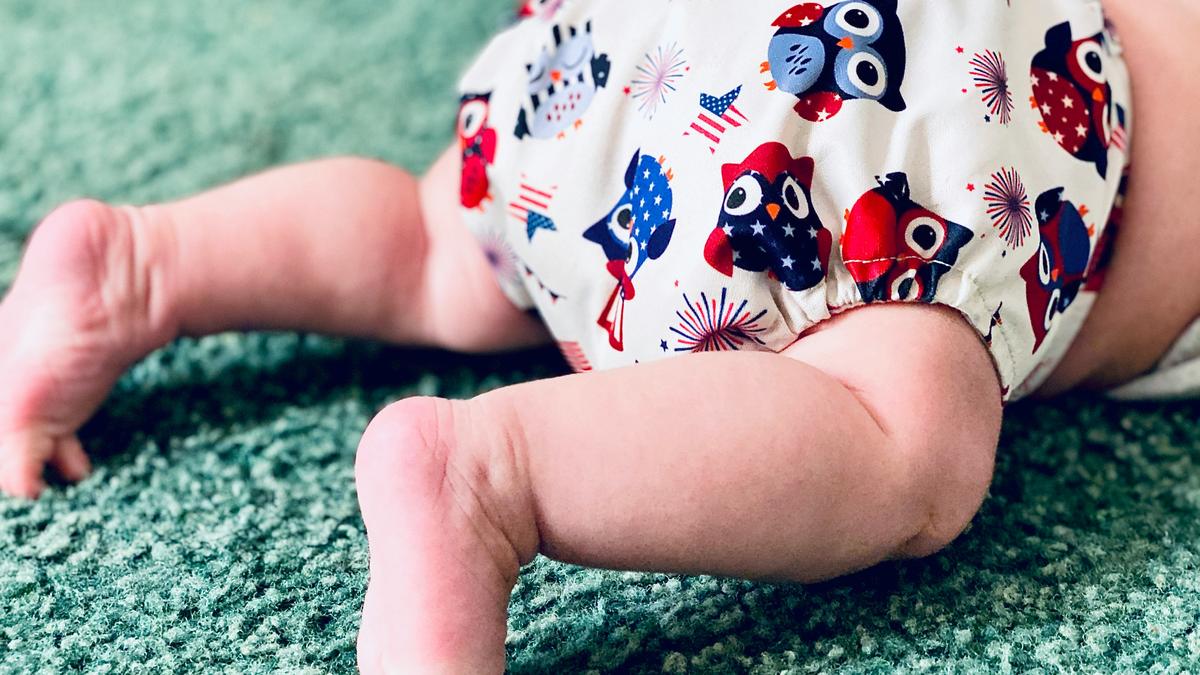
Still wondering what you should gift your friends who have just turned parents? Think no more and buy a bunch of diapers. This sleep-giving, time-relieving, and peace-conferring machinery has been providing the only solace young parents can often find between all the screaming and food-throwing their adorable babies are doing. Just wrap this soft, powdery white packet around the baby’s bum, and from a few hours to even a whole night it will make sure the baby — and consequently you — will be able to get some more sleep.
But have you ever wondered how it is that a diaper is able to soak so much liquid? We all know a few things can soak water around us, such as our cotton clothes, and a few things that don’t, such as our rubber shoes. What is in that diaper that it seems to be able to absorb so much more?
This has some of the most beautiful pieces of physics we see around us. But before we do that, let’s find out why some things soak water and some things don’t.
The case of cotton
Whether something absorbs or repels water has to do with microscopic forces and the nature of a material. Water, the all prevailing, life sustaining liquid we are so used to, is a remarkable thing. Its smallest constituent is a molecule made of two hydrogen atoms and one oxygen atom. While every atom here is charge neutral — i.e. it has an equal number of positively charged protons and negatively charged electrons — something funny happens. Two electrons, one each from every hydrogen atom, decide to shift a bit towards the larger oxygen atom (thanks to a pull exerted by the latter). Thus the oxygen atoms become more negatively charged and the hydrogen atoms become more positively charged.
Thus we can think of every molecule as a big-headed monkey with two hands.
When you place your cotton handkerchief on the water you accidently spilled on the table, the water molecules meet the molecules of the cotton fibres. These fibres are big networks of molecules called polymers, and they have a bunch of slightly positive and negatively charged ions sitting everywhere. So as soon as you place the cotton on the water, the water molecules see this big network like a bunch of hungry monkeys meeting a jungle of dense trees.
The water molecules now experience forces leading them to rush to the ions, climbing over various molecules of cotton. In the process the water is soaked up and your handkerchief becomes wet.
This also means that whether some material will soak or not soak water depends on the kind of ions it is made of. For example, synthetic rubber is again made of a type of network of molecules, but it deliberately has ions that repel water molecules. So the water molecules aren’t inclined to enter them at all. Cotton absorbs water quite well and therefore it is no wonder you see it everywhere, including as cotton balls in the handy medical kit.
The molecules of a diaper
Cotton works great when you need to absorb small amounts of water, but when you need to absorb the litres of fluids your baby is producing overnight, clearly something more remarkable is required. That magic material is called a super-absorbent polymer (SAP). If you wish to see this material, grab hold of a pair of scissors and cut open an unused diaper or sanitary pad. Beneath all the cotton tissue and fragrances, you will come across a whitish power. This is SAP.
The molecular structure of this compound again resembles the complicated mesh of a tree. As soon as it comes in contact with water, water molecules flow through and sit inside. The oxygen atoms in particular are attracted to the mesh due to the presence of an important ion in SAP called sodium — the same sodium that is in your salt and often goes off the charts if you don’t hydrate yourself properly in the summer.
Sodium and water have some unspeakable love for each other that they remain stuck together when given a chance. This is the same reason salt — in the form of a compound of sodium and chlorine — dissolves in water. Here, sodium ions leave the chlorine ions for water molecules, and in the process the salt dissolves.
Anyway, because of the oxygen, the water molecules go and attach themselves to the sodium ions in the SAP trees. Their monkey hands are however still free. They start to hold each other and form a strong network that can no longer move, i.e. it is rigid. The whole network swells, trapping the water molecules within, to form what is called a gel.
Thus, SAP is a magical compound that can absorb a large amount of water, at times more than its own weight.

Quantum physics in the fray
You may still wonder why it is that sodium ions have this fascination with water. What kind of other ions can we use that would change this physics? What if, instead of water, there was some other liquid that has to be soaked up?
The reason why sodium and oxygen atoms want to come closer is that they wish to share an electron. As a child, we are made to think of an electron as a small table-tennis ball zipping around a much larger nucleus, like a basketball. Like everything else in this world, this is not the complete picture.
The electron is really a wave, and it can be shared by two atoms at the same time thanks to the rules of quantum physics. In fact, nature prefers this arrangement: to have the electron to live in the shared world of oxygen + sodium. And this is what drives water molecules towards the sodium ions in a diaper.
If you want to understand this better, you should consider taking an undergraduate course in physics, such as here at IIT Kanpur, where some of us teach.
The next time you wrap a diaper around your baby and plan to catch a good night’s sleep, remember to thank the tiny electrons and the quantum physics that are really attending to nature’s call.
Adhip Agarwala is an assistant professor of physics at IIT Kanpur.