

Skip to content
  • Facebook
  • X
  • Linkedin
  • WhatsApp
  • YouTube
  • Associate Journalism
  • About Us
  • Privacy Policy
  • 033-46046046
  • editor@artifex.news
Artifex.News

Artifex.News

Stay Connected. Stay Informed.

  • Breaking News
  • World
  • Nation
  • Sports
  • Business
  • Science
  • Entertainment
  • Lifestyle
  • Toggle search form
  • The Science Quiz: Rovers on the moon and Mars
    The Science Quiz: Rovers on the moon and Mars Science
  • Iran Guards chief warns Israel of ‘bitter consequences’ after attack: Media reports
    Iran Guards chief warns Israel of ‘bitter consequences’ after attack: Media reports World
  • Global Mining Stocks On Cusp Of Supercycle As AI Boom Stokes Metals Business
  • U.S. lifts Caribbean airspace restrictions after Venezuela strike
    U.S. lifts Caribbean airspace restrictions after Venezuela strike World
  • Los Angeles fire evacuees face price gouging
    Los Angeles fire evacuees face price gouging World
  • ‘Election bill’, says Rahul Gandhi on commercial LPG price hike; Kharge slams ‘anti-labour’ government
    ‘Election bill’, says Rahul Gandhi on commercial LPG price hike; Kharge slams ‘anti-labour’ government Business
  • Access Denied
    Access Denied Nation
  • IPL 2025 Full Schedule Announcement LIVE Updates: CSK vs MI To Be On…
    IPL 2025 Full Schedule Announcement LIVE Updates: CSK vs MI To Be On… Sports
What is post-stroke depression and how can we address it? | Explained

What is post-stroke depression and how can we address it? | Explained

Posted on April 22, 2024 By admin


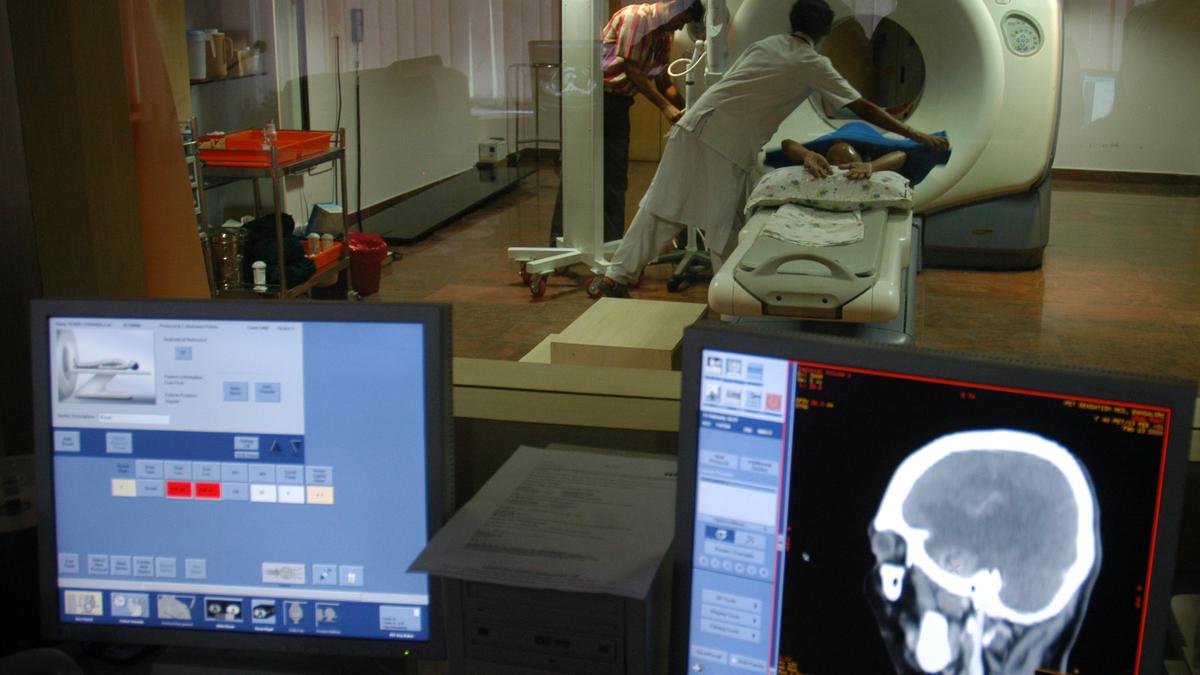
I visited my friend’s place recently after he had called me over to talk to his father, who had recently suffered a large vessel stroke. During my interaction, I noticed my friend’s father frequently breaking down. He was of the view that he had become a burden on his son.

The current World Health Organisation definition of stroke is to rapidly develop clinical signs of focal (or global) disturbance of cerebral function, lasting more than 24 hours or leading to death, with no apparent cause other than that of vascular origin.

The word ‘stroke’ was first introduced to medicine by William Cole in a 1689 essay entitled ‘A Physico-Medical Essay Concerning the Late Frequencies of Apoplexies’. Before Cole, the common term used to describe very acute non-traumatic brain injuries was ‘apoplexy’. It originated with Hippocrates circa 400 BC.

Stroke is associated with substantial neuropsychiatric morbidity including cognitive impairment, dementia, personality change, and mood disorders. Disability stemming from stroke is a mixture of physical, mental, and emotional manifestations. Neuropsychiatric features may be a result of the damage sustained by the brain or may be a function of the individual’s reaction to the handicaps imposed on them.

Robert Gaupp, a disciple of the noted German psychiatrist Emil Kraeplin, was the first to characterise forms of depression related to what he called “arteriosclerotic brain disease”. Later, Martin Roth suggested an association between atherosclerotic disease and depression, and in 1977 M.F. Folstein showed that depression was significantly more common among stroke survivors.

What are the clinical features of post-stroke depression?

There are several reasons outlined in the genesis of post-stroke depression. They include the location of the stroke, genetic factors, the availability of social support, and personality factors. The sudden onset of disability may trigger an emotional response. Brain injury and neurochemical changes may produce changes in the mood. Post-stroke depression as a result of a stroke is strongly associated with impairment in the activities of daily life. The individual may have a family history of depression or may have had a depressive episode prior to the stroke.

When diagnosing post-stroke depression, a clinician will have to rule out other pathologies that may mimic depression. Some stroke symptoms in hospitalised patients overlap with depressive symptoms, including weight loss, fatigue, and altered sleeping patterns. The clinician will need to look for other symptoms such as dysphoria, loss of pleasure in previously pleasurable activities (anhedonia), feelings of guilt or worthlessness, impaired concentration, inability to make decisions, and suicidal thoughts. Speech difficulties occur in about 30% of stroke patients, posing a major challenge to an accurate diagnosis of depression in stroke patients.

Classificatory systems, while far from perfect, have certain criteria for diagnosing post-stroke depression. For example, the DSM-5 describes post-stroke depression as a depressive disorder caused by another medical condition. This is defined as a “prominent and persistent period of depressed mood or markedly diminished interest and pleasure in all, or almost all, activities that predominates in the clinical picture”. As well, the depressive disorder should be “the direct pathophysiological consequence of another medical condition”.

A 2014 study estimated the frequency of post-stroke depression to be 31%. In fact, while many other studies have prepared different estimates, the majority zeroes in on a prevalence of around 30%. Gender is not a significant risk factor for post-stroke depression, although some studies have identified the sex as such.

How is post-stroke depression treated?

The treatment of post-stroke depression should ideally involve biological, psychological, social, and rehabilitation paradigms. Such holistic and comprehensive care may not always be feasible in resource-constrained settings.

Small studies have indicated the efficacy of cognitive behavioural therapy in reducing depressive symptoms in stroke patients. Some studies have considered novel technologies such as virtual reality and reported beneficial effects for individuals with post-stroke depression.

Behavioural activation therapy is based on prolonging the frequency of pleasant and enjoyable events, and this has shown some promising results. Similarly, reminiscence therapy, which is routinely employed in dementia, involves recalling prominent life events and pleasurable memories to enhance belonging. Researchers have shown that it can reduce the burden of depressive symptoms following a stroke. Brain stimulation modalities, such as repetitive transcranial magnetic stimulation (rTMS) and transcranial direct current stimulation (tDCS) among others, have also been shown to be effective in relieving post-stroke depression.

Along with the aforementioned interventions, psychiatrists also use antidepressants to treat post-stroke depression. There is sufficient and reliable evidence to show that these drugs can treat the condition efficaciously. But when doing so, the psychiatrist must carefully consider the type of antidepressant to be administered, and regularly monitor the individual.

The psychiatrist must also discuss the benefits and possible risks before initiating antidepressant therapy in individuals with post-stroke depression. There is also evidence to initiate antidepressant therapy prophylactically in stroke patients to prevent the onset of depression. 

Stroke is a common condition associated with significant morbidity. A common neuropsychiatric sequel of stroke is the occurrence of post-stroke depression. If left untreated, post-stroke depression can lead to a poor quality of life and further impair the individual’s life.

With the right treatment approaches, a full remission of depressive symptoms is possible. Stroke-ready hospitals and stroke physicians should work closely with neuropsychiatrists to facilitate better patient outcomes.

Stigma and lack of awareness regarding post-stroke depression can result in patients getting over-investigated and yet being under-treated. Evidence-based biological, psychological and social interventions delivered by psychiatrists can vastly improve the quality of life of patients. The aphorism “prevention is better than cure” should be readily applied to stroke and post-stroke depression.

Dr. Alok Kulkarni is a senior interventional neuropsychiatrist at the Manas Institute of Mental Health and Neurosciences at Hubli in Karnataka. He received the IMH Marshall Fellowship in Mood Disorders from the University of British Columbia, Vancouver.




Source link

Science Tags:antidepressants classification, antidepressants drugs, depression icd 10, old people care, post-stroke depression, stroke icd 10, stroke symptoms

Post navigation

Previous Post: Boxer Vijender Singh On Switching From Congress To BJP
Next Post: Ex-Cricket Star’s IPL Take On PM’s Rajasthan Speech Row

Related Posts

  • NASA’s Artemis II moonship returns home to its launch site after historic voyage
    NASA’s Artemis II moonship returns home to its launch site after historic voyage Science
  • Understanding insect societies with Bengaluru-based Raghavendra Gadagkar
    Understanding insect societies with Bengaluru-based Raghavendra Gadagkar Science
  • What is the butterfly effect?
    What is the butterfly effect? Science
  • Science Quiz | What computers need to compute: Logic gates
    Science Quiz | What computers need to compute: Logic gates Science
  • Pigs may be transmission route of rat hepatitis E to humans
    Pigs may be transmission route of rat hepatitis E to humans Science
  • Chandrayaan-4 to launch in 2027: Jitendra Singh
    Chandrayaan-4 to launch in 2027: Jitendra Singh Science

More Related Articles

A man received 217 COVID shots — what does his body teach us? A man received 217 COVID shots — what does his body teach us? Science
Gaganyaan mission: ISRO completes key engine test Gaganyaan mission: ISRO completes key engine test Science
Neither ecologically sustainable nor ethical, says study over translocation of African cheetahs to India Neither ecologically sustainable nor ethical, says study over translocation of African cheetahs to India Science
The many benefits of coconut The many benefits of coconut Science
Indore tragedy: why do EV batteries catch fire? | Explained Indore tragedy: why do EV batteries catch fire? | Explained Science
Ahead of COP-30, Brazil vows to “decouple” climate negotiations and implementation Ahead of COP-30, Brazil vows to “decouple” climate negotiations and implementation Science
SiteLock

Archives

  • May 2026
  • April 2026
  • March 2026
  • February 2026
  • January 2026
  • December 2025
  • November 2025
  • October 2025
  • September 2025
  • August 2025
  • July 2025
  • June 2025
  • May 2025
  • April 2025
  • March 2025
  • February 2025
  • January 2025
  • December 2024
  • November 2024
  • October 2024
  • September 2024
  • August 2024
  • July 2024
  • June 2024
  • May 2024
  • April 2024
  • March 2024
  • February 2024
  • January 2024
  • December 2023
  • November 2023
  • October 2023
  • September 2023
  • August 2023
  • July 2023
  • June 2023
  • May 2023
  • April 2023
  • March 2023
  • February 2023
  • January 2023
  • December 2022
  • November 2022
  • October 2022
  • September 2022
  • August 2022
  • July 2022
  • June 2022
  • May 2022

Categories

  • Business
  • Nation
  • Science
  • Sports
  • World

Recent Posts

  • Visakhapatnam Collector calls for inter-departmental synergy to boost investments
  • Kohli’s masterful knock powers Royal Challengers to the top
  • Vijay Narayan earns rare distinction of being Advocate General under two different governments
  • Learn from Sri Lanka’s experience on impact of fertilizer supply chains: experts
  • Sewage pollution of Cooum, groundwater depletion raise alarm

Recent Comments

  1. Leonardren on UP Teacher Who Asked Students To Slap Muslim Classmate
  2. NathanQuins on UP Teacher Who Asked Students To Slap Muslim Classmate
  3. Davidgof on UP Teacher Who Asked Students To Slap Muslim Classmate
  4. NathanJobre on UP Teacher Who Asked Students To Slap Muslim Classmate
  5. Davidcag on UP Teacher Who Asked Students To Slap Muslim Classmate
  • Mohammed Shami Likes Post Talking About India Player Who Faked Injury In World Cup To Play In IPL. Image Viral
    Mohammed Shami Likes Post Talking About India Player Who Faked Injury In World Cup To Play In IPL. Image Viral Sports
  • South Korean leaders seek calm after President Yoon Suk Yeol is impeached
    South Korean leaders seek calm after President Yoon Suk Yeol is impeached World
  • Access Denied World
  • “Heard I Was Marrying Mithali Raj”: Shikhar Dhawan Addresses Wild Rumour
    “Heard I Was Marrying Mithali Raj”: Shikhar Dhawan Addresses Wild Rumour Sports
  • Lower-Placed Teams In World Cup Under Pressure With New Rules In Place For Champions Trophy 2025 Qualification: Report
    Lower-Placed Teams In World Cup Under Pressure With New Rules In Place For Champions Trophy 2025 Qualification: Report Sports
  • After Chandrayaan Landing, Seer Wants Moon To Be Declared “Hindu Rashtra”
    After Chandrayaan Landing, Seer Wants Moon To Be Declared “Hindu Rashtra” Nation
  • Taliban investigates explosion close to Government buildings in Kabul
    Taliban investigates explosion close to Government buildings in Kabul World
  • Access Denied Business

Editor-in-Chief:
Mohammad Ariff,
MSW, MAJMC, BSW, DTL, CTS, CNM, CCR, CAL, RSL, ASOC.
editor@artifex.news

Associate Editors:
1. Zenellis R. Tuba,
zenelis@artifex.news
2. Haris Daniyel
daniyel@artifex.news

Photograher:
Rohan Das
rohan@artifex.news

Artifex.News offers Online Paid Internships to college students from India and Abroad. Interns will get a PRESS CARD and other online offers.
Send your CV (Subjectline: Paid Internship) to internship@artifex.news

Links:
Associate Journalism
About Us
Privacy Policy

News Links:
Breaking News
World
Nation
Sports
Business
Entertainment
Lifestyle

Registered Office:
72/A, Elliot Road, Kolkata - 700016
Tel: 033-22277777, 033-22172217
Email: office@artifex.news

Editorial Office / News Desk:
No. 13, Mezzanine Floor, Esplanade Metro Rail Station,
12 J. L. Nehru Road, Kolkata - 700069.
(Entry from Gate No. 5)
Tel: 033-46011099, 033-46046046
Email: editor@artifex.news

Copyright © 2023 Artifex.News Newsportal designed by Artifex Infotech.