
Skip to content
  • Facebook
  • X
  • Linkedin
  • WhatsApp
  • YouTube
  • Associate Journalism
  • About Us
  • Privacy Policy
  • 033-46046046
  • editor@artifex.news
Artifex.News

Artifex.News

Stay Connected. Stay Informed.

  • Breaking News
  • World
  • Nation
  • Sports
  • Business
  • Science
  • Entertainment
  • Lifestyle
  • Toggle search form
  • Access Denied Sports
  • Access Denied
    Access Denied Nation
  • Access Denied Business
  • “Don’t Think We’ll Ever See A Bowler To Match James Anderson”: ECB Chairperson Richard Thompson’s Huge Praise
    “Don’t Think We’ll Ever See A Bowler To Match James Anderson”: ECB Chairperson Richard Thompson’s Huge Praise Sports
  • Access Denied World
  • Namma Pride 2024: To the colours of love  
    Namma Pride 2024: To the colours of love   Nation
  • NASA IMAP to show how solar particles are energised and shield us
    NASA IMAP to show how solar particles are energised and shield us Science
  • Out On Picnic, 2 Army Officers Attacked, Their Friend Raped In Madhya Pradesh Mhow
    Out On Picnic, 2 Army Officers Attacked, Their Friend Raped In Madhya Pradesh Mhow Nation
Global space norms find a firm footing in India’s new re-entry rules

Global space norms find a firm footing in India’s new re-entry rules

Posted on August 23, 2026 By admin


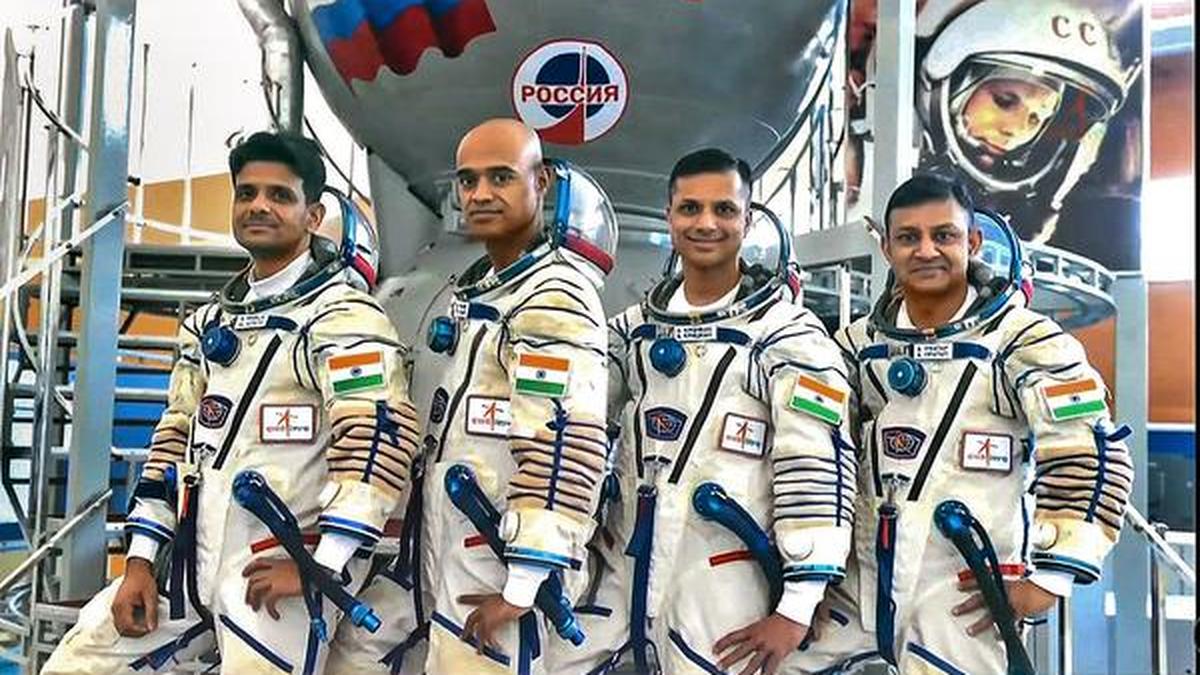
On August 23, India marked its third National Space Day, three years since the Chandrayaan-3 mission’s lunar lander ‘Vikram’ touched down in the moon’s south pole region.

Between then and Hyderabad-based Skyroot Aerospace launching India’s first privately built rocket to orbit, India has actually come a long way — even as it is also just beginning to regulate the responsibilities that follow from expanding its orbital footprint.

As part of this endeavour, and days after the success of Vikram-1, the Indian National Space Promotion and Authorisation Centre (IN-SPACe) released the country’s first guidelines on planned re-entry.

A sustainability problem

For many decades, there were few rocket launches and few new satellites in orbit every year, so there were also few re-entries, and most of them simply burned up in the atmosphere with little consequence. But today, low-earth orbits several thousand satellites, with private companies planning for many, many more. Satellite operators are also deliberately bringing satellites down at the end of their operational lives as part of post-mission disposal in great numbers.

A spacecraft returning to the earth has to negotiate many risks, including deviating from its planned path and breaking up into smaller pieces. It may also affect airspace and maritime zones and potentially crash in the territory or jurisdiction of another state.

Here, the idea of sustainability is important. The UN Guidelines for the Long-term Sustainability of Outer Space Activities define ‘sustainability’ as maintaining space activities while preserving the outer space environment for future generations. In this context, re-entry poses a question: how can an increasingly crowded orbital environment remain usable as more objects are launched, operated, and eventually brought back to the earth?  

Therefore, re-entry is a physics problem as well as a governance problem. And the new IN-SPACe guidelines are intended to give Indian operators clarity on how the Indian government expects them to solve these problems.

‘Conditions of permission’

The guidelines have three important elements.

(i) Accountability — Any Indian entity undertaking a planned re-entry, whether within or outside Indian territory, now requires the IN-SPACe’s authorisation. Non-Indian entities seeking to undertake planned re-entry over Indian territory must route the activity through an Indian-incorporated entity, such as a subsidiary, joint venture or partnership, which will be responsible for complying with Indian laws, regulations, and national security requirements.

This has been done because commercialisation creates an accountability gap: i.e. the spacecraft may belong to a private company but the consequences of its return can lie across maritime zones, and jurisdictions. And India has responded by attaching regulatory responsibility to a re-entering entity even before the risk materialises.

Objects designed to survive re-entry or intentionally controlled towards a particular landing or impact area also require separate authorisation. This is what makes a re-entry ‘planned’. On the other hand, objects expected to burn up, melt or fragment sufficiently during natural orbital decay do not count as a planned re-entry.

(ii) Risk must be acceptable — The guidelines say the expected casualty risk must remain below 1 in 10,000, supported by survivability and ground-casualty assessments.

As a result, operators have to analyse failure scenarios, fragmentation patterns, ballistic coefficients, de-orbit plans, flight-path angles, and danger zones, and share the results. They must also identify components likely to survive re-entry and hazardous systems such as batteries and pressure vessels.

By requiring quantitative studies and attaching a number to the acceptable risk threshold, the guidelines make sustainability measurable and thus trackable.

(iii) Permissions —Per the guidelines, IN-SPACe will re-verify the latest re-entry parameters approximately three months before the proposed operation. If planned re-entry is decided upon after launch, the operator must apply at least six months in advance. Operators must also obtain an IN-SPACe advisory note to issue warnings to airborne and marine vessels in the re-entry area at least 45 days before the re-entry begins.

If a re-entry site falls within the territorial control of a non-Indian state, including in its exclusive economic zones, the applicant must also submit the relevant clearance or authorisation from that state.

Changes to the approved trajectory, timing or danger zone may also demand revised notifications and changes to the authorisation.

These checkpoints ensure that the regulator has fixed windows and mechanisms to intervene when the re-entry parameters change after the mission has launched or the risk pattern has changed for some reason.

Soft law to domestic rule

For nearly two decades, the international community has developed principles for sustainable space activities. Notable among them are the Inter-Agency Space Debris Coordination Committee’s ‘Space Debris Mitigation Guidelines’ and the ‘Guidelines for the Long-term Sustainability of Outer Space Activities’ of the U.N. Committee for the Peaceful Uses of Outer Space. Article IX of the Outer Space Treaty 1967 also provides an important foundation for environmental responsibility.

However, most of the contemporary sustainability architecture works on guidelines and other similar forms of ‘soft law’, which operators are not obligated to follow.

The IN-SPACe guidelines solve this problem for India by tying an operator’s fragmentation analysis and insurance policies to the national regulator.

The guidelines also address the financial risks that follow from the Space Liability Convention 1972, which places absolute liability on a launching state for damage caused by its space object on the surface of the earth or to aircraft in flight.

The IN-SPACe guidelines, on the other hand, require operators to undertake planned re-entries at their own risk and say they remain liable for third-party damage and claims. They also indemnify the Government of India and its agencies for liability incurred under India’s international commitments while satisfying the applicable third-party insurance requirements.

Taken together, the IN-SPACe guidelines translate international principles into obligations that private operators in India must satisfy before the government gives them permission to act.

Shrawani Shagun is a researcher focusing on environmental sustainability and space governance.

Published – August 24, 2026 09:00 am IST


Source link

Science

Post navigation

Previous Post: Proposal to make Muvattupuzha a district will be considered, says Keralam Chief Minister V.D. Satheesan
Next Post: Science Snapshots: August 23, 2026

Related Posts

  • The joint India-U.S. mission to fly two Gaganyatris to the ISS | Explained
    The joint India-U.S. mission to fly two Gaganyatris to the ISS | Explained Science
  • Primates often gave birth to twins 60M years ago: new research
    Primates often gave birth to twins 60M years ago: new research Science
  • ‘It’s like writing a poem’: prize winner Rajula Srivastava on doing maths
    ‘It’s like writing a poem’: prize winner Rajula Srivastava on doing maths Science
  • Cracking the mystery of how the chemical origins of life formed
    Cracking the mystery of how the chemical origins of life formed Science
  • GSAT-7R will strengthen Indian Navy’s surveillance and communication in the Indian Ocean Region
    GSAT-7R will strengthen Indian Navy’s surveillance and communication in the Indian Ocean Region Science
  • What next for ISRO after Chandrayaan-3 mission?
    What next for ISRO after Chandrayaan-3 mission? Science

More Related Articles

Scientists brace for a ’flood of junk’ papers written with AI help Scientists brace for a ’flood of junk’ papers written with AI help Science
After 180 years, clues reveal how general anaesthesia works in the brain After 180 years, clues reveal how general anaesthesia works in the brain Science
NIMHANS to arrange first-in-the-world mind and thoughts museum NIMHANS to arrange first-in-the-world mind and thoughts museum Science
Study unravels why men experience more skin infections than women Study unravels why men experience more skin infections than women Science
Does 2022 H5N1 bind, replicate better in the respiratory tract? Does 2022 H5N1 bind, replicate better in the respiratory tract? Science
South African study suggests a ‘distinct echo’ attracted ancient artists to one site South African study suggests a ‘distinct echo’ attracted ancient artists to one site Science
SiteLock

Archives

  • September 2026
  • August 2026
  • July 2026
  • June 2026
  • May 2026
  • April 2026
  • March 2026
  • February 2026
  • January 2026
  • December 2025
  • November 2025
  • October 2025
  • September 2025
  • August 2025
  • July 2025
  • June 2025
  • May 2025
  • April 2025
  • March 2025
  • February 2025
  • January 2025
  • December 2024
  • November 2024
  • October 2024
  • September 2024
  • August 2024
  • July 2024
  • June 2024
  • May 2024
  • April 2024
  • March 2024
  • February 2024
  • January 2024
  • December 2023
  • November 2023
  • October 2023
  • September 2023
  • August 2023
  • July 2023
  • June 2023
  • May 2023
  • April 2023
  • March 2023
  • February 2023
  • January 2023
  • December 2022
  • November 2022
  • October 2022
  • September 2022
  • August 2022
  • July 2022
  • June 2022
  • May 2022

Categories

  • Business
  • Nation
  • Science
  • Sports
  • World

Recent Posts

  • IIT Bombay faculty member booked for caste abuse, suicide abetment
  • Arjun finds form as India beats Spain; Savitha stars for women
  • CWC chief flags ‘malpractices’ in phytosanitary certification, pitches integrated logistics to boost agri-exports
  • Handloom weavers block Tenkasi-Madurai road
  • Ecologists urge scientists and policymakers to study imminent ‘Super’ El Niño to prepare for the future

Recent Comments

  1. AlvinNet on UP Teacher Who Asked Students To Slap Muslim Classmate
  2. AlvinNet on UP Teacher Who Asked Students To Slap Muslim Classmate
  3. Jamesslits on UP Teacher Who Asked Students To Slap Muslim Classmate
  4. MichaelClear on UP Teacher Who Asked Students To Slap Muslim Classmate
  5. Jamesslits on UP Teacher Who Asked Students To Slap Muslim Classmate
  • Access Denied
    Access Denied Nation
  • India joins the FIFA momentum
    India joins the FIFA momentum Sports
  • Access Denied Business
  • About 90 ships have crossed Strait of Hormuz so far as Iran exports millions of barrels of oil despite war
    About 90 ships have crossed Strait of Hormuz so far as Iran exports millions of barrels of oil despite war World
  • Russia will welcome India’s efforts toward peaceful resolution of Ukraine conflict: Peskov
    Russia will welcome India’s efforts toward peaceful resolution of Ukraine conflict: Peskov Nation
  • ED raids against AAP leader in Delhi
    ED raids against AAP leader in Delhi Nation
  • Access Denied
    Access Denied Nation
  • Access Denied
    Access Denied Nation

Editor-in-Chief:
Mohammad Ariff,
MSW, MAJMC, BSW, DTL, CTS, CNM, CCR, CAL, RSL, ASOC.
editor@artifex.news

Associate Editors:
1. Zenellis R. Tuba,
zenelis@artifex.news
2. Haris Daniyel
daniyel@artifex.news

Photograher:
Rohan Das
rohan@artifex.news

Artifex.News offers Online Paid Internships to college students from India and Abroad. Interns will get a PRESS CARD and other online offers.
Send your CV (Subjectline: Paid Internship) to internship@artifex.news

Links:
Associate Journalism
About Us
Privacy Policy

News Links:
Breaking News
World
Nation
Sports
Business
Entertainment
Lifestyle

Registered Office:
72/A, Elliot Road, Kolkata - 700016
Tel: 033-22277777, 033-22172217
Email: office@artifex.news

Editorial Office / News Desk:
No. 13, Mezzanine Floor, Esplanade Metro Rail Station,
12 J. L. Nehru Road, Kolkata - 700069.
(Entry from Gate No. 5)
Tel: 033-46011099, 033-46046046
Email: editor@artifex.news

Copyright © 2023 Artifex.News Newsportal designed by Artifex Infotech.