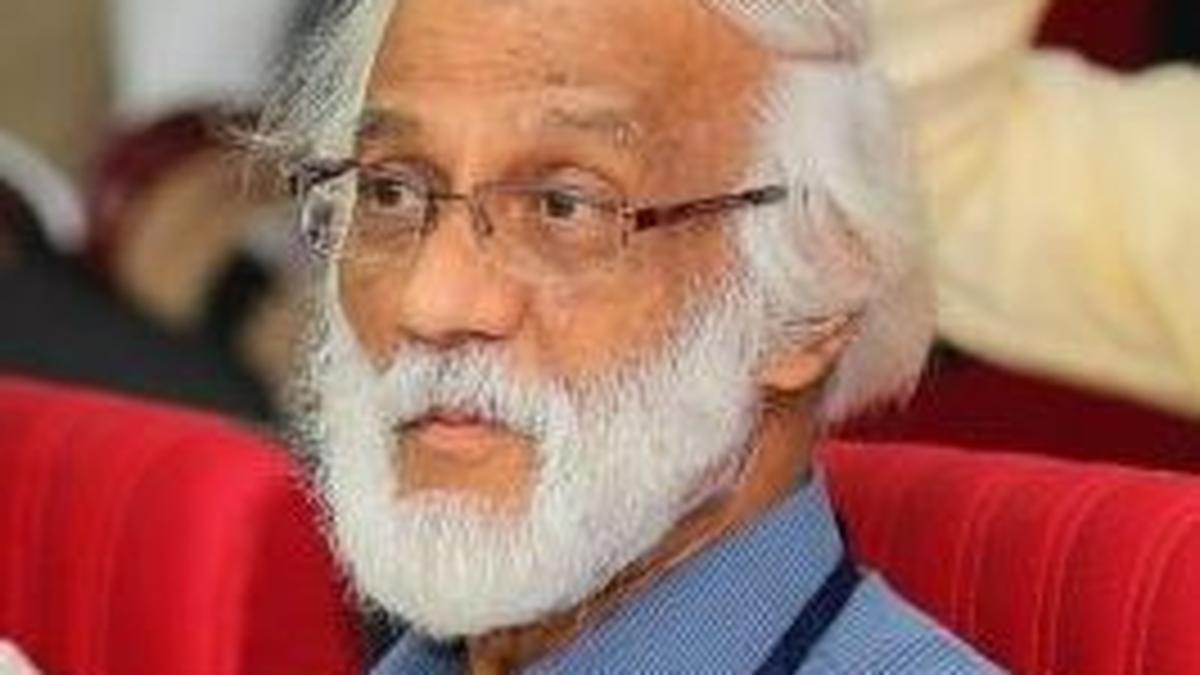




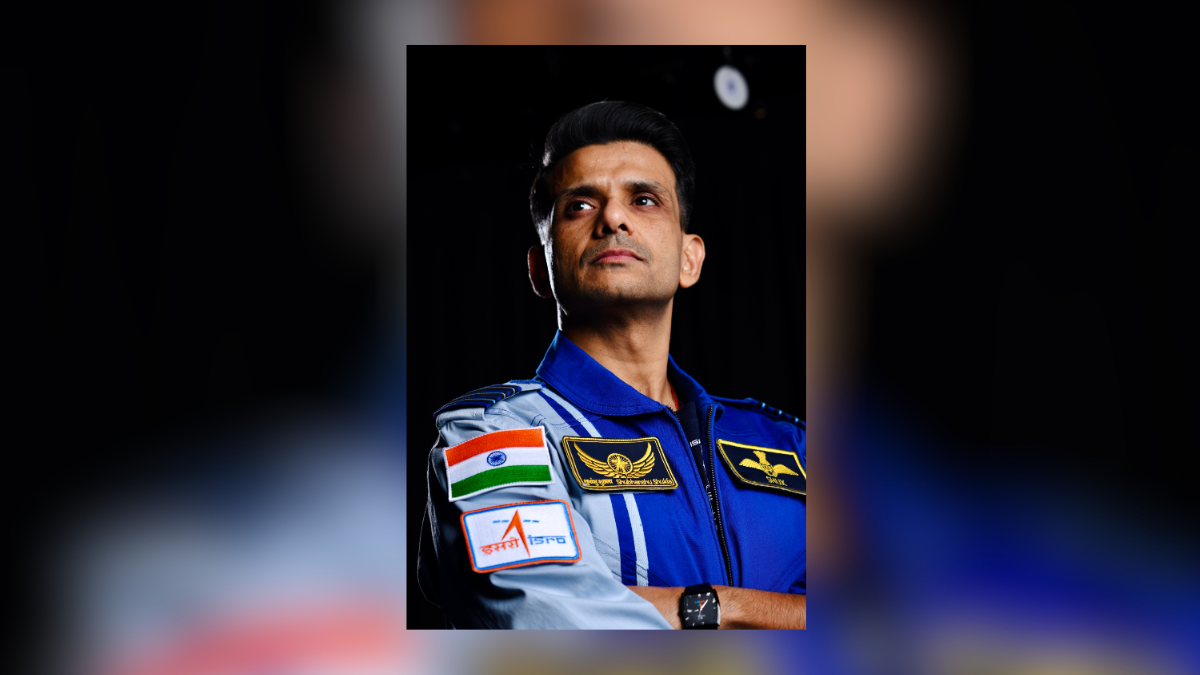
From the moment he was announced as one of the four astronaut-candidates for India’s maiden human spaceflight programme Gaganyaan, Air Force test pilot Shubhanshu Shukla has been a prolific science communicator. His social media feed is full of amusing yet enlightening quips, videos, and posts about what going to space has been like for him.
In his new book, The Second Orbit, Shukla adds a personal touch. His journey begins from being a boy in Lucknow too paralysed by doubt to enter a handwriting competition and ends — figuratively — with being a man “encased in fire” as he plummeted through the atmosphere. But in between, he goes past the sterile trope of a ‘hero’ to talk about his body’s “quiet mutiny” and the ego-stripping lessons of teamwork. In an email interview, he speaks about why he wrote this book and the bureaucracy of space travel. Edited excerpts:

Why did you write a book?

I believe the journey belonged to everyone, not just to me. I may have been the one strapped into the seat, but the aspiration behind that seat was always a shared story. Second, I wanted to make something very clear to young readers: every great journey begins somewhere ordinary. Mine began in a classroom. I wanted them to know that theirs can too.
You spend a lot of time in your book describing a communication failure during a kayaking exercise in Baja California. In a professional culture that often demands a perfect persona, how did it feel to commit that specific failure to print, and what have you learnt about the relationship between admitting mistakes and building teams?
The kayaking episode is, in many ways, the most important story in the book precisely because it is the most uncomfortable one. Here are highly trained people — people selected through extraordinarily rigorous processes — paddling in the wrong direction. Mistakes are not the opposite of excellence; they are frequently the path to it. And when we pretend otherwise, we do a particular kind of damage to every young person watching, who then concludes that their own stumbles are evidence of inadequacy rather than evidence of being human. I wanted to put that failure in print so that someone, somewhere, reads it and feels just a little less alone in their own.
For the millions of Indian students who currently feel ‘average’ or ‘mediocre’ because of their exam scores, how do you hope your story redefines their understanding of what potential actually looks like?
When we are young, we are handed a single ruler and told to measure everything with it — and for many of us, we come up short. I did too. What I want every student who feels ‘average’ to understand is that the trajectory of a life is not determined in a classroom in Class 10 — it is determined by the decision to keep going anyway. Dream big. And never, ever give up.
The book uses wonderful domestic analogies like the “water hat” or the “train on a fixed track” to demystify space. As someone who has spent years in the highly technical worlds of the IAF and ISRO, what was the hardest part about translating the almost spiritual reality of space into a language accessible to people at large?
The hardest part was resisting the temptation to rely on technical language. In professional life, precise terminology protects you. But in a book that is meant to invite people in, that same language becomes a wall. So the challenge was to find the courage to be simple. To trust that a “water hat” or a “train on a fixed track” could carry the weight of an experience that no existing vocabulary was ever really designed to describe. I found that once I committed to that approach, the analogies came more naturally than I expected. Whether they succeed is, of course, for the reader to decide.
You provide a candid account of the body’s “mutiny” in space, from “puffy face syndrome” to the pain of your spine literally stretching. How did experiencing this profound physical vulnerability change your perception of yourself as a pilot?
It humbled me, and I mean that in the best possible sense. As pilots, we are trained to manage our physical environment — to work with the body’s limits, to push through discomfort, to stay sharp when the machine around you is demanding everything you have. But spaceflight introduces a different kind of reckoning. Your spine stretches. Your face puffs. Your sense of direction becomes negotiable. The body, quite simply, was not designed for this — and it lets you know that.
I became more respectful of vulnerability, in myself and in others. The cockpit is not a comfortable place, but it is a familiar one. Space strips away familiarity entirely. And in doing so, it teaches you something that no amount of training can fully prepare you for — that being comfortable with being uncomfortable is not a coping mechanism; it is a way of life.
You have been the most prolific communicator among the Gaganyaan astronaut-candidates. Does the role of being a “conduit for national aspiration” ever feel like a second spacesuit — one that is perhaps heavier or more restrictive than the physical one you wore during launch? How do you maintain your personal interiority when so much of your experience is now part of a public and state-driven narrative?
That is a beautiful and rather precise analogy — and I say that having worn both. The spacesuit, at least, comes off at the end of the day. But I want to be honest: I don’t experience the public role as a burden, because I genuinely believe in what it represents. India’s journey into space is not a government project; it is a civilisational aspiration. Being a small part of how that story is told feels like a privilege.
As for maintaining my interiority — my family does that for me without even trying. And I think that is the most important orbit of all — the one that keeps bringing you back to who you actually are.
What is one thing you encountered in the bureaucracy of international space travel that you think could be improved to make the journey easier for the next generation of Indian astronauts?
What struck me most is how much the bureaucracy of space travel still reflects the geopolitical boundaries of Earth — which is somewhat ironic, given that the moment you actually leave Earth, those boundaries become invisible. I believe the next frontier for space exploration is the cultivation of what I would call an Earth culture: a shared identity and a shared sense of responsibility that transcends national interest. The more we can build that culture into the institutions and frameworks of international space collaboration, the easier the journey becomes for every astronaut, from every country, who comes after us.
Now that you are back on Earth, what’s the one space habit or shift in perspective you find most difficult to let go of?
The shift in scale. When you have looked at Earth from the outside, it becomes very difficult to treat small problems as large ones. I still get unsettled by things, but I now have a different relationship with my own unsettledness. I have learned to let the issue sit for a moment before I react to it — and in that pause, more often than not, the urgency quietly dissolves. Whether that counts as wisdom or detachment, I cannot say. But it has made me calmer.
A striking image in the book is you becoming a “human centrifuge” to get bubbles out of a syringe. Having gone from a student who hated chemistry in Lucknow to a man performing it while suspended sideways on a wall, what would you like the Indian scientific community to understand about the labour of science?
That image still makes me smile — partly because of how absurd it must look, and partly because of how perfectly it captures how science is, at its heart, physical and frequently undignified. The scientific community already understands this labour intimately — they live it every day, in ways that rarely make headlines. What I would gently offer them is this: the next great leap for Indian science will not come from any single institution or any individual discovery. It will come from alignment in the direction of a shared national ambition. We have everything we need. We now need to point it all in the same direction.
mukunth.v@thehindu.co.in
Published – July 13, 2026 11:34 am IST