

Skip to content
  • Facebook
  • X
  • Linkedin
  • WhatsApp
  • YouTube
  • Associate Journalism
  • About Us
  • Privacy Policy
  • 033-46046046
  • editor@artifex.news
Artifex.News

Artifex.News

Stay Connected. Stay Informed.

  • Breaking News
  • World
  • Nation
  • Sports
  • Business
  • Science
  • Entertainment
  • Lifestyle
  • Toggle search form
  • Access Denied
    Access Denied Nation
  • First January 6 Rioter To Breach US Capitol Jailed For More Than 4 Years
    First January 6 Rioter To Breach US Capitol Jailed For More Than 4 Years World
  • Police halt demolition drive in Jammu briefly to retrieve national flag
    Police halt demolition drive in Jammu briefly to retrieve national flag Nation
  • Access Denied
    Access Denied Nation
  • Don’t feel secure in sending our team to India, next step depends on ICC’s response: BCB president
    Don’t feel secure in sending our team to India, next step depends on ICC’s response: BCB president World
  • Access Denied
    Access Denied Nation
  • Access Denied
    Access Denied Nation
  • 240 mobile phones recovered by Puducherry police handed over to owners
    240 mobile phones recovered by Puducherry police handed over to owners Nation
Read the rocks to improve India’s geological literacy

Read the rocks to improve India’s geological literacy

Posted on June 26, 2024 By admin


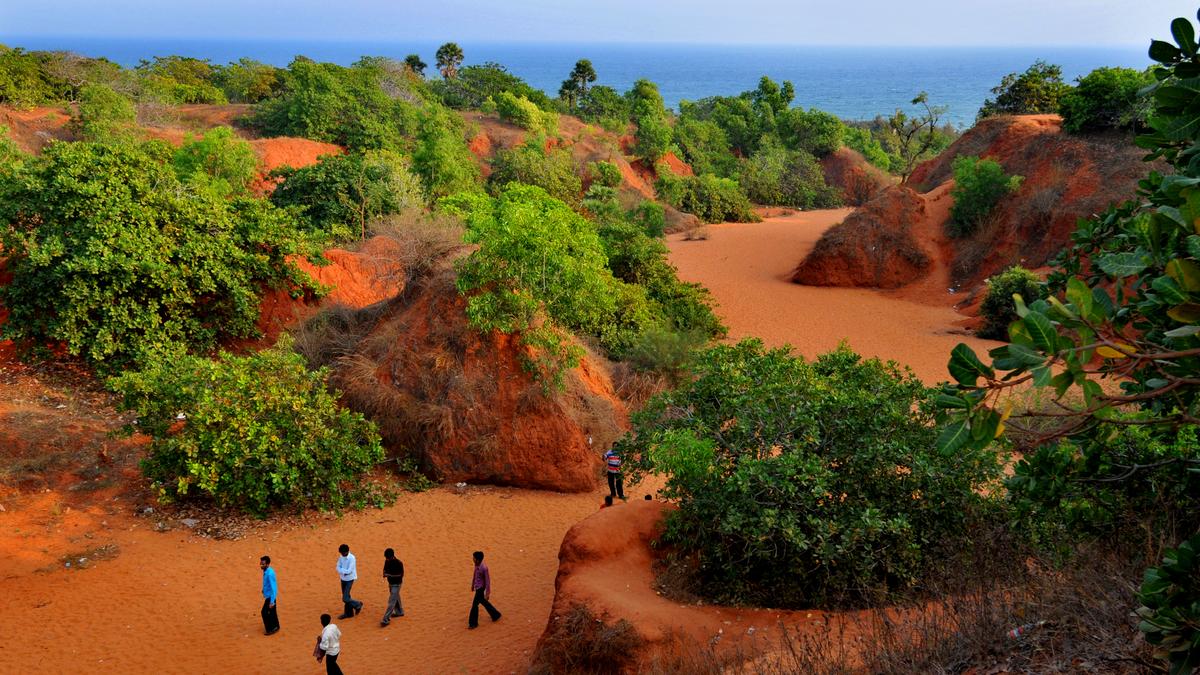
At the stretch between Visakhapatnam and Bhimili
| Photo Credit: The Hindu

With landscapes that range from the world’s greatest peaks to low-lying coastal plains, India showcases a diverse morphology that has evolved over billions of years. In several places, we find a variety of rocks and minerals and distinctive fossil assemblages. These geological features and landscapes tell us the spectacular ‘origin’ stories derived not from mythology but from scientific interpretations. India’s tumultuous geological past is recorded in its rocks and terrains and should be considered as our non-cultural heritage. India offers many such examples. Geo-heritage sites are educational spaces where people acquire much needed geological literacy, especially when India’s collective regard for this legacy is abysmal.

Scant traction in India

Geological conservation seeks to ensure the survival of the best representative examples of India’s geological features and events so that present and future generations can appreciate more of the world’s best natural laboratories. Despite international progress in this field, geo-conservation has not found much traction in India. Many fossil-bearing sites have been destroyed in the name of development and real estate growth, Destructive stone mining activities also add to this misery. The magnitude of these activities is evident from the fact that the area covered under stone-mining operations exceeds more than 10% of the total area of India.


Also read | Why the Indian subcontinent is a geological museum like no other

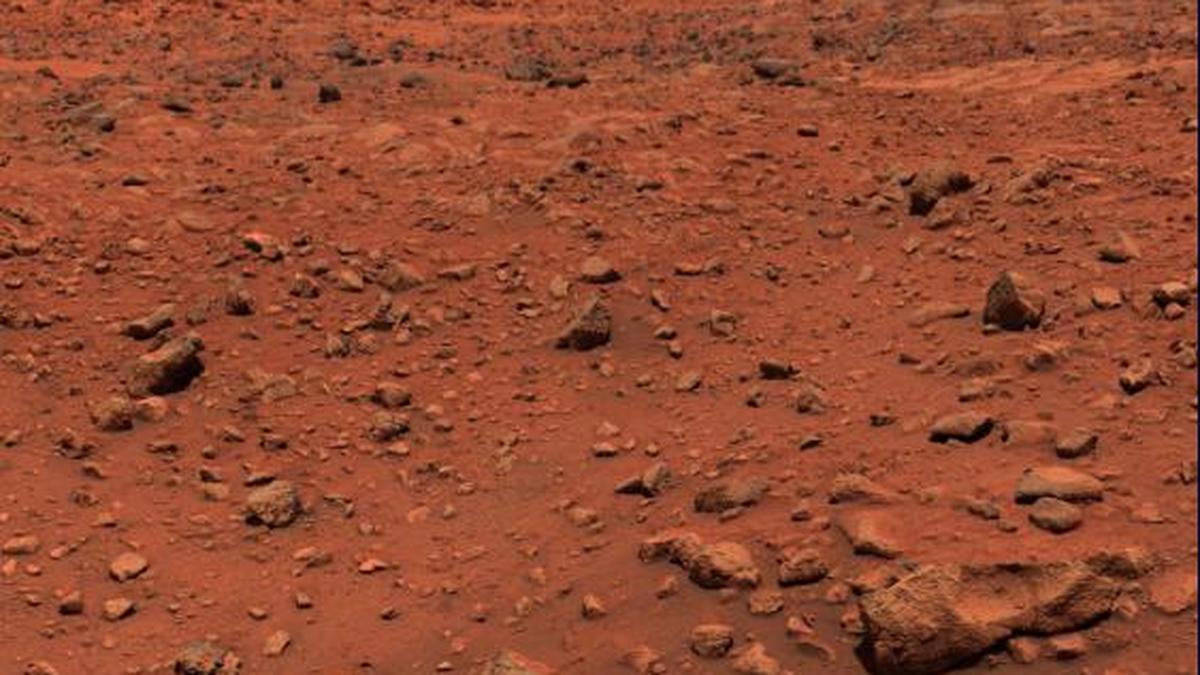
These geological features tell us how the land we are so familiar with came to be, and are part of an evolutionary history that has made Indian terrane what it is today. Ironically, on the one hand, we reach out to Mars in search of evidence for early life but on the other, we destroy such proof that is so precious and right in our backyard. How many of us know about the little-known Dhala meteoritic impact crater in Shivpuri, Madhya Pradesh? This between 1.5 billion to 2.5 billion-year-old crater is evidence of a celestial collision when life must have begun. The more famous Lonar crater in Buldhana district of Maharashtra was earlier dated to be about 50,000 years old, and a recent study suggests its origin around 5,76,000 years ago.

The importance of the shared geological heritage of our planet was first recognised in 1991 at a UNESCO-sponsored event, ‘First International Symposium on the Conservation of our Geological Heritage’. The delegates assembled in Digne, France, endorsed the concept of a shared legacy: “Man and the Earth share a common heritage, of which we and our governments are but the custodians”. This declaration foresaw the establishment of geo-parks as sites that commemorate unique geological features and landscapes within their assigned territories; and as spaces that educate the public on geological importance.

Geo-heritage sites in many countries such as Canada, China, Spain, the United States and the United Kingdom have been developed as national parks. UNESCO has also prepared guidelines for the development of geo-parks. Many countries also have the necessary legislation to build, protect and designate geo-parks. Europe celebrates its geological heritage across 73 zones. Japan offers another good lesson in such conservation. Today, there are 169 Global Geoparks across 44 countries. Thailand and Vietnam have also implemented laws to conserve their geological and natural heritage. Though a signatory, India has no such legislation or policy for geo-heritage conservation.

This situation calls for sustainable conservation approaches, such as those we have been able to formulate to protect biodiversity. The Biological Diversity Act was implemented in 2002 and there are now 18 notified biosphere reserves in India. Although the Geological Survey of India (GSI) has notified 34 geological monuments, it lacks the regulatory powers to implement the preservation measures. A recent development in the case of a cliff in Varkala in Thiruvananthapuram district, Kerala, is a typical example. This cliff which overlooks the Arabian Sea is made up of rocks deposited millions of years ago and has been declared by the GSI as a geological heritage site. To save some unauthorised structures, the district administration recently demolished a part of this cliff citing landslide hazards. Many such features around the country face such survival threats.

Half-hearted measures

The Government of India has attempted to address these concerns on some occasions. In 2009, there was a half-hearted attempt to constitute a National Commission for Heritage Sites through a Bill introduced in the Rajya Sabha. Though it was eventually referred to the Standing Committee, the government backtracked on it for some unstated reasons and the Bill was withdrawn. The Bill was meant to constitute a national commission to implement the stipulations of the UNESCO World Heritage Convention 1972 and to create a national roster of heritage sites. More recently, in 2022, the Ministry of Mines has prepared a draft Bill for preservation and maintenance, but no further progress on this has been heard. As the annexure to the Draft Geoheritage Sites and Geo-relics (Preservation and Maintenance) Bill, 2022 says, “In sharp contrast to the well laid out protection and conservation measures addressed with relevant legislation on archaeological and historical monuments and cultural heritage sites, India does not have any specific and specialized policy or law to conserve and preserve the geoheritage sites and geo-relics for future generations.”

Specifically, India needs the following at the earliest: first, create an inventory of all prospective geo-sites in the country (in addition to the 34 sites identified by the GSI); second, frame geo-conservation legislation for the country along the lines of the Biological Diversity Act 2002; and third, have a ‘National Geo-Conservation Authority’ along the lines of the National Biodiversity Authority, with independent observers, while ensuring that the establishment will not lead to red tape and encroach on the autonomy of researchers and academically-inclined private collectors.

C.P. Rajendran is an adjunct professor at the National Institute of Advanced Studies, Bengaluru and the Director of the Consortium for Sustainable Development, Connecticut, U.S.


Source link

Science Tags:Biological Diversity Act, cliff in Varkala in Thiruvananthapuram district Kerala, development and real estate growth, Dhala meteoritic impact crater, Draft Geoheritage Sites and Geo-relics (Preservation and Maintenance) Bill, First International Symposium on the Conservation of our Geological Heritage, fossil assemblages, fossil-bearing sites, geo-conservation and India, Geo-heritage sites and educational spaces, Geological conservation, geological features and landscapes and scientific interpretations, geological literacy, Geological Survey of India and geological monuments, Global Geoparks, India and diverse morphology, Lonar crater in Buldhana district of Maharashtra, UNESCO guidelines and development of geo-parks, UNESCO World Heritage Convention, UNESCO-sponsored event, variety of rocks and minerals

Post navigation

Previous Post: Jailed Maoist Leader in Bengal Appears For PhD Interview
Next Post: Belgium To Face France, Ukraine Bow Out Of Euro 2024

Related Posts

  • Do giraffes really struggle with slopes?
    Do giraffes really struggle with slopes? Science
  • CCMB scientists identify metabolism as new target for antifungal therapies
    CCMB scientists identify metabolism as new target for antifungal therapies Science
  • AI’s Cassandra moment
    AI’s Cassandra moment Science
  • Why ISRO’s next big challenge is to succeed on an industrial scale
    Why ISRO’s next big challenge is to succeed on an industrial scale Science
  • If DNA is the instruction manual, we just opened a big second volume
    If DNA is the instruction manual, we just opened a big second volume Science
  • Watch: ‘A great honour, privilege and opportunity’, says new ISRO chairman V. Narayanan
    Watch: ‘A great honour, privilege and opportunity’, says new ISRO chairman V. Narayanan Science

More Related Articles

Semaglutide guidelines based on BMI may exclude at-risk Indians Semaglutide guidelines based on BMI may exclude at-risk Indians Science
Proba-3 mission would significantly advance understanding of Sun’s Corona: Ex-ISRO scientist Proba-3 mission would significantly advance understanding of Sun’s Corona: Ex-ISRO scientist Science
Marine heatwave killed four million Alaska seabirds Marine heatwave killed four million Alaska seabirds Science
Sci-five | The Hindu Science Quiz: On the first cat in space Sci-five | The Hindu Science Quiz: On the first cat in space Science
Why did metal-organic frameworks win the 2025 chemistry Nobel? Why did metal-organic frameworks win the 2025 chemistry Nobel? Science
The first breath, at scale: on Nationwide Neonatal Resuscitation Program Day 2026 The first breath, at scale: on Nationwide Neonatal Resuscitation Program Day 2026 Science
SiteLock

Archives

  • September 2026
  • August 2026
  • July 2026
  • June 2026
  • May 2026
  • April 2026
  • March 2026
  • February 2026
  • January 2026
  • December 2025
  • November 2025
  • October 2025
  • September 2025
  • August 2025
  • July 2025
  • June 2025
  • May 2025
  • April 2025
  • March 2025
  • February 2025
  • January 2025
  • December 2024
  • November 2024
  • October 2024
  • September 2024
  • August 2024
  • July 2024
  • June 2024
  • May 2024
  • April 2024
  • March 2024
  • February 2024
  • January 2024
  • December 2023
  • November 2023
  • October 2023
  • September 2023
  • August 2023
  • July 2023
  • June 2023
  • May 2023
  • April 2023
  • March 2023
  • February 2023
  • January 2023
  • December 2022
  • November 2022
  • October 2022
  • September 2022
  • August 2022
  • July 2022
  • June 2022
  • May 2022

Categories

  • Business
  • Nation
  • Science
  • Sports
  • World

Recent Posts

  • Arsenal thrashed by Brighton, sorry Spurs lose again
  • Shamli Police book six over alleged ‘misleading’ social media posts on Ayush Malik High Court proceedings
  • What is the India-Pakistan conflict at sea about? | Explained
  • Why has U.S. deployed ‘space weapons’? |Explained
  • How will the U.S.’s Sanctioning Act affect India? | Explained

Recent Comments

  1. AlvinNet on UP Teacher Who Asked Students To Slap Muslim Classmate
  2. AlvinNet on UP Teacher Who Asked Students To Slap Muslim Classmate
  3. Jamesslits on UP Teacher Who Asked Students To Slap Muslim Classmate
  4. MichaelClear on UP Teacher Who Asked Students To Slap Muslim Classmate
  5. Jamesslits on UP Teacher Who Asked Students To Slap Muslim Classmate
  • ISRO completes first integrated air drop test for Gaganyaan
    ISRO completes first integrated air drop test for Gaganyaan Science
  • Access Denied
    Access Denied Nation
  • Asia Cup 2023 final | Siraj storm blows away the Sri Lankans, India sprints to title
    Asia Cup 2023 final | Siraj storm blows away the Sri Lankans, India sprints to title Sports
  • Defence Minister Rajnath Singh To Commission Navy’s New Frigate ‘INS Tushil’ In Russia Today
    Defence Minister Rajnath Singh To Commission Navy’s New Frigate ‘INS Tushil’ In Russia Today Nation
  • UP Groom Goes Missing Before Wedding, Then Taken Hostage By Bride’s Family
    UP Groom Goes Missing Before Wedding, Then Taken Hostage By Bride’s Family Nation
  • The simple medical tools of an OPD visit | Explained
    The simple medical tools of an OPD visit | Explained Science
  • Shakib Al Hasan Banned From Bowling By England Cricket Board Over “Illegal Action”: Report
    Shakib Al Hasan Banned From Bowling By England Cricket Board Over “Illegal Action”: Report Sports
  • Access Denied Sports

Editor-in-Chief:
Mohammad Ariff,
MSW, MAJMC, BSW, DTL, CTS, CNM, CCR, CAL, RSL, ASOC.
editor@artifex.news

Associate Editors:
1. Zenellis R. Tuba,
zenelis@artifex.news
2. Haris Daniyel
daniyel@artifex.news

Photograher:
Rohan Das
rohan@artifex.news

Artifex.News offers Online Paid Internships to college students from India and Abroad. Interns will get a PRESS CARD and other online offers.
Send your CV (Subjectline: Paid Internship) to internship@artifex.news

Links:
Associate Journalism
About Us
Privacy Policy

News Links:
Breaking News
World
Nation
Sports
Business
Entertainment
Lifestyle

Registered Office:
72/A, Elliot Road, Kolkata - 700016
Tel: 033-22277777, 033-22172217
Email: office@artifex.news

Editorial Office / News Desk:
No. 13, Mezzanine Floor, Esplanade Metro Rail Station,
12 J. L. Nehru Road, Kolkata - 700069.
(Entry from Gate No. 5)
Tel: 033-46011099, 033-46046046
Email: editor@artifex.news

Copyright © 2023 Artifex.News Newsportal designed by Artifex Infotech.