


Skip to content
  • Facebook
  • X
  • Linkedin
  • WhatsApp
  • YouTube
  • Associate Journalism
  • About Us
  • Privacy Policy
  • 033-46046046
  • editor@artifex.news
Artifex.News

Artifex.News

Stay Connected. Stay Informed.

  • Breaking News
  • World
  • Nation
  • Sports
  • Business
  • Science
  • Entertainment
  • Lifestyle
  • Toggle search form
  • Historic Steps Will Be Seen In Budget
    Historic Steps Will Be Seen In Budget Nation
  • Access Denied Sports
  • Access Denied
    Access Denied Nation
  • Gujarat Titans vs Delhi Capitals, IPL 2024: Match Preview, Fantasy Picks, Pitch And Weather Reports
    Gujarat Titans vs Delhi Capitals, IPL 2024: Match Preview, Fantasy Picks, Pitch And Weather Reports Sports
  • Paul Pogba’s Juventus Contract Terminated Despite Doping Ban Reduction
    Paul Pogba’s Juventus Contract Terminated Despite Doping Ban Reduction Sports
  • World Leaders Pay Tribute To Former PM Dr Manmohan Singh
    World Leaders Pay Tribute To Former PM Dr Manmohan Singh Nation
  • Interim Budget 2024 | Thrust for PM Vishwakarma Scheme, cluster projects for MSMEs
    Interim Budget 2024 | Thrust for PM Vishwakarma Scheme, cluster projects for MSMEs Business
  • Access Denied Sports
RRI technique yields certified randomness with one qubit

RRI technique yields certified randomness with one qubit

Posted on October 11, 2025 By admin


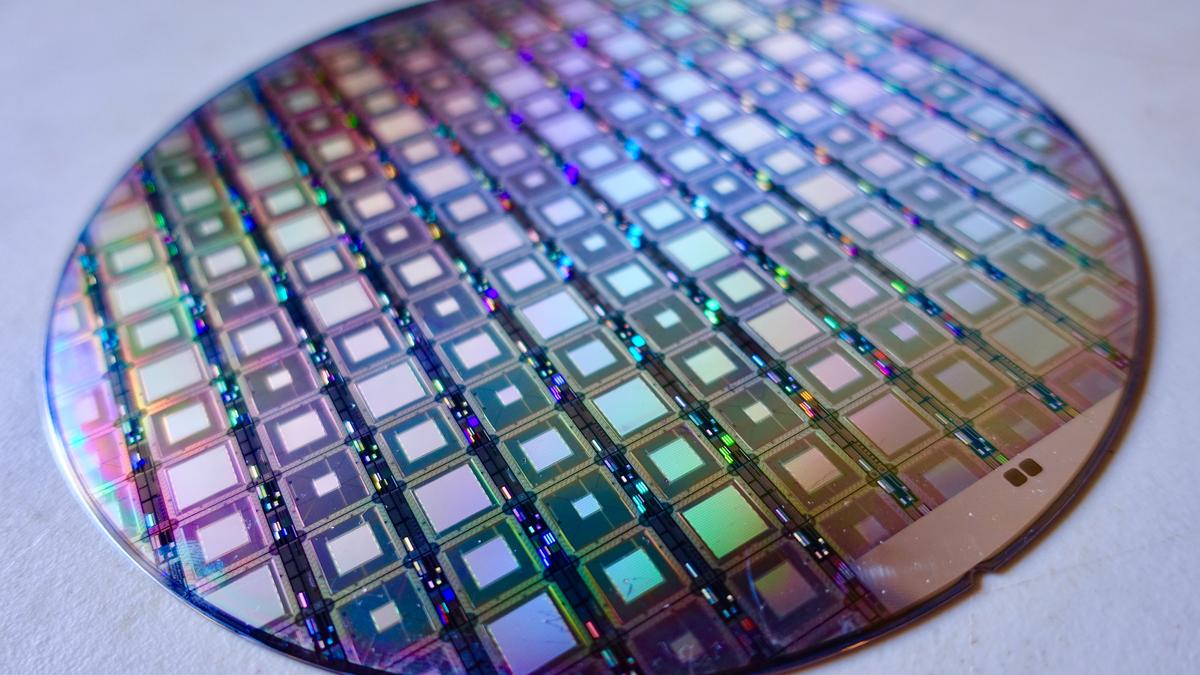
A wafer of quantum computers. Representative image.
| Photo Credit: Steve Jurvetson

Randomness is essential today. From encrypting sensitive information to simulating biological systems, unpredictable numbers are indispensable. Yet most everyday random numbers aren’t truly random. Conventional computers use algorithms called pseudorandom number generators to produce sequences that look random but are ultimately predictable if the starting ‘seed’ is known. For applications such as cryptography, this predictability is dangerous because attackers could exploit it.

True random number generators try to solve this using physical processes such as electronic noise or radioactive decay, which can’t be predetermined. But these devices aren’t free of problems either: they degrade over time like any hardware, and also need users to trust manufacturers to not have secretly inserted prerecorded numbers into the system. Certifying they are truly random is also difficult.

Quantum physics is especially powerful here. At its heart is a principle that some outcomes, such as the spin of an electron measured along a chosen axis, are fundamentally random. Physicists have long used quantum experiments to prove this intrinsic randomness, often by showing quantum systems can violate mathematical limits known as Bell inequalities. However, such tests require at least two entangled qubits to be separated by a large distance, making them impractical for a single quantum computer.

A different inequality, known as the Leggett-Garg inequality (LGI), provides an alternative. Instead of requiring spatial separation, it compares the outcomes of measurements performed at different times on the same system. If LGI is violated while satisfying the ‘no signalling in time’ condition, which ensures the two readings are completely independent, the results are certified as truly random.

To this end, Raman Research Institute researchers led by Urbasi Sinha asked a question: could modern quantum processors, like those available on the IBM Quantum platform, already be used to generate certified random numbers? If so, this would prove that even the current generation of quantum devices can perform tasks impossible for classical machines.

The team built simple quantum circuits on IBM’s superconducting quantum computers, which are available on the cloud. Each circuit used only one qubit and a sequence of single-qubit gates representing rotations around chosen axes. They made measurements at three times and checked the results for whether the LGI was violated while still satisfying the ‘no signalling in time’ condition. By carefully varying the parameters and constraints in multiple tests, the team certified the randomness of the generated bits.

The experiments successfully produced random numbers certified by quantum mechanics. On IBM’s Brussels backend, the team observed consistent violations of the LGI, although the measured values were slightly below theoretical predictions due to noise.

“The beauty of our implementation is that we have been able to show something as fundamental as certified randomness using a noisy intermediate scale quantum computer,” Prof. Sinha, who heads the Quantum Information and Computing (QuIC) lab, said. “We have been able to do this through careful error mitigation techniques and ensuring that ‘classical’ errors are under control and the randomness is purely from the underlying quantum mechanical principles.”

The study has several important implications. It demonstrates foremost that secure random numbers can already be generated on existing quantum computers without elaborate laboratory setups. Demanding only one qubit and shallow circuits, the protocol is feasible for end users who can access quantum computers through cloud platforms.

“There are still a few challenges to be overcome along the way but the fact that this certification is device-independent makes this a very promising avenue,” Prof. Sinha said.

The work also shows how quantum mechanics can benefit society today. Classical randomness can’t fake certified randomness, providing a layer of security for applications where unpredictability is paramount, including data encryption, secure communications, and scientific simulations.

The results highlight the importance of error-mitigation tools in making quantum hardware reliable. Techniques such as readout error correction improved the tests’ agreement with theory and reinforced trust in the generated randomness, underlying how progress in circuit design can extend the capabilities of noisy devices.

The study also contributes to foundational physics: by confirming violations of the Leggett-Garg inequality on a quantum computer, it offers further validation of quantum theory in a new setting. The same methods could also be used to benchmark qubits individually, providing a tool with which to test future machines.

“We can use our method as a strong benchmark for new qubit registers as they emerge, which will prove how useful these systems are going to be in solving real-world problems,” Prof. Sinha said.

The team’s results were published in Frontiers in Quantum Science & Technology in September.

Published – October 11, 2025 05:30 am IST



Source link

Science

Post navigation

Previous Post: Women’s ODI World Cup | Can England or Sri Lanka batters get going at the Premadasa Stadium?
Next Post: Even on ‘clear’ days, the air can be chemically toxic

Related Posts

  • What is quantum computing? – The Hindu
    What is quantum computing? – The Hindu Science
  • 35% doctors in India feel unsafe while at work, study shows
    35% doctors in India feel unsafe while at work, study shows Science
  • Whales can live way longer than scientists had thought, new research shows
    Whales can live way longer than scientists had thought, new research shows Science
  • Asteroid named after Bengaluru Professor
    Asteroid named after Bengaluru Professor Science
  • Newfound ‘obelisks’ join viruses, viroids as third unusual life form
    Newfound ‘obelisks’ join viruses, viroids as third unusual life form Science
  • Budget 2025: FM opens up Nuclear power sector to private players and incentivises distribution reforms
    Budget 2025: FM opens up Nuclear power sector to private players and incentivises distribution reforms Science

More Related Articles

Scientists investigate thousands of dead Antarctic penguins for bird flu Scientists investigate thousands of dead Antarctic penguins for bird flu Science
Why sustainable funding matters for India’s ‘science power’ ambition | Explained Why sustainable funding matters for India’s ‘science power’ ambition | Explained Science
Gaganyaan test flight mission successful, crew escape module splashes down Gaganyaan test flight mission successful, crew escape module splashes down Science
De-extinction company Colossal Biosciences announces 0 million series C financing De-extinction company Colossal Biosciences announces $200 million series C financing Science
The chemical treasury in garlic The chemical treasury in garlic Science
Blood bank study reveals true incidence of Long COVID Blood bank study reveals true incidence of Long COVID Science
SiteLock

Archives

  • May 2026
  • April 2026
  • March 2026
  • February 2026
  • January 2026
  • December 2025
  • November 2025
  • October 2025
  • September 2025
  • August 2025
  • July 2025
  • June 2025
  • May 2025
  • April 2025
  • March 2025
  • February 2025
  • January 2025
  • December 2024
  • November 2024
  • October 2024
  • September 2024
  • August 2024
  • July 2024
  • June 2024
  • May 2024
  • April 2024
  • March 2024
  • February 2024
  • January 2024
  • December 2023
  • November 2023
  • October 2023
  • September 2023
  • August 2023
  • July 2023
  • June 2023
  • May 2023
  • April 2023
  • March 2023
  • February 2023
  • January 2023
  • December 2022
  • November 2022
  • October 2022
  • September 2022
  • August 2022
  • July 2022
  • June 2022
  • May 2022

Categories

  • Business
  • Nation
  • Science
  • Sports
  • World

Recent Posts

  • Vijay govt. says it needs time to ‘restructure’ Magalir Urimai Thogai programme; funds to be disbursed soon
  • Wholesale price inflation rises to 8.3% in April on sharp spike in fuel, power, crude
  • Ten new MLCs sworn in at Maharashtra Vidhan Bhavan
  • Frederic Soyez replaces Sreejesh as junior men’s hockey team coach
  • Mamata appears before Calcutta High Court to argue Bengal post-poll violence case

Recent Comments

  1. RafaelNar on UP Teacher Who Asked Students To Slap Muslim Classmate
  2. CarlosExorb on UP Teacher Who Asked Students To Slap Muslim Classmate
  3. Robertfloup on UP Teacher Who Asked Students To Slap Muslim Classmate
  4. Davidcag on UP Teacher Who Asked Students To Slap Muslim Classmate
  5. OrvalMaync on UP Teacher Who Asked Students To Slap Muslim Classmate
  • Access Denied Business
  • Tamil Nadu Couple Drown After Car Falls Into Pit Filled With Water: Cops
    Tamil Nadu Couple Drown After Car Falls Into Pit Filled With Water: Cops Nation
  • Access Denied Sports
  • Access Denied
    Access Denied Nation
  • Kylian Mbappe Strikes On Debut As Real Madrid Beat Atalanta In UEFA Super Cup
    Kylian Mbappe Strikes On Debut As Real Madrid Beat Atalanta In UEFA Super Cup Sports
  • “Probably The Best To Ever Play The Game”: Nathan Lyon On James Anderson
    “Probably The Best To Ever Play The Game”: Nathan Lyon On James Anderson Sports
  • Access Denied World
  • Access Denied World

Editor-in-Chief:
Mohammad Ariff,
MSW, MAJMC, BSW, DTL, CTS, CNM, CCR, CAL, RSL, ASOC.
editor@artifex.news

Associate Editors:
1. Zenellis R. Tuba,
zenelis@artifex.news
2. Haris Daniyel
daniyel@artifex.news

Photograher:
Rohan Das
rohan@artifex.news

Artifex.News offers Online Paid Internships to college students from India and Abroad. Interns will get a PRESS CARD and other online offers.
Send your CV (Subjectline: Paid Internship) to internship@artifex.news

Links:
Associate Journalism
About Us
Privacy Policy

News Links:
Breaking News
World
Nation
Sports
Business
Entertainment
Lifestyle

Registered Office:
72/A, Elliot Road, Kolkata - 700016
Tel: 033-22277777, 033-22172217
Email: office@artifex.news

Editorial Office / News Desk:
No. 13, Mezzanine Floor, Esplanade Metro Rail Station,
12 J. L. Nehru Road, Kolkata - 700069.
(Entry from Gate No. 5)
Tel: 033-46011099, 033-46046046
Email: editor@artifex.news

Copyright © 2023 Artifex.News Newsportal designed by Artifex Infotech.