
Skip to content
  • Facebook
  • X
  • Linkedin
  • WhatsApp
  • YouTube
  • Associate Journalism
  • About Us
  • Privacy Policy
  • 033-46046046
  • editor@artifex.news
Artifex.News

Artifex.News

Stay Connected. Stay Informed.

  • Breaking News
  • World
  • Nation
  • Sports
  • Business
  • Science
  • Entertainment
  • Lifestyle
  • Toggle search form
  • Chess: Shyaamnikhil Ends 12-Year Wait, Becomes India’s 85th Grandmaster
    Chess: Shyaamnikhil Ends 12-Year Wait, Becomes India’s 85th Grandmaster Sports
  • Access Denied Sports
  • “Demonising Constitutional Institutions Becoming Pastime”: Vice President
    “Demonising Constitutional Institutions Becoming Pastime”: Vice President Nation
  • Typhoon Yagi kills 14 in Vietnam as officials warn of heavy rain and floods
    Typhoon Yagi kills 14 in Vietnam as officials warn of heavy rain and floods World
  • Access Denied Sports
  • ​Moving on: On India’s Consumer Price Index and a new base year
    ​Moving on: On India’s Consumer Price Index and a new base year Business
  • Lebanon says 3 killed in Israeli strike on vehicle near Sidon
    Lebanon says 3 killed in Israeli strike on vehicle near Sidon World
  • Access Denied
    Access Denied Nation
What’s ailing India’s battery scheme for EVs? | Explained

What’s ailing India’s battery scheme for EVs? | Explained

Posted on January 31, 2026 By admin


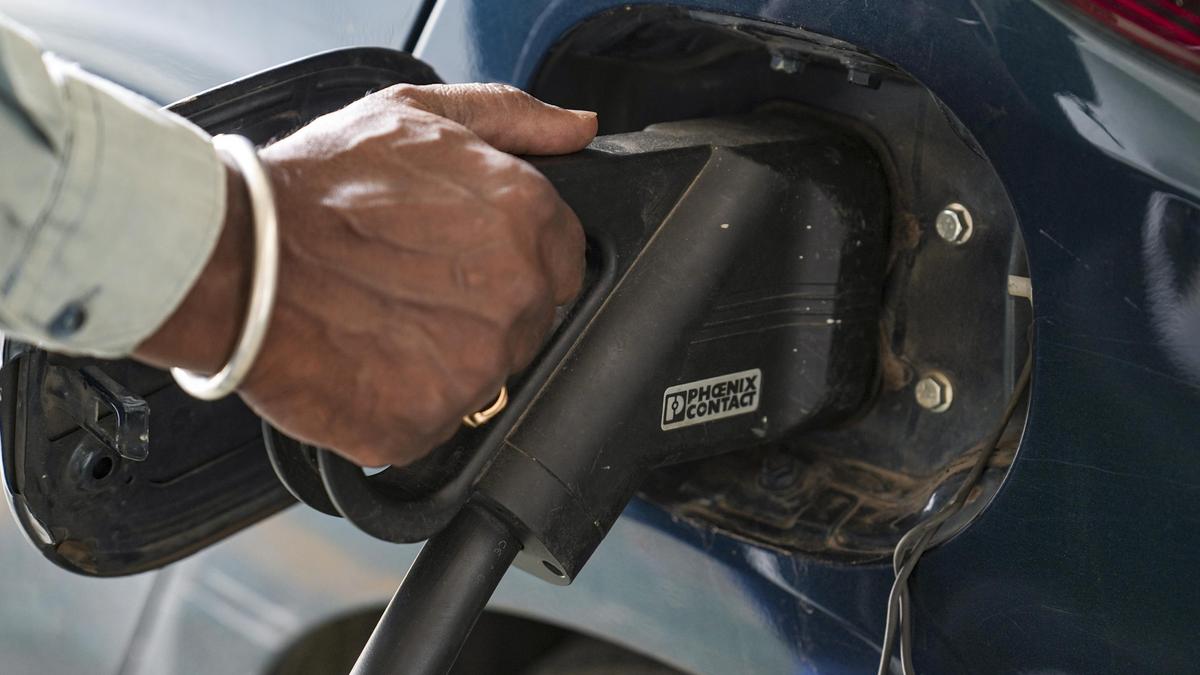
The ACC PLI scheme, launched in October 2021, was designed to catalyse a domestic battery manufacturing ecosystem and reduce a near-total reliance on Chinese imports. File image for representation only.
| Photo Credit: PTI

The story so far: An ambitious ₹18,100 crore scheme to facilitate the manufacture of advanced chemistry cell batteries in India, particularly for Electric Vehicles (EVs), is floundering. The Advanced Chemistry Cell Production Linked Incentive (ACC PLI) had a target of making battery cells worth 50 gigawatt-hour (GWh) by 2025, but only 1.4 GWh has been installed; approximately 8.6 GWh is ‘under development’ but delayed, while 20 GWh has seen no progress at all. Additionally, the scheme has generated only 1,118 jobs — just 0.12% of the estimated 1.03 million — and attracted only 25.58% of its targeted investment.

Also Read | Ambitious scheme to spur next-gen battery manufacturing in India stumbles

What are Advanced Chemistry Cells (ACC)?

They represent a new generation of advanced storage technologies that can store electric energy as chemical energy and convert it back to electric energy as and when required. Lithium-ions — the mainstay of cellphone batteries — are the most prominent today among this class of batteries. However, the scheme is “technology agnostic” and is open to other combinations such as nickel manganese cobalt, lithium-ion phosphate and sodium-ion batteries.

EDITORIAL | ​Falling short: On India’s EV journey

What is the intent of this scheme?

The ACC PLI scheme, launched in October 2021, was designed to catalyse a domestic battery manufacturing ecosystem and reduce a near-total reliance on Chinese imports. However, an analysis by the Institute for Energy Economics and Financial Analysis (IEEFA) and JMK Research and Analysis reveals that the policy’s ambitious goals have yet to translate into significant realised capacity. As of October 2025, only 2.8% of the targeted 50 GWh capacity has been commissioned. The 1.4 GWh is from a single beneficiary, Ola Electric. Moreover, despite a targeted incentive disbursement of ₹2,900 crore by this period, zero funds have been paid out because no beneficiary has met the necessary milestones.

Also Read | Government rolls out 100% subsidy for EV charging infrastructure under PM E-Drive

How was the scheme supposed to work?

The primary aim of the scheme was to encourage industry into building domestic capacity for essential components like cathodes, anodes, and electrolytes. This was to be done by attracting major private players and global technology partnerships to the sector and in the process lower battery costs to accelerate the adoption of EVs and Energy Storage Systems (ESS). The latter are large blocks of battery cells that can be used to supply solar or wind power, during the night or windless days respectively. Companies were to participate in an auction to commit to a minimum bid size of 5 GWh and have a net worth of at least ₹225 crore per GWh of committed capacity and produce batteries. For every battery sold, they could claim up to ₹2,000 per KWh as subsidy. There were other caveats though: companies had to achieve 25% Domestic Value Addition (DVA) within two years and reach 60% DVA by the fifth year.

Also Read | What is India’s latest approach to localising EV manufacturing?

Which companies were selected?

In the first auction round of the ACC PLI scheme, three companies were selected as beneficiaries: Ola Electric, Reliance New Energy, and Rajesh Exports. Ola Electric was awarded a capacity of 20 GWh; Reliance New Energy initially secured 15 GWh in the first round and subsequently won an additional 10 GWh in the second auction round; and Rajesh Exports was awarded a capacity of 5 GWh.

Also Read | Centre notifies guidelines to boost electric car production

Why has the scheme been unsuccessful?

The scheme mandates that beneficiaries commission their facilities within a two-year “gestation period,” a target deemed unrealistic for building complex gigafactories from scratch in a nascent market. Additionally, the DVA requirements have been difficult because India lacks sufficient facilities for processing minerals, lithium, nickel and cobalt. Secondly, the scheme’s evaluation criteria prioritised DVA and subsidy benchmarks over prior manufacturing experience. Thus, established battery players like Exide and Amara Raja did not qualify, leaving the project in the hands of novices who are still building foundational technical competencies. Finally, India’s dependency on China for raw material, technical competency and knowhow has led to sluggish progress. A major bottleneck is the delay in visa approvals for Chinese technical specialists, as India lacks skilled workforce for cell manufacturing.

Also Read | China files complaint against India in World Trade Organisation over EV, battery subsidies

What fix does the report recommend?

Immediate recommendations include fast-tracking visas for technical experts and extending implementation timelines by at least one year to waive current penalties. Long-term success will require schemes for critical mineral refining and component manufacturing, alongside focused R&D and talent development.

Published – February 01, 2026 02:10 am IST


Source link

Science Tags:acc pli scheme, Advanced Chemistry Cell production linked incentive, battery scheme for ev in india, electric vehicles in india, ev manufacturing in india

Post navigation

Previous Post: Access Denied
Next Post: India vs New Zealand fifth T20I: Kishan knocks the stuffing out of Black Caps

Related Posts

  • Sea otters get more prey and reduce tooth damage using tools
    Sea otters get more prey and reduce tooth damage using tools Science
  • Nuclear fusion cost models too optimistic to be viable, experts warn
    Nuclear fusion cost models too optimistic to be viable, experts warn Science
  • New model finds hovering doesn’t need a complex brain
    New model finds hovering doesn’t need a complex brain Science
  • Loggerhead turtles use geomagnetic field to navigate large distances
    Loggerhead turtles use geomagnetic field to navigate large distances Science
  • What are cookies (on the internet)?
    What are cookies (on the internet)? Science
  • Chinese scientists identify super moss able to ‘survive’ in Mars
    Chinese scientists identify super moss able to ‘survive’ in Mars Science

More Related Articles

India to have 56 new Doppler weather radars soon, says Ministry of Earth Sciences India to have 56 new Doppler weather radars soon, says Ministry of Earth Sciences Science
Will the baby be a boy or a girl? SRY gene claims to have the answer Will the baby be a boy or a girl? SRY gene claims to have the answer Science
Sex work drives clade Ib mpox outbreak in DR Congo Sex work drives clade Ib mpox outbreak in DR Congo Science
Going to Mars? Speak to a psychologist first Going to Mars? Speak to a psychologist first Science
As West Asia war threatens gas supply, remembering a gas grid India never built As West Asia war threatens gas supply, remembering a gas grid India never built Science
Science for all newsletter scientists find a new tile shape Science for all newsletter scientists find a new tile shape Science
SiteLock

Archives

  • May 2026
  • April 2026
  • March 2026
  • February 2026
  • January 2026
  • December 2025
  • November 2025
  • October 2025
  • September 2025
  • August 2025
  • July 2025
  • June 2025
  • May 2025
  • April 2025
  • March 2025
  • February 2025
  • January 2025
  • December 2024
  • November 2024
  • October 2024
  • September 2024
  • August 2024
  • July 2024
  • June 2024
  • May 2024
  • April 2024
  • March 2024
  • February 2024
  • January 2024
  • December 2023
  • November 2023
  • October 2023
  • September 2023
  • August 2023
  • July 2023
  • June 2023
  • May 2023
  • April 2023
  • March 2023
  • February 2023
  • January 2023
  • December 2022
  • November 2022
  • October 2022
  • September 2022
  • August 2022
  • July 2022
  • June 2022
  • May 2022

Categories

  • Business
  • Nation
  • Science
  • Sports
  • World

Recent Posts

  • At least 1,000 more rooms to be made available to devotees at Kukke Subrahmanya in two years
  • India’s genetic mosaic: how understanding our genes can help improve our health
  • Iran executes man accused of spying for Israel, allegedly trained by Mossad
  • Dr. Reddy’s Q4 dips 86% on lower sales, multiple one offs to ₹221 crore
  • U.S. appeals court halts order declaring Trump’s global 10% tariff illegal

Recent Comments

  1. WilliamTOP on UP Teacher Who Asked Students To Slap Muslim Classmate
  2. DavidAnymn on UP Teacher Who Asked Students To Slap Muslim Classmate
  3. Jesusetexy on UP Teacher Who Asked Students To Slap Muslim Classmate
  4. JeffryFok on UP Teacher Who Asked Students To Slap Muslim Classmate
  5. StanleyPeapy on UP Teacher Who Asked Students To Slap Muslim Classmate
  • A Glimpse At Member Countries’ Shared Heritage
    A Glimpse At Member Countries’ Shared Heritage World
  • Access Denied World
  • Baltimore bridge collapse | Indian crew to remain on board ship till probe is complete
    Baltimore bridge collapse | Indian crew to remain on board ship till probe is complete World
  • Access Denied Sports
  • Dick Cheney, one of the most powerful and polarising Vice-Presidents of U.S. history, dies at 84
    Dick Cheney, one of the most powerful and polarising Vice-Presidents of U.S. history, dies at 84 World
  • Budget 2026-27 must keep the growth momentum
    Budget 2026-27 must keep the growth momentum Business
  • Access Denied Sports
  • Musheer Khan Gives First Public Statement After Car Accident, Says “My Father…”
    Musheer Khan Gives First Public Statement After Car Accident, Says “My Father…” Sports

Editor-in-Chief:
Mohammad Ariff,
MSW, MAJMC, BSW, DTL, CTS, CNM, CCR, CAL, RSL, ASOC.
editor@artifex.news

Associate Editors:
1. Zenellis R. Tuba,
zenelis@artifex.news
2. Haris Daniyel
daniyel@artifex.news

Photograher:
Rohan Das
rohan@artifex.news

Artifex.News offers Online Paid Internships to college students from India and Abroad. Interns will get a PRESS CARD and other online offers.
Send your CV (Subjectline: Paid Internship) to internship@artifex.news

Links:
Associate Journalism
About Us
Privacy Policy

News Links:
Breaking News
World
Nation
Sports
Business
Entertainment
Lifestyle

Registered Office:
72/A, Elliot Road, Kolkata - 700016
Tel: 033-22277777, 033-22172217
Email: office@artifex.news

Editorial Office / News Desk:
No. 13, Mezzanine Floor, Esplanade Metro Rail Station,
12 J. L. Nehru Road, Kolkata - 700069.
(Entry from Gate No. 5)
Tel: 033-46011099, 033-46046046
Email: editor@artifex.news

Copyright © 2023 Artifex.News Newsportal designed by Artifex Infotech.