




India is emerging as a global leader in the adoption of AI agents at the workplace, with 32% of AI-using professionals classified as “Frontier Professionals” — employees who are actively redesigning how work gets done with AI agents, according to the Microsoft Work Trend Index 2026.
The share is twice the global average of 16% and the highest among the 10 markets covered in the study, highlighting the pace at which Indian enterprises and professionals are integrating AI into everyday workflows.
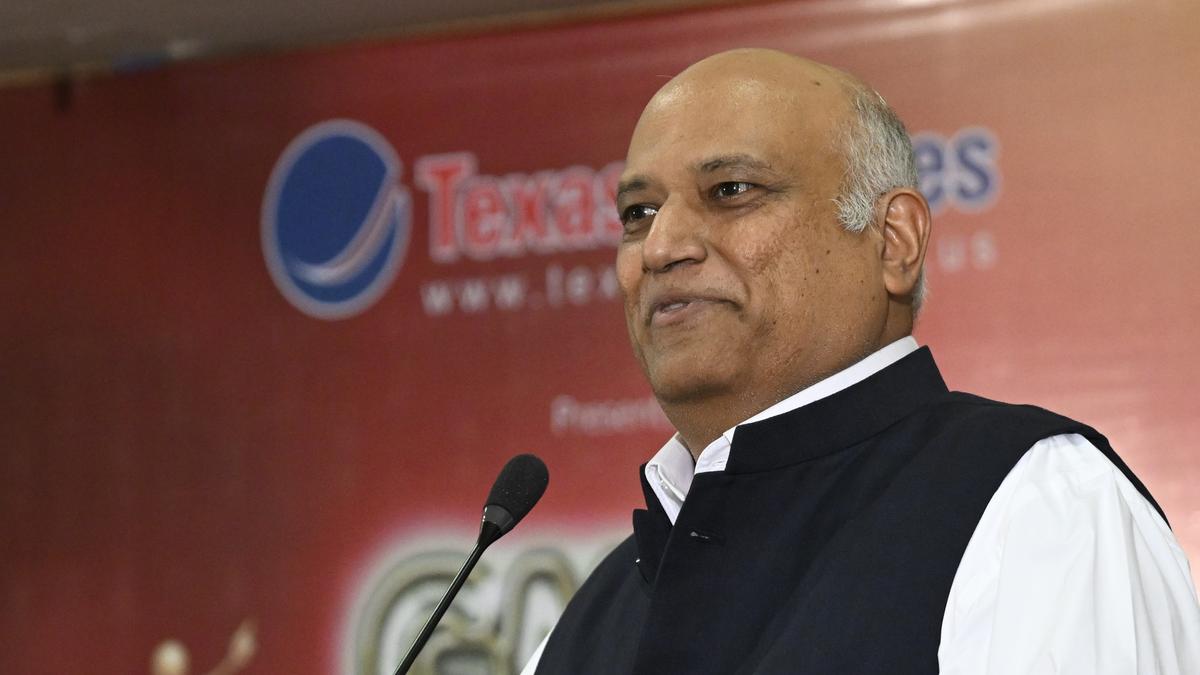
Puneet Chandok, President, Microsoft India & South Asia, said India had moved beyond its stated ambition of building human-agent teams at scale.
“A year ago, India said it would build human-agent teams at scale. The data now says we are doing it. India is amongst the markets with the highest share of Frontier Professionals in this study,” Chandok said at the launch of the report.
According to the study, one in three Indian professionals using AI is working with agents on multi-step, real-world tasks, compared with one in six globally. Further, 78% of Indian respondents said they were doing work that was not possible 12 months earlier.
“This is not a gap, it is a lead. And it is showing up in what people actually produce,” Chandok said, adding that work was changing rather than disappearing and that India was developing a model that other markets could learn from.
The global study surveyed 20,000 AI users across 10 markets and analysed trillions of anonymised Microsoft 365 productivity signals. It points to a shift in the nature of work, with AI agents increasingly taking on execution while employees focus more on directing work, exercising judgment and owning outcomes.
Human judgment remains critical
Despite the growing use of AI agents, Indian professionals continue to place a strong emphasis on human oversight. According to the report, 63% of India’s AI users rank quality control of AI-generated output as a priority, while 59% identify critical thinking as a top skill.
The report also highlighted the rapid enterprise adoption of Microsoft 365 Copilot in India. Infosys, Tata Consultancy Services (TCS), Wipro and LTM collectively signed up for more than 400,000 Microsoft 365 Copilot seats in less than six months, according to Microsoft.
The company described the rollout as one of its largest and fastest enterprise AI deployments globally.
At TCS, around 86% of Copilot-licensed associates actively use AI in their daily work, with applications spanning reporting, meeting management, documentation, analysis and other knowledge-based tasks. Microsoft said multiple teams had reported productivity improvements of 20-25% in research and content production, twice-as-fast insight generation, and a 25-35% reduction in work-cycle time for selected processes.
At Wipro, monthly active usage of Microsoft 365 Copilot has crossed 95%, with employees generating around 7.5 million prompts a month and averaging 23 actions per user each week. According to Microsoft, this translates into more than 250,000 full-time-equivalent days saved every quarter.
Wipro has also expanded agent development across its workforce, with more than 29,000 employee-developed agents and over 60 enterprise-grade agentic solutions currently in use. Its appraisal agent has reduced performance-review effort by nearly 70% through evidence-based goal tracking, Microsoft said.
AI experimentation to enterprise transformation
The findings were discussed during a fireside conversation between Chandok and Balakrishna D. R., Executive Vice President and Global Services Head, AI and Industry Verticals, Infosys.
The discussion focused on the challenge of moving from AI experimentation to enterprise-wide transformation. While a workforce capable of using AI agents represents an important starting point, the larger challenge for companies is to translate adoption into repeatable business outcomes across large and globally distributed operations.
Infosys has expanded Microsoft 365 Copilot to more than 100,000 employees, integrating AI into delivery, engineering and corporate functions. Monthly active usage has crossed 91%, according to the company.
“Building a Frontier Enterprise requires more than technology. Organisations that are realising sustainable value from AI are those that combine leadership alignment, workforce readiness, governance, and intelligence embedded across the business,” Balakrishna said.
For Infosys, enterprise-wide AI adoption is supporting innovation, strengthening decision-making and delivering measurable business outcomes, he added.
“The opportunity now is to move beyond experimentation and scale AI responsibly across the enterprise,” Balakrishna said.
Published – September 03, 2026 05:26 pm IST