




Skip to content
  • Facebook
  • X
  • Linkedin
  • WhatsApp
  • Associate Journalism
  • About Us
  • Privacy Policy
  • 033-46046046
  • editor@artifex.news
Artifex.News

Artifex.News

Stay Connected. Stay Informed.

  • Breaking News
  • World
  • Nation
  • Sports
  • Business
  • Science
  • Entertainment
  • Lifestyle
  • Toggle search form
  • 70,000 Forced From Homes As Deadly Floods Hit Brazil
    70,000 Forced From Homes As Deadly Floods Hit Brazil World
  • “Indian Cricketers Shouldn’t Be Allowed In Overseas Leagues Unless…”: Dinesh Karthik’s Blunt Take
    “Indian Cricketers Shouldn’t Be Allowed In Overseas Leagues Unless…”: Dinesh Karthik’s Blunt Take Sports
  • “Bhai Khana Khaa Rahe Hain”: Mistaken As Mohammad Siraj, Suryakumar Yadav Causes Laughter Riot
    “Bhai Khana Khaa Rahe Hain”: Mistaken As Mohammad Siraj, Suryakumar Yadav Causes Laughter Riot Sports
  • Access Denied World
  • Abigail Spanberger elected Virginia Governor in historic first that boosts Democrats ahead of 2026
    Abigail Spanberger elected Virginia Governor in historic first that boosts Democrats ahead of 2026 World
  • Heavy winter rains in Pakistan kill at least 37 people, collapse buildings and trigger landslides
    Heavy winter rains in Pakistan kill at least 37 people, collapse buildings and trigger landslides World
  • BSNL Q3 profit after 17 years at ₹262 crore
    BSNL Q3 profit after 17 years at ₹262 crore Business
  • Elon Musk Says Ketamine Helps Cure Negative Frame Of Mind. What Research Shows
    Elon Musk Says Ketamine Helps Cure Negative Frame Of Mind. What Research Shows World
Earthlife is made of space stuff, studies of asteroid Bennu hint

Earthlife is made of space stuff, studies of asteroid Bennu hint

Posted on January 1, 2026 By admin


In October 2020, when the world was beginning to come out of a global lockdown, a spacecraft more than 3 lakh km away performed a pogo-stick jump on a small asteroid called Bennu and collected samples of its surface.

The craft, part of NASA’s OSIRIS REx, then launched itself away from the asteroid and towards the earth a few months later. It dropped off the samples inside a canister, which touched down on the earth’s surface using parachutes in September 2023.

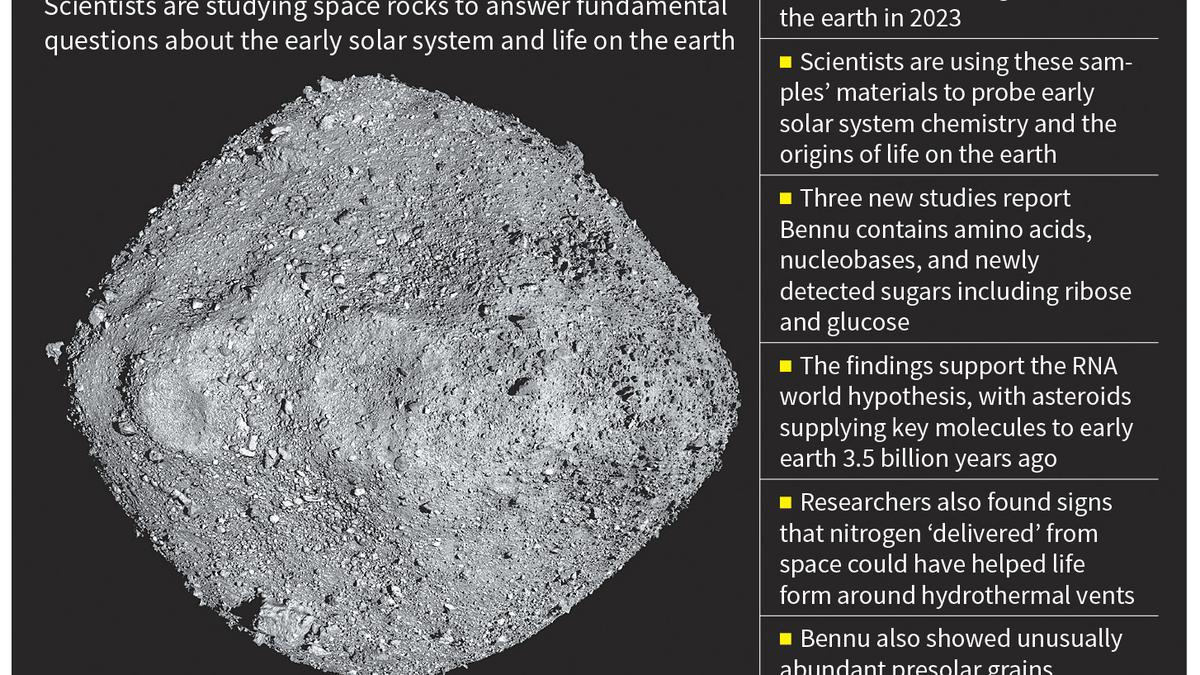
Since then, scientists in the US and Japan have been studying pieces of Bennu in an effort to answer fundamental questions about the formation of the early solar system and of life on the earth, and whether its building blocks could have come here from asteroids.

In the latest round of results, three teams published papers on December 2 reporting that Bennu doesn’t only contain amino acids and other important molecules required to form RNA: it also hosts a hard but once-gooey substance as well as a surprising abundance of supernova dust from a time before the sun formed.

New sugar molecules

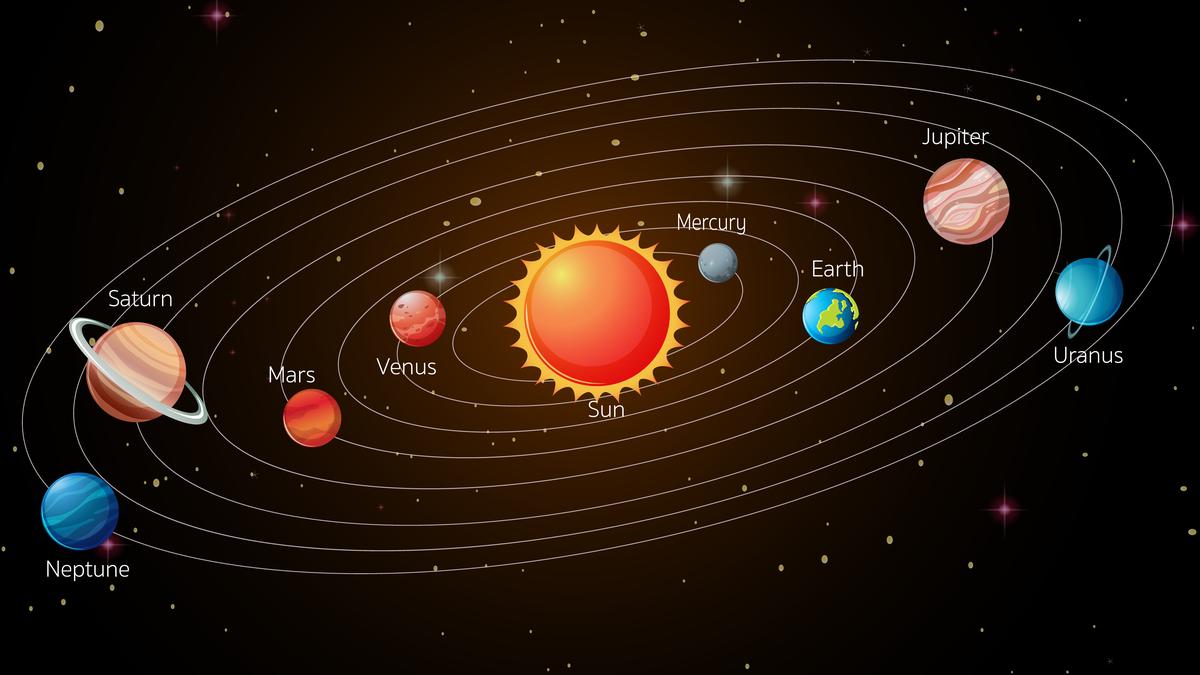
The planets of our solar system formed from a cloud of dust and gas swirling around the sun, which itself formed around 4.6 billion years ago. In this process, several smaller rocks that had already been floating around in the icy reaches of the solar system were pushed around as well, and they often clumped together.

The larger asteroid from which Bennu broke off formed in this way, around the same time as the sun and somewhere beyond Saturn. When Jupiter migrated to its present orbit, the parent asteroid was kicked into the asteroid belt between Jupiter and Mars, where it collided with other rocks. Over thousands of years, fragments from the parent gave rise to Bennu.

Today, the asteroid Bennu orbits the sun between the orbits of the earth and Mars. In fact, it’s a part of more than 21,000 asteroids scientists call the Apollo group: nearly all their orbits cut across the earth’s at two points.

To study the Bennu samples, NASA collaborated with scientists from the Japanese space agency because it had previously worked with samples from the asteroids Itokawa and the very similar Ryugu. In a paper published in Nature Geoscience, scientists led by those in Tohoku University in Japan reported finding ribose, the sugar molecule present in RNA, and glucose, the sugar molecule required for metabolism, on Bennu.

Together with previously announced findings of amino acids and all the five nucleobases found in DNA and RNA, the entire inventory of molecules scientists believe are needed for life have been confirmed on Bennu.

Such large sugar molecules haven’t been observed on asteroids before; only smaller ones have.

“We had never observed 6-carbon molecules in other asteroids, and this paper answers why,” Kuljeet Kaur Marhas, professor and head of the Planetary Labs Analysis Section at the Physical Research Laboratory, Ahmedabad, who works with samples of the asteroid Itokawa and specialises in the early solar system, said.

“For 5-C to convert to 6-C sugar, the optimal mix of environmental conditions such as very little but liquid brine, the right pH, and extremely low temperatures are required, which the asteroid possessed at formation. The availability of pockets undamaged by exposure to the sun and earth helped make this find.”

The findings strengthen the ‘RNA world hypothesis’: that early life used RNA both as its source of genetic information and to perform catalytic functions before DNA and proteins evolved. According to the study’s authors, the abundant presence of asteroids like Bennu in the inner solar system would have provided sugars and amino acids for the region, eventually leading to the formation of life on the earth more than 3.5 billion years ago.

Scientists have also reported evidence of chemical reactions between ices leading to the formation of polymer molecules before the ices melted. In a paper published in Nature Astronomy, a second team from NASA thus explained the discovery of polymers of nitrogen- and oxygen-rich materials on Bennu.

This material, called carbamate, would have been soft and gummy when it formed and could have hardened since. Scientists haven’t found this material in extraterrestrial samples before — nor have such long polymer chains been observed in an asteroid before.

There are some reasons to believe the first earthlife formed around hydrothermal vents — fissures in the seafloor releasing hot fluids rich in minerals and which have been known to support ecosystems dependent on chemosynthesis, rather than sunlight. But this theory missed a crucial ingredient: a source of nitrogen, which is required for RNA.

But the new findings strengthen the possibility that life was instead seeded from outer space thanks to the nitrogen-rich polymers on Bennu.

Presolar grains

At the time Bennu’s parent asteroid formed, volatile compound ices like ammonia (i.e. frozen ammonia) that are known to accumulate on asteroids’ primordial surface could have been subjected to occasional heat from random radioactive decay. This would have liquefied the ices. Subsequently the liquids could have seeped into rocky pores and deposited the salts and minerals dissolved in them there. And Bennu could have ‘inherited’ a piece of this action.

Dust and gas in the early presolar system, i.e. before the sun, were formed from other exploding stars in the past. By analysing these grains of dust, astronomers hope to find clues about the elements that made up the dust and gas in the early solar system, which could help understand how planets and other bodies formed.

In a third paper also published in Nature Astronomy, a different NASA team showed that the presolar grains on Bennu had indeed been disturbed and moved around by moving liquids on the asteroid’s surface. Importantly, the concentration of presolar grains was at least six-times higher than in other similar asteroid and meteorite samples scientists have studied before. The team also reported signs of nebular heating, i.e. of the grains having been singed by the heat released when the great mass of dust collapsed to form our sun.

Studies of the grains revealed that they originated from various types of stars and supernovae (the dying explosions of massive stars). Of these, the concentrations of grains of supernovae-origin were the highest, indicating it was present in abundant quantities in the part of space where Bennu’s parent formed. 

“Why exactly there is an abundance of supernova-origin presolar grains is the biggest question, as Bennu is just like plenty of other asteroids in its neighborhood,” Dr. Marhas, who also reviewed the second Nature Astronomy paper, said. “Will we find similar concentrations if we sample previously studied asteroids in different locations or is there something specific that makes the ordinary-seeming Bennu extremely special?”

Sandhya Ramesh is a freelance science journalist.

Published – January 01, 2026 06:00 am IST


Source link

Science

Post navigation

Previous Post: Additional excise duty on tobacco, health cess on pan masala to be effective February 1
Next Post: Zohran Mamdani will be sworn in as mayor on a Quran, a first in New York City history

Related Posts

  • In search of skin lightening creams, kidneys take a hit
    In search of skin lightening creams, kidneys take a hit Science
  • Chandrayaan-3 | ‘Smile, please!’ Pragyan’s cameras capture Vikram
    Chandrayaan-3 | ‘Smile, please!’ Pragyan’s cameras capture Vikram Science
  • Air-drop test success a big step in Gaganyaan mission: ISRO scientist
    Air-drop test success a big step in Gaganyaan mission: ISRO scientist Science
  • Is peeing contagious in chimpanzees?
    Is peeing contagious in chimpanzees? Science
  • NASA to launch mission on Oct. 10 to look for habitable spots on Europa moon
    NASA to launch mission on Oct. 10 to look for habitable spots on Europa moon Science
  • Science Quiz: Domesticating and breeding dogs
    Science Quiz: Domesticating and breeding dogs Science

More Related Articles

Could AI chatbots become conscious? Could AI chatbots become conscious? Science
NASA affirms plan with SpaceX to return astronauts after Trump demand NASA affirms plan with SpaceX to return astronauts after Trump demand Science
Gene that helps race horses manage BP could help human athletes, too Gene that helps race horses manage BP could help human athletes, too Science
What next for ISRO after Chandrayaan-3 mission? What next for ISRO after Chandrayaan-3 mission? Science
Commercialisation of health services can be a recipe for disaster, says Sujatha Rao Commercialisation of health services can be a recipe for disaster, says Sujatha Rao Science
New insights into how Long COVID affects the brain New insights into how Long COVID affects the brain Science
SiteLock

Archives

  • January 2026
  • December 2025
  • November 2025
  • October 2025
  • September 2025
  • August 2025
  • July 2025
  • June 2025
  • May 2025
  • April 2025
  • March 2025
  • February 2025
  • January 2025
  • December 2024
  • November 2024
  • October 2024
  • September 2024
  • August 2024
  • July 2024
  • June 2024
  • May 2024
  • April 2024
  • March 2024
  • February 2024
  • January 2024
  • December 2023
  • November 2023
  • October 2023
  • September 2023
  • August 2023
  • July 2023
  • June 2023
  • May 2023
  • April 2023
  • March 2023
  • February 2023
  • January 2023
  • December 2022
  • November 2022
  • October 2022
  • September 2022
  • August 2022
  • July 2022
  • June 2022
  • May 2022

Categories

  • Business
  • Nation
  • Science
  • Sports
  • World

Recent Posts

  • Wanted Maoist killed in encounter with security forces in Bihar
  • Access Denied
  • Access Denied
  • Access Denied
  • Access Denied

Recent Comments

  1. DavidQuink on UP Teacher Who Asked Students To Slap Muslim Classmate
  2. WilburUniow on UP Teacher Who Asked Students To Slap Muslim Classmate
  3. CharlesJag on UP Teacher Who Asked Students To Slap Muslim Classmate
  4. JoshuaNeM on UP Teacher Who Asked Students To Slap Muslim Classmate
  5. Michealtheat on UP Teacher Who Asked Students To Slap Muslim Classmate
  • Supreme Court Verdict On Same-Sex Marriage Today
    Supreme Court Verdict On Same-Sex Marriage Today Nation
  • Access Denied
    Access Denied Nation
  • Multiple cases registered against Imran Khan’s wife for her alleged remarks on Saudi Arabia
    Multiple cases registered against Imran Khan’s wife for her alleged remarks on Saudi Arabia World
  • Covid Still Kills 1,700 A Week Around World: WHO
    Covid Still Kills 1,700 A Week Around World: WHO World
  • PM Modi Pays Tribute To Sushil Modi At His Residence In Patna
    PM Modi Pays Tribute To Sushil Modi At His Residence In Patna Nation
  • Rupee falls 12 paise to close at 87.68 against U.S. dollar
    Rupee falls 12 paise to close at 87.68 against U.S. dollar Business
  • “PM Modi Doesn’t Believe In Entitlement, But Empowerment”: Nirmala Sitharaman
    “PM Modi Doesn’t Believe In Entitlement, But Empowerment”: Nirmala Sitharaman Nation
  • Ex-Trump adviser John Bolton surrenders following charges of mishandling classified information
    Ex-Trump adviser John Bolton surrenders following charges of mishandling classified information World

Editor-in-Chief:
Mohammad Ariff,
MSW, MAJMC, BSW, DTL, CTS, CNM, CCR, CAL, RSL, ASOC.
editor@artifex.news

Associate Editors:
1. Zenellis R. Tuba,
zenelis@artifex.news
2. Haris Daniyel
daniyel@artifex.news

Photograher:
Rohan Das
rohan@artifex.news

Artifex.News offers Online Paid Internships to college students from India and Abroad. Interns will get a PRESS CARD and other online offers.
Send your CV (Subjectline: Paid Internship) to internship@artifex.news

Links:
Associate Journalism
About Us
Privacy Policy

News Links:
Breaking News
World
Nation
Sports
Business
Entertainment
Lifestyle

Registered Office:
72/A, Elliot Road, Kolkata - 700016
Tel: 033-22277777, 033-22172217
Email: office@artifex.news

Editorial Office / News Desk:
No. 13, Mezzanine Floor, Esplanade Metro Rail Station,
12 J. L. Nehru Road, Kolkata - 700069.
(Entry from Gate No. 5)
Tel: 033-46011099, 033-46046046
Email: editor@artifex.news

Copyright © 2023 Artifex.News Newsportal designed by Artifex Infotech.