





Skip to content
  • Facebook
  • X
  • Linkedin
  • WhatsApp
  • YouTube
  • Associate Journalism
  • About Us
  • Privacy Policy
  • 033-46046046
  • editor@artifex.news
Artifex.News

Artifex.News

Stay Connected. Stay Informed.

  • Breaking News
  • World
  • Nation
  • Sports
  • Business
  • Science
  • Entertainment
  • Lifestyle
  • Toggle search form
  • On Camera, Cylinder Kept In Truck Explodes On Tamil Nadu Highway
    On Camera, Cylinder Kept In Truck Explodes On Tamil Nadu Highway Nation
  • Ranji Trophy 2024-25: Batters Fail Again As Delhi Trail Assam By 116 Runs
    Ranji Trophy 2024-25: Batters Fail Again As Delhi Trail Assam By 116 Runs Sports
  • Access Denied
    Access Denied Nation
  • Access Denied Sports
  • US faces risk of losing to China in second moon race
    US faces risk of losing to China in second moon race Science
  • Access Denied
    Access Denied Nation
  • Israel’s Foreign Minister denies reports of ‘direct’ Lebanon talks
    Israel’s Foreign Minister denies reports of ‘direct’ Lebanon talks World
  • Wimbledon 2026 | Of longevity and supreme fitness: Djokovic keeps redefining his career graph
    Wimbledon 2026 | Of longevity and supreme fitness: Djokovic keeps redefining his career graph Sports
Roundworms do inherit info on threats to avoid, but with a catch

Roundworms do inherit info on threats to avoid, but with a catch

Posted on November 17, 2025 By admin


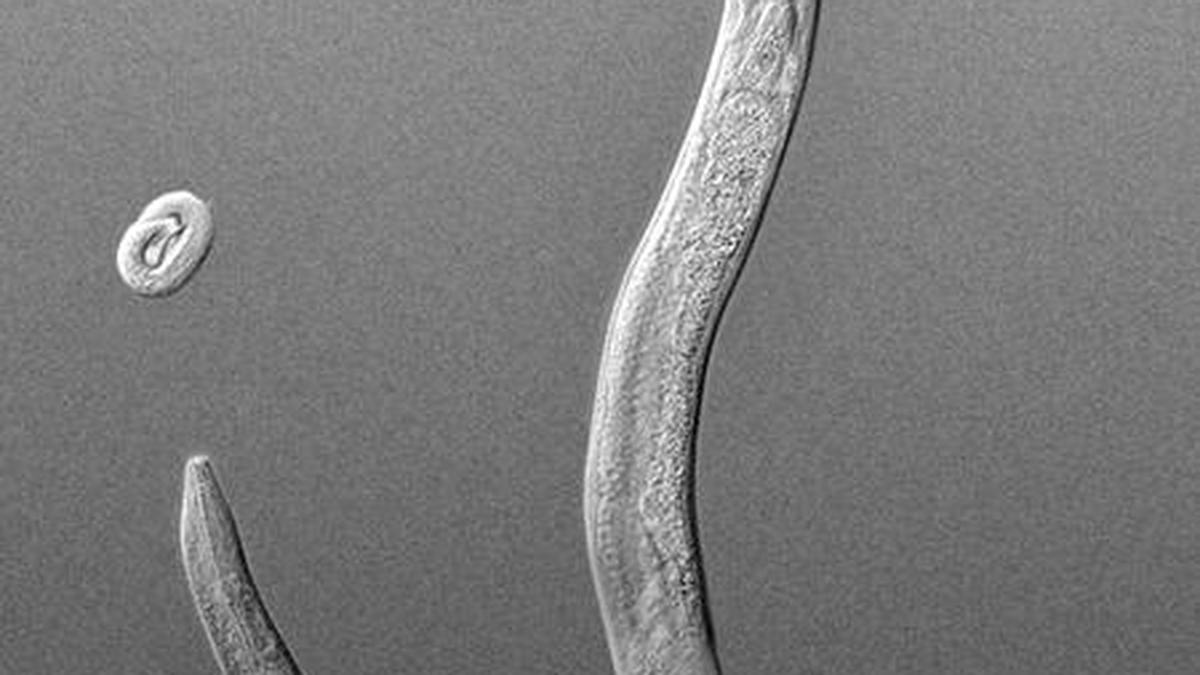
An image of Caenorhabditis elegans worms.
| Photo Credit: Megha Rai/Special arrangement

Animals often meet the same threats across generations. A central question in biology is whether experience with a threat can be passed from parents to offspring in a way that changes the latter’s behaviour.

In the roundworm Caenorhabditis elegans, one such experience is learning to avoid a dangerous bacterium called Pseudomonas aeruginosa strain PA14. Previous work has suggested that worms exposed to PA14 can produce descendants that also avoid this bacterium, even though those descendants have never encountered it. Other researchers, however, reported that this inherited avoidance didn’t reliably persist beyond the first generation, casting doubt on the phenomenon.

A new study by researchers from Illinois State University in the US was designed to address this disagreement with an independent replication study. Working in a different laboratory, they closely followed the previous study’s protocol and focused on whether learned avoidance could still be detected in the second generation, where previous results began to diverge.

The authors used a standard choice assay. The worms were placed on a plate where one spot contained their usual lab food, a harmless Escherichia coli strain called OP50, and another spot contained the pathogenic PA14. A compound called sodium azide was added to each spot to paralyse worms as soon as they arrived, so their first choice could be recorded. Worms were first ‘trained’ by spending 24 hours on PA14 or OP50, and then their preference, and that of their offspring and the offspring’s offspring raised only on OP50, was tested in the assay.

Naïve worms that had never seen PA14 showed the expected initial attraction to the pathogen over OP50. After training on PA14, however, parental worms strongly avoided PA14 in the choice assay. Crucially, their descendants, which had never themselves encountered PA14, also shifted to avoiding the pathogen compared to control worms whose ancestors had only seen OP50. The inherited effect weakened with each generation but remained statistically significant in the second generation descendants when the assay was run in tightly controlled conditions.

The findings were published in eLife on November 11. A companion article by Canada’s Michael G. DeGroote Institute for Infectious Disease Research associate professor Lesley MacNeil, who wasn’t involved in the studies, placed the findings in a broader debate about “transgenerational epigenetic inheritance”. Dr. MacNeil contrasted the old and new study with a third set of studies that often didn’t detect either the initial attraction to PA14 or its inherited avoidance when using a different method that immobilised worms by cooling the plate instead of using azide. This alternative method could have allowed the worms to contact PA14 during the assay and learn on the spot, blurring the difference between naïve and previously trained lineages.

Taken together, the first two papers (i.e. old and new) strengthen the case that signals from microbes, including small RNAs produced by PA14, can leave heritable marks that shape how C. elegans descendants respond to future threats. At the same time, comparing their findings with the third line of inquiry underlines that claims about such inheritance must rest on protocols that others can reproduce and scrutinise.

Published – November 17, 2025 01:38 pm IST


Source link

Science

Post navigation

Previous Post: Access Denied
Next Post: Access Denied

Related Posts

  • Scientists confirm HIV capsid is a good drug target despite resistance
    Scientists confirm HIV capsid is a good drug target despite resistance Science
  • Here are the latest news and big news to follow today
    Here are the latest news and big news to follow today Science
  • Sci-Five | The Hindu Science Quiz: On the study of things
    Sci-Five | The Hindu Science Quiz: On the study of things Science
  • What a ‘super’ El Niño would mean for India’s monsoon
    What a ‘super’ El Niño would mean for India’s monsoon Science
  • The cosmological constant problem is one of the biggest crises in physics
    The cosmological constant problem is one of the biggest crises in physics Science
  • Why does our hair grow and become grey? 
    Why does our hair grow and become grey?  Science

More Related Articles

Climate change intensified rain that caused Wayanad landslides: study Climate change intensified rain that caused Wayanad landslides: study Science
What Starliner’s crewless return means for NASA and Boeing What Starliner’s crewless return means for NASA and Boeing Science
Paper-based platform for rapid detection of antibiotic-resistant bacteria Paper-based platform for rapid detection of antibiotic-resistant bacteria Science
What happened to ISRO’s PSLV-C62 mission? | Explained What happened to ISRO’s PSLV-C62 mission? | Explained Science
Are ‘colour molecules’ the key to a room-temperature quantum computer? Are ‘colour molecules’ the key to a room-temperature quantum computer? Science
What is mathematical realism? – The Hindu What is mathematical realism? – The Hindu Science
SiteLock

Archives

  • October 2026
  • September 2026
  • August 2026
  • July 2026
  • June 2026
  • May 2026
  • April 2026
  • March 2026
  • February 2026
  • January 2026
  • December 2025
  • November 2025
  • October 2025
  • September 2025
  • August 2025
  • July 2025
  • June 2025
  • May 2025
  • April 2025
  • March 2025
  • February 2025
  • January 2025
  • December 2024
  • November 2024
  • October 2024
  • September 2024
  • August 2024
  • July 2024
  • June 2024
  • May 2024
  • April 2024
  • March 2024
  • February 2024
  • January 2024
  • December 2023
  • November 2023
  • October 2023
  • September 2023
  • August 2023
  • July 2023
  • June 2023
  • May 2023
  • April 2023
  • March 2023
  • February 2023
  • January 2023
  • December 2022
  • November 2022
  • October 2022
  • September 2022
  • August 2022
  • July 2022
  • June 2022
  • May 2022

Categories

  • Business
  • Nation
  • Science
  • Sports
  • World

Recent Posts

  • Food safety officials inspect 100 sweet units on third day of drive, issue notices to 15
  • Central Bank of India Q2 net profit jumps 21% to ₹1,469 crore on higher core income
  • These are dark times for WI cricket, but I stay loyal: Roach
  • Himachal Pradesh hosts heavyweight Mumbai in ‘unfamiliar territory’
  • Cusat association requests V-C to revoke suspension of four officials

Recent Comments

  1. RobertGat on UP Teacher Who Asked Students To Slap Muslim Classmate
  2. RobertGat on UP Teacher Who Asked Students To Slap Muslim Classmate
  3. RobertGat on UP Teacher Who Asked Students To Slap Muslim Classmate
  4. RobertGat on UP Teacher Who Asked Students To Slap Muslim Classmate
  5. Davidbrurf on UP Teacher Who Asked Students To Slap Muslim Classmate
  • Grievances meet for power consumers
    Grievances meet for power consumers Nation
  • Access Denied
    Access Denied Nation
  • Two Indians aboard cruise ship with hantavirus cases evacuated to Netherlands
    Two Indians aboard cruise ship with hantavirus cases evacuated to Netherlands Nation
  • India vs Bangladesh Live Score, ICC Cricket World Cup 2023: India Aim To Extend Winning Run Against Bangladesh
    India vs Bangladesh Live Score, ICC Cricket World Cup 2023: India Aim To Extend Winning Run Against Bangladesh Sports
  • Access Denied Sports
  • Bangladesh’s apex tribal group denies supporting a new militant outfit from Tripura
    Bangladesh’s apex tribal group denies supporting a new militant outfit from Tripura World
  • Access Denied World
  • Border-Gavaskar Trophy will be a challenge for India, says Karthik
    Border-Gavaskar Trophy will be a challenge for India, says Karthik Sports

Editor-in-Chief:
Mohammad Ariff,
MSW, MAJMC, BSW, DTL, CTS, CNM, CCR, CAL, RSL, ASOC.
editor@artifex.news

Associate Editors:
1. Zenellis R. Tuba,
zenelis@artifex.news
2. Haris Daniyel
daniyel@artifex.news

Photograher:
Rohan Das
rohan@artifex.news

Associate Journalists
1. Subrata Paul - AN/2020/01
2. Quamruz Zaman - AN/2021/22
3. Ahmed Sha - AN/2021/035
4. Ajay Kumar Shaw - AN/2021/39
5. Tahqiqul Hoda - AN/2021/21

Artifex.News offers Online Paid Internships to college students from India and Abroad. Interns will get a PRESS CARD and other online offers.
Send your CV (Subjectline: Paid Internship) to internship@artifex.news

Links:
Associate Journalism
About Us
Privacy Policy

News Links:
Breaking News
World
Nation
Sports
Business
Entertainment
Lifestyle

Registered Office:
72/A, Elliot Road, Kolkata - 700016
Tel: 033-22277777, 033-22172217
Email: office@artifex.news

Editorial Office / News Desk:
No. 13, Mezzanine Floor, Esplanade Metro Rail Station,
12 J. L. Nehru Road, Kolkata - 700069.
(Entry from Gate No. 5)
Tel: 033-46011099, 033-46046046
Email: editor@artifex.news

Copyright © 2023 Artifex.News Newsportal designed by Artifex Infotech.