




Skip to content
  • Facebook
  • X
  • Linkedin
  • WhatsApp
  • YouTube
  • Associate Journalism
  • About Us
  • Privacy Policy
  • 033-46046046
  • editor@artifex.news
Artifex.News

Artifex.News

Stay Connected. Stay Informed.

  • Breaking News
  • World
  • Nation
  • Sports
  • Business
  • Science
  • Entertainment
  • Lifestyle
  • Toggle search form
  • Access Denied Sports
  • Access Denied Sports
  • Coal India Q4 net profit accelerates 12%, fuelled by marginal increase in input cost
    Coal India Q4 net profit accelerates 12%, fuelled by marginal increase in input cost Business
  • Man Enters Bank, Fires In Air, Runs Away With Rs 6.5 Lakh Cash In Indore
    Man Enters Bank, Fires In Air, Runs Away With Rs 6.5 Lakh Cash In Indore Nation
  • “Heads To Be Chopped…”: Sunil Gavaskar Senses Panic In Australia Camp, Highlights ‘Mystery’ Pull Out
    “Heads To Be Chopped…”: Sunil Gavaskar Senses Panic In Australia Camp, Highlights ‘Mystery’ Pull Out Sports
  • Madiga Federation urges Telangana government to implement Scheduled Castes categorisation 
    Madiga Federation urges Telangana government to implement Scheduled Castes categorisation  Nation
  • Access Denied World
  • Access Denied Sports
Roundworms do inherit info on threats to avoid, but with a catch

Roundworms do inherit info on threats to avoid, but with a catch

Posted on November 17, 2025 By admin


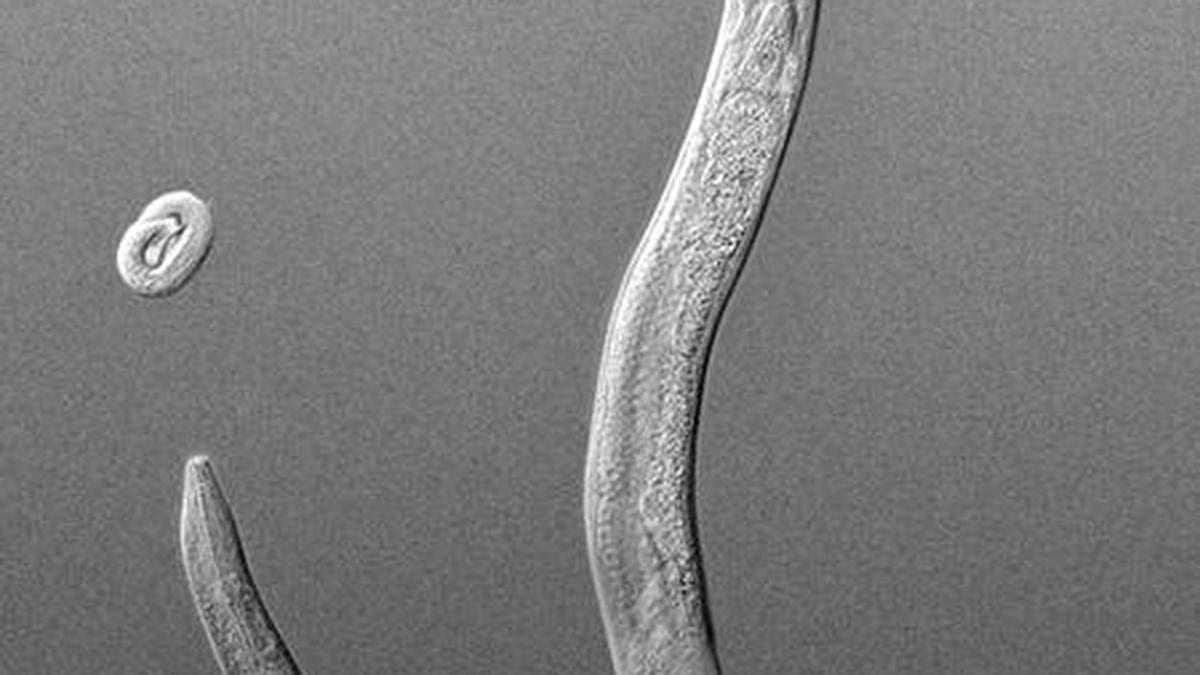
An image of Caenorhabditis elegans worms.
| Photo Credit: Megha Rai/Special arrangement

Animals often meet the same threats across generations. A central question in biology is whether experience with a threat can be passed from parents to offspring in a way that changes the latter’s behaviour.

In the roundworm Caenorhabditis elegans, one such experience is learning to avoid a dangerous bacterium called Pseudomonas aeruginosa strain PA14. Previous work has suggested that worms exposed to PA14 can produce descendants that also avoid this bacterium, even though those descendants have never encountered it. Other researchers, however, reported that this inherited avoidance didn’t reliably persist beyond the first generation, casting doubt on the phenomenon.

A new study by researchers from Illinois State University in the US was designed to address this disagreement with an independent replication study. Working in a different laboratory, they closely followed the previous study’s protocol and focused on whether learned avoidance could still be detected in the second generation, where previous results began to diverge.

The authors used a standard choice assay. The worms were placed on a plate where one spot contained their usual lab food, a harmless Escherichia coli strain called OP50, and another spot contained the pathogenic PA14. A compound called sodium azide was added to each spot to paralyse worms as soon as they arrived, so their first choice could be recorded. Worms were first ‘trained’ by spending 24 hours on PA14 or OP50, and then their preference, and that of their offspring and the offspring’s offspring raised only on OP50, was tested in the assay.

Naïve worms that had never seen PA14 showed the expected initial attraction to the pathogen over OP50. After training on PA14, however, parental worms strongly avoided PA14 in the choice assay. Crucially, their descendants, which had never themselves encountered PA14, also shifted to avoiding the pathogen compared to control worms whose ancestors had only seen OP50. The inherited effect weakened with each generation but remained statistically significant in the second generation descendants when the assay was run in tightly controlled conditions.

The findings were published in eLife on November 11. A companion article by Canada’s Michael G. DeGroote Institute for Infectious Disease Research associate professor Lesley MacNeil, who wasn’t involved in the studies, placed the findings in a broader debate about “transgenerational epigenetic inheritance”. Dr. MacNeil contrasted the old and new study with a third set of studies that often didn’t detect either the initial attraction to PA14 or its inherited avoidance when using a different method that immobilised worms by cooling the plate instead of using azide. This alternative method could have allowed the worms to contact PA14 during the assay and learn on the spot, blurring the difference between naïve and previously trained lineages.

Taken together, the first two papers (i.e. old and new) strengthen the case that signals from microbes, including small RNAs produced by PA14, can leave heritable marks that shape how C. elegans descendants respond to future threats. At the same time, comparing their findings with the third line of inquiry underlines that claims about such inheritance must rest on protocols that others can reproduce and scrutinise.

Published – November 17, 2025 01:38 pm IST


Source link

Science

Post navigation

Previous Post: Access Denied
Next Post: Access Denied

Related Posts

  • Why do flags flutter in the wind?
    Why do flags flutter in the wind? Science
  • Pentagon study finds no sign of alien life in reported UFO sightings going back decades
    Pentagon study finds no sign of alien life in reported UFO sightings going back decades Science
  • Why were the Spain floods so deadly?
    Why were the Spain floods so deadly? Science
  • The virtues of the tomato, a healthy vegetable
    The virtues of the tomato, a healthy vegetable Science
  • What is space-based solar power?
    What is space-based solar power? Science
  • NASA plans to build a nuclear reactor on the moon
    NASA plans to build a nuclear reactor on the moon Science

More Related Articles

The discrepancy between satellite data of farm fires and air pollution | Explained The discrepancy between satellite data of farm fires and air pollution | Explained Science
Science and nation-building – The Hindu Science and nation-building – The Hindu Science
West Asia war: how finding oil changed the Persian Gulf’s ecology West Asia war: how finding oil changed the Persian Gulf’s ecology Science
Prof. Neena Gupta: ‘Not every problem will give you a eureka moment‘ National Mathematics Day Prof. Neena Gupta: ‘Not every problem will give you a eureka moment‘ National Mathematics Day Science
The Silent Killer: tackling hypertension in India The Silent Killer: tackling hypertension in India Science
Over 75% of European bumblebee species threatened in the next 40-60 years Over 75% of European bumblebee species threatened in the next 40-60 years Science
SiteLock

Archives

  • May 2026
  • April 2026
  • March 2026
  • February 2026
  • January 2026
  • December 2025
  • November 2025
  • October 2025
  • September 2025
  • August 2025
  • July 2025
  • June 2025
  • May 2025
  • April 2025
  • March 2025
  • February 2025
  • January 2025
  • December 2024
  • November 2024
  • October 2024
  • September 2024
  • August 2024
  • July 2024
  • June 2024
  • May 2024
  • April 2024
  • March 2024
  • February 2024
  • January 2024
  • December 2023
  • November 2023
  • October 2023
  • September 2023
  • August 2023
  • July 2023
  • June 2023
  • May 2023
  • April 2023
  • March 2023
  • February 2023
  • January 2023
  • December 2022
  • November 2022
  • October 2022
  • September 2022
  • August 2022
  • July 2022
  • June 2022
  • May 2022

Categories

  • Business
  • Nation
  • Science
  • Sports
  • World

Recent Posts

  • Learn from Sri Lanka’s experience on impact of fertilizer supply chains: experts
  • Sewage pollution of Cooum, groundwater depletion raise alarm
  • Device with low-grade explosives found inside private hospital in Pune; ATS joins probe
  • Punjab Kings seeks turnaround against Mumbai Indians
  • Around 83% of candidates lost their deposit in Tamil Nadu polls, says ECI

Recent Comments

  1. RichardClage on UP Teacher Who Asked Students To Slap Muslim Classmate
  2. JeffryFok on UP Teacher Who Asked Students To Slap Muslim Classmate
  3. DerrickSef on UP Teacher Who Asked Students To Slap Muslim Classmate
  4. Leonardren on UP Teacher Who Asked Students To Slap Muslim Classmate
  5. NathanQuins on UP Teacher Who Asked Students To Slap Muslim Classmate
  • New India Star Harshit Rana Picks Up 5-Fer, Scores Half-Century In Ranji Trophy
    New India Star Harshit Rana Picks Up 5-Fer, Scores Half-Century In Ranji Trophy Sports
  • Access Denied Sports
  • Bangladesh’s armed forces chiefs make rare joint visit to ailing ex-PM Khaleda Zia
    Bangladesh’s armed forces chiefs make rare joint visit to ailing ex-PM Khaleda Zia World
  • KIIT University Announce Scholarship In Memory Of Nepalese Student Who Died
    KIIT University Announce Scholarship In Memory Of Nepalese Student Who Died Nation
  • Ayodhya Temple Trust Rebuts Rahul Gandhi’s Claims Of Not Inviting President Droupadi Murmu For Consecration
    Ayodhya Temple Trust Rebuts Rahul Gandhi’s Claims Of Not Inviting President Droupadi Murmu For Consecration Nation
  • Fast-moving cornstarch acts like a liquid before hardening
    Fast-moving cornstarch acts like a liquid before hardening Science
  • Anrich Nortje Ruled Out Of South Africa’s Remaining White-Ball Matches Against Pakistan
    Anrich Nortje Ruled Out Of South Africa’s Remaining White-Ball Matches Against Pakistan Sports
  • Troubling repeat: On ISRO’s failed PSLV-C62 mission
    Troubling repeat: On ISRO’s failed PSLV-C62 mission Science

Editor-in-Chief:
Mohammad Ariff,
MSW, MAJMC, BSW, DTL, CTS, CNM, CCR, CAL, RSL, ASOC.
editor@artifex.news

Associate Editors:
1. Zenellis R. Tuba,
zenelis@artifex.news
2. Haris Daniyel
daniyel@artifex.news

Photograher:
Rohan Das
rohan@artifex.news

Artifex.News offers Online Paid Internships to college students from India and Abroad. Interns will get a PRESS CARD and other online offers.
Send your CV (Subjectline: Paid Internship) to internship@artifex.news

Links:
Associate Journalism
About Us
Privacy Policy

News Links:
Breaking News
World
Nation
Sports
Business
Entertainment
Lifestyle

Registered Office:
72/A, Elliot Road, Kolkata - 700016
Tel: 033-22277777, 033-22172217
Email: office@artifex.news

Editorial Office / News Desk:
No. 13, Mezzanine Floor, Esplanade Metro Rail Station,
12 J. L. Nehru Road, Kolkata - 700069.
(Entry from Gate No. 5)
Tel: 033-46011099, 033-46046046
Email: editor@artifex.news

Copyright © 2023 Artifex.News Newsportal designed by Artifex Infotech.