


Skip to content
  • Facebook
  • X
  • Linkedin
  • WhatsApp
  • Associate Journalism
  • About Us
  • Privacy Policy
  • 033-46046046
  • editor@artifex.news
Artifex.News

Artifex.News

Stay Connected. Stay Informed.

  • Breaking News
  • World
  • Nation
  • Sports
  • Business
  • Science
  • Entertainment
  • Lifestyle
  • Toggle search form
  • Meet Pooja Yadav, 25-Year-Old Graduate ‘Jobless Chai Wali’ From Lucknow
    Meet Pooja Yadav, 25-Year-Old Graduate ‘Jobless Chai Wali’ From Lucknow Nation
  • French PM Michel Barnier Faces No Confidence Vote. All You Need To Know
    French PM Michel Barnier Faces No Confidence Vote. All You Need To Know World
  • Telangana Cabinet sanctions around 500 new posts in different categories  
    Telangana Cabinet sanctions around 500 new posts in different categories   Nation
  • Personal loans disbursed via digital apps have the highest share of overdue accounts: Data
    Personal loans disbursed via digital apps have the highest share of overdue accounts: Data Business
  • Gunmen kill a member of Iran’s paramilitary force and wound 3 others on protest anniversary
    Gunmen kill a member of Iran’s paramilitary force and wound 3 others on protest anniversary World
  • Access Denied World
  • Hezbollah Claims Strike On Israeli Base
    Hezbollah Claims Strike On Israeli Base World
  • Big Jasprit Bumrah Surprise In India vs Pakistan Women’s T20 World Cup Game
    Big Jasprit Bumrah Surprise In India vs Pakistan Women’s T20 World Cup Game Sports
Microplastics threaten Goa’s estuarine fisheries, human consumers

Microplastics threaten Goa’s estuarine fisheries, human consumers

Posted on October 15, 2025 By admin


Microplastics in water bodies can be ingested by very small organisms, which in turn are consumed by larger ones. As a result, the bodies of animals higher up in the food chain accumulate  more microplastics and can suffer from amplified toxicity. This phenomenon is called bioaccumulation.

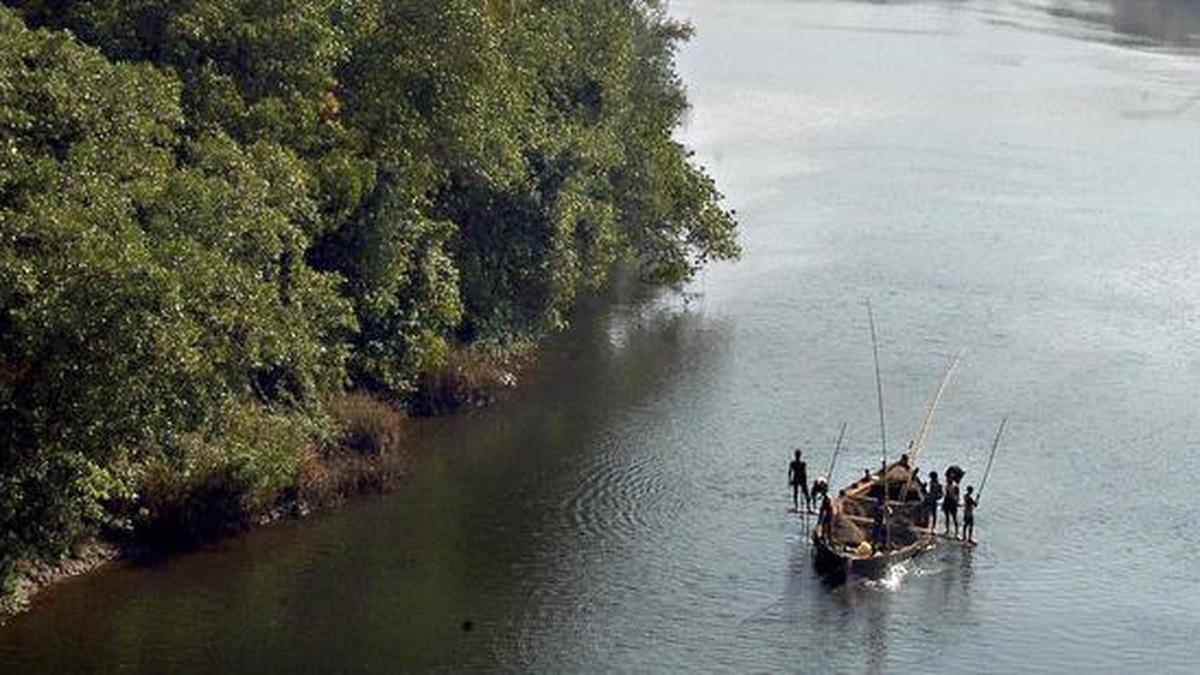
To understand microplastic bioaccumulation along the Goan coast, scientists from the CSIR-National Institute of Oceanography in Goa and the Academy of Scientific and Innovative Research in Ghaziabad recently examined the habitats and feeding behaviour of 251 fishes belonging to nine species of finfish and shellfish. These included mackerel, anchovy, oyster, clam, catfish, sardine, and other commercial varieties, which the team captured from various depths in the ocean’s water column.

In a study published in Environmental Research in August, the team identified 4,871 polluting particles in these fish, of which 3,369 particles were plastic polymers of 19 types. The scientists also found more contamination on the sea floor and in sediments at the bottom of the water column (in benthic realm) than in the open water column (pelagic realm).

These particles were mainly from degraded fishing material left at sea and wastewater discharged from human settlements.

Based on the findings, the scientists have indicated that the fish are suffering from disrupted gene expression, oxidative stress, reproductive damage, and lower growth. When people eat these fish, according to the team, effects on the human body could include immune dysfunction, higher risk of cancer, and toxicity to the brain.

Five key questions

Fisheries around Goa focus on the estuaries — ecologically critical zones that nourish young fish and which serve as feeding grounds for the older ones. Finfish and shellfish are commonly fished at estuaries. These fish kinds also feature frequently in Indian cuisine because they are accessible, affordable, and are rich in proteins.

Anchovies, sardines, and mackerel are small pelagic fish that play an important role in estuarine ecosystems, feeding on plankton and drawing in larger predatory fish. They are also filter feeders: they trap floating particles in the water and ingest them, and are thus more liable to imbibe microplastics.

These small fish are consumed by other larger ones, which in turn are prey for the elasmobranchs, or cartilaginous fish, including the sharks that dwell in shallow shelf waters. Microplastics thus move all the way up the food chain in a process called trophic transfer, eventually affecting the apex predators and human consumers.

The scientists analysed fish samples only from the Mandovi estuarine system, part of the Mandovi-Zuari system that contributes to 97% of Goa’s fish output. They treated the bamboo shark, an apex predator, as the focal species to identify the effects of microplastic accumulation.

The study fills a knowledge gap for five key questions for the region: microplastic contamination quantities in commercial fish, factors that increase the uptake of microplastics in fish, parts of the body that are the primary ingestion pathways, evidence of microplastics through ingestion in the bamboo shark, and risks of microplastic ingestion for fish and human health along the Goan coast.

Many shapes and colours

The scientists analysed 30 members each of mackerels, sardines, anchovies, bamboo sharks, sole fish, catfish, clams, and oysters, plus 11 of the rarer green mussels. These fish were grouped by their feeding levels: filter feeders and planktivores, secondary consumers, and carnivorous consumers. The scientists determined the microplastic concentration in their bodies by assessing the soft tissue.

Their analysis revealed that anchovies had the highest concentration among the pelagic species, at 8.8 microplastic particles per individual (MP/in). The catfish led the benthic realm at over 10 MP/in. The bamboo shark had the least: 3.5 MP/in. The water column itself contained 120 MP/litre.

The team found that the longer bodies the fish had, the fewer microplastic particles they accumulated. They also concluded that fish with habitats closer to contaminated sediments on the sea bed ingested more microplastics when they fed.

Among the finfish, the scientists found more microplastics in the digestive tract than in the gills, indicating accumulation through the consumption of contaminated water or prey. (As water moves through the fish, the particles are trapped in the gills and could lead to respiratory issues.)

They also identified four major shape-types of microplastics: fibres (53%), fragments (29.9%), films (13.1%), and beads (4%). Marine animals use colours to detect prey, and the particles came in nine hues: blue (37.6%), black (24.3%), red (12%), discoloured (8.7%), transparent (6.8%), green (4.4%), pink/purple (2.5%), yellow (1.9%), and orange (1.7%).

The types and colours of microplastics revealed their sources to be fishing gear, tire residue from roads, e-waste, packaging, and textiles.

Risk assessment

In all, the study categorised the region and ecosystem as low-risk but placed benthic life at more risk than pelagic. The paper also said 11 of the 19 types of polymers identified were highly toxic.

The study showed 66 of the 71 shellfish to have poor nutritional statuses. Previous studies have found the direct effects of microplastics on fish include lower fitness, protein, and fatty acids and lower nutritional quality. Indirectly, as the demand for such fish drops in the market, coastal populations could be at risk of losing their livelihoods.

“This is a good study that further supports several other independent findings,” Ravidas K. Naik, who also studies microplastics in marine environments at the National Centre for Polar and Ocean Research in Vasco da Gama and wasn’t affiliated with the study, said.

“There are microplastics in every place on earth, and such findings only underscore the urgent need for us to take action as a society to remove plastic from various environments, with better waste disposal and new research for biodegradable alternatives.”

Sandhya Ramesh is a freelance science journalist.


Source link

Science

Post navigation

Previous Post: Trump threatens to pull support for Argentina if its politics don’t align with US

Related Posts

  • Astronomers have spotted the biggest bangs since the Big Bang
    Astronomers have spotted the biggest bangs since the Big Bang Science
  • New sedimentary rock made from slag is a carbon-trapping champ
    New sedimentary rock made from slag is a carbon-trapping champ Science
  • Why do people catch colds and flu more often in the winter?
    Why do people catch colds and flu more often in the winter? Science
  • How do high-altitude birds take to the air when thin air offers little lift?
    How do high-altitude birds take to the air when thin air offers little lift? Science
  • Great Barrier Reef suffering ‘one of the most severe’ coral bleaching events on record
    Great Barrier Reef suffering ‘one of the most severe’ coral bleaching events on record Science
  • How oil companies put the responsibility for climate change on consumers
    How oil companies put the responsibility for climate change on consumers Science

More Related Articles

Team led by PRL Ahmedabad finds ozone on Jupiter’s moon Callisto Team led by PRL Ahmedabad finds ozone on Jupiter’s moon Callisto Science
New breast cancer genes found in women of African ancestry, may improve risk assessment New breast cancer genes found in women of African ancestry, may improve risk assessment Science
ISRO signs implementing agreement with Australian Space Agency for Gaganyaan mission ISRO signs implementing agreement with Australian Space Agency for Gaganyaan mission Science
Google’s GenCast AI turns spotlight on powerful new weather forecasters Explained Google’s GenCast AI turns spotlight on powerful new weather forecasters Explained Science
ISRO releases images of Sun captured by Aditya-L1 during May solar storm ISRO releases images of Sun captured by Aditya-L1 during May solar storm Science
Cyclone Fengal was unusually hard to predict and track | Analysis Cyclone Fengal was unusually hard to predict and track | Analysis Science
SiteLock

Archives

  • October 2025
  • September 2025
  • August 2025
  • July 2025
  • June 2025
  • May 2025
  • April 2025
  • March 2025
  • February 2025
  • January 2025
  • December 2024
  • November 2024
  • October 2024
  • September 2024
  • August 2024
  • July 2024
  • June 2024
  • May 2024
  • April 2024
  • March 2024
  • February 2024
  • January 2024
  • December 2023
  • November 2023
  • October 2023
  • September 2023
  • August 2023
  • July 2023
  • June 2023
  • May 2023
  • April 2023
  • March 2023
  • February 2023
  • January 2023
  • December 2022
  • November 2022
  • October 2022
  • September 2022
  • August 2022
  • July 2022
  • June 2022
  • May 2022

Categories

  • Business
  • Nation
  • Science
  • Sports
  • World

Recent Posts

  • Microplastics threaten Goa’s estuarine fisheries, human consumers
  • Trump threatens to pull support for Argentina if its politics don’t align with US
  • Access Denied
  • Israel says it has received remains of four more deceased hostages as cuts to aid for Gaza loom
  • Access Denied

Recent Comments

  1. dfb{{98991*97996}}xca on UP Teacher Who Asked Students To Slap Muslim Classmate
  2. "dfbzzzzzzzzbbbccccdddeeexca".replace("z","o") on UP Teacher Who Asked Students To Slap Muslim Classmate
  3. 1}}"}}'}}1%>"%>'%> on UP Teacher Who Asked Students To Slap Muslim Classmate
  4. bfg6520<s1﹥s2ʺs3ʹhjl6520 on UP Teacher Who Asked Students To Slap Muslim Classmate
  5. pHqghUme9356321 on UP Teacher Who Asked Students To Slap Muslim Classmate
  • Former UK Prime Minister Rishi Sunak Visits Taj Mahal With Family
    Former UK Prime Minister Rishi Sunak Visits Taj Mahal With Family Nation
  • Nitish Reddy Sizzles With Bat And Ball As India Seal T20I Series With 86-Run Win vs Bangladesh
    Nitish Reddy Sizzles With Bat And Ball As India Seal T20I Series With 86-Run Win vs Bangladesh Sports
  • Ex-PMs, These Opposition Chief Ministers To Skip President’s G20 Dinner On September 9
    Ex-PMs, These Opposition Chief Ministers To Skip President’s G20 Dinner On September 9 World
  • Sensex, Nifty surge over 1% on heavy buying in IT stocks as Donald Trump wins U.S. polls
    Sensex, Nifty surge over 1% on heavy buying in IT stocks as Donald Trump wins U.S. polls Business
  • BFC will look for revenge against Odisha and get back in the groove
    BFC will look for revenge against Odisha and get back in the groove Sports
  • Stock markets crash nearly 3% amid global equity rout, investors lose ₹15 lakh crore in single day
    Stock markets crash nearly 3% amid global equity rout, investors lose ₹15 lakh crore in single day Business
  • Access Denied Sports
  • With Labour in his sights, left-winger Galloway wins in U.K. town of Rochdale
    With Labour in his sights, left-winger Galloway wins in U.K. town of Rochdale World

Editor-in-Chief:
Mohammad Ariff,
MSW, MAJMC, BSW, DTL, CTS, CNM, CCR, CAL, RSL, ASOC.
editor@artifex.news

Associate Editors:
1. Zenellis R. Tuba,
zenelis@artifex.news
2. Haris Daniyel
daniyel@artifex.news

Photograher:
Rohan Das
rohan@artifex.news

Artifex.News offers Online Paid Internships to college students from India and Abroad. Interns will get a PRESS CARD and other online offers.
Send your CV (Subjectline: Paid Internship) to internship@artifex.news

Links:
Associate Journalism
About Us
Privacy Policy

News Links:
Breaking News
World
Nation
Sports
Business
Entertainment
Lifestyle

Registered Office:
72/A, Elliot Road, Kolkata - 700016
Tel: 033-22277777, 033-22172217
Email: office@artifex.news

Editorial Office / News Desk:
No. 13, Mezzanine Floor, Esplanade Metro Rail Station,
12 J. L. Nehru Road, Kolkata - 700069.
(Entry from Gate No. 5)
Tel: 033-46011099, 033-46046046
Email: editor@artifex.news

Copyright © 2023 Artifex.News Newsportal designed by Artifex Infotech.