


Skip to content
  • Facebook
  • X
  • Linkedin
  • WhatsApp
  • YouTube
  • Associate Journalism
  • About Us
  • Privacy Policy
  • 033-46046046
  • editor@artifex.news
Artifex.News

Artifex.News

Stay Connected. Stay Informed.

  • Breaking News
  • World
  • Nation
  • Sports
  • Business
  • Science
  • Entertainment
  • Lifestyle
  • Toggle search form
  • At least 10 killed, including two children, in Montenegro shooting spree
    At least 10 killed, including two children, in Montenegro shooting spree World
  • India Ends Paris Paralympics 2024 With 29 Medals. Pakistan, China Got…
    India Ends Paris Paralympics 2024 With 29 Medals. Pakistan, China Got… Sports
  • Antimicrobial resistant gene profile found in poultry from Kerala, Telangana: study
    Antimicrobial resistant gene profile found in poultry from Kerala, Telangana: study Science
  • Access Denied Sports
  • Nagarkurnool DEO refutes rumours on Telangana CM Revanth Reddy’s voter registration
    Nagarkurnool DEO refutes rumours on Telangana CM Revanth Reddy’s voter registration Nation
  • I had a tough time believing in myself: Ashmita
    I had a tough time believing in myself: Ashmita Sports
  • Around 1.75 tonnes of red sanders stolen from sandalwood depot
    Around 1.75 tonnes of red sanders stolen from sandalwood depot Nation
  • “I Am Going To Be Your 700th Wicket”: James Anderson Reveals Kuldeep Yadav’s Startling Statement
    “I Am Going To Be Your 700th Wicket”: James Anderson Reveals Kuldeep Yadav’s Startling Statement Sports
India’s invasive aliens problem complicates wait to understand scope

India’s invasive aliens problem complicates wait to understand scope

Posted on October 9, 2025 By admin


Conservation scientists are sounding warning bells over ‘stealth invader’ species that they say are destroying local biodiversity and changing landscapes.

This has in turn posed a chicken-and-egg dilemma for researchers: should they wait to document the effects of all invasive alien species in India and then prepare a conservation plan or should they conduct the exercises in parallel?

Invasive alien species are non-native species that have been introduced into a landscape by accident; as exotic ornamental fishes and decorated shrubs; or as a solution to a problem such as revegetating arid land. Soon these species take over a region and displace much of the local biodiversity, even rendering some native species locally or globally extinct and destroying habitats.

Invasive alien species have received more research and policy attention of late due to the economic and non-economic losses they cause. At present, some 37,000 established alien species have been introduced by human activities worldwide and every year there are 200 more, K.V. Sankaran, former director of Kerala Forest Research Institute, Thrissur, said. Of these, around 3,500 alien species (or 10%) have been found to have negative consequences for nature and people, Dr. Sankaran had told a forum of invasive alien species biologists in Bhopal in February.

India has an estimated 139 invasive alien species, mostly insect pests of crops, according to Ankila Hiremath at the Ashoka Trust for Research in Ecology and the Environment, Bengaluru. Others indirectly damage crops due to their effects on native insects. For example the invasive yellow crazy ant (Anoplolepisgracilipes) reduces the numbers of other ants that help keep pests in check.

Soil and water

Dr. Hiremath cited the example of the fast-growing weed Lantana camara. Introduced as a colourful shrub in the British colonial period, today it’s in the way of efforts to conserve elephants and other large herbivores. The plant thrives in a range of soils from alkaline to acidic, and fertile to infertile, and is unpalatable for large herbivores and makes their habitat harder to navigate. The animals adapt by switching to cash crops, pushing them closer to human settlements, and increasing human-animal conflict.

Invasive plants also degrade natural wild habitats, endangering predator-prey relationships and jeopardising conservation efforts, Achyut Banerjee, assistant professor at the Azim Premji University in Bhopal, said.

Similarly, Prosopis juliflora is a tree originally introduced to India from South America and the Caribbean in the 19th century. In the 1960s and 1970s, the Gujarat Forest Department brought it to the Banni grassland in the Kutch region to combat soil salinisation and boost green cover. Now known locally as ‘gando bawar’, or the mad tree, this invasive species covers 50-60% of the original grassland area. Prosopis is very thirsty and guzzles water from surface soil, thus competing with grasses and native trees such as Acacia, Dr. Hiremath said.

This has led to more salt-water intrusion from the nearby coast rather than less — and has stressed the local wildlife, frustrated access to grazing resources, and has broken down traditional pastoralist-farmer networks.

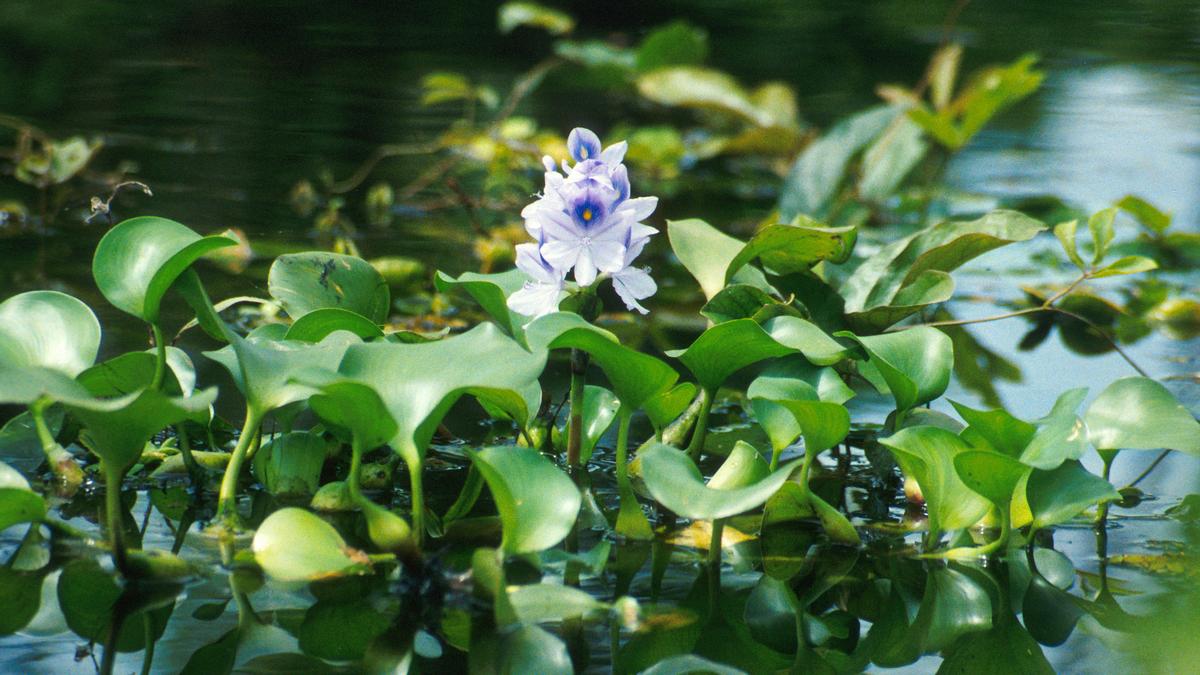
Aquatic ecosystems are at risk as well. Dominant aquatic weed species include the water hyacinth (Pontederia crassipes), alligator weed (Alternantheraphiloxeroides), duck weed (Lemnoidease species), and water lettuce (Pistia stratiotes). Water hyacinth is listed among the 10 worst invasives and looms everywhere, from paddy fields to lakes that host migratory birds in winter as well as in the Kaziranga National Park in Assam.

“Alien species are a major threat for 1,070 species of threatened freshwater fishes,” Rajeev Raghavan, scientist at the Kerala University of Fisheries and Ocean Studies, Kochi, said.

India alone has 626 alien aquatic species, mostly introduced via the aquarium trade, aquaculture, and for mosquito control and sport fishing, according to Raghavan. Alien fish are now found across India, from the Dal Lake in Kashmir and the rivers and lakes of Manipur lakes to water bodies in Telangana and Kerala.

Poor documentation

A major problem scientists grapple with is the absence of extensive documentation. Unlike a few invasives, such as Parthenium, Lantana, and Prosopis, most of them in India have no recorded invasion histories, invaded regions or extent of consequences, said Alok Bang, assistant professor at Azim Premji University.

Freshwater invasion biology as a discipline is also “still in its infancy”, according to Raghavan. There is a lack of comprehensive studies to understand micro-level distribution of alien species, their potential interactions with native species, and their impacts at the species and ecosystem levels.

“Conservation of a species might be understood differently by different stakeholders, so scientifically, we must define what we mean by conservation and impacts,” and understand their multiple impacts, Dr. Bang said.

For example, at the species level, they affect native inhabitants’ ability to survive and reproduce. At the populationlevel,  they affect the population size and genetic diversity.  Speciescould become locally extinct and/or have reduced ranges or communitieswithmultiple species could undergo changes in their composition and functions.

Invasive plants can also change the soil’s porosity and compactness; the acidity and turbidity of water; and the availability of light (e.g. by preventing light from penetrating to the forest floor or sea floor).

At the ecosystem-level, processes like food webs, primary productivity, nutrient cycling, and energy transfers could change — or an entire existing ecosystem could transform into a new one.

Document or conserve?

Conservation researchers, practitioners, and policymakers in India thus face a dilemma. As Dr. Bang put it: should they wait to document the effects of all these species to prepare a conservation plan or should they document and conserve in parallel?

Waiting to document all “would be unwise because there is no end to doing site-specific documentation, and we may not have the resources to do these studies.”

It would be wiser to simultaneously conduct more impact studies in India and prepare conservation plans based on the knowledge of their ecological and socio-economic consequences in other countries, Dr. Bang added. 

He recommended developing standardised quantitative methods to map the cumulative effects of invasive alien species on ecosystems as well as studies on impact assessment and eradication efforts.

“This approach can help identify highly impactful invasive alien species and hotspots of highly [affected] areas and prioritise sites, pathways, and species for management actions,” Dr. Bang, who is working on such a framework, added.

According to him, scientists must also step out of silos and communicate and consult with diverse stakeholders that are interested in and affected by biological invasions while designing potential future prevention, control, and eradication.

He also said citizen science efforts could help create atlases of invasive species distribution.

T.V. Padma is a science journalist in New Delhi.


Source link

Science

Post navigation

Previous Post: Israel, Hamas agree to ‘first phase’ of plan to end fighting, release hostages, Trump says
Next Post: Access Denied

Related Posts

  • Secretive jungle cats need habitats outside protected areas: study
    Secretive jungle cats need habitats outside protected areas: study Science
  • Quiz | Easy like Sunday morning: Space and beyond
    Quiz | Easy like Sunday morning: Space and beyond Science
  • What was the tussle over Covaxin IPR? | Explained
    What was the tussle over Covaxin IPR? | Explained Science
  • Sci-Five | The Hindu Science Quiz: On Octopus
    Sci-Five | The Hindu Science Quiz: On Octopus Science
  • Understanding ovarian cancer: its causes, symptoms, and screening methods
    Understanding ovarian cancer: its causes, symptoms, and screening methods Science
  • Germany signs U.S.-led space norms pact Artemis Accords
    Germany signs U.S.-led space norms pact Artemis Accords Science

More Related Articles

NASA-ISRO mission to launch NISAR satellite on July 30, confirms ISRO chairman NASA-ISRO mission to launch NISAR satellite on July 30, confirms ISRO chairman Science
With CRISPR poised to revolutionise therapy, a pause to consider ethical issues With CRISPR poised to revolutionise therapy, a pause to consider ethical issues Science
Reflect Orbital is a company with plans to sell you sunlight at night Reflect Orbital is a company with plans to sell you sunlight at night Science
In pictures | Rare blue supermoon dazzles stargazers around the globe In pictures | Rare blue supermoon dazzles stargazers around the globe Science
Sci-Five | The Hindu Science Quiz: on semi-conductors Sci-Five | The Hindu Science Quiz: on semi-conductors Science
Scientists find a blood test that predicts lung cancer years early Scientists find a blood test that predicts lung cancer years early Science
SiteLock

Archives

  • October 2026
  • September 2026
  • August 2026
  • July 2026
  • June 2026
  • May 2026
  • April 2026
  • March 2026
  • February 2026
  • January 2026
  • December 2025
  • November 2025
  • October 2025
  • September 2025
  • August 2025
  • July 2025
  • June 2025
  • May 2025
  • April 2025
  • March 2025
  • February 2025
  • January 2025
  • December 2024
  • November 2024
  • October 2024
  • September 2024
  • August 2024
  • July 2024
  • June 2024
  • May 2024
  • April 2024
  • March 2024
  • February 2024
  • January 2024
  • December 2023
  • November 2023
  • October 2023
  • September 2023
  • August 2023
  • July 2023
  • June 2023
  • May 2023
  • April 2023
  • March 2023
  • February 2023
  • January 2023
  • December 2022
  • November 2022
  • October 2022
  • September 2022
  • August 2022
  • July 2022
  • June 2022
  • May 2022

Categories

  • Business
  • Nation
  • Science
  • Sports
  • World

Recent Posts

  • Police ‘lost control’ during French protests, says Interior Minister
  • Neha Bora moves Delhi High Court against peace bond notice
  • Anti-drug activist murder: Diljit Dosanjh says Jhota’s family should get justice
  • Greek coast guard says 12 migrants die in Aegean sea crossings
  • Indian air ambulance makes emergency landing in Bangladesh; patient dies

Recent Comments

  1. AnthonyMow on UP Teacher Who Asked Students To Slap Muslim Classmate
  2. AndrewDuS on UP Teacher Who Asked Students To Slap Muslim Classmate
  3. AnthonyMow on UP Teacher Who Asked Students To Slap Muslim Classmate
  4. MatthewSow on UP Teacher Who Asked Students To Slap Muslim Classmate
  5. TimothysweaR on UP Teacher Who Asked Students To Slap Muslim Classmate
  • Education and bank usage rise among Telangana women, yet nearly 1 in 3 report spousal violence
    Education and bank usage rise among Telangana women, yet nearly 1 in 3 report spousal violence Nation
  • Several children killed in stampede at a holiday fair event in Nigeria, state governor says
    Several children killed in stampede at a holiday fair event in Nigeria, state governor says World
  • Access Denied Business
  • Chess | Would be ‘supercool’ to have World title match in India, says Gukesh
    Chess | Would be ‘supercool’ to have World title match in India, says Gukesh Sports
  • Several Buses Explode In Israel In ‘Suspected Terror Attack’: Police
    Several Buses Explode In Israel In ‘Suspected Terror Attack’: Police World
  • Indonesia plans minimum age for social media use
    Indonesia plans minimum age for social media use World
  • Vinesh Phogat versus the perplexing biochemistry of losing weight
    Vinesh Phogat versus the perplexing biochemistry of losing weight Science
  • How can Bengal election be fair when so many genuine voters are left out, asks Shashi Panja
    How can Bengal election be fair when so many genuine voters are left out, asks Shashi Panja Nation

Editor-in-Chief:
Mohammad Ariff,
MSW, MAJMC, BSW, DTL, CTS, CNM, CCR, CAL, RSL, ASOC.
editor@artifex.news

Associate Editors:
1. Zenellis R. Tuba,
zenelis@artifex.news
2. Haris Daniyel
daniyel@artifex.news

Photograher:
Rohan Das
rohan@artifex.news

Associate Journalists
1. Subrata Paul - AN/2020/01
2. Quamruz Zaman - AN/2021/22
3. Ahmed Sha - AN/2021/035
4. Ajay Kumar Shaw - AN/2021/39
5. Tahqiqul Hoda - AN/2021/21

Artifex.News offers Online Paid Internships to college students from India and Abroad. Interns will get a PRESS CARD and other online offers.
Send your CV (Subjectline: Paid Internship) to internship@artifex.news

Links:
Associate Journalism
About Us
Privacy Policy

News Links:
Breaking News
World
Nation
Sports
Business
Entertainment
Lifestyle

Registered Office:
72/A, Elliot Road, Kolkata - 700016
Tel: 033-22277777, 033-22172217
Email: office@artifex.news

Editorial Office / News Desk:
No. 13, Mezzanine Floor, Esplanade Metro Rail Station,
12 J. L. Nehru Road, Kolkata - 700069.
(Entry from Gate No. 5)
Tel: 033-46011099, 033-46046046
Email: editor@artifex.news

Copyright © 2023 Artifex.News Newsportal designed by Artifex Infotech.