



“We will each write a ghost story”, said Lord Byron; and his proposition was acceded to. And so on a cold and rainy supposedly summer night in 1816, four friends inspired by German ghost stories, gathered to write one. Among them, a young Mary Shelley, consumed by the idea of creating a story that would “curdle the blood” of her readers, ended up with a novel titled Frankenstein.
With Frankenstein 200 years in the past, the possibility of creating such life is a reality. With the first gene editing technology securing approval for the treatment of sickle cell anemia and beta-thalassemia, we transcend into a new revolutionary phase. The possibilities are endless.
(For top health news of the day, subscribe to our newsletter Health Matters)
Casgevy and Lyfgenia, the two cell-based gene therapies approved by the Food and Drug Administration (FDA) for sickle cell anemia treatment and beta-thalassemia utilise the Nobel-winning CRISPR/Cas 9 genome editing technology.
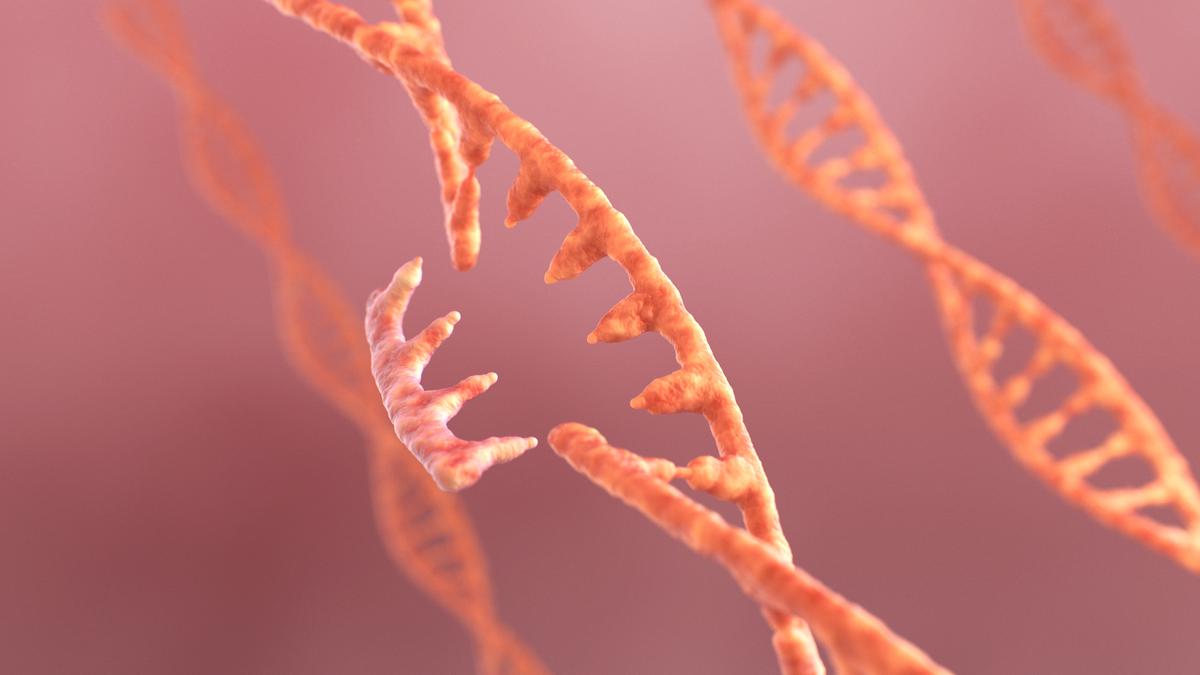
Clustered Regularly Interspaced Short Palindromic Repeats (CRISPR), a feature of the bacterial immune system, forms the basis for this technology. In a nutshell, the system in bacteria serves as a warehouse for past infections by storing a part of the viral genetic material and incorporating it into its own, so the next time it is attacked, the bacteria is capable of recognising the virus and destroying it. The bacteria, in short, is immunised when it employs the CRISPR system. The CRISPR-Cas system is effective and easy to manipulate. Researchers have adapted it as a tool to cut, delete, or add DNA sequences at precise locations, opening different windows to treat genetic disorders, develop drought-resistant plants, modify food crops, or experiment with de-extinction projects involving the woolly mammoth and the dodo.
Sickle-cell anemia (SCA) is an inherited disorder where red blood cells contort to a sickle or crescent shape because of defective hemoglobin, restricting its ability to carry oxygen. According to an article published in the Indian Journal of Medical Research over 20 million people live with SCA in India and it is predominantly seen in the scheduled tribes (ST) and scheduled caste (SC) populations where the majority are economically backward.
Also Read: Explained | How is India addressing sickle cell anaemia?
Casgevy costs 2.2 million US$ per patient to treat sickle-cell anemia. Indian researchers are working on indigenous treatment involving CRISPR genome editing to reduce the cost. “For India, the issue of pricing is a very important consideration, since it impacts equitable distribution. It is little early to determine now, if production costs can be reduced, or there can be alternative pricing models, or coverage through healthcare, insurance, negotiations with pharma sector, policies around commercialisation for sustainable and affordable solutions”, explained Roli Mathur, Head, Bioethics Unit, Indian Council of Medical Research (ICMR) over mail.
For many people living with the disease accessing even hydroxyurea, a medicine used as a first-line therapy for SCD, is a challenge in India. While researchers are doing their best to find a cost-effective treatment, there are chances of it still being beyond reach for most of them. “When you have such a blockbuster therapy, you also have to think about how you can make it accessible and many people around the world including us are working along those lines”, said Debojyoti Chakraborty, Principal Scientist at CSIR Institute of Genomics and Integrative Biology (IGIB).
The tribal population which is affected the most has limited healthcare access for various reasons: one being that they live in remote areas where there is a scarcity of healthcare professionals. “There is a need to provide primary care to deal with this debilitating disease that the community is suffering from. If you don’t do primary care then how are you going to do tertiary care?” asked Amar Jesani, a medical doctor, independent researcher, and teacher of bioethics and public health.
The Sickle Cell Anemia Elimination Mission launched in India on 1st July 2023 aims to strengthen the existing healthcare system and improve primary, secondary, and tertiary healthcare teams. “Equitability is a factor which has to be accessed both at the local and global level. The government has a lot of power and we have seen how they can actually make things accessible to everyone like they did for vaccines. A similar modality would have to be put into place where you have partners from scientists, governments, and industries come together to see how you can get these kinds of therapies out”, said Dr. Chakraborty.
Indian regulation
The decision-making process for CRISPR research is governed by the existing legal and regulatory framework. The New Drugs and Clinical Trials Rules (2019) classify Gene Therapy Products (GTPs), including those developed through CRISPR, as new drugs, subjecting them to a thorough approval process by the Central Drugs Standard Control Organization (CDSCO). Additional requirements will be determined following the ICMR-DBT National guidelines for GTPs and oversight by bodies such as the Review Committee on Genetic Manipulation (RCGM) and the Genetic Engineering Approval Committee (GEAC) as applicable. Moreover, all biomedical and health research in India must adhere to the ICMR National Ethical Guidelines for Biomedical and Health Research Involving Human Participants, 2017.
Germline editing and CRISPR
Apart from the health equity and disparities associated with CRISPR, one of the biggest controversies has been about germline editing. Most of the scientific community supports the use of CRISPR to treat monogenic diseases. Germline editing is heritable and more complex and begs the question if it is even moral to subject an individual to heritable changes, even if it is to treat debilitating genetic conditions.
As of now, genome editing is restricted to somatic cells and there is a moratorium on germline editing. But when the advantages surpass the drawbacks, where will science draw the line with genome editing?
Chinese scientist He Jiankui took the scientific world by storm when he announced that he had edited healthy embryos in an attempt to minimise girls’ predisposition to HIV infection. This was in 2018 despite having guidelines against germline editing and at a time when studies had no clear-cut answers to the outcome of such an intervention. We still fully do not understand the long-term effects of CRISPR editing.
“It’s not a technology which is absolutely 100% full-fledgedly understood. [Germline editing] can come slowly, progressively once we have totally understood the pros and cons of the gene editing technology”, explained Dr. Chakraborty.
Guidelines, laws, and dialogues around ethical, societal, and safety issues need to evolve parallelly as technology evolves. “Most countries including India have forbidden genome editing in human embryos through legal instruments or through guidelines. In India every Institution involved in biomedical research is required to follow ICMR National Ethical Guidelines and register with the ethics committee which monitors research (including around gene editing)”, said Dr. Mathur.
The gene editing technology has also raised concerns regarding it becoming a commodity that wealthy parents will exploit to improve the fate of their children not only for therapeutic purposes but for genetic enhancement. “There is a chance that if we do not have a way to distribute these therapies to different parts of the world where it is needed through whatever mechanism, then you would have a division in the world because the therapy is there but the affordability isn’t there”, Dr. Chakraborty added.
Public engagement
Also given our incomplete knowledge about the long-term effects of CRISPR, researchers and policy-makers are considering real-world implications in the long run. The method is here to stay and the media and public need to engage in open dialogues to prevent the spread of misinformation. “Institutions undertaking cutting-edge research must also come up with best practices in community engagement, education, and timely and truthful communication to build trust among all stakeholders with a special focus on communities”, according to Dr. Mathur.
Written in an era before DNA was discovered, Frankenstein became an inspiration for science fiction and was one of the first novels to question the outcome of interfering with nature. It served as a reminder for scientists to proceed with caution and explore the moral consequences of scientific innovation. We have come a long way since then. Unlike the scientist in the novel, scientists today are aware of the power they hold with a technology that can change the genetic code and the societal implications for it, while also holding accountability for violating guidelines as seen in 2018.
At the end of the day, CRISPR is a tool whose endgame is determined by how humans utilise it. “Unless ethics is at the fore, even if there is scientific success, societal acceptance cannot be guaranteed. There needs to be enough commitment to integrate ethics in research work for the technology to have a positive impact”, explained Dr. Mathur.
(The author is a freelance content provider based in Hyderabad. )