





On August 7, Vinesh Phogat was set to become the first Indian woman to compete in a wrestling finals at the Olympics. At the 2024 games in Paris, she had defeated defending Olympic champion Yui Sasaki (Japan) and European and Pan-American champions Oksana Livach (Ukraine) and Yusneylis Guzman (Cuba) in that order, guaranteeing herself at least a silver medal.
That morning, however, Ms. Phogat’s weight was found to be about a hundred grams more than 50 kg — the maximum permitted in the category she was competing in. The game’s rules demanded that she be disqualified. The silver medal, initially seen as a consolation in case she lost the final, was now out of her reach.
The next day Ms. Phogat retired from wrestling, although media reports have said she may reconsider.
Physically a hundred grams isn’t much, but biologically it’s a lot. The things Ms. Phogat tried to bring her weight under 50 kg left her unwell and requiring medical care, speaking to the difficulties of gaining and losing weight. But why are they so difficult?
The physiology of weight
Losing or gaining weight is on the face of it a function of “one’s energy intake and expenditure,” Sanjay Kalra, an endocrinologist in Karnal, Haryana, said. If an individual intends to lose weight, it should ideally suffice for them to reduce the amount of energy they take in as food and increase the amount of energy they lose through exercise.
“There is more to the story”, however.
It plays out on at least three levels, according to Dr. Kalra:
(i) The brain: The hypothalamus, a small part of the brain, produces two kinds of hormones: orexigenic hormones increase appetite and anorexigenic hormones lower appetite and increase satiety.
Hormones are molecules produced in one part of the body that exert their effects on a different and often distant part. The orexigenic and anorexigenic hormones are produced in the hypothalamus and show their effects on other parts of the brain and in the gut.
(ii) The bowels: The gut produces hormones that can directly communicate with the brain to regulate appetite; it also regulates the rate at which food flows through the gut, which affects body weight.
A 1976 paper in the journal Gut reported that when food moved faster from the stomach to the small intestine, the intestine had more time to absorb calories from the food, leading to higher body weight. Conversely, lower body weight was associated with slower food movement from the stomach to the small intestine.
(iii) The brawn:“The brawn refers to the physical build of the body,” Dr. Kalra said. It has two kinds of hormones that he called “burners” and “builders”. Burners, including hormones produced by the thyroid, increase metabolism and lead to weight loss. Builders, like insulin, help incorporate glucose from the bloodstream into liver and fat cells and skeletal muscles, leading to weight gain.
Complicating the story further is a person’s “metabolic set-point”. A term proposed in 1982 by American nutrition researchers William Bennett and Joel Gurin in their book ‘The Dieter’s Dilemma’, the set-point refers to an individual’s innate weight range that the body attempts to preserve. When the individual tries to lose weight by, say, regulating their diet, the body kicks in mechanisms that lead to weight gain.
“This makes weight loss incredibly challenging,” Dr. Kalra said.
Losing weight rapidly
Christianez Ratna Kiruba, a general medicine physician in Guwahati, said every human’s weight has three main contributions: from skeletal muscles, fat, and water. The exact contribution of each varies from one individual to the next, but in all bodies the biggest contributor is water.
Thus rapid weight gain or loss targets the fluid content of a body. According to Dr. Kiruba, “The methods Vinesh Phogat was using to reduce her weight appeared to target water weight.”
According to media reports, Ms. Phogat tried a combination of sauna visits, static cycling, running, and exercising in the gym the night before her weighing.
Gaining or losing water leads to an overall increase or reduction in body weight because of carbohydrates. Dr. Kalra said the body stores carbohydrates mainly as glycogen (a polymer of glucose molecules), most of which goes to the skeletal muscles and the liver.
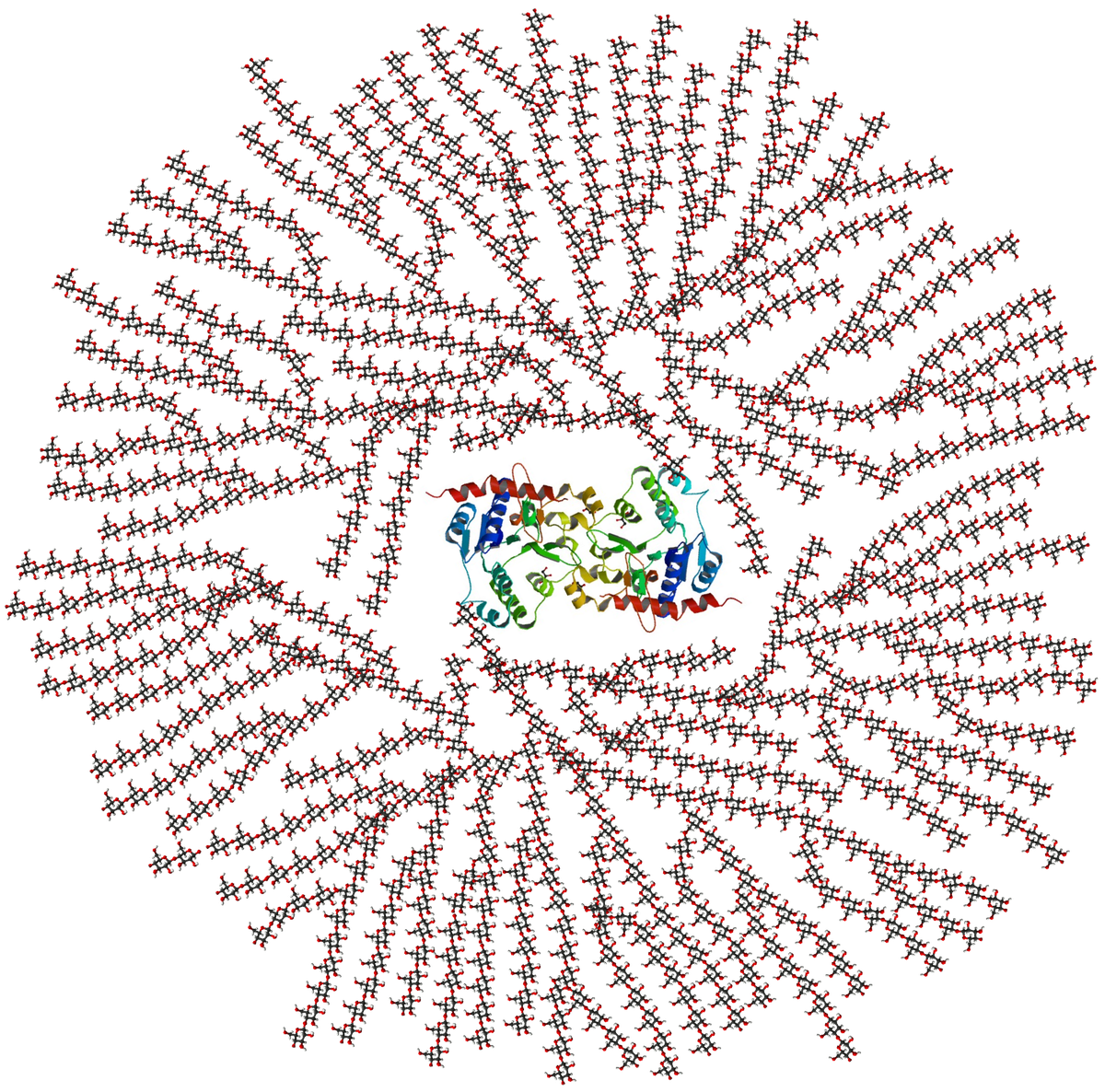
A core protein of glycogenin is surrounded by branches of glucose units. The entire globular complex contains around 30,000 glucose units.
| Photo Credit:
Mikael Häggström
But whenever glycogen is shuttled into muscles, it is stored in a hydrated form, so water gets in as well. According to one estimate, every gram of glycogen brings about 3 grams of water along. This is why rapid weight loss protocols target carbohydrates by reducing their intake as well as storage. As the amount of carbohydrates drops in the body, so does the amount of water, leading to weight loss.
“This is why people see rapid weight loss in the initial few days of dieting and exercise,” Dr. Kiruba said.

In addition to carbohydrates, other factors including salt intake also affect body weight by involving water. In 2021, a group of scientists in the U.S. compared the beverage hydration index of electrolyte-, protein- or carbohydrate-rich fluids against plain water. This index is used to measure the amount of water a body retains after consuming a fluid. They found electrolyte-rich fluids led to the highest amount of water retention.
Consuming excess salt increases the concentration of sodium ions — a type of electrolyte — in the body. In response, the body reduces the amount of water excreted through urine to ensure the sodium-to-water ratio is constant. This in turn leads to water retention and a higher body weight.
Sex matters
After Ms. Phogat’s disqualification, the Indian Olympic Association (IOA) appealed to the Lausanne-based Court for Arbitration of Sports (CAS), an international body that adjudicates in sports-related disputes. One of the IOA’s arguments was: “The biological difference in the bodies of male and female wrestlers, particularly in light of the menstruation of women, needs to be taken into account whilst determining the eligibility of female wrestlers on the second day of the weigh-in.”
The IOA also provided medical certificates highlighting Ms. Phogat was close to her menstrual period.
CAS replied that such differences are “speculative and unsupported by evidence”.
Both Dr. Kalra and Dr. Kiruba said some women might gain body weight during the latter part of their menstrual cycle, closer to their periods. In this time, women are in the luteal phase of the cycle: the time when the levels of the hormone progesterone are high in the body. According to Dr. Kalra, about 25% of women experience bloating and water retention in this time and may gain weight.
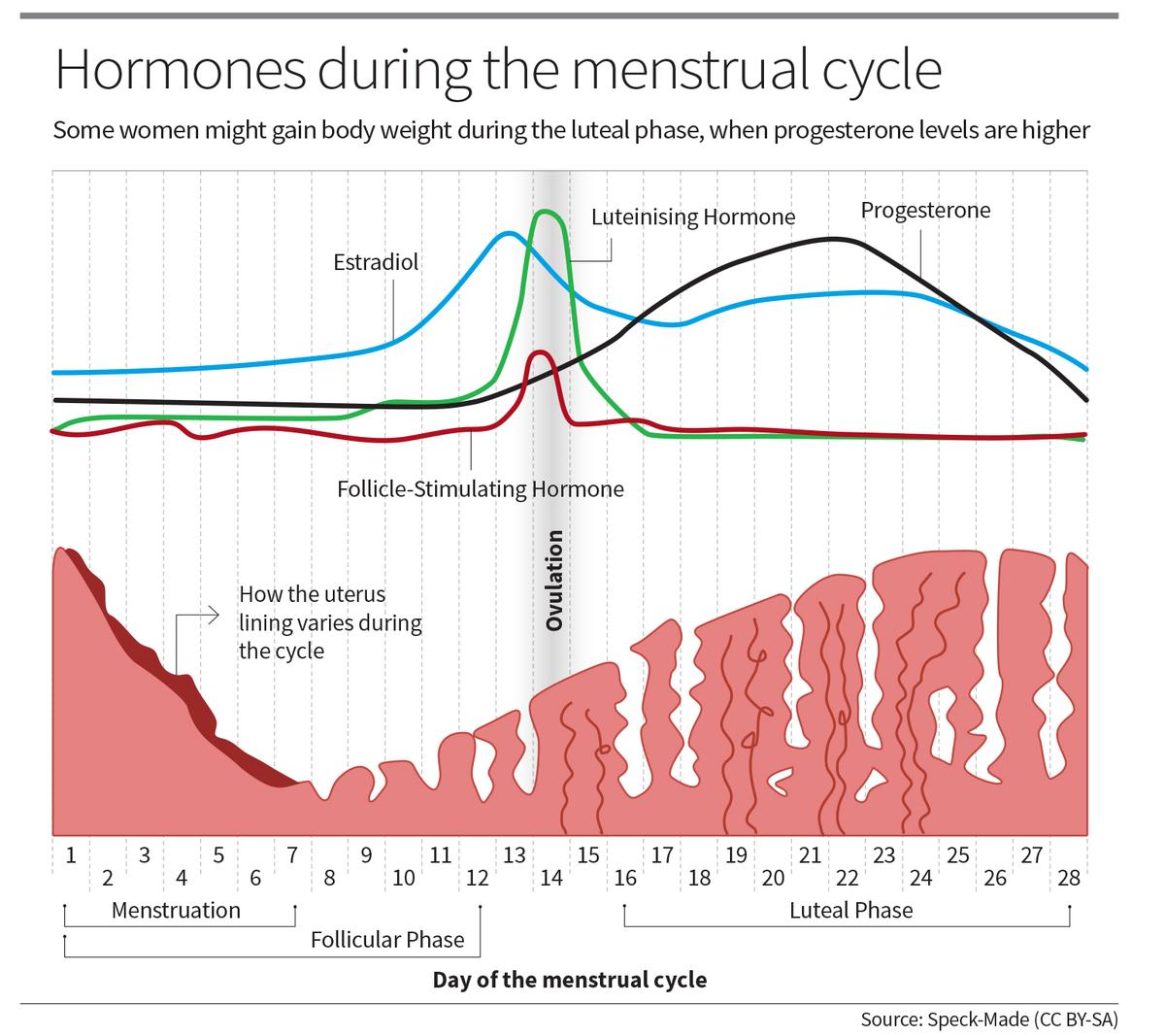
That said, evidence of progesterone’s impact on body weight is controversial. In 1967, researchers reported that progesterone could increase the body weight of female rats, but subsequent evidence suggested the hormone in human females may either not lead to a change in body weight or lead to its reduction. Even in human males, where the adrenal glands produce low levels of progesterone, researchers have associated the hormone with lower body weight.
The contradictory observations can be explained by the metabolic effects of progesterone. It can increase the amount of insulin, which leads to more glycogen being stored in the liver along with water. On the other hand, according to a 1982 study, progesterone “antagonises the effects of insulin” in fat tissue and skeletal muscle, leads to larger fat deposits, and a faster rate of protein breakdown.
Weight v. athletic advantage
Dr. Kalra said that, in Ms. Phogat’s case, he believes little could have been done to lower her weight further. One option he said could have been to medically regulate her menstrual cycle to ensure she was in the low-progesterone phase, together with a stricter weight monitoring regime.
As controversial as menstrual regulation sounds, Dr. Kalra said it is a “regular reality for many women athletes”.
“Even though there are medicines that can induce weight loss, most of them would amount to doping in sports contexts,” he added.

Ms. Phogat’s inability to make the required weight may have stemmed from being compelled to compete in the ‘wrong’ category. Most wrestlers compete in categories where the maximum weight limit is slightly less than their regular weight. Ms. Phogat’s regular weight was around 55 kg, so the more appropriate category might have been 53 kg. But another wrestler had already been selected to represent India in that category, so Ms. Phogat was slotted into the 50-kg group.
Dr. Kiruba said Ms. Phogat’s case shines light on the potential need for Olympic rules to consider whether small increases in weight correspond to athletic advantage. According to her, athletic advantages stem mostly from skeletal muscle mass and not from water weight, which she suspected was the cause of Ms. Phogat’s higher weight on August 7 morning.
By fixating more on the weight instead of whether the athlete acquired any actual advantages, the sports might be misjudging the eligibility of an individual to compete, she added.
Sayantan Datta is a science journalist and a faculty member at Krea University.