

Skip to content
  • Facebook
  • X
  • Linkedin
  • WhatsApp
  • Associate Journalism
  • About Us
  • Privacy Policy
  • 033-46046046
  • editor@artifex.news
Artifex.News

Artifex.News

Stay Connected. Stay Informed.

  • Breaking News
  • World
  • Nation
  • Sports
  • Business
  • Science
  • Entertainment
  • Lifestyle
  • Toggle search form
  • Indonesia flood death toll rises to 41 with 17 missing
    Indonesia flood death toll rises to 41 with 17 missing World
  • “Need To Work On My Mistakes”: PV Sindhu After Getting Knocked Out Of All England Badminton
    “Need To Work On My Mistakes”: PV Sindhu After Getting Knocked Out Of All England Badminton Sports
  • Satwiksairaj Rankireddy-Chirag Shetty Crowned Thailand Open Men’s Doubles Champions
    Satwiksairaj Rankireddy-Chirag Shetty Crowned Thailand Open Men’s Doubles Champions Sports
  • An Hour On Counting Day, And A Big Mood Swing At Congress, BJP Offices
    An Hour On Counting Day, And A Big Mood Swing At Congress, BJP Offices Nation
  • Pope acknowledges criticism and health issues but says in his new memoir he has no plans to retire
    Pope acknowledges criticism and health issues but says in his new memoir he has no plans to retire World
  • Need To Fight Together With INDIA Bloc: Sonia Gandhi’s Unity Message
    Need To Fight Together With INDIA Bloc: Sonia Gandhi’s Unity Message Nation
  • Paris Olympics 2024: Archer Pravin Jadhav Loses His Opening Round, Men’s Singles Challenge Ends
    Paris Olympics 2024: Archer Pravin Jadhav Loses His Opening Round, Men’s Singles Challenge Ends Sports
  • Health Ministry Dismisses Reports On High Number Of ‘Zero Dose Children’ In India
    Health Ministry Dismisses Reports On High Number Of ‘Zero Dose Children’ In India Nation
What makes the NASA-ISRO NISAR satellite so special? | Explained

What makes the NASA-ISRO NISAR satellite so special? | Explained

Posted on July 27, 2025 By admin


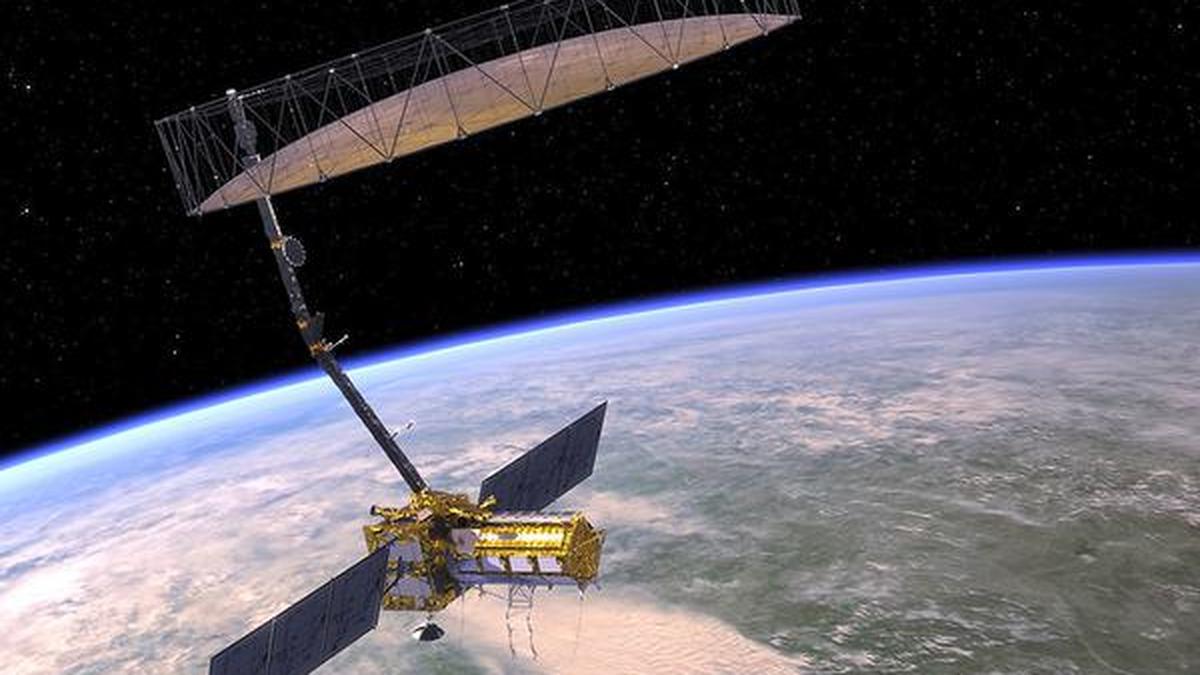
The story so far: The Indian Space Research Organisation (ISRO) is planning to launch the NISAR satellite from Sriharikota on July 30 onboard a GSLV Mk-II rocket. ‘NISAR’ stands for NASA-ISRO Synthetic Aperture Radar and is a joint mission of the two space agencies. It is a sophisticated earth-observation satellite designed to study changes on the earth’s surface in fine detail, covering earthquakes, volcanoes, ecosystems, ice sheets, farmland, floods, and landslides.

What’s the need for NISAR?

NISAR is the first major earth-observing mission with a dual-band radar, which will allow it to observe changes more precisely than any other satellite. It will be able to see through clouds, smoke, and even thick vegetation, both at day and night, in all weather conditions. The three-tonne machine has been a decade in the making and costs more than $1.5 billion, also making it one of the most expensive earth-observing satellites to date.

The earth’s surface is constantly changing. Natural disasters, human-driven changes, and climate shifts all affect environments and human societies. Satellites provide critical information by taking snapshots of these changes from space, helping scientists, governments, and relief agencies prepare for, respond to or study them. To this end, NASA and ISRO have created a powerful global mission that also allows ISRO guaranteed access to a stream of high‑resolution data tailored to India’s needs.

NISAR’s science and application goals span six areas: solid earth processes, ecosystems, ice dynamics, coastal and ocean processes, disaster response, and additional applications (including tracking groundwater, oil reservoirs, and infrastructure like levees, dams, and roads for subsidence or deformation and supporting food security research).

The planned mission lifetime is three years although its design lifetime is at least five years. Notably, the mission’s data policy entails that the data NISAR produces will be freely available to all users (typically) within a few hours.

How does NISAR work?

Once it is launched, NISAR will enter into a sun-synchronous polar orbit at 747 km altitude and an inclination of 98.4º. From here, instead of snapping pictures, NISAR’s synthetic aperture radar (SAR) will bounce radar waves off the planet’s surface and measure how long the signal takes to come back and how its phase changes.

The ability of a radar antenna to resolve smaller details increases with its length, called its aperture. In orbit, deploying an antenna hundreds of metres long is impractical. SAR gets around this by mimicking a giant antenna. As the spacecraft moves forward, it transmits a train of radar pulses and records the echoes. Later, a computer coherently combines all those echoes as if they had been captured simultaneously by one very long antenna, hence the “synthetic aperture”.

NISAR will combine an L-band SAR (1.257 GHz), which uses longer-wavelength radiowaves to track changes under thick forests and soil and deformations on the ground, and an S-band SAR (3.2 GHz), which uses shorter-wavelength radiowaves to capture surface details, such as crops and water surfaces.

Although NISAR will operate globally at L‑band, ISRO has reserved routine, planned acquisitions with the S‑band SAR over India. The latter acquisitions have extended sensitivity to biomass, better soil‑moisture retrieval, and mitigate ionospheric noise — all capabilities tuned to India’s needs in agriculture, forestry, and disaster management.

Because the L‑band radar is the principal tool for NASA’s mission goals, the instrument is expected to operate in up to 70% of every orbit. This said, operating both radars together is an official implementation goal so that mode conflicts over the Indian subcontinent are minimised.

Polarisation is the direction in which the electric field of some electromagnetic radiation, like radiowaves, oscillates. SAR can transmit and receive radar signals with horizontal or vertical polarisation. Using different combinations will allow the instruments to identify the structure and types of different surface materials, like soil, snow, crop or wood.

The swath width, i.e. the breadth of the bands on the ground the SARs will scan, is an ultra-wide 240 km. The radars’ SweepSAR design will transmit this beam and, upon its return, digitally steer multiple small sub‑apertures in sequence, synthesising beams that sweep across the ground track. This scan‑on‑receive method allows the 240‑km swath without compromising resolution.

The resulting scans will have a spatial resolution of 3-10 m and centrimetre-scale vertical mapping — enough to spot impending land subsidence in cities, for example — depending on the mode. Each spot on the ground will be scanned once every 12 days.The satellite also features a large 12-m-wide mesh antenna.

NISAR will produce annual maps of aboveground woody biomass of 1 ha resolution and quarterly maps of active and inactive cropland. High-resolution maps of flooded versus dry areas will be available as well. During a disaster, NISAR can also be directed to collect data for ‘damage proxy maps’ to be delivered in under five hours.

This said, for certain acquisition modes, NISAR won’t be able to achieve full global coverage at the highest resolution. Above roughly 60º latitude, every alternative observation will be skipped due to converging ground tracks. Similarly, some 10% of the surface may not be mapped from either direction (of the satellite’s passage over the ground) in any given 12-day cycle.

How was NISAR built?

At the time the two space organisations agreed to build NISAR, NASA and ISRO decided each body would contribute equivalent‑scale hardware, expertise, and funding. ISRO’s contributions in particular are mission‑critical.

The organisation supplied the I‑3K spacecraft bus, the platform that houses the controls to handle command and data, propulsion, and attitude, plus 4 kW of solar power. The same package also included the entire S‑band radar electronics, a high‑rate Ka‑band telecom subsystem, and a gimballed high‑gain antenna. The S‑band electronics were designed and built at the Space Applications Centre in Ahmedabad.

NASA’s biggest contribution was the complete L‑band SAR system. NASA’s Jet Propulsion Laboratory supplied all radio‑frequency electronics, the 12‑m antenna, a 9-m carbon-composite boom, and the instrument structure that carries both radars. The agency also fabricated the L‑band feed aperture and provided the supporting avionics, including a high‑capacity solid‑state recorder, a GPS receiver, an autonomous payload data system, and a Ka‑band payload communications subsystem.

The spacecraft was to be integrated at the ISRO Satellite Centre in Bengaluru after the two radars were mated at JPL. The final observatory‑level tests will therefore have taken place on Indian soil. After that the mission will lift off from Sriharikota onboard a GSLV Mk-II launch vehicle, with ISRO providing end‑to‑end launch services and documentation.

While themission operations are to be centred at the JPL Mission Operations Center, day‑to‑day flight operations will be led from the ISRO Telemetry, Tracking and Command Network in Bengaluru. Once NISAR is in orbit, most of its data will be sent through NASA’s Near Earth Network facilities in Alaska, Svalbard (Norway), and Punta Arenas (Chile), which can together receive around 3 TB of radar data per day. They will be complemented by ISRO’s ground stations in Shadnagar and Antarctica.

After the raw data arrive, India’s National Remote Sensing Centre will process and distribute all products required for Indian users, mirroring NASA’s pipeline.



Source link

Science Tags:NASA ISRO joint space mission, NASA-ISRO NISAR satellite, NISAR earth-observation satellite, NISAR satellite, NISAR satellite launch date, What is NISAR satellite?, What makes the NISAR satellite special?

Post navigation

Previous Post: The virtues of the tomato, a healthy vegetable
Next Post: MCap of six of ten most valued firms drops by ₹2.22 lakh crore; Reliance biggest laggard

Related Posts

  • Chandrayaan-3 | ISRO one step away from landing on Moon as Lander Module completes second deboost operation  
    Chandrayaan-3 | ISRO one step away from landing on Moon as Lander Module completes second deboost operation   Science
  • Krishna Ella, of Bharat Biotech, conferred INSA Fellowship
    Krishna Ella, of Bharat Biotech, conferred INSA Fellowship Science
  • How reliable are studies that show moderate drinking has health benefits?
    How reliable are studies that show moderate drinking has health benefits? Science
  • What is the legal framework for space missions like the Chandrayaan 3 and Aditya L-1? | Explained
    What is the legal framework for space missions like the Chandrayaan 3 and Aditya L-1? | Explained Science
  • Calories and kilojoules: how do we know the energy content of food, and how accurate are the labels?
    Calories and kilojoules: how do we know the energy content of food, and how accurate are the labels? Science
  • X chromosome revival in older women ups autoimmune disease risk
    X chromosome revival in older women ups autoimmune disease risk Science

More Related Articles

DRDO conducts key test in scramjet technology development DRDO conducts key test in scramjet technology development Science
What are colours and how do people understand them? | Explained What are colours and how do people understand them? | Explained Science
Warming-induced glacier retreat could create novel ecosystems Warming-induced glacier retreat could create novel ecosystems Science
Bottleneck in human evolution explained using a novel genomic analysis technique Bottleneck in human evolution explained using a novel genomic analysis technique Science
Can use genomic labs set up during pandemic to measure antimicrobial resistance: Soumya Swaminathan Can use genomic labs set up during pandemic to measure antimicrobial resistance: Soumya Swaminathan Science
The Science Quiz | 100 years ago, science found the colossal squid… The Science Quiz | 100 years ago, science found the colossal squid… Science
SiteLock

Archives

  • August 2025
  • July 2025
  • June 2025
  • May 2025
  • April 2025
  • March 2025
  • February 2025
  • January 2025
  • December 2024
  • November 2024
  • October 2024
  • September 2024
  • August 2024
  • July 2024
  • June 2024
  • May 2024
  • April 2024
  • March 2024
  • February 2024
  • January 2024
  • December 2023
  • November 2023
  • October 2023
  • September 2023
  • August 2023
  • July 2023
  • June 2023
  • May 2023
  • April 2023
  • March 2023
  • February 2023
  • January 2023
  • December 2022
  • November 2022
  • October 2022
  • September 2022
  • August 2022
  • July 2022
  • June 2022
  • May 2022

Categories

  • Business
  • Nation
  • Science
  • Sports
  • World

Recent Posts

  • What are the uses of wastewater surveillance? | Explained
  • Netanyahu rival Benny Gantz offers political truce to help secure Gaza hostage deal
  • Wang Yi: The ‘silver fox’ of Chinese diplomacy
  • Access Denied
  • Access Denied

Recent Comments

  1. dfb{{98991*97996}}xca on UP Teacher Who Asked Students To Slap Muslim Classmate
  2. "dfbzzzzzzzzbbbccccdddeeexca".replace("z","o") on UP Teacher Who Asked Students To Slap Muslim Classmate
  3. 1}}"}}'}}1%>"%>'%> on UP Teacher Who Asked Students To Slap Muslim Classmate
  4. bfg6520<s1﹥s2ʺs3ʹhjl6520 on UP Teacher Who Asked Students To Slap Muslim Classmate
  5. pHqghUme9356321 on UP Teacher Who Asked Students To Slap Muslim Classmate
  • For Arvind Kejriwal, It Is Back To Ramlila Maidan Where It All Began
    For Arvind Kejriwal, It Is Back To Ramlila Maidan Where It All Began Nation
  • 2 Commanders Of Hamas’ “Most Significant Brigade” Killed In Israel Strikes
    2 Commanders Of Hamas’ “Most Significant Brigade” Killed In Israel Strikes World
  • Joe Biden Talks With Volodymyr Zelensky, Announces New Military Aid For Ukraine
    Joe Biden Talks With Volodymyr Zelensky, Announces New Military Aid For Ukraine World
  • Pakistan Release Pacer Hasan Ali From T20I Squad vs England.
    Pakistan Release Pacer Hasan Ali From T20I Squad vs England. Sports
  • Donald Trump Says He Will Meet PM Modi Next Week
    Donald Trump Says He Will Meet PM Modi Next Week World
  • New China rules allow detention of foreigners in South China Sea
    New China rules allow detention of foreigners in South China Sea World
  • Hyderabad Couple Lives With Son’s Body For 4 Days, Not Knowing He Is Dead
    Hyderabad Couple Lives With Son’s Body For 4 Days, Not Knowing He Is Dead Nation
  • In Frames | Starling murmurations
    In Frames | Starling murmurations Science

Editor-in-Chief:
Mohammad Ariff,
MSW, MAJMC, BSW, DTL, CTS, CNM, CCR, CAL, RSL, ASOC.
editor@artifex.news

Associate Editors:
1. Zenellis R. Tuba,
zenelis@artifex.news
2. Haris Daniyel
daniyel@artifex.news

Photograher:
Rohan Das
rohan@artifex.news

Artifex.News offers Online Paid Internships to college students from India and Abroad. Interns will get a PRESS CARD and other online offers.
Send your CV (Subjectline: Paid Internship) to internship@artifex.news

Links:
Associate Journalism
About Us
Privacy Policy

News Links:
Breaking News
World
Nation
Sports
Business
Entertainment
Lifestyle

Registered Office:
72/A, Elliot Road, Kolkata - 700016
Tel: 033-22277777, 033-22172217
Email: office@artifex.news

Editorial Office / News Desk:
No. 13, Mezzanine Floor, Esplanade Metro Rail Station,
12 J. L. Nehru Road, Kolkata - 700069.
(Entry from Gate No. 5)
Tel: 033-46011099, 033-46046046
Email: editor@artifex.news

Copyright © 2023 Artifex.News Newsportal designed by Artifex Infotech.