
Skip to content
  • Facebook
  • X
  • Linkedin
  • WhatsApp
  • YouTube
  • Associate Journalism
  • About Us
  • Privacy Policy
  • 033-46046046
  • editor@artifex.news
Artifex.News

Artifex.News

Stay Connected. Stay Informed.

  • Breaking News
  • World
  • Nation
  • Sports
  • Business
  • Science
  • Entertainment
  • Lifestyle
  • Toggle search form
  • People In USA Left Amazed When They’re Calling 1-800-242-8478. Here’s Why
    People In USA Left Amazed When They’re Calling 1-800-242-8478. Here’s Why World
  • Access Denied Sports
  • Ehrlich builds the basis for chemotherapy
    Ehrlich builds the basis for chemotherapy Science
  • Class 11 Student Stabbed 14 Times In Faridabad Market, 10 Detained
    Class 11 Student Stabbed 14 Times In Faridabad Market, 10 Detained Nation
  • Access Denied Sports
  • Access Denied
    Access Denied Nation
  • Union Budget 2024 | What can women expect?
    Union Budget 2024 | What can women expect? Business
  • Access Denied
    Access Denied Nation
Why isn’t one antivenom enough for India? | Explained

Why isn’t one antivenom enough for India? | Explained

Posted on July 6, 2026 By admin


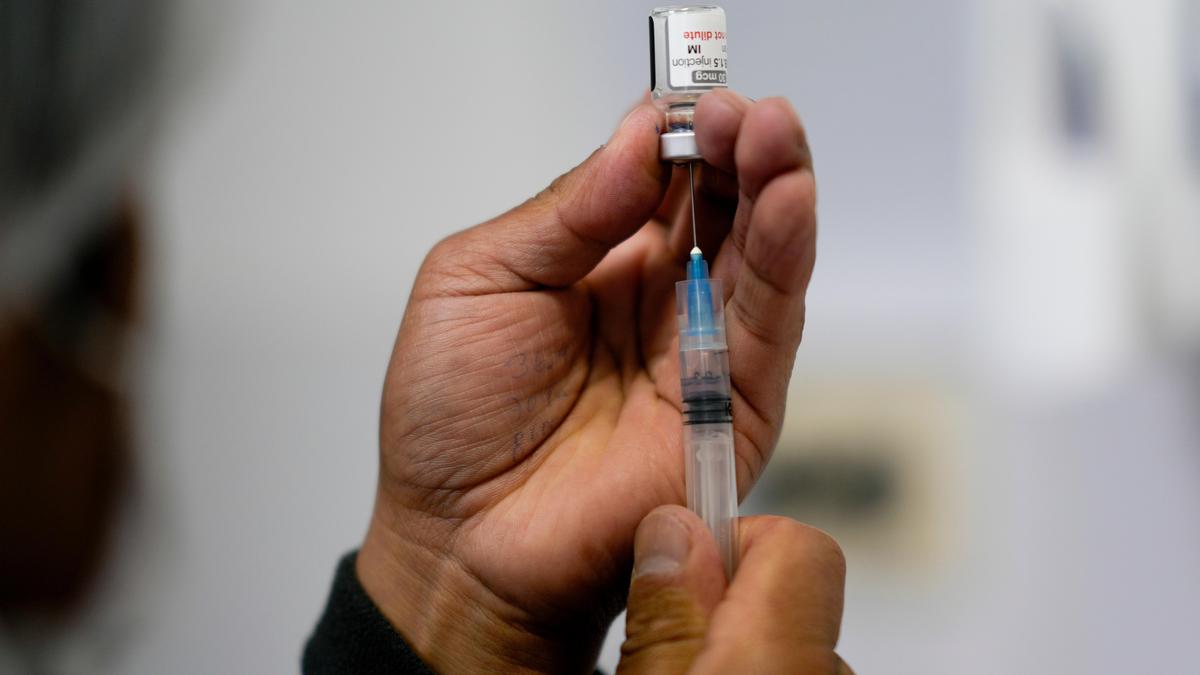
Image used for representational purposes only.
| Photo Credit: AP

Gujarat has begun the process of developing a region-specific antivenom using venom collected from snakes found within the State. Why are scientists calling for geographically representative antivenoms? How is India’s existing antivenom made? And will region-specific products improve snakebite treatment?

The story so far

Gujarat has moved a step closer to developing its first region-specific antivenom after the Snake Research Institute (SRI) at Dharampur handed over lyophilised (freeze-dried) venom from the four medically important venomous snakes found in the State to a licensed manufacturer for production. The first batch is expected within a year, according to State officials.

The move comes amid growing scientific interest in whether antivenoms should better reflect regional differences in snake venom. While India has relied on a single polyvalent antivenom for decades, researchers have reported that venom composition can vary across the geographical range of the same species. They argue that such heterogeneity in venom necessitates region-specific formulations and more geographically representative venom pools for antivenom production.

How are antivenoms currently made in India?

India records one of the world’s highest burdens of snakebite deaths and envenoming. To treat bites from the country’s four medically important venomous snakes — the Indian cobra, common krait, Russell’s viper and saw-scaled viper — manufacturers produce a polyvalent antivenom that targets all four species.

The process begins with collecting venom from healthy snakes. The venom is processed, purified and injected in carefully controlled doses into horses over several weeks. As the animals develop antibodies against the venom toxins, blood is collected and the antibodies are purified to produce antivenom for human use.

For decades, much of the venom used for commercial antivenom production has come from the Irula Snake Catchers’ Industrial Co-operative Society in Chengalpattu, which remains India’s principal supplier of venom for licensed manufacturers. Because the antivenom is produced using venom from the “Big Four”, it is designed to neutralise bites from all four species rather than a single snake.

Why are scientists questioning the ‘one-size-fits-all’ approach?

According to researchers, snake venom is a complex mixture of proteins, peptides and enzymes that has evolved over millions of years. The composition of these toxins can differ even among populations of the same species living in different parts of the country.

These differences arise from several factors, including local prey preferences, habitat, evolutionary history, and genetic divergence. Research over the past decade has documented substantial geographical variation in the venoms of several medically important Indian snakes, including cobras, kraits and Russell’s vipers.

One of the earliest studies demonstrating this was published in the journal International Immunopharmacology in 2007 by researchers from the University of Mysore. Comparing Indian cobra venoms from eastern, western and southern India, the researchers found marked regional differences in venom composition and showed that antibodies raised against eastern Indian cobra venom neutralised eastern venom more effectively than venom from the other two regions.

In a 2019 study published in PLOS Neglected Tropical Diseases, researchers led by Kartik Sunagar profiled the venoms of several medically important but neglected Indian snakes and found marked inter- and intra-species variation in venom composition. Using WHO-recommended preclinical assays, they reported that commercially available Indian antivenoms showed poor venom recognition and neutralisation against several of these snakes.

Does this mean the current antivenom does not work?

Not necessarily. India’s existing polyvalent antivenom has saved countless lives and remains the standard treatment recommended for venomous snakebites. Researchers say that laboratory studies demonstrating differences in venom neutralisation should not be interpreted to mean that existing polyvalent antivenoms are ineffective.

Clinical outcomes also depend on factors such as the amount of venom injected, the time taken to reach a healthcare facility, supportive care and intensive care facilities. A recent policy paper published in The Lancet Regional Health — Southeast Asia notes that while improving antivenom quality and developing region-specific products are important priorities, strengthening peripheral healthcare, referral systems and evidence-based treatment protocols remain equally critical.

What are region-specific antivenoms?

Region-specific antivenoms are produced using venom collected from snakes found within a particular geographical area. The idea is that antibodies generated against locally representative venom may more closely match the toxin profile of snakes responsible for bites in that region.

Gujarat’s initiative follows this principle. The SRI has supplied venom from the four medically important venomous snake species found in Gujarat for commercial production. Officials say the aim is to improve treatment outcomes for snakebite victims within the State. Whether future antivenoms should be region-specific or developed using a broader range of venoms collected across India remains an area of scientific discussion.

Why hasn’t India already adopted region-specific antivenoms?

Developing a new antivenom is considerably more complex than collecting venom from a different location. Researchers say that producing multiple formulations could also increase manufacturing complexity and costs. It would need generating robust clinical evidence through multicentric validation studies, and standardising manufacturing processes so that products remain consistent in quality and efficacy. Any new formulation would also need to undergo regulatory evaluation before it could be introduced into routine clinical practice.

Published – July 06, 2026 11:06 am IST



Source link

Science Tags:anti venom explainer, issues with polyvalent anti venom, need for region specific anti venom, The Hindu explains, why one anti venom is not enough

Post navigation

Previous Post: Why FDA approval for vepdegestrant is a major shift in cancer therapy
Next Post: Free health camp at SRN Mehta State School in Kalaburagi draws over 1,200 parents

Related Posts

  • Science quiz: Scientific terms that are palindromes
    Science quiz: Scientific terms that are palindromes Science
  • Europe’s Jupiter probe to stage daring lunar-earth fly-by 
    Europe’s Jupiter probe to stage daring lunar-earth fly-by  Science
  • What is ‘lunarcrete’?
    What is ‘lunarcrete’? Science
  • Investigation into PSLV failures ‘ongoing’, next launch date in June: Minister
    Investigation into PSLV failures ‘ongoing’, next launch date in June: Minister Science
  • Redesigned programmes can vastly improve TB treatment outcomes
    Redesigned programmes can vastly improve TB treatment outcomes Science
  • Sci-Five | The Hindu Science Quiz: On the Cassowary bird
    Sci-Five | The Hindu Science Quiz: On the Cassowary bird Science

More Related Articles

Bottleneck in human evolution explained using a novel genomic analysis technique Bottleneck in human evolution explained using a novel genomic analysis technique Science
Agnikul eyes to launch satellites by 2025: start-up CEO Ravichandran Agnikul eyes to launch satellites by 2025: start-up CEO Ravichandran Science
The challenge of writing about the science Nobel Prizes The challenge of writing about the science Nobel Prizes Science
Kerala scientist bags Marie Skłodowska-Curie Postdoctoral Fellowship Kerala scientist bags Marie Skłodowska-Curie Postdoctoral Fellowship Science
Painter draws up a crown for the bottling industry Painter draws up a crown for the bottling industry Science
Science Quiz: Remembering Max Born, quantum physics architect Science Quiz: Remembering Max Born, quantum physics architect Science
SiteLock

Archives

  • September 2026
  • August 2026
  • July 2026
  • June 2026
  • May 2026
  • April 2026
  • March 2026
  • February 2026
  • January 2026
  • December 2025
  • November 2025
  • October 2025
  • September 2025
  • August 2025
  • July 2025
  • June 2025
  • May 2025
  • April 2025
  • March 2025
  • February 2025
  • January 2025
  • December 2024
  • November 2024
  • October 2024
  • September 2024
  • August 2024
  • July 2024
  • June 2024
  • May 2024
  • April 2024
  • March 2024
  • February 2024
  • January 2024
  • December 2023
  • November 2023
  • October 2023
  • September 2023
  • August 2023
  • July 2023
  • June 2023
  • May 2023
  • April 2023
  • March 2023
  • February 2023
  • January 2023
  • December 2022
  • November 2022
  • October 2022
  • September 2022
  • August 2022
  • July 2022
  • June 2022
  • May 2022

Categories

  • Business
  • Nation
  • Science
  • Sports
  • World

Recent Posts

  • Free mega medical camp promotes Health and Legal awareness in Gajuwaka
  • After October 1, only smaller 5 or 10 kg LPG refills await non-eKYC households
  • Pakistan forces kill five terrorists, rescue 23 abductees in Balochistan
  • Asian Games 2026: Smriti Mandhana surpasses Suzie Bates to become women’s T20I cricket’s leading run-scorer
  • Hope flows anew with revival of Andhra’s Veligonda project

Recent Comments

  1. Glennalbub on UP Teacher Who Asked Students To Slap Muslim Classmate
  2. PhilipLog on UP Teacher Who Asked Students To Slap Muslim Classmate
  3. DennisDum on UP Teacher Who Asked Students To Slap Muslim Classmate
  4. DonaldFrosy on UP Teacher Who Asked Students To Slap Muslim Classmate
  5. DonaldFrosy on UP Teacher Who Asked Students To Slap Muslim Classmate
  • Access Denied World
  • Four, Including 2 Children, Killed In Massive Fire At Delhi’s Shastri Nagar
    Four, Including 2 Children, Killed In Massive Fire At Delhi’s Shastri Nagar Nation
  • Real Madrid Back Kylian Mbappe Amid Swedish Rape Investigation Reports
    Real Madrid Back Kylian Mbappe Amid Swedish Rape Investigation Reports Sports
  • Over 12 Kg Of Gold Seized During Checking At Yamuna Expressway In UP: Cops
    Over 12 Kg Of Gold Seized During Checking At Yamuna Expressway In UP: Cops Nation
  • Explained | What the fate of Luna 25 means for Russia
    Explained | What the fate of Luna 25 means for Russia Science
  • Ola Electric rides beyond bikes; forays into battery energy storage systems for homes
    Ola Electric rides beyond bikes; forays into battery energy storage systems for homes Business
  • Sri Lanka to table contentious Bill extending judges’ retirement age
    Sri Lanka to table contentious Bill extending judges’ retirement age World
  • Access Denied Business

Editor-in-Chief:
Mohammad Ariff,
MSW, MAJMC, BSW, DTL, CTS, CNM, CCR, CAL, RSL, ASOC.
editor@artifex.news

Associate Editors:
1. Zenellis R. Tuba,
zenelis@artifex.news
2. Haris Daniyel
daniyel@artifex.news

Photograher:
Rohan Das
rohan@artifex.news

Artifex.News offers Online Paid Internships to college students from India and Abroad. Interns will get a PRESS CARD and other online offers.
Send your CV (Subjectline: Paid Internship) to internship@artifex.news

Links:
Associate Journalism
About Us
Privacy Policy

News Links:
Breaking News
World
Nation
Sports
Business
Entertainment
Lifestyle

Registered Office:
72/A, Elliot Road, Kolkata - 700016
Tel: 033-22277777, 033-22172217
Email: office@artifex.news

Editorial Office / News Desk:
No. 13, Mezzanine Floor, Esplanade Metro Rail Station,
12 J. L. Nehru Road, Kolkata - 700069.
(Entry from Gate No. 5)
Tel: 033-46011099, 033-46046046
Email: editor@artifex.news

Copyright © 2023 Artifex.News Newsportal designed by Artifex Infotech.