Skip to content
  • Facebook
  • X
  • Linkedin
  • WhatsApp
  • YouTube
  • Associate Journalism
  • About Us
  • Privacy Policy
  • 033-46046046
  • editor@artifex.news
Artifex.News

Artifex.News

Stay Connected. Stay Informed.

  • Breaking News
  • World
  • Nation
  • Sports
  • Business
  • Science
  • Entertainment
  • Lifestyle
  • Toggle search form
  • Centre Bans 156 Combination Medicines Used For Fever, Pain, Cold
    Centre Bans 156 Combination Medicines Used For Fever, Pain, Cold Nation
  • Watch | 50 years ago, India conducted its first ever nuclear test
    Watch | 50 years ago, India conducted its first ever nuclear test Science
  • Meet Howard Buffett, Warren Buffett’s Middle Child And Heir
    Meet Howard Buffett, Warren Buffett’s Middle Child And Heir World
  • Ranji Trophy semifinal | Mumbai thrashes Tamil Nadu by an innings and 70 runs
    Ranji Trophy semifinal | Mumbai thrashes Tamil Nadu by an innings and 70 runs Sports
  • Farmers’ Protest In Delhi Today. Here’s What Their Demands Are
    Farmers’ Protest In Delhi Today. Here’s What Their Demands Are Nation
  • Weakened Iran could pursue nuclear weapon: White House’s Sullivan
    Weakened Iran could pursue nuclear weapon: White House’s Sullivan World
  • Access Denied Sports
  • Mobile phones not linked to brain cancer, major review of 28 years of research finds
    Mobile phones not linked to brain cancer, major review of 28 years of research finds Science
Colonialism Turned Tigers To Trophies. How India Relocated Humans To Save Them

Colonialism Turned Tigers To Trophies. How India Relocated Humans To Save Them

Posted on September 28, 2024 By admin


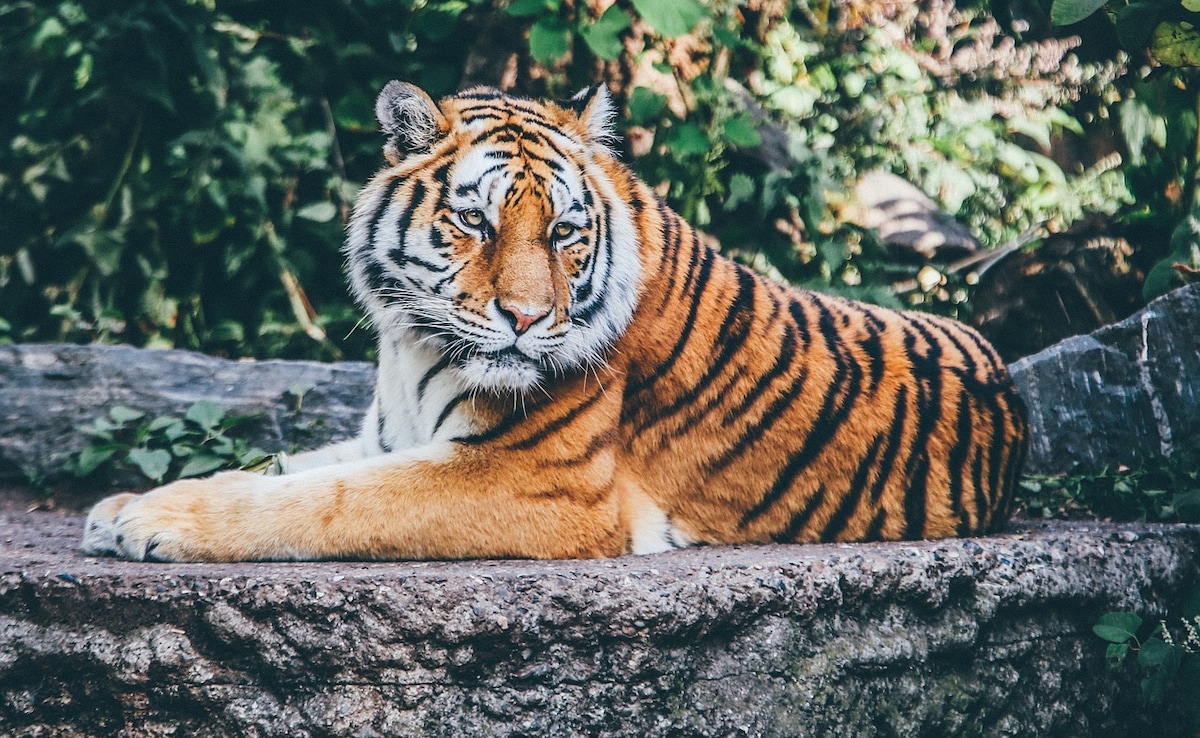
British colonialism turned India’s tigers into trophies. Between 1860 and 1950, more than 65,000 were shot for their skins. The fortunes of the Bengal tiger, one of Earth’s biggest species of big cat, did not markedly improve post-independence. The hunting of tigers – and the animals they eat, like deer and wild pigs – continued, while large tracts of their forest habitat became farmland.

India established Project Tiger in 1972 when there were fewer than 2,000 tigers remaining; it is now one of the world’s longest-running conservation programmes. The project aimed to protect and increase tiger numbers by creating reserves from existing protected areas like national parks and wildlife sanctuaries. Part of that process has involved forcing people to relocate.

In protected areas globally, nature conservationists can find themselves at odds with the needs of local communities. Some scientists have argued that, in order for them to thrive, tigers need forests that are completely free of people who might otherwise graze livestock or collect firewood. In a few documented cases, the tiger population has indeed recovered once people were removed from tiger reserves.

But in pitting people against wildlife, relocations foster bigger problems that do not serve the long-term interests of conservation.

India’s Relocation Policy

Under Project Tiger, 27 tiger reserves were established by 2005, each spanning somewhere between 500 and 2,500 square kilometres. Tiger reserves have a core in which people are prevented from grazing livestock, hunting wildlife and collecting wood, leaves and flowers. A buffer zone encircles this. Here, such activities are allowed, but regulated.

About 3,000 families were relocated from these core zones in the first three decades of the project, and from 2005 until 2023, about 22,000 families were moved. Most relocations were involuntary and some plunged those ousted into deeper poverty.

A village inside the core of Sariska tiger reserve. Ghazala Shahabuddin

In Sariska tiger reserve in Rajasthan, northwestern India, the first relocation was made during 1976-77. Some of the families returned to the reserve after being given land unsuitable for farming as compensation. This was a poor advertisement for relocation which few other communities opted for voluntarily.

After they were moved from Rajaji tiger reserve in 2012, Gujjar pastoralists who make their living grazing buffalo were prompted to take up farming on new land. With little experience in agriculture, and having been denied their traditional source of income, many struggled to adjust.

The Gujjar did at least gain access to water pumps and electricity. In one case, in the Bhadra tiger reserve in Karnataka, southwestern India, relocation was less painful as people were offered quality agricultural land who already had prior farming experience.

Most people who lost their right to graze livestock or collect forest produce in newly established tiger reserves went on to labour in tea and coffee plantations or factories.

Despite widespread relocations, the tiger population in India continued to plummet, reaching an all-time low of fewer than 1,500 in 2006. Tigers became extinct in Sariska and Panna tiger reserves in 2004 and 2007 respectively.

Local extinction in Sariska prompted the government to enlist the help of tiger biologists and social scientists in 2005. This task force found that illegal hunting of tigers was still happening, their claws, teeth, bones and skin harvested for use in Chinese medicine. Mining and grazing had also continued within many reserves.

Corridors Of Power

The tiger task force acknowledged that having the local community onside helped prevent illegal hunting and forest fires. The Soliga tribes of Biligiri Rangananthaswamy temple tiger reserve in Karnataka decided not to relocate when offered compensation, but instead took up work rooting out invasive plants like lantana and curbing illegal hunting and timber felling. The Soliga are among the very few communities who have been rewarded with rights in tiger reserves.

Similarly, in Parambikulam tiger reserve in Kerala, a state on India’s tropical Malabar coast, communities that were not relocated found work as tour guides and forest guards. People here have supplemented their income by collecting and selling honey, wild gooseberry and medicinal spices, under the joint supervision of the community and forest department officials. Many families have been able to give up cattle rearing as a result, reducing grazing pressure on the forest.
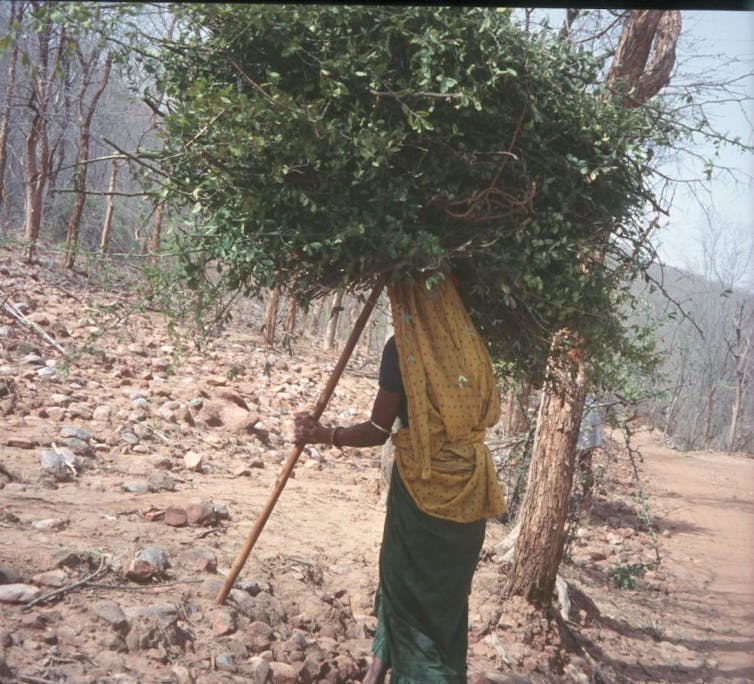
A woman carrying a bundle fodder on her head.
Residents in tiger reserves depend on fodder, fuel and other forest produce. Ghazala Shahabuddin

Despite these successes, the government’s policy of relocation remains.

Tiger numbers have recovered to more than 3,000 as of 2022, but Project Tiger shows that relocation alone cannot conserve tigers indefinitely.

A great opportunity awaits. Over 38 million hectares of forest, suitable tiger habitat, lies outside tiger reserves. Declaring these forests “corridors” that allow tigers to move between reserves could reduce the risk of inbreeding and local extinction and reinforce the recovery of India’s tigers.

Studies in certain tiger reserves show that large numbers of villagers would support further relocations if it meant gaining access to drinking water, schools, healthcare and jobs in resettlement sites. A portion of the US$30 million (£22.7 million) spent annually by Project Tiger should be used to make relocations fair. Or better yet, promote the kind of community-based conservation nurtured in the Biligiri Ranganathaswamy temple and Parambikulam tiger reserves.

(Authors: Dhanapal Govindarajulu, Postgraduate Researcher, Global Development Institute, University of Manchester; Divya Gupta, Assistant Professor, Binghamton University, State University of New York, and Ghazala Shahabuddin, Visiting Professor of Environmental Studies, Ashoka University)

(Disclosure Statement: The authors do not work for, consult, own shares in or receive funding from any company or organisation that would benefit from this article, and have disclosed no relevant affiliations beyond their academic appointment)

This article is republished from The Conversation under a Creative Commons license. Read the original article.
 

(Except for the headline, this story has not been edited by NDTV staff and is published from a syndicated feed.)




Source link

World Tags:conservation, India Tiger Conservation, India Tiger Reserves, Project Tiger India, Royal Bengal Tigers, Tiger Reserve Protected Areas, Tigers, Tigers in India

Post navigation

Previous Post: Real Madrid Can Cover Kylian Mbappe Injury Absence In Derby: Carlo Ancelotti
Next Post: “Rohit Needs To Be…”: Ex-India Star Points Out ‘Baffling’ Strategy vs Bangladesh

Related Posts

  • Access Denied World
  • Maldives’ main Opposition party welcomes President Muizzu government’s ‘sudden recalibration’ of its India policy
    Maldives’ main Opposition party welcomes President Muizzu government’s ‘sudden recalibration’ of its India policy World
  • Moscow Denies ‘Baseless’ Claim Russia Behind Fake US Election Video
    Moscow Denies ‘Baseless’ Claim Russia Behind Fake US Election Video World
  • 22 Terrorists, 6 Soldiers Killed During Security Operations In Pakistan
    22 Terrorists, 6 Soldiers Killed During Security Operations In Pakistan World
  • Cheryl Hines Faces Backlash For Posting Video Of Husband RFK Jr. Taking Shower
    Cheryl Hines Faces Backlash For Posting Video Of Husband RFK Jr. Taking Shower World
  • Google May Be Forced To Sell Its Chrome Browser. Here’s Why
    Google May Be Forced To Sell Its Chrome Browser. Here’s Why World

More Related Articles

Trump says he believes U.S. will get Greenland Trump says he believes U.S. will get Greenland World
World’s oldest President, Paul Biya, could extend his rule as Cameroon votes in election World’s oldest President, Paul Biya, could extend his rule as Cameroon votes in election World
Turkiye heads to local elections as Erdogan seeks to avenge defeat Turkiye heads to local elections as Erdogan seeks to avenge defeat World
European Union Agrees 5 Billion Euro Boost For Ukraine Military Aid Fund European Union Agrees 5 Billion Euro Boost For Ukraine Military Aid Fund World
Hamas to return Israeli hostage’s body, part of fragile ceasefire Hamas to return Israeli hostage’s body, part of fragile ceasefire World
Here’s What Gets More Expensive For American Consumers Here’s What Gets More Expensive For American Consumers World
SiteLock

Archives

  • May 2026
  • April 2026
  • March 2026
  • February 2026
  • January 2026
  • December 2025
  • November 2025
  • October 2025
  • September 2025
  • August 2025
  • July 2025
  • June 2025
  • May 2025
  • April 2025
  • March 2025
  • February 2025
  • January 2025
  • December 2024
  • November 2024
  • October 2024
  • September 2024
  • August 2024
  • July 2024
  • June 2024
  • May 2024
  • April 2024
  • March 2024
  • February 2024
  • January 2024
  • December 2023
  • November 2023
  • October 2023
  • September 2023
  • August 2023
  • July 2023
  • June 2023
  • May 2023
  • April 2023
  • March 2023
  • February 2023
  • January 2023
  • December 2022
  • November 2022
  • October 2022
  • September 2022
  • August 2022
  • July 2022
  • June 2022
  • May 2022

Categories

  • Business
  • Nation
  • Science
  • Sports
  • World

Recent Posts

  • ATS questions 57 in Maharashtra over alleged gangster network links
  • Nicobarese oppose proposal for three wildlife sanctuaries
  • Visakhapatnam Collector calls for inter-departmental synergy to boost investments
  • Kohli’s masterful knock powers Royal Challengers to the top
  • Senior IPS officer Asra Garg posted IGP Intelligence

Recent Comments

  1. RichardClage on UP Teacher Who Asked Students To Slap Muslim Classmate
  2. StevenLek on UP Teacher Who Asked Students To Slap Muslim Classmate
  3. Leonardren on UP Teacher Who Asked Students To Slap Muslim Classmate
  4. NathanQuins on UP Teacher Who Asked Students To Slap Muslim Classmate
  5. Davidgof on UP Teacher Who Asked Students To Slap Muslim Classmate
  • Lathmar Holi Celebration Kicks Off In Mathura’s Barsana
    Lathmar Holi Celebration Kicks Off In Mathura’s Barsana Nation
  • Rajasthan Royals vs Royal Challengers Bengaluru, IPL 2024: Match Preview, Fantasy Picks, Pitch and Weather Reports
    Rajasthan Royals vs Royal Challengers Bengaluru, IPL 2024: Match Preview, Fantasy Picks, Pitch and Weather Reports Sports
  • Davos 2026 World Economic Forum LIVE: Trump returns to Washington, calls Board of Peace ‘very special’
    Davos 2026 World Economic Forum LIVE: Trump returns to Washington, calls Board of Peace ‘very special’ Business
  • Actor Chris Evans Clarifies He Did Not Sign Israeli Bomb As Pic Goes Viral
    Actor Chris Evans Clarifies He Did Not Sign Israeli Bomb As Pic Goes Viral World
  • Dorf-Ketal Chemicals files DRHP with SEBI for ₹5,000 crore IPO
    Dorf-Ketal Chemicals files DRHP with SEBI for ₹5,000 crore IPO Business
  • Rupee recovers from all-time low, gains 10 paise to 85.03 against U.S. dollar
    Rupee recovers from all-time low, gains 10 paise to 85.03 against U.S. dollar Business
  • Access Denied Sports
  • Sachin Tendulkar Touches Lives, Helps In Surgeries “To Put A Smile Back” On Children
    Sachin Tendulkar Touches Lives, Helps In Surgeries “To Put A Smile Back” On Children Sports

Editor-in-Chief:
Mohammad Ariff,
MSW, MAJMC, BSW, DTL, CTS, CNM, CCR, CAL, RSL, ASOC.
editor@artifex.news

Associate Editors:
1. Zenellis R. Tuba,
zenelis@artifex.news
2. Haris Daniyel
daniyel@artifex.news

Photograher:
Rohan Das
rohan@artifex.news

Artifex.News offers Online Paid Internships to college students from India and Abroad. Interns will get a PRESS CARD and other online offers.
Send your CV (Subjectline: Paid Internship) to internship@artifex.news

Links:
Associate Journalism
About Us
Privacy Policy

News Links:
Breaking News
World
Nation
Sports
Business
Entertainment
Lifestyle

Registered Office:
72/A, Elliot Road, Kolkata - 700016
Tel: 033-22277777, 033-22172217
Email: office@artifex.news

Editorial Office / News Desk:
No. 13, Mezzanine Floor, Esplanade Metro Rail Station,
12 J. L. Nehru Road, Kolkata - 700069.
(Entry from Gate No. 5)
Tel: 033-46011099, 033-46046046
Email: editor@artifex.news

Copyright © 2023 Artifex.News Newsportal designed by Artifex Infotech.