

Technology is rapidly changing the way we cultivate rice and wheat, and India has the opportunity to lead the pack if we restore the attraction of fundamental research in plant sciences to our students. The shrillness of anti-GMO voices have driven aspiring biology researchers to other areas of life sciences, which use much the same methods. We need to bring them back to plant research, too.
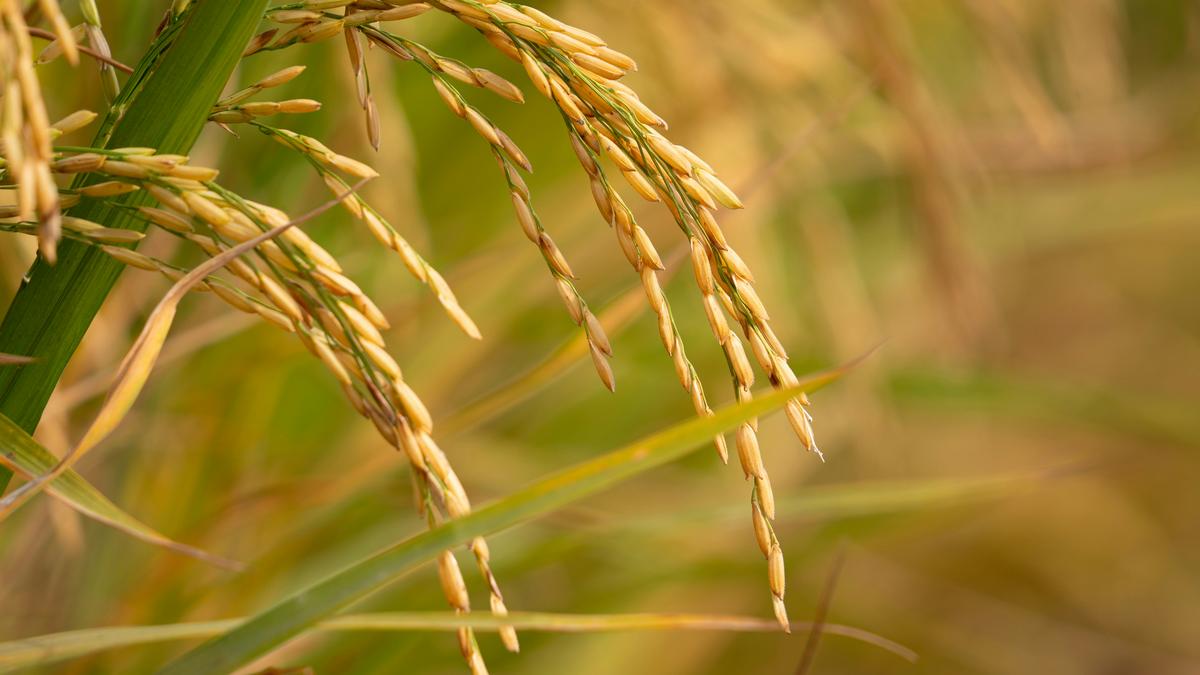
India’s food security largely depends on rice and wheat, which take up more than half our farmland and provide most of the calories Indians eat. Scientists and breeders designed today’s wheat and and rice varieties at a time when the consequences of excess fertilizer use on soil were not sufficiently anticipated, when pesticides were used to hit insects and other pests with a metaphorical hammer, and when water and electricity were abundant or heavily subsidised.
Today, however, climate change, extreme weather events, droughts, and floods are more immediate concerns. This together with demands for sustainable and moderated use of pesticides and fertilizers, but without compromising yield, has created a high-bar of demand in a competitive world. In addition, science and technology are but one component of solutions that also involve politics, economics, and global supply chains.
Public institutions
The supply of seeds to farmers, for crops such as rice and wheat, have had a strong public-sector presence. The National Seeds Corporation (NSC) was established in 1963. The NSC partners with State seed corporations and State agricultural universities to ensure reliability in the early stages of seed supply. The Indian Council of Agricultural Research (ICAR) laboratories and State agricultural universities ensure supply of ‘breeder seeds’, certified to be of the highest quality. These are then amplified by partners, which include private companies to generate ‘foundation seeds’, which are distributed.
For wheat, public institutions dominate the supply of certified seeds, with private players being present in only about 5% of the market. However, their share is growing rapidly, at about 8% each year. In the case of rice, private companies dominate the market for hybrid seeds, with public institutions mainly supplying farmers with small-holdings.
In India, public institutions play a large role in wheat and rice, unlike with maize and cotton, where private companies dominate. The new varieties they develop are available to any registered seed company, public or private. The government has a system in place to make and distribute these new varieties widely, cheaply, and fairly — a system which works reasonably.
India took a big step forward in 2025 in using new gene-editing technology to improve rice, and became the first country to allow farmers to grow rice that had been edited using this technology. The scientists also grew these rice strains in fields, and the approved seeds are now being given to farmers.
Two types of rice, DRR Dhan 100 and Pusa DST Rice 1, were developed by Indian researchers using the CRISPR gene-editing technology. Researchers tested these new rice types widely in 2023-2024. The advances were significant. One variety DRR Dhan-1 took 130 days to mature, compared to 150 days of the baseline strain. It produced close to 20% more rice, at about 5.4 tonnes per hectare, and reduced water use and labour costs. Pusa DST Rice-1 was developed to grow reasonably in salty or alkaline soils. Its yield in these conditions was about 10-30% more than the baseline strains. Government announcements point to lowered water and fertilizer use and, consequently, lowered greenhouse gas emissions as well.
Tale of two varieties
The story behind these two strains is worth understanding for how fundamental research on rice flowering leads to application. The targeted gene in DRR DNAn-1 encodes a product that degrades cytokinin, the hormone driving spikelet formation on a rice panicle. This process caps how many grains a plant can produce.
ICAR’s CRISPR edit partially reduces, but does not eliminate, this enzyme’s activity, letting cytokinin accumulate just enough to boost spikelet and grain number without the stunted growth seen in complete knockouts. In 2005, Motoyuki Ashikari’s team in Japan had already traced a grain-number trait to a natural small deletion in the corresponding gene in a high-yielding wild rice relative, and ICAR recreated that two-decade-old discovery by design, in weeks rather than through years of conventional breeding.
The PUSA DST-1 story is equally interesting. In 2020, a team at ICAR-Indian Agricultural Research Institute, led by Viswanathan Chinnusamy, used the CRISPR-Cas9 gene-editing tool to delete a stretch of a rice gene called OsDST, in a particular strain, producing plants with broader leaves, fewer stomata, and sharply better survival under salt stress (over 65% versus just 20% in unedited plants).
This engineered mutant reproduced the effects of a naturally occurring chemical mutation found years earlier in a completely different rice subspecies, confirming that disabling DST itself rather than some editing side-effect of the edit had conferred the stress tolerance. Pusa DST Rice 1, released five years later, is the commercial maturation of this already published laboratory mutant, illustrating a journey from a characterised gene to seed ready for farmers to use.
In both cases, the residues of the gene-editing tools were not detected in the final strains. Thus, while genetic engineering tools were used, the results are equivalent to those that would come from conventional mutagenesis and breeding, only much faster and more accurate.

Work on apomixis
Scientists at public institutions conducted the work on the rice, and the resulting seeds will not be tied up in restrictive patents or licensing agreements. The developers have also made sure that the technology used to create it will not be a bottleneck for public breeding programs.
Other innovative approaches are now on the horizon and will likely be deployable in the near future, led by a method called apomixis. It was first successfully demonstrated in rice by Venkatesan Sundaresan and his colleague Imtiyaz Khanday at the University of California, Davis, in 2018. In apomixis, plants are engineered to bypass the normal process of sexual reproduction and fertilisation. This allows desirable traits of the parent plant, known as hybrid vigour, to be preserved indefinitely, rather than being lost in the next generation. The efficiency of this method has improved significantly, with success rates reaching around 90% in rice. Various research groups are now exploring apomixis in other crops, such as maize and sorghum.
Sundaresan’s work on plant development earned him a share of the prestigious Wolf Prize in agriculture in 2024, alongside Elliot Meyerowitz and Joanne Chory. In December 2025, Sundaresan and Khanday received the VinFuture Special Prize for their work on self-cloning crop technology, which has the potential to revolutionise agriculture.
There is still a big gap between the lab and the field. Tests in different environments are required to get regulatory approval and to set up systems to produce seeds in large quantities. Because adding foreign genes is not required to make apomixis work, many of these techniques could potentially follow a simpler regulatory process. The technology makes sense for small farmers. If they can save seeds from high-yielding crops and replant them without losing any quality, they will not have to keep buying new seeds every year. This is currently a big expense for many smallholder rice and wheat farmers.
Driving progress
India has not seen a gene-edited wheat released yet, but there are some conventional developments in the pipeline. For instance, the government recently introduced 184 new crop varieties across 25 different crops, including some climate-resilient wheat lines that are expected to reach farmers within the next three years. Hybrid wheat has been a challenge for breeders due to the complexities of wheat’s floral biology. It is harder to hybridise than rice or maize. Despite this, hybrid wheat has been gaining traction in India, due in part to private companies like Mahyco and Nuziveedu.
Currently, the most advanced genetically engineered trait in wheat is called HB4, developed by an Argentine company called Bioceres Crop Solutions. This trait uses a gene from sunflowers to help wheat plants tolerate drought. This is not a new type of gene editing but a traditional genetically engineered trait. HB4 is already being grown commercially in Argentina, and on a smaller scale in Brazil and Paraguay.
In August 2024, the U.S. Department of Agriculture gave the green light for HB4 wheat to be grown in the country, making it the fourth to approve its production. However, it may take a few years before we see large-scale commercial planting in the U.S., since more field trials need to be done and the trait needs to be integrated into American wheat varieties. Additionally, export markets need to approve the trait as well.
Australia is taking a two-pronged approach to improving wheat yields, with two separate programmes running side by side. The Australian government has given the green light for field trials of HB4. This trial started in 2024. At the same time, the University of Adelaide is working on a project to engineer wheat and barley to produce higher yields, using genetic modification techniques. This project is set to run until 2029.
Meanwhile, an Australian breeding company called InterGrain has teamed up with a U.S. firm called Inari to try out CRISPR gene-editing. They are hoping to boost wheat yields by 10% and have already started field trials in the 2025 growing season. In a significant development, Australian Grain Technologies and China’s Qihe Biosciences have announced that they will be working together on cross-border field trials of a new CRISPR-edited wheat variety. This is important as it shows that international collaboration is driving progress in wheat gene-editing, unlike some other crops like rice.

Reviving a tradition
India’s approach to breeding wheat and rice is still largely controlled by the public sector, which means new techniques like editing genes without adding foreign ones can be made available to farmers.
As new tools like apomixis become more widely available and private companies start investing more in Indian seeds, it is as important to think about how our system will adapt to these changes as it is to invest in fundamental research in plant genetics, physiology, development and host-pathogen interactions.
We have had a great tradition here, and it should be revived.
K. VijayRaghavan is the DAE-Homi Bhabha Chair, TIFR-National Centre for Biological Sciences, Bengaluru.