
Skip to content
  • Facebook
  • X
  • Linkedin
  • WhatsApp
  • YouTube
  • Associate Journalism
  • About Us
  • Privacy Policy
  • 033-46046046
  • editor@artifex.news
Artifex.News

Artifex.News

Stay Connected. Stay Informed.

  • Breaking News
  • World
  • Nation
  • Sports
  • Business
  • Science
  • Entertainment
  • Lifestyle
  • Toggle search form
  • Israeli strike in south Lebanon kills 10 security personnel
    Israeli strike in south Lebanon kills 10 security personnel World
  • Harry Kane Would Swap Career Of Personal Glory To Win Euros For England
    Harry Kane Would Swap Career Of Personal Glory To Win Euros For England Sports
  • Manipur Chief Minister’s Message To Protesters
    Manipur Chief Minister’s Message To Protesters Nation
  • “Chingaari Lag Chuki Hai”: Harbhajan Singh’s Brutal Take On Mumbai Indians Captaincy Row
    “Chingaari Lag Chuki Hai”: Harbhajan Singh’s Brutal Take On Mumbai Indians Captaincy Row Sports
  • Five Players Ahead Of Skipper Shreyas Iyer In Kolkata Knight Riders’ IPL 2025 Retention Plan: Report
    Five Players Ahead Of Skipper Shreyas Iyer In Kolkata Knight Riders’ IPL 2025 Retention Plan: Report Sports
  • Narendra Modi all praise for Bobbili Veena artisans
    Narendra Modi all praise for Bobbili Veena artisans Nation
  • Access Denied
    Access Denied Nation
  • ‘Wants benefits of a State, without being one’: Trump hits back at Canada over retaliatory tariffs on U.S.
    ‘Wants benefits of a State, without being one’: Trump hits back at Canada over retaliatory tariffs on U.S. World
Nazis and the bomb: nuclear archaeology finds Werner Heisenberg mistook how close he was

Nazis and the bomb: nuclear archaeology finds Werner Heisenberg mistook how close he was

Posted on October 6, 2026 By admin


Hans Bethe. Felix Bloch. Niels Bohr. Albert Einstein. Enrico Fermi. James Franck. Otto Frisch. Samuel Goudsmit. Lilli Hornig. Rolf Landshoff. Maria Goeppert Mayer. Rudolf Peierls. George Placzek. Eugene Rabinowitch. Joseph Rotblat. Leo Szilard. Edward Teller. Stanislaw Ulam. John von Neumann. Victor Weisskopf. Eugene Wigner. These are just some of the scientists who had emigrated from Europe, many of whom later made critical contributions to the Manhattan Project — the American effort to build the world’s first nuclear weapon.

Many of these scientists had seen firsthand the horrors Nazi Germany was perpetrating in Europe; many were Jews who were escaping persecution themselves. They showed their contempt for Adolf Hitler and his armies by bringing a sense of urgency to their research on the bomb, and were often motivated by what they believed the stake was: the fate of the world itself.

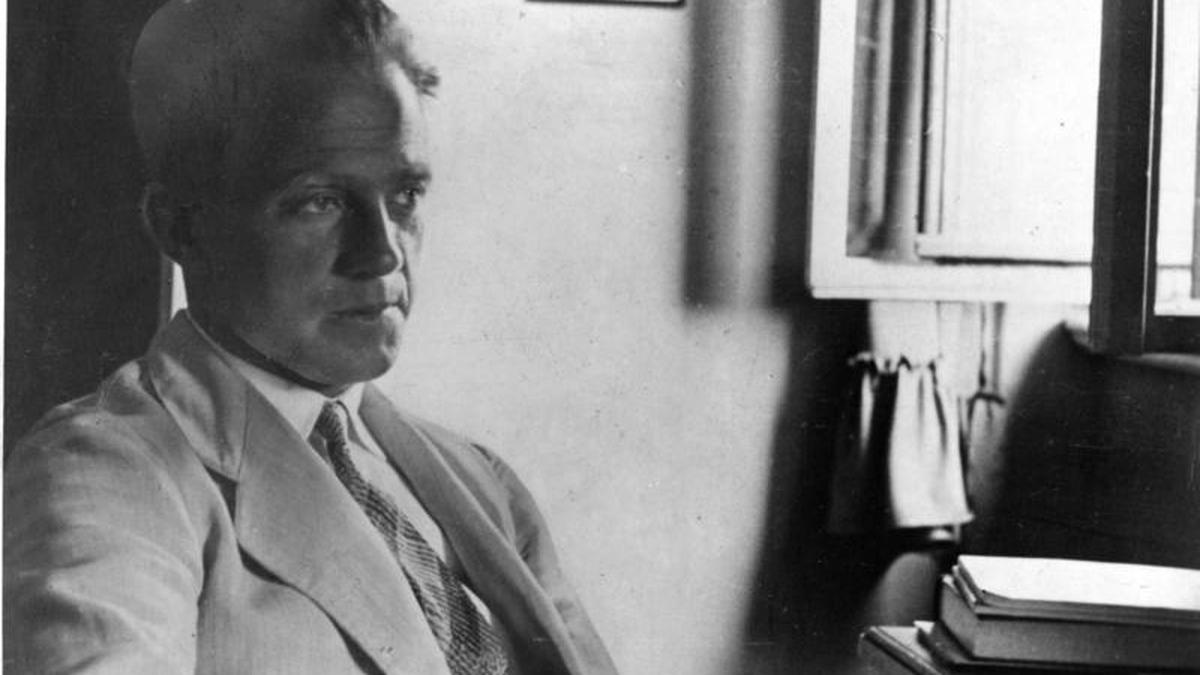
The Manhattan Project tested its first atom bomb on July 16, 1945, and delivered two to the U.S. military in July-August. Part of their sense of urgency was rooted in doubts about whether Nazi Germany was also building a bomb, including some groups led by the physicist and Nobel laureate Werner Heisenberg. The anxieties were not unfounded: in April 1945, only weeks before Germany surrendered to Allied forces, Heisenberg’s team had assembled a nuclear reactor in a cellar beneath a church in Haigerloch, in the country’s south.

The setup, called the B8 pile, had 664 cubes of uranium suspended on chains in around 1,400 litres of heavy water. A 40-cm-thick shell of graphite surrounded the core, and was itself surrounded by a layer of aluminium and a 60-cm-thick layer of (ordinary) water. The team had taken six years to build B8 but had little to show for it. When a few neutrons were shot into the reactor, the uranium multiplied them into more — but no chain reaction followed.

Far from critical

After the war ended, Heisenberg said the team had come very close; he wrote in a 1947 article in Nature that Haigerloch didn’t have enough resources and that just a little more quantity of uranium would have done the trick.

According to a new study in PNAS Nexus, by researchers from the U.S., Heisenberg & co. were actually way off the mark.

Only around 14 of the 1,100 or so uranium cubes made for Heisenberg’s efforts still survive. Using a pycnometer, the team found the density of one cube to be 18.535 g/cm3, lower than the 19.01 g/cm3 of solid uranium, indicating the cube was porous. Another cube contained 0.724% of uranium-235 (by mass), meaning it was natural rather than enriched uranium.

In March 1944, a German physicist named Karl Wirtz had reported that Nazi Germany’s stocks of heavy water had accidentally been diluted to 98.85% purity. A post-war sample from Haigerloch in 1947 found only 96.8% purity. The team also started from the records of aluminium giant Norsk Hydro to estimate that Nazi Germany had a maximum supply of 1,836 kg of pure heavy water during the war.

When the team worked upwards from here, including the design of the B8 pile, they concluded it had a neutron multiplication factor of 0.942. A reactor needs to have a factor of 1 to be critical. A difference of 0.058 is actually large. The team found that the uranium cubes in B8 were arranged too close together, preventing the heavy water from efficiently slowing the neutrons. The researchers estimated that increasing the heavy water’s purity to 100% would improve the factor to only 0.95.

They also simulated over 1,200 combinations of uranium and heavy water and found that the B8 pile would have required at least 2,994 kg of uranium and 3,411 litres of heavy water to become critical. B8 however, contained 1,538 kg of uranium and 1,549 kg of heavy water when it was dismantled. More importantly, the team also estimated all German facilities at the time combined possessed only 2,572 kg of uranium and 1,890 kg of 96.8%-pure heavy water — a significant shortfall and which could support a factor of 0.959 at best.

Industrial capacity

The first U.S. reactor, called Chicago Pile-1, first became critical on December 2, 1942, using natural uranium as fuel and graphite, rather than heavy water, as the moderator. So some nuclear historians have opined that Heisenberg et al. had simply picked the wrong moderator.

A 2025 study in The European Physical Journal H demurred, however: while the U.S. was able to source petroleum coke extremely low in boron and turn it into reactor-grade graphite, the graphite made from metallurgical coke in Germany was high in boron, which absorbs neutrons. The B8 pile used the graphite from the predecessor B7 pile, and the new study also found that it contained 3.4 weight-parts per million (wppm) of equivalent boron contamination. The Siemens graphite from earlier contained around 6.6 wppm. On the other hand, the Manhattan Project used graphite with around 1.4 wppm of boron. In simulations, it didn’t matter how far apart the uranium cubes in the B7 pile or in any previous piles could have been: the contamination made criticality impossible.

The significant difference between the Nazi German and the Manhattan Project programmes, then, seems to have been industrial capacity. The Americans developed and built multiple technologies to enrich uranium, set up reactors and chemical separation units, and a weapons laboratory, which together created 1.3 lakh jobs and invested $2.2 billion at the peak. Nazi Germany had nothing of similar scale.

Understandable concerns

According to a 2015 study in Angewandte Chemie, some uranium from the Nazi nuclear programme had not experienced a significant neutron flux and had probably come from Joachimsthal in today’s Czechia, indicating (in a limited sense) the absence of an industrial uranium enrichment programme.

Many questions about the Nazi nuclear programme still remain open, often rooted in different interpretations of common data. Some important ones are centered on whether German scientists deliberately delayed the bomb project. Some technical questions are open, too. For example, the purity of the heavy water at Haigerloch itself is unknown and the graphite’s boron content is based on archival rather than direct, firsthand information.

The overall picture today is neither that German physicists were incompetent nor that they were tantalisingly close to building a bomb. Their base of materials fell short of what a nuclear programme required and their supply chains were not good enough. Ultimately, given the information available at the time, and more so given Germany was also home to many of the world’s best nuclear physicists, the Manhattan Project scientists’ concerns were understandable.

mukunth.v@thehindu.co.in

Published – October 06, 2026 08:15 am IST



Source link

Science

Post navigation

Previous Post: U.S. envoy holds rare meeting with Sudan’s top general in push to seek end to fighting
Next Post: CEC row LIVE updates: INDIA bloc to hold protest march to ECI headquarters against ‘vote chori’; security heightened

Related Posts

  • World falls short of UN drought deal at Saudi talks
    World falls short of UN drought deal at Saudi talks Science
  • Long UPSC prep cycles take heavy toll on aspirants’ mental health
    Long UPSC prep cycles take heavy toll on aspirants’ mental health Science
  • ‘Publication retractions from India have skyrocketed since 2022’
    ‘Publication retractions from India have skyrocketed since 2022’ Science
  • What is Parrondo’s paradox? – The Hindu
    What is Parrondo’s paradox? – The Hindu Science
  • Cracking the mystery of how proteins found their shapes
    Cracking the mystery of how proteins found their shapes Science
  • How oil companies put the responsibility for climate change on consumers
    How oil companies put the responsibility for climate change on consumers Science

More Related Articles

Your name in Landsat: How to use NASA’s satellite name generator? Your name in Landsat: How to use NASA’s satellite name generator? Science
What hinders Indian pharma companies from making drugs for rare diseases What hinders Indian pharma companies from making drugs for rare diseases Science
fMRI may reveal depression ‘subtypes’ and treatments that could work fMRI may reveal depression ‘subtypes’ and treatments that could work Science
South American lungfish has largest genome of any animal South American lungfish has largest genome of any animal Science
China’s spacecraft carrying rocks from the far side of the moon leaves the lunar surface China’s spacecraft carrying rocks from the far side of the moon leaves the lunar surface Science
What is a cloudburst? What is a cloudburst? Science
SiteLock

Archives

  • October 2026
  • September 2026
  • August 2026
  • July 2026
  • June 2026
  • May 2026
  • April 2026
  • March 2026
  • February 2026
  • January 2026
  • December 2025
  • November 2025
  • October 2025
  • September 2025
  • August 2025
  • July 2025
  • June 2025
  • May 2025
  • April 2025
  • March 2025
  • February 2025
  • January 2025
  • December 2024
  • November 2024
  • October 2024
  • September 2024
  • August 2024
  • July 2024
  • June 2024
  • May 2024
  • April 2024
  • March 2024
  • February 2024
  • January 2024
  • December 2023
  • November 2023
  • October 2023
  • September 2023
  • August 2023
  • July 2023
  • June 2023
  • May 2023
  • April 2023
  • March 2023
  • February 2023
  • January 2023
  • December 2022
  • November 2022
  • October 2022
  • September 2022
  • August 2022
  • July 2022
  • June 2022
  • May 2022

Categories

  • Business
  • Nation
  • Science
  • Sports
  • World

Recent Posts

  • Navratri 2026: Are your vintage kolu dolls becoming collector’s items?
  • New White House press secretary Katie Zacharia’s legal career draws scrutiny
  • October 10 detainees provided ‘hot, fresh, good meals’, only cellular internet was suspended: Delhi Police to SC
  • Oil prices retreat as investors weigh supply outlook, West Asia tensions
  • 19-year-old arrested in Illinois for planning attack on Hindu place of worship

Recent Comments

  1. Bryanloono on UP Teacher Who Asked Students To Slap Muslim Classmate
  2. Bryanloono on UP Teacher Who Asked Students To Slap Muslim Classmate
  3. WalterBoumn on UP Teacher Who Asked Students To Slap Muslim Classmate
  4. ShawnFeach on UP Teacher Who Asked Students To Slap Muslim Classmate
  5. RobertTes on UP Teacher Who Asked Students To Slap Muslim Classmate
  • Gautam Adani Explains How Adani Group Countered Short-Seller Hindenburg Attack
    Gautam Adani Explains How Adani Group Countered Short-Seller Hindenburg Attack Nation
  • Air Canada to resume flights after directive ending strike
    Air Canada to resume flights after directive ending strike World
  • Man killed by falling boulders near Cheerbasa Helipad as Kedarnath Yatra suspended temporarily
    Man killed by falling boulders near Cheerbasa Helipad as Kedarnath Yatra suspended temporarily Nation
  • Door-to-door Census survey begins across CURE
    Door-to-door Census survey begins across CURE Nation
  • Switzerland Defeat Hungary 3-1 In UEFA Euro 2024 Opener
    Switzerland Defeat Hungary 3-1 In UEFA Euro 2024 Opener Sports
  • IPL-17, Qualifier 1 | Top-heavy KKR-SRH collide for a place in the final
    IPL-17, Qualifier 1 | Top-heavy KKR-SRH collide for a place in the final Sports
  • Gautam Adani denies any deal linked to dismissal of U.S. criminal case in sworn affidavit
    Gautam Adani denies any deal linked to dismissal of U.S. criminal case in sworn affidavit World
  • Brazil Floods A Climate Warning To World, Says UN
    Brazil Floods A Climate Warning To World, Says UN World

Editor-in-Chief:
Mohammad Ariff,
MSW, MAJMC, BSW, DTL, CTS, CNM, CCR, CAL, RSL, ASOC.
editor@artifex.news

Associate Editors:
1. Zenellis R. Tuba,
zenelis@artifex.news
2. Haris Daniyel
daniyel@artifex.news

Photograher:
Rohan Das
rohan@artifex.news

Associate Journalists
1. Subrata Paul - AN/2020/01
2. Quamruz Zaman - AN/2021/22
3. Ahmed Sha - AN/2021/035
4. Ajay Kumar Shaw - AN/2021/39
5. Tahqiqul Hoda - AN/2021/21

Artifex.News offers Online Paid Internships to college students from India and Abroad. Interns will get a PRESS CARD and other online offers.
Send your CV (Subjectline: Paid Internship) to internship@artifex.news

Links:
Associate Journalism
About Us
Privacy Policy

News Links:
Breaking News
World
Nation
Sports
Business
Entertainment
Lifestyle

Registered Office:
72/A, Elliot Road, Kolkata - 700016
Tel: 033-22277777, 033-22172217
Email: office@artifex.news

Editorial Office / News Desk:
No. 13, Mezzanine Floor, Esplanade Metro Rail Station,
12 J. L. Nehru Road, Kolkata - 700069.
(Entry from Gate No. 5)
Tel: 033-46011099, 033-46046046
Email: editor@artifex.news

Copyright © 2023 Artifex.News Newsportal designed by Artifex Infotech.