


Skip to content
  • Facebook
  • X
  • Linkedin
  • WhatsApp
  • YouTube
  • Associate Journalism
  • About Us
  • Privacy Policy
  • 033-46046046
  • editor@artifex.news
Artifex.News

Artifex.News

Stay Connected. Stay Informed.

  • Breaking News
  • World
  • Nation
  • Sports
  • Business
  • Science
  • Entertainment
  • Lifestyle
  • Toggle search form
  • R Ashwin Clarifies As Cryptic “Good Leaders” Post Triggers Social Media Storm
    R Ashwin Clarifies As Cryptic “Good Leaders” Post Triggers Social Media Storm Sports
  • Zimbabwe police rescue 251 children used as labour and find graves in religious sect compound raid
    Zimbabwe police rescue 251 children used as labour and find graves in religious sect compound raid World
  • Watch: New regime in Bangladesh | Lessons for India & South Asia
    Watch: New regime in Bangladesh | Lessons for India & South Asia World
  • Building Collapses After Explosion In Madhya Pradesh’s Morena, Many Feared Trapped: Cops
    Building Collapses After Explosion In Madhya Pradesh’s Morena, Many Feared Trapped: Cops Nation
  • US Police Shoot And Kill 13-Year-Old Who Wielded Replica Gun
    US Police Shoot And Kill 13-Year-Old Who Wielded Replica Gun World
  • Access Denied Sports
  • Access Denied Sports
  • Brown, botany, and Brownian motion
    Brown, botany, and Brownian motion Science
Cracking the mystery of how proteins found their shapes

Cracking the mystery of how proteins found their shapes

Posted on August 10, 2025 By admin


In 1959, the American biochemist Walter Kauzmann proposed a radical solution to the problem of protein structure. At the time, it was unclear how proteins, the workhorses of the cell, fold into their unique three-dimensional forms.

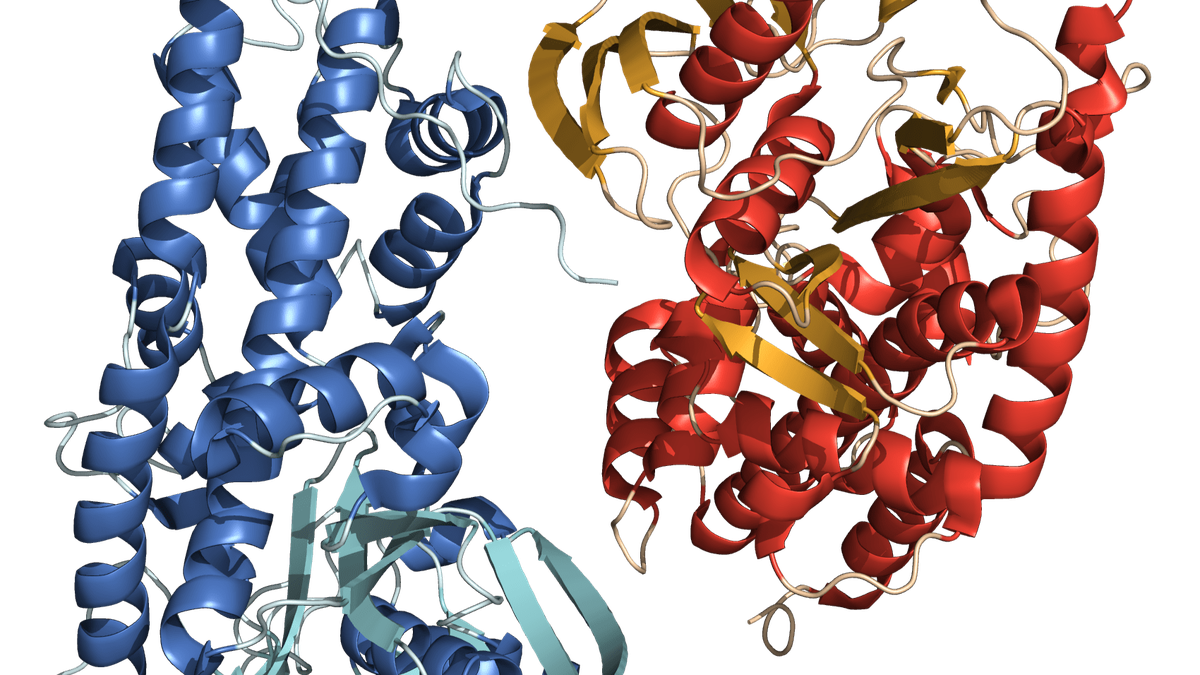
Every protein is made up of a set of 20 amino acids, rather like beads on a string. The length and order of these amino acid beads dictate how that protein folds into its unique shape. This is important because the shape of a protein is vital to its function. Any disruption to this structure destroys the protein’s ability to do its job. How nature ensures correct protein folding each time remains one of the biggest mysteries in science.

At the heart of the problem is the knowledge that amino acids interact with water in two distinct ways. Some of them, like lysine, love water. These hydrophilic amino acids easily dissolve and mix well with water. And then there are those like tryptophan that don’t like water. These hydrophobic amino acids don’t mix with water and tend to avoid it as much as possible, to the extent that they often clump together to minimise water exposure.

Since about 70% of the cell is made of water, the way the amino acids are arranged and how that arrangement interacts with water molecules is pivotal to how they fold. If a protein contains a stretch of hydrophobic amino acids, they will naturally tend to aggregate, compacting the entire protein in the process.

Sensitive to change

Kauzmann built on this idea and proposed that proteins have a core largely made up of hydrophobic amino acids and a surface made primarily of hydrophilic amino acids.

The theory was proven to be correct in the following decade when scientists began to accurately map protein structures by X-ray crystallography and saw what he predicted was true: the hydrophobic amino acids were often buried in the core, while the hydrophilic ones tended to localise to the surface.

Further research showed that, unlike the surface, the amino acids at the core were also very sensitive to changes. It appeared that even minor modifications in the core could disrupt the protein’s shape and, consequently, function.

Another piece of evidence supporting this line of thought was that the amino acid sequences from the cores of proteins common to different forms of life were remarkably similar. It was reasoned that this was so since nature couldn’t afford to change these without lethal consequences.

But this raised another question. If the effects of a wrong amino acid combination are so drastic, how did nature, while relying on slow, incremental trial and error, manage to find functional protein structures at all?

Even for a modest 60-amino-acid protein core, the number of possible combinations is around 1078, a number comparable to the estimated number of atoms in the known universe. It’s astonishing that evolution was able to navigate such a vast space of possibilities to find the stable, functional sequences not once, but again and again, across the millions of proteins found in life today.

This mystery has finally been put to rest by a team from the Centre for Genomic Regulation in Spain and the Wellcome Sanger Institute in the U.K.

Implications for therapeutic proteins

In a new paper in Science, the team challenged the original assumption that protein cores are sensitive to change by arguing that, of the astronomically high number of combinations of protein cores that are possible, few have been tested. The changes made in those studies were also localised to small regions and didn’t allow for compensating adjustments elsewhere in the protein.

The team proceeded to test this by first generating a library of 78,125 different amino acid combinations across seven locations in the cores of three proteins: the SH3 domain of FYN tyrosine protein kinase from humans, the CI-2A protein from barley, and the CspA from the Escherichia coli bacterium. Then they tested the stability of some of these combinations to assess the impact of the changes they introduced in the protein.

Remarkably, the authors found that while most combinations were indeed detrimental, several remained stable, showing that protein cores are more resilient to change than previously believed. The actual number of stable combinations varied from protein to protein, with the highest being the human SH3-FYN, which showed more than 12,000 different stable core conformations.

The team then fed this data into a machine-learning algorithm to check if, based on their data, they would be able to predict protein core stability based on the amino acid sequence alone. They tested their model on 51,159 natural SH3 sequences across all domains of life that are available in public databases and found that it could accurately predict stability even if the sequences were less than 25% similar with the human SH3.

The study’s results have several important implications for therapeutic protein engineering. Many proteins trigger an unwanted immune reaction when administered due to their amino acid sequence. Changing that amino acid sequence was a slow and painful process, since it was believed that too many changes, especially at the core, would disrupt protein structure. Now, with the new insights, it may be possible to speed up the process by screening larger combinations, with many more changes than were attempted previously. 

However, while the study holds clear promise for therapeutic applications, its deeper significance lies in what it means for fundamental biology. The knowledge that the protein core is tolerant to a larger degree is an insight that resonates beyond medicine, and into the very nature of evolution itself. It’s a reminder to us that life, at its deepest level, is far more adaptable than we imagined.

Arun Panchapakesan is an assistant professor at the Y.R. Gaitonde Centre for AIDS Research and Education, Chennai.

Published – August 10, 2025 05:30 am IST



Source link

Science

Post navigation

Previous Post: Will India cave in to U.S. pressure on Russian oil? | Explained
Next Post: Global ocean model affirms Fukushima wastewater release is safe

Related Posts

  • Srinivas Hegde, Chandrayaan-1 mission director, passes away 
    Srinivas Hegde, Chandrayaan-1 mission director, passes away  Science
  • What are carbon credits? – The Hindu
    What are carbon credits? – The Hindu Science
  • Science Ministry survey on research and development in India gets weak response from private sector
    Science Ministry survey on research and development in India gets weak response from private sector Science
  • Sci-Five | The Hindu Science Quiz: On Snow Leopards
    Sci-Five | The Hindu Science Quiz: On Snow Leopards Science
  • Budget 2026: Odisha, T.N., Andhra, Kerala to get dedicated rare earth corridors to promote research and mining
    Budget 2026: Odisha, T.N., Andhra, Kerala to get dedicated rare earth corridors to promote research and mining Science
  • How energy efficiency drives seasonal mountain bird migration worldwide
    How energy efficiency drives seasonal mountain bird migration worldwide Science

More Related Articles

The last of the Mariners The last of the Mariners Science
Malaria parasites corkscrew their way deeper through skin Malaria parasites corkscrew their way deeper through skin Science
Science Quiz: On Charles Darwin Science Quiz: On Charles Darwin Science
ISRO successfully executes SpaDeX docking experiment; India joins elite club of nations ISRO successfully executes SpaDeX docking experiment; India joins elite club of nations Science
Drug-resistant superbugs projected to kill 39 million by 2050 Drug-resistant superbugs projected to kill 39 million by 2050 Science
Increasing tropical cyclones of higher intensity necessitates a new category Increasing tropical cyclones of higher intensity necessitates a new category Science
SiteLock

Archives

  • May 2026
  • April 2026
  • March 2026
  • February 2026
  • January 2026
  • December 2025
  • November 2025
  • October 2025
  • September 2025
  • August 2025
  • July 2025
  • June 2025
  • May 2025
  • April 2025
  • March 2025
  • February 2025
  • January 2025
  • December 2024
  • November 2024
  • October 2024
  • September 2024
  • August 2024
  • July 2024
  • June 2024
  • May 2024
  • April 2024
  • March 2024
  • February 2024
  • January 2024
  • December 2023
  • November 2023
  • October 2023
  • September 2023
  • August 2023
  • July 2023
  • June 2023
  • May 2023
  • April 2023
  • March 2023
  • February 2023
  • January 2023
  • December 2022
  • November 2022
  • October 2022
  • September 2022
  • August 2022
  • July 2022
  • June 2022
  • May 2022

Categories

  • Business
  • Nation
  • Science
  • Sports
  • World

Recent Posts

  • Sinner reaches Italian Open semis, breaks Masters 1000 winning streak record
  • Trading in organs illegally in Kerala, with forged documents
  • IPL 2026 | Raghuvanshi — repaying the faith shown by Knight Riders
  • Three-day Mohiniyattam masterclass at Fort Kochi
  • Sri Lanka’s Fisheries Minister urges CM Vijay to ban bottom trawling

Recent Comments

  1. Davidexomi on UP Teacher Who Asked Students To Slap Muslim Classmate
  2. AllanSwexy on UP Teacher Who Asked Students To Slap Muslim Classmate
  3. Davidcag on UP Teacher Who Asked Students To Slap Muslim Classmate
  4. CordellVoice on UP Teacher Who Asked Students To Slap Muslim Classmate
  5. Wesleyunfix on UP Teacher Who Asked Students To Slap Muslim Classmate
  • Pakistan Coach Unhappy With Players’ Fitness After Bangladesh Loss, PCB Set To Impose ‘Central Contract’ Condition
    Pakistan Coach Unhappy With Players’ Fitness After Bangladesh Loss, PCB Set To Impose ‘Central Contract’ Condition Sports
  • KL Rahul Shell-Shocked As SunRisers Hyderabad Chase Down 166 In 58 Balls. Says, “Am At Loss For Words”
    KL Rahul Shell-Shocked As SunRisers Hyderabad Chase Down 166 In 58 Balls. Says, “Am At Loss For Words” Sports
  • “Lok Sabha Polls In Bengal Neck And Neck Contest”: Political Analysts
    “Lok Sabha Polls In Bengal Neck And Neck Contest”: Political Analysts Nation
  • Access Denied
    Access Denied Nation
  • Access Denied World
  • EU says von der Leyen’s plane GPS system was jammed, Russian interference suspected
    EU says von der Leyen’s plane GPS system was jammed, Russian interference suspected World
  • Rockets hit Syria’s Damascus, damaging mosque: local authorities
    Rockets hit Syria’s Damascus, damaging mosque: local authorities World
  • At Least Nine Killed As Small Plane Crashes Into Brazilian Tourist City
    At Least Nine Killed As Small Plane Crashes Into Brazilian Tourist City World

Editor-in-Chief:
Mohammad Ariff,
MSW, MAJMC, BSW, DTL, CTS, CNM, CCR, CAL, RSL, ASOC.
editor@artifex.news

Associate Editors:
1. Zenellis R. Tuba,
zenelis@artifex.news
2. Haris Daniyel
daniyel@artifex.news

Photograher:
Rohan Das
rohan@artifex.news

Artifex.News offers Online Paid Internships to college students from India and Abroad. Interns will get a PRESS CARD and other online offers.
Send your CV (Subjectline: Paid Internship) to internship@artifex.news

Links:
Associate Journalism
About Us
Privacy Policy

News Links:
Breaking News
World
Nation
Sports
Business
Entertainment
Lifestyle

Registered Office:
72/A, Elliot Road, Kolkata - 700016
Tel: 033-22277777, 033-22172217
Email: office@artifex.news

Editorial Office / News Desk:
No. 13, Mezzanine Floor, Esplanade Metro Rail Station,
12 J. L. Nehru Road, Kolkata - 700069.
(Entry from Gate No. 5)
Tel: 033-46011099, 033-46046046
Email: editor@artifex.news

Copyright © 2023 Artifex.News Newsportal designed by Artifex Infotech.