Skip to content
  • Facebook
  • X
  • Linkedin
  • WhatsApp
  • YouTube
  • Associate Journalism
  • About Us
  • Privacy Policy
  • 033-46046046
  • editor@artifex.news
Artifex.News

Artifex.News

Stay Connected. Stay Informed.

  • Breaking News
  • World
  • Nation
  • Sports
  • Business
  • Science
  • Entertainment
  • Lifestyle
  • Toggle search form
  • ‘GST spurring fresh tax terrorism,’ says former CEA Arvind Subramanian
    ‘GST spurring fresh tax terrorism,’ says former CEA Arvind Subramanian Business
  • Access Denied
    Access Denied Nation
  • Joe Root Added To England Squad For First ODI Against Ireland At His Own Request
    Joe Root Added To England Squad For First ODI Against Ireland At His Own Request Sports
  • ISRO’s GSLV Mission In January Will Be 100th Launch From Sriharikota
    ISRO’s GSLV Mission In January Will Be 100th Launch From Sriharikota Nation
  • Wanted Indian Drugs Smuggler Shot Dead In US
    Wanted Indian Drugs Smuggler Shot Dead In US World
  • Access Denied
    Access Denied Nation
  • Asian Games 2023 October 3 Live Updates: Archers Assure India Of Medal, Tejaswin In Decathlon Gold Race
    Asian Games 2023 October 3 Live Updates: Archers Assure India Of Medal, Tejaswin In Decathlon Gold Race Sports
  • Access Denied Sports
Drug-resistant superbugs projected to kill 39 million by 2050

Drug-resistant superbugs projected to kill 39 million by 2050

Posted on September 17, 2024 By admin


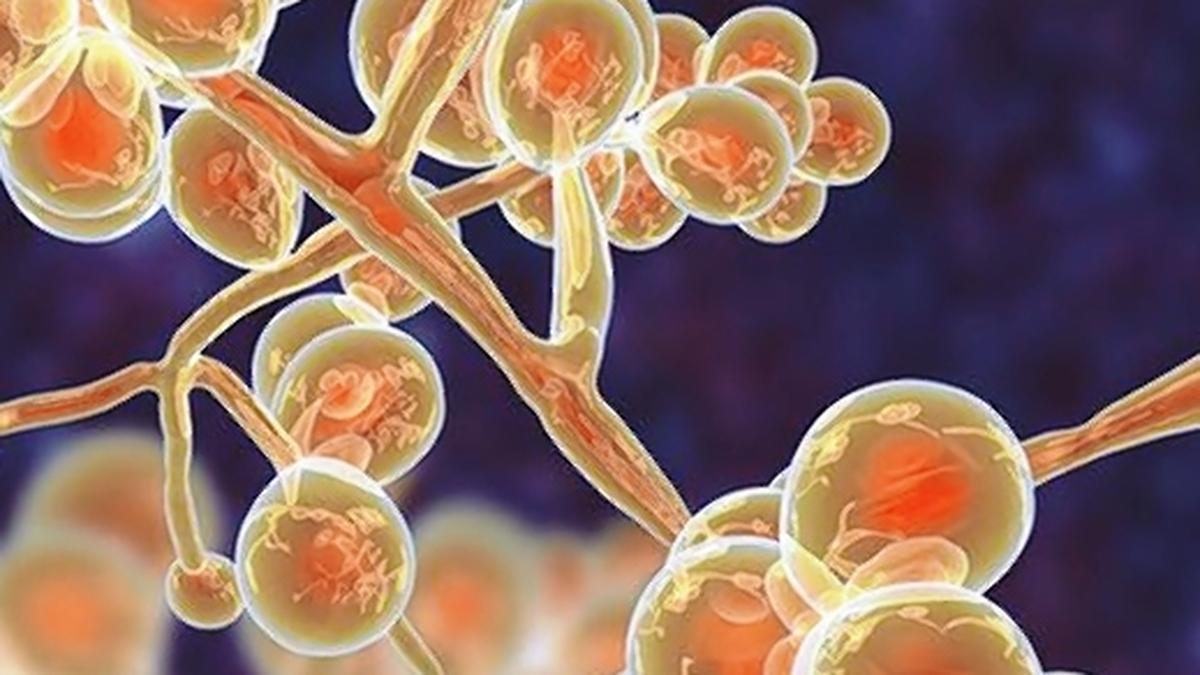
Candida auris fungi, emerging multidrug resistant fungus, 3D illustration
| Photo Credit: Dr_Microbe

Infections of drug-resistant superbugs are projected to kill nearly 40 million people over the next 25 years, a global analysis predicted on Monday, September 16, 2024, with the researchers urging action to avoid this grim scenario.

Superbugs — strains of bacteria or pathogens that have become resistant to antibiotics, making them much harder to treat — have been recognised as a rising threat to global health.

The analysis has been billed as the first research to track the global impact of superbugs over time, and to estimate what could happen next.

More than a million people died from the superbugs — also called antimicrobial resistance (AMR) — per year across the world between 1990 and 2021, according to the GRAM study in The Lancet journal.

Deaths among children under five from superbugs actually fell by more than 50 percent over the last three decades, the study said, due to improving measures to prevent and control infections for infants. However, when children now catch superbugs, the infections are much harder to treat.

And deaths of over-70s have surged by more than 80 percent over the same period, as an ageing population became more vulnerable to infection.

Deaths from infections of MRSA, a type of staph bacteria that has become resistant to many antibiotics, doubled to 130,000 in 2021 from three decades earlier, the study said.

The researchers looked at 22 pathogens, 84 combinations of drugs and pathogens, and 11 infectious syndromes such as meningitis. The study involved data from 520 million individual records across 204 countries and territories.

The researchers used modelling to estimate that, based on current trends, the number of direct deaths from AMR would rise by 67 percent to reach nearly two million a year by 2050.

It would also play a role in a further 8.2 million annual deaths, a jump of nearly 75 percent, according to the modelling.

Threat to modern medicine

Under this scenario, AMR will have directly killed 39 million people over the next quarter century and contributed to a total of 169 million deaths, it added.

But less dire scenarios are also possible.

If the world works to improve care for severe infections and access to antimicrobial drugs, it could save the lives of 92 million people by 2050, the modelling suggested.

“These findings highlight that AMR has been a significant global health threat for decades and that this threat is growing,” said study co-author Mohsen Naghavi of the US-based Institute of Health Metrics.

Jeremy Knox, infectious disease policy head at the UK-based health charity the Wellcome Trust, warned that the effects of rising AMR rates would be felt across the world.

“An increasing AMR burden at the scale described in the GRAM report would represent a steady undermining of modern medicine as we know it, as the antibiotics we rely upon to keep common medical interventions safe and routine could lose their effectiveness,” Knox told AFP.

While there has been a steady increase in political attention on the subject over the last decade, “we have yet to see governments around the world go far enough, fast enough in tackling the threat of AMR”, he added.

He described a high-level AMR meeting at the United Nations scheduled for September 26 as a “vital moment” for the fight against superbugs.

Antimicrobial resistance is a natural phenomenon but the overuse and misuse of antibiotics in humans, animals and plants has made the problem worse.

Published – September 17, 2024 04:47 pm IST



Source link

Science

Post navigation

Previous Post: Sri Lanka’s disenchanted Tamils are divided this election
Next Post: “You Want Your Best Players To…”: Rohit Sharma’s Clear Take On Workload Management Ahead Of Long Test Season

Related Posts

  • Consistent effort key to India’s growth in space technology, says ISRO chairman
    Consistent effort key to India’s growth in space technology, says ISRO chairman Science
  • What is helium and why is it used in rockets?
    What is helium and why is it used in rockets? Science
  • ISRO set for a historic 100th launch from Sriharikota
    ISRO set for a historic 100th launch from Sriharikota Science
  • Australian weather bureau sees 50% chance of La Nina this year
    Australian weather bureau sees 50% chance of La Nina this year Science
  • The Science Quiz: The stuff semiconductors are made of
    The Science Quiz: The stuff semiconductors are made of Science
  • How David Attenborough inspired Indians to see nature differently
    How David Attenborough inspired Indians to see nature differently Science

More Related Articles

mRNA research exemplifies the unpredictable value of basic research mRNA research exemplifies the unpredictable value of basic research Science
With no central brain, can jellyfish learn from past experiences? With no central brain, can jellyfish learn from past experiences? Science
The Science Quiz | Computer viruses The Science Quiz | Computer viruses Science
Private member bill seeks to establish central optical devices quality control and vision care regulation Private member bill seeks to establish central optical devices quality control and vision care regulation Science
2025 ICTP Prize awarded to Titas Chanda, Sthitadhi Roy 2025 ICTP Prize awarded to Titas Chanda, Sthitadhi Roy Science
Nuclear fusion cost models too optimistic to be viable, experts warn Nuclear fusion cost models too optimistic to be viable, experts warn Science
SiteLock

Archives

  • May 2026
  • April 2026
  • March 2026
  • February 2026
  • January 2026
  • December 2025
  • November 2025
  • October 2025
  • September 2025
  • August 2025
  • July 2025
  • June 2025
  • May 2025
  • April 2025
  • March 2025
  • February 2025
  • January 2025
  • December 2024
  • November 2024
  • October 2024
  • September 2024
  • August 2024
  • July 2024
  • June 2024
  • May 2024
  • April 2024
  • March 2024
  • February 2024
  • January 2024
  • December 2023
  • November 2023
  • October 2023
  • September 2023
  • August 2023
  • July 2023
  • June 2023
  • May 2023
  • April 2023
  • March 2023
  • February 2023
  • January 2023
  • December 2022
  • November 2022
  • October 2022
  • September 2022
  • August 2022
  • July 2022
  • June 2022
  • May 2022

Categories

  • Business
  • Nation
  • Science
  • Sports
  • World

Recent Posts

  • Visakhapatnam Collector calls for inter-departmental synergy to boost investments
  • Kohli’s masterful knock powers Royal Challengers to the top
  • Vijay Narayan earns rare distinction of being Advocate General under two different governments
  • Learn from Sri Lanka’s experience on impact of fertilizer supply chains: experts
  • Sewage pollution of Cooum, groundwater depletion raise alarm

Recent Comments

  1. Leonardren on UP Teacher Who Asked Students To Slap Muslim Classmate
  2. NathanQuins on UP Teacher Who Asked Students To Slap Muslim Classmate
  3. Davidgof on UP Teacher Who Asked Students To Slap Muslim Classmate
  4. NathanJobre on UP Teacher Who Asked Students To Slap Muslim Classmate
  5. Davidcag on UP Teacher Who Asked Students To Slap Muslim Classmate
  • Access Denied
    Access Denied Nation
  • New Zealand’s Māori King dies after 18-year reign
    New Zealand’s Māori King dies after 18-year reign World
  • Access Denied
    Access Denied Nation
  • First Time In 147 Years: Yashasvi Jaiswal Achieves Historic Feat In 1st Test vs Bangladesh
    First Time In 147 Years: Yashasvi Jaiswal Achieves Historic Feat In 1st Test vs Bangladesh Sports
  • ‘Security risks, IT costs won’t impede AI progress’
    ‘Security risks, IT costs won’t impede AI progress’ Business
  • Access Denied World
  • Access Denied Sports
  • Mizoram Running Out Of Essentials As Trucks Stranded Due To Bad Roads
    Mizoram Running Out Of Essentials As Trucks Stranded Due To Bad Roads Nation

Editor-in-Chief:
Mohammad Ariff,
MSW, MAJMC, BSW, DTL, CTS, CNM, CCR, CAL, RSL, ASOC.
editor@artifex.news

Associate Editors:
1. Zenellis R. Tuba,
zenelis@artifex.news
2. Haris Daniyel
daniyel@artifex.news

Photograher:
Rohan Das
rohan@artifex.news

Artifex.News offers Online Paid Internships to college students from India and Abroad. Interns will get a PRESS CARD and other online offers.
Send your CV (Subjectline: Paid Internship) to internship@artifex.news

Links:
Associate Journalism
About Us
Privacy Policy

News Links:
Breaking News
World
Nation
Sports
Business
Entertainment
Lifestyle

Registered Office:
72/A, Elliot Road, Kolkata - 700016
Tel: 033-22277777, 033-22172217
Email: office@artifex.news

Editorial Office / News Desk:
No. 13, Mezzanine Floor, Esplanade Metro Rail Station,
12 J. L. Nehru Road, Kolkata - 700069.
(Entry from Gate No. 5)
Tel: 033-46011099, 033-46046046
Email: editor@artifex.news

Copyright © 2023 Artifex.News Newsportal designed by Artifex Infotech.