



Each rare disease affects very few people. However, there are around 8,000 rare diseases, and they cumulatively affect hundreds of millions of people. In India, 1,004 rare genetic disorders have been reported so far.
It used to be that because the number of patients for a rare-disease drug was very small, so the pharmaceutical industry’s interest in developing such drugs was limited. Therefore they were called orphan drugs.
In order to overcome this hesitancy, many governments have incentivised companies to develop orphan drugs. Examples include the Orphan Drug Act, which the U.S. passed in 1983 to provide tax incentives, seven years of market exclusivity for the first approved product for a given condition, grants, regulatory fee waivers, etc.That is, it reduced the costs of developing the drugs and enabled companies to make a good profit.

This allowed companies to diversify into rare-disease drugs. Before the passage of the Orphan Drug Act, only 38 relevant drugs had been approved in the U.S. But after that, by 2022, there had been 1,122 approvals. Subsequently, several countries and regions, including Japan, Australia, and the European Union had approved similar legislation encouraging pharmaceutical companies to develop and manufacture orphan drugs.
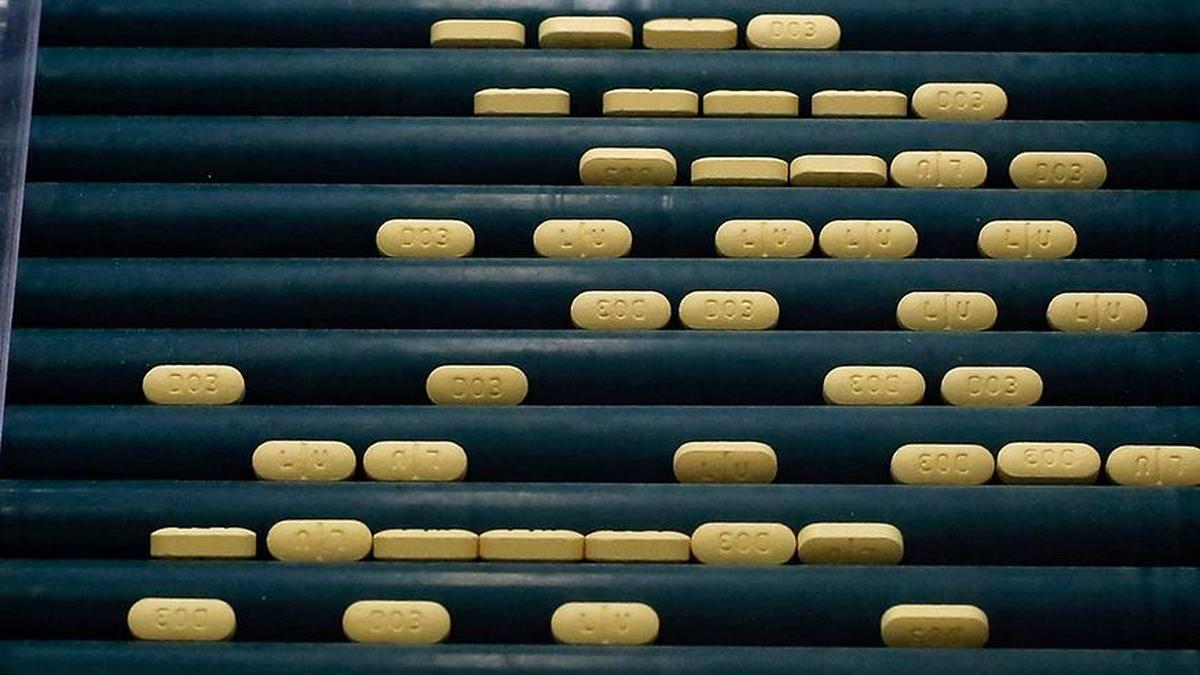
Because of the small market, companies tend to set very high prices for these medications, and it is not unusual for a rare disease patient to find that a year’s worth of the drug costs around $100,000 (Rs 1 crore) or more. This puts the medication out of reach for virtually all patients around the world unless a health insurance scheme or government health service covers it. Samples of such high-priced pharmaceuticals are described in the table.
Two challenges
Although the Government of India supports rare disease patients with up to a total of Rs 50 lakh for their treatment, this is often insufficient to cover the necessary costs even for a year, and patients may have to resort to crowdfunding to raise the required capital.
For example, in mid-2025, Rs 9 crore was raised through crowdfunding to pay for gene therapy for a 16-month-old child in Kolkata. In fact, almost 4,000 children are listed on a Government of India crowdfunding platform, with the cumulative annual cost of treatment for these patients amounting to over Rs 9,000 crore.
Many drugs for rare diseases have been developed, but they cater to only about 5% of rare diseases and associated conditions. Therefore, most patients lack suitable drugs, even those available at high cost.
Two key challenges in developing new orphan drugs are identifying a patient cohort for conducting clinical trials and determining endpoints in these trials. Once a drug is approved, undertaking small-scale manufacturing and distribution that is affordable and of high-quality are other major challenges.
In this article, the authors present here a possible solution to these issues. These solutions touch on how foreign companies that tend to develop novel drugs can work with India both for clinical trials and manufacturing.

Trials for new drugs
With an overall population exceeding 1.4 billion, India has a large number of patients with any given condition. And due to high rates of endogamy in certain social groups, the prevalence of a particular rare disease is even higher than might be expected based on its prevalence elsewhere.
For example, research has shown that in particular ethnic groups, the prevalence of beta-thalassemia in India can be 10.5% whereas, per a 2023 review, the prevalence in India’s general population is 3.7%. Indian patients have also become increasingly organised in recent years, with a proliferation of patient advocacy groups focusing on specific diseases.
On the research front, for example, one longitudinal study has been tracking a group of 70 people with a rare condition called GNE myopathy. Patient groups pertaining to Rett syndrome have a registry of more than 400 patients. The gene pool of the Indian diaspora also has unique mutations, often across different ethnicities.
In all, there is a large number of rare disease patients, which should help in finding a suitable patient cohort for trials. However, patients from India are not usually participants in international trials for orphan drugs.Therefore, there is considerable scope to increase their involvement in such trials. The government could foster the collaboration of foreign companies and local organisations, as it does in the area of chip manufacturing. It also could invite multinational drug companies to set up drug-development centres vis-à-vis rare diseases in India, in collaboration with patient groups.
If Indian patients are important participants in developing such drugs, they are also likely to be more interested in accessing the resulting drugs than in any monetary compensation. Put another way, Indian patients may be willing to help drug development but only if they see themselves as beneficiaries of the approved drugs.
Overpriced drugs that they cannot access serve no local purpose. To this end, the authors propose that India decide on the price of drugs sold within the country or in the Global South. The company developing the drug can be free to set prices in the rest of the world.
The authors say this with reference to the concept of benefit-sharing. Recently, country representatives and medical experts discussed this concept in the context of the Pandemic Agreement of the World Health Organization (WHO). The idea is that in the event of a pandemic, countries will rapidly share information about pathogens, including their genetic information, with the rest of the world. That way, pharmaceutical and biotechnology companies can develop diagnostics, drugs, and vaccines as early as possible. The catch is such products must be shared across countries, fairly and equitably.
Notably, U.S. and Chinese companies are locked in a charged race to develop drugs for rare diseases. Chinese companies will usually have access to enough patients, and also to low-cost manufacturing. Likewise, companies from the Western nations may find it worthwhile to explore opportunities of collaboration in India.

Manufacturing in India
India has been called the “pharmacy of the world” due to its production of small molecule generics, which fill 47% of the prescriptions for generics in the U.S. India also has the largest number of manufacturing sites approved by U.S. regulators outside the U.S.
Indian firms also manufacture and export biosimilars to the U.S. and the European Union and supply 15% of all biosimilars sold in the U.S. Of late, facilities in the country have been producing a relatively novel therapy personalised to each patient for particular cancers, called CAR-T, to international standards.
In effect, India can manufacture various categories of high-quality drugs at low cost. Local manufacturers are also ready to do this for small volumes, whereas manufacturers in Western nations are often unwilling to do so.
After understanding how foreign companies could develop and manufacture orphan drugs in India, we can consider how existing orphan drugs that have been approved abroad can be produced in India.
Under Rule 101 of the New Drugs and Clinical Trials Rules 2019, the Central Drugs Standard Control Organisation (CDSCO) has specified six countries — including the U.S. and the U.K.; if one of these countries approves a drug, the drug need not have a new clinical trial conducted in India before its maker seeking the Indian regulator’s approval.
This provision can be a major incentive to manufacture and market certain generic drugs in India. However, this policy can benefit from greater transparency, including guidance documents to help drug developers and sponsors file applications to the regulator. Regulatory agencies abroad routinely develop such documents to ease the applications process.
As a rule, the approval of such drugs should be based on bioequivalence, i.e. their behaviour in the body should be the same as that of the original drug; safety and toxicity studies; and the drug’s effectiveness once it is on the market.
Such a pathway will require appropriate safeguards for quality, safety, a system that looks out for adverse events after the drug is on the market (i.e. pharmacovigilance), and manufacturing standards — but it will also considerably reduce the need for duplicate paperwork.

What the state can do
We also have an opportunity to take advantage of India’s expertise in generic drugs to create a global orphan drug manufacturing industry. The government should draft policy that reduces the financial barriers to producing such drugs locally. A useful model could be developed along the lines of the production-linked incentive schemes for manufacturing. That is, companies investing in the manufacture of selected orphan drugs could receive incentives linked to production, investment, exports, and patient access.
The financial incentives could include tax incentives for investing in orphan drug manufacturing and production-linked incentives for approved orphan drugs. Other kinds of support could include support for technology transfer and process development in collaboration with a national laboratory, advanced market commitments (AMCs) by the government, committing to buy a certain output at a certain price point, and distributing it through the Centres of Excellence on Rare Diseases, the Central Government Health Scheme, and the Pradhan Mantri Bhartiya Jan Aushadhi Kendras. Manufacturers could also benefit from predictable demand during the early stages of production, and incentives for exporting to low- and middle-income countries.
The overall objective should not simply be to subsidise companies. Instead, the government should de-risk the initial investment enough to make orphan drug manufacturing commercially viable.
With a streamlined regulatory pathway, appropriate financial incentives, and government procurement, India could build a globally competitive rare-disease pharmaceutical sector.
Taken together, India has already shown the world how to make drugs affordable. The next challenge is to show the world how to make rare-disease drugs accessible.
Gayatri Saberwal, Rakesh Mishra, and Alok Bhattacharya are with the Tata Institute for Genetics and Society. Bhattacharya is also with ‘World Without GNE Myopathy’.