
Skip to content
  • Facebook
  • X
  • Linkedin
  • WhatsApp
  • YouTube
  • Associate Journalism
  • About Us
  • Privacy Policy
  • 033-46046046
  • editor@artifex.news
Artifex.News

Artifex.News

Stay Connected. Stay Informed.

  • Breaking News
  • World
  • Nation
  • Sports
  • Business
  • Science
  • Entertainment
  • Lifestyle
  • Toggle search form
  • Access Denied
    Access Denied Nation
  • Access Denied
    Access Denied Nation
  • Cashew nutshell marine biofuel causes problems for some ships: testing agency
    Cashew nutshell marine biofuel causes problems for some ships: testing agency Science
  • Access Denied World
  • British PM Keir Starmer says no ‘let up’ in moves to stop far-right riots
    British PM Keir Starmer says no ‘let up’ in moves to stop far-right riots World
  • Asked About Excuse If India Beat Australia In BGT Again, Pat Cummins Gives Epic Reply
    Asked About Excuse If India Beat Australia In BGT Again, Pat Cummins Gives Epic Reply Sports
  • US ‘Black Friday’ Online Spending Put At Record .8 Billion
    US ‘Black Friday’ Online Spending Put At Record $10.8 Billion World
  • India, UK Hold Inaugural ‘2+2’ Foreign, Defence Dialogue In Delhi
    India, UK Hold Inaugural ‘2+2’ Foreign, Defence Dialogue In Delhi Nation
India’s river interlinks may carry invasive species farther

India’s river interlinks may carry invasive species farther

Posted on September 27, 2026 By admin


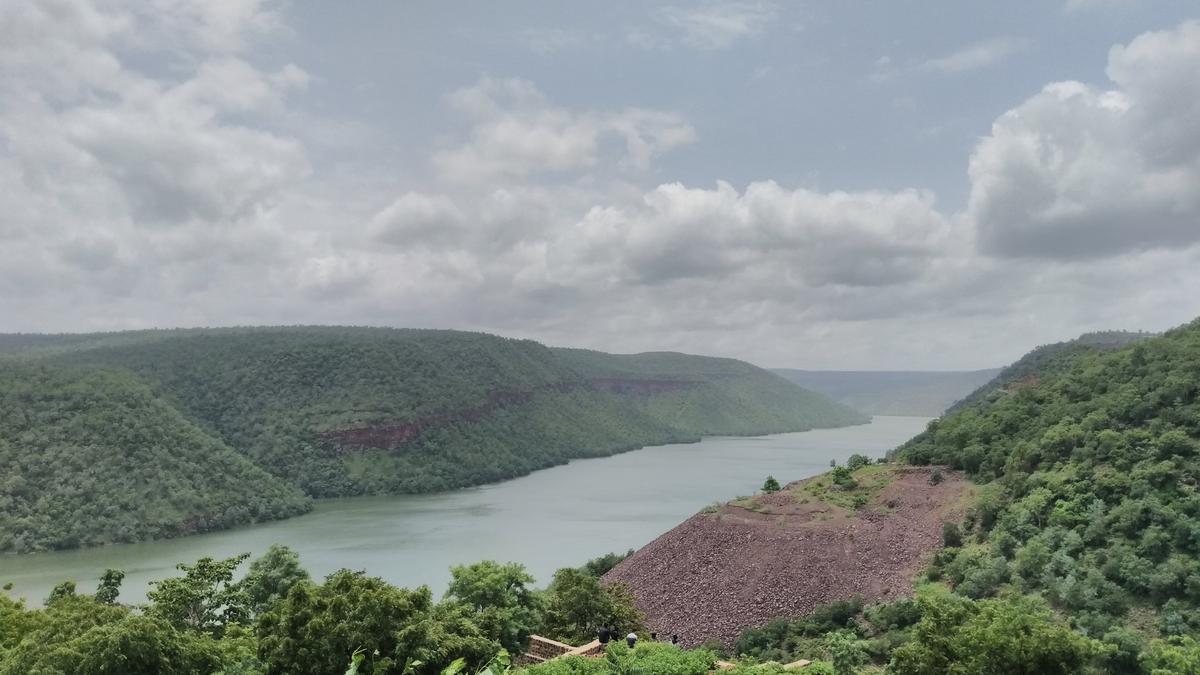
The National River-Linking Project is the world’s most ambitious project of its kind to date, proposing to link 37 major river basins across India using 30 links, potentially redistributing around 174 billion cubic metres of water from ‘surplus’ to ‘deficit’ basins while generating some 34,000 MW of power.

Yet the Project has also raised serious concerns about its environmental costs. Experts have said the idea of ‘surplus’ and ‘deficit’ basins can mask seasonal and year-on-year variations in river flows, and that transferring water between basins can alter downstream flows, sediment transport, floodplains, deltas, and the habitats that depend on them. Dams, reservoirs, and canals can also break ecosystems up into pieces and disturb fish migration and other ecological processes.

Climate change has also been complicating assumptions about how much water a basin will reliably have available to transfer in the decades ahead. But it seems river-linking also poses another, less obvious problem.

‘Ecological highways’

Recently, researchers from the Ashoka Trust for Research in Ecology and the Environment (ATREE), Bengaluru, assessed the Project also possibly creating “ecological highways” that invasive species can travel on to new, ecologically sensitive areas.

Their findings were recently published in Scientific Reports.

Because of the ways in which India’s river basins are isolated from each other, many species in each one are endemic, meaning they inhabit a small area and are not found elsewhere on the planet. River links may then threaten them more than native species.

“There is no public or verifiable scientific basis that backs any of the claims of benefits of the National River-Linking Project, but more of a notional basis that if you connect a drier part to a wetter part of the country, there will be water balance, as opposed to how ecology actually works,” Siddharth Agarwal, director-founder of the Veditum India Foundation, a nonprofit working on environmental governance, said.

In the paper, the team showed that all Northeast and peninsular Indian basins are more vulnerable to biological invasions than those in Central and North India.

The Southwestern Ghats, Kaveri, Krishna Lower Ganga, and Brahmaputra basins support diverse habitats and complex ecological niches that host native species, threatened species, and invasive alien species.

‘Invasion hotspots’

“Right now, [the invasive alien species] are isolated, restricted to individual river basins,” the study’s lead author and ATREE senior fellow Aravind Neelavar Ananthram said. “By connecting rivers, we would not only introduce new species which are not naturally found but also increase the vulnerability of the native species that cannot compete with the invasive alien species.”

This finding is consistent with research worldwide, which has suggested that biodiversity hotspots can accumulate more invasive alien species, thus compromising the long-term prospects of native species and themselves turning into ‘invasion hotspots’.

For example, the Lower Ganga basin hosts 13-15 invasive alien species, and could become a major source of invasives for the Mahanadi, which is home to 69 threatened species. In fact, this is one of the Project’s most ecologically sensitive links, and it could increase the risk of extinction for the threatened species.

Water connections under the Project could also help aquatic pathogens to spread, disrupt the migratory routes of fish, and flatten the unique biota that individual river basins boast today.

“Fishes in one river basin may be well adapted or immune to the pathogens it harbours, while species in other basins may not be able to protect themselves against such pathogens,” Dr. Ananthram said. “If one reduces the water flow by taking out water from one river and putting it into another, the downstream water flow will be reduced. As a consequence, the downstream biodiversity will be severely affected and there is a high chance that the endemic species in the lower reaches might go extinct.”

“The river linking project is being sold as a solution (at least for the Ken-Betwa) to water scarcity (in Bundelkhand), but can it really serve the objectives that it is proposing?” Mr. Agarwal asked. “There is no way for us to verify. It is more of a capital investment than an ecological one.”

In need of foresight

“Rivers like the Ken have sand of great ecological value. But when the Ken-Betwa link is live, large quantities of water will be moved away from the river, lowering the flow volume and reducing sediment production rates in the river,” Mr. Agarwal said. “That could ultimately reduce the biodiversity in the river and potentially even trigger a food chain collapse.”

The Project’s consequences may also extend to downstream nations.

“Right now, we have only considered 15 freshwater invasive species for which data is available,” Dr. Ananthram said. “If one looks at all species across India, including terrestrial and marine systems, it would be approximately 350 to 400 species in different stages of invasion. Developed economies like Australia and in Europe have very strong policies for invasive alien species. It is an urgent need that India comes up with a specific policy targeted to regulate, manage and control” such species.

Embedding evidence-based management of river basins into national infrastructure planning could provide ecological foresight.

“The health risks, biodiversity, wildlife, and economic costs of [the Project] to India, especially for the agro-economy, farmers’ livelihoods, and fisheries, are matters of urgent attention,” he added. “While the government’s intention might be good to address water deficit, development plans and policy decisions should be holistic, addressing the ecological impact, the effect on biodiversity, and people’s lives.”

Jhinook Mitra is an independent researcher and ecologist, currently with the Nature Conservation Foundation, Bengaluru.

Published – September 30, 2026 09:15 am IST



Source link

Science

Post navigation

Previous Post: Three drug peddlers held, MDMA worth ₹24 lakh seized
Next Post: French Consul General visits Mar Ivanios College

Related Posts

  • As AI marches on math research, scholars ponder the future
    As AI marches on math research, scholars ponder the future Science
  • How India established its first research station in Antarctica
    How India established its first research station in Antarctica Science
  • The ‘genomic accordion’ mpox viruses use to evolve, infect humans
    The ‘genomic accordion’ mpox viruses use to evolve, infect humans Science
  • Vaccine for dengue may be available commercially by mid-2026 
    Vaccine for dengue may be available commercially by mid-2026  Science
  • Rock collected by Apollo 17 astronaut in 1972 reveals moon’s age
    Rock collected by Apollo 17 astronaut in 1972 reveals moon’s age Science
  • Sci-Five | The Hindu Science Quiz: On the study of things
    Sci-Five | The Hindu Science Quiz: On the study of things Science

More Related Articles

What does spaceflight do to the human body? | Explained What does spaceflight do to the human body? | Explained Science
Starship’s first ever payload was a stuffed banana Starship’s first ever payload was a stuffed banana Science
What is pyroprocessing? What is pyroprocessing? Science
As trees fall in the thousands, innovative protests erupt across India As trees fall in the thousands, innovative protests erupt across India Science
Single genome-editing strategy promises to treat multiple disorders Single genome-editing strategy promises to treat multiple disorders Science
Mumbai-led team helps reveal mysterious twin rings around galaxy Mumbai-led team helps reveal mysterious twin rings around galaxy Science
SiteLock

Archives

  • October 2026
  • September 2026
  • August 2026
  • July 2026
  • June 2026
  • May 2026
  • April 2026
  • March 2026
  • February 2026
  • January 2026
  • December 2025
  • November 2025
  • October 2025
  • September 2025
  • August 2025
  • July 2025
  • June 2025
  • May 2025
  • April 2025
  • March 2025
  • February 2025
  • January 2025
  • December 2024
  • November 2024
  • October 2024
  • September 2024
  • August 2024
  • July 2024
  • June 2024
  • May 2024
  • April 2024
  • March 2024
  • February 2024
  • January 2024
  • December 2023
  • November 2023
  • October 2023
  • September 2023
  • August 2023
  • July 2023
  • June 2023
  • May 2023
  • April 2023
  • March 2023
  • February 2023
  • January 2023
  • December 2022
  • November 2022
  • October 2022
  • September 2022
  • August 2022
  • July 2022
  • June 2022
  • May 2022

Categories

  • Business
  • Nation
  • Science
  • Sports
  • World

Recent Posts

  • AIADMK, BJP leaders slam TVK-led Tamil Nadu government over electricity purchase at high rate
  • Women stage silent demonstration at Kathipara against police action on anti-CEC protesters in Delhi
  • DGCA bans specific power banks on flights
  • Saudi Supreme Court sets aside Sri Lankan migrant worker’s death penalty
  • Nedumbassery accident: CPI(M) stages protest march to police station over ‘indifference’ in handling of case

Recent Comments

  1. RobertTes on UP Teacher Who Asked Students To Slap Muslim Classmate
  2. Manuelret on UP Teacher Who Asked Students To Slap Muslim Classmate
  3. RobertTes on UP Teacher Who Asked Students To Slap Muslim Classmate
  4. RobertTes on UP Teacher Who Asked Students To Slap Muslim Classmate
  5. BrentWes on UP Teacher Who Asked Students To Slap Muslim Classmate
  • India vs Bangladesh second Test | Akash Deep quietly making a mark with vital contributions
    India vs Bangladesh second Test | Akash Deep quietly making a mark with vital contributions Sports
  • Saudi LCC flyadeal to enter India next year with 4-5 destinations
    Saudi LCC flyadeal to enter India next year with 4-5 destinations Business
  • “10 Cr Player”: Marco Jansen Given Huge Praise After Record-Breaking T20I Fifty vs India
    “10 Cr Player”: Marco Jansen Given Huge Praise After Record-Breaking T20I Fifty vs India Sports
  • Oxford University Press apologises over content on Shivaji Maharaj in book published 2 decades ago
    Oxford University Press apologises over content on Shivaji Maharaj in book published 2 decades ago World
  • Iran chief negotiator says Hormuz strait to open only under ‘Iranian arrangements’
    Iran chief negotiator says Hormuz strait to open only under ‘Iranian arrangements’ World
  • Access Denied
    Access Denied Nation
  • Afghanistan Women Cricketers Urge ICC To Set Up Refugee Team In Australia
    Afghanistan Women Cricketers Urge ICC To Set Up Refugee Team In Australia Sports
  • Farmers in Kerala’s Thrissur await over ₹10 crore in paddy dues as Onam nears
    Farmers in Kerala’s Thrissur await over ₹10 crore in paddy dues as Onam nears Nation

Editor-in-Chief:
Mohammad Ariff,
MSW, MAJMC, BSW, DTL, CTS, CNM, CCR, CAL, RSL, ASOC.
editor@artifex.news

Associate Editors:
1. Zenellis R. Tuba,
zenelis@artifex.news
2. Haris Daniyel
daniyel@artifex.news

Photograher:
Rohan Das
rohan@artifex.news

Associate Journalists
1. Subrata Paul - AN/2020/01
2. Quamruz Zaman - AN/2021/22
3. Ahmed Sha - AN/2021/035
4. Ajay Kumar Shaw - AN/2021/39
5. Tahqiqul Hoda - AN/2021/21

Artifex.News offers Online Paid Internships to college students from India and Abroad. Interns will get a PRESS CARD and other online offers.
Send your CV (Subjectline: Paid Internship) to internship@artifex.news

Links:
Associate Journalism
About Us
Privacy Policy

News Links:
Breaking News
World
Nation
Sports
Business
Entertainment
Lifestyle

Registered Office:
72/A, Elliot Road, Kolkata - 700016
Tel: 033-22277777, 033-22172217
Email: office@artifex.news

Editorial Office / News Desk:
No. 13, Mezzanine Floor, Esplanade Metro Rail Station,
12 J. L. Nehru Road, Kolkata - 700069.
(Entry from Gate No. 5)
Tel: 033-46011099, 033-46046046
Email: editor@artifex.news

Copyright © 2023 Artifex.News Newsportal designed by Artifex Infotech.