



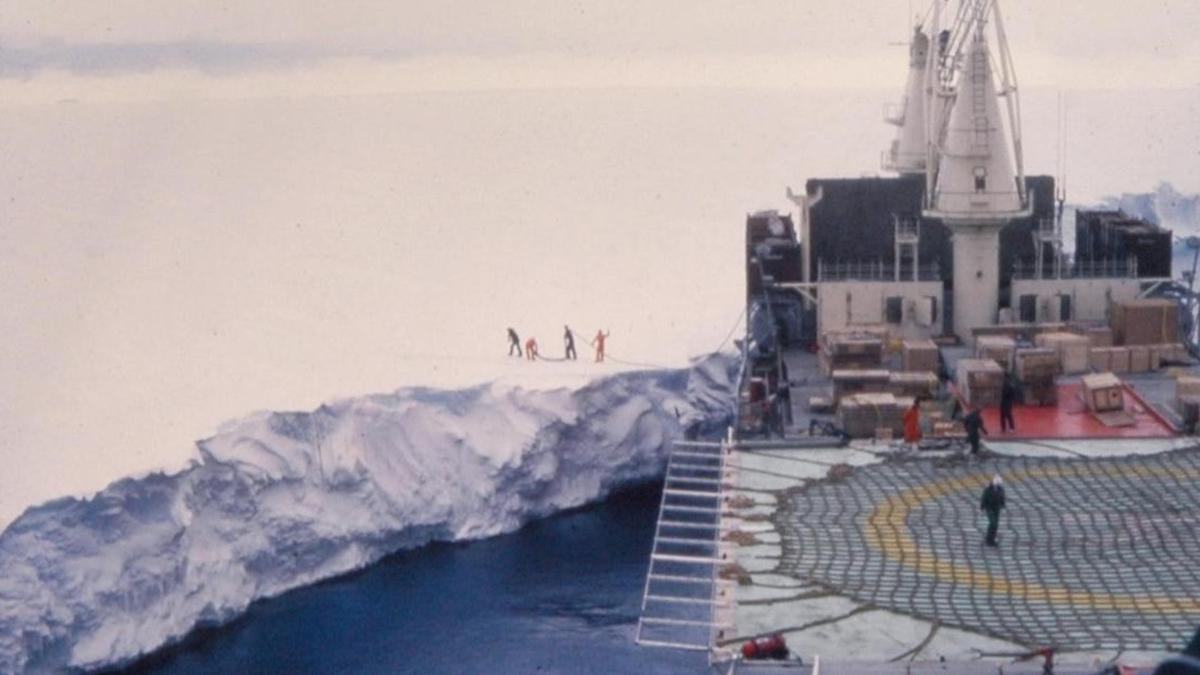
Dr Harsh K Gupta remembers the sequence of events that led to the establishment of Dakshin Gangotri, India’s first permanent research station in Antarctica, as if it happened yesterday. A year after he had moved to Thiruvananthapuram as director of the Centre for Earth Science Studies in 1982, a call for proposals to carry out scientific work in Antarctica was issued, says the renowned earth scientist and seismologist, who led India’s Third Antarctic Expedition between 1983-84 and successfully established Dakshin Gangotri there.
“I am basically a geophysicist, and my expertise is in earthquake seismology. So, I put up a proposal to set up five stations in Antarctica,” says the Hyderabad-based Harsh, a fellow of the International Science Council (ISC), the President of the Geological Society of India and also a member of the Atomic Energy Regulatory Board of India.
India’s first permanent base would go on to shape the future of the country’s Antarctic programme.
| Photo Credit:
Special Arrangement
He was soon called to make a presentation of his proposal at the Department of Ocean Development (DOD), New Delhi, which, according to him, “everyone liked very much.” However, his proposal was not selected.
Instead, Sayed Zahoor Qasim, the marine biologist who had led India’s very first expedition to Antarctica back in 1981, told him that India was planning to set up a permanent base there and asked him if he was willing to lead the expedition. “My question was why me,” recollects Harsh, on a Zoom call.
In response, he was told he was exactly the sort of person they were looking for to lead the next expedition to Antarctica and also set up a permanent research station there: he was the director of a full-fledged laboratory at only 40 years of age, had an extensive body of work in the Himalayas with an impressive publication record, and was also a good athlete.
Harsh was thrilled with the offer and said yes right away. Soon after, he met with the then Prime Minister, Indira Gandhi. “She was delighted to see that a young man would be the leader of the expedition,” says the Padma Shri awardee, in whose honour South Sudan named its first seismological centre this July.
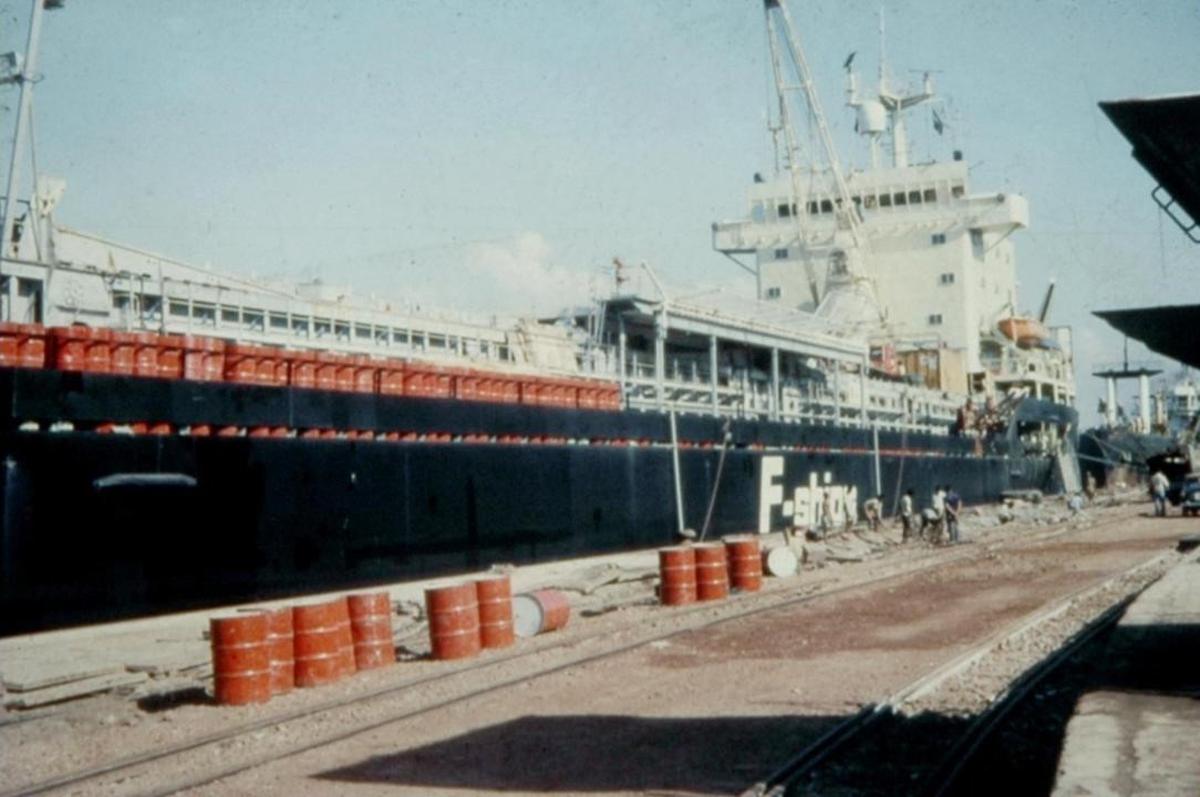
Harsh and his team left India on December 3, 1983 on the Finnpolaris
| Photo Credit:
Special Arrangement
The task ahead, however, was daunting. India’s Antarctic Programme was only two years old by then, and “no country had, till then, set up a permanent base in Antarctica and populated it in one Antarctic summer, barely two months”, says Harsh, who was excited about the challenge, even though he knew that the odds of success were slim, only 10-15 %.
On December 3, 1983, Harsh and his team set out from Goa aboard the Finnpolaris, a Finnish ice-class cargo ship capable of breaking ice. “Eighty-one families (of the people onboard) were there to bid farewell to us,” he says, adding that once they commenced sea passage, he began brainstorming on how to construct the station in around 30 days, “since out of those 60 days of an Antarctic summer, many would be lost in whiteouts and blizzards.”
Harsh remembers some of the events that took place on that journey: the setting up of a hospital on the ship, which would prove to be exceptionally fortuitous; stopping at Mauritius to pick up material and encountering the rough sea at approximately 40º S latitude (called the “Roaring Forties”), where “almost everyone fell seasick, except Harsh Gupta, because there is something biologically wrong with me,” he quips.
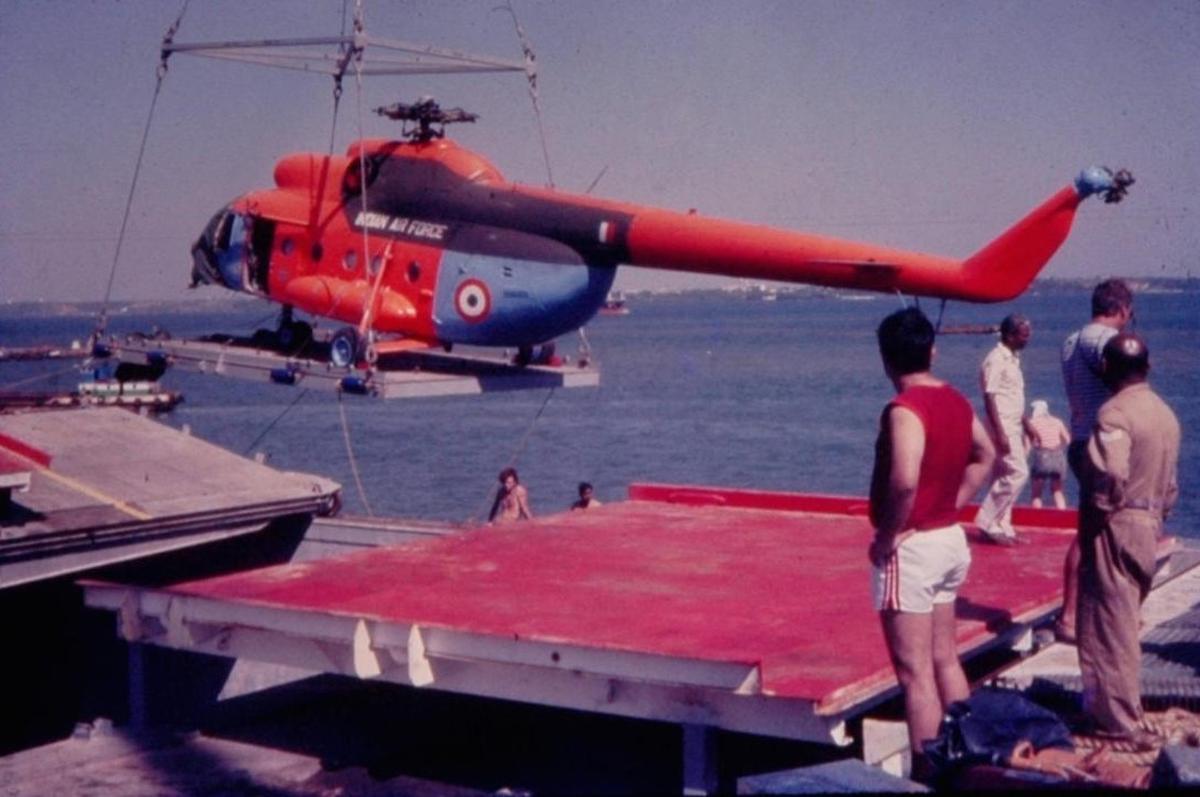
The team got into an accident a few days after arrival
| Photo Credit:
Special Arrangement
They reached Antarctica in 20-odd days, on December 24 to be precise, and began their construction. Disaster, however, struck on December 29, when one of their Mi-8 helicopters, which was being used to unload the ship, crashed, requiring its occupants to be hospitalised immediately.
Even the Prime Minister called him to check on the situation. “She asked me if I could still do it,” says Harsh, who told her that if he did not do it, he would not return. “There was a long, deafening pause of 40-50 seconds, and she then told me to go ahead.”
And go ahead they did, successfully building a 620-square-meter station complete with living quarters for 12, kitchen, washrooms, gymnasium, water-melt tank, laboratories, generator room housing three generators, and communication facilities by February 25, 1984. This construction, India’s first permanent base there, would go on to shape the future of the country’s Antarctic programme.
In the following few decades, India sent over 40 expeditions to the continent, established two more research stations, and created the National Centre for Polar and Ocean Research (NCPOR) in Goa.
“Over the years, India has done very well in Antarctica, coming up with many firsts. For instance, we have identified more than half the microbes in Antarctica, “ says Harsh, pointing out that India’s Antarctic programme has impacted our weather forecasting to a large extent, illustrating the importance of this research for our country.
The icy continent is crucial to India, Harsh explains, because 180 million years ago, the supercontinent of Gondwanaland, which includes present-day South America, Africa, Australia, Antarctica, India, Madagascar, and Arabia, began splintering.
“India moved northward and then, about 60 million years ago, collided with Eurasia, giving rise to the Himalayan mountains,” explains Harsh. Between Antarctica and India, he adds, there is mostly only ocean, except for a few small island countries like Mauritius. “Antarctica completely controls the weather of the Indian Ocean, and the Indian Ocean controls the weather of the Indian subcontinent,” says this self-described accidental scientist, who was born in Moradabad and moved to Mussoorie as a child.

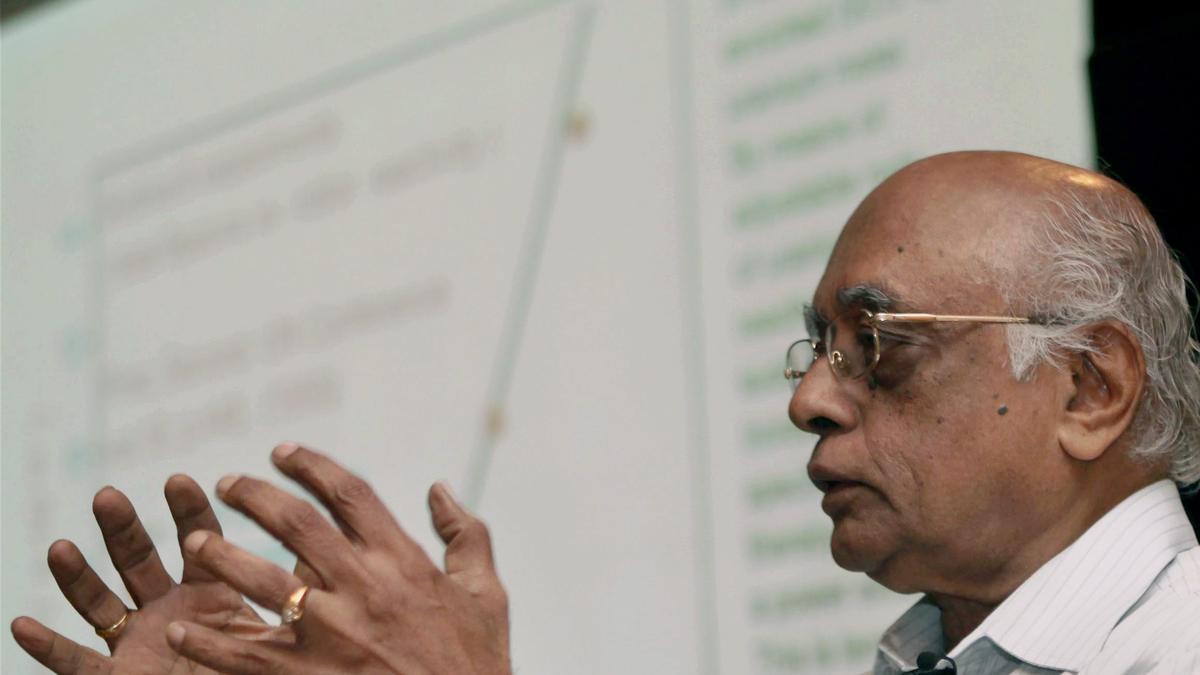
Dr Harsh K Gupta
| Photo Credit:
Special Arrangement
“The last thing I ever thought I would be was a scientist,” says Harsh, who studied at Saint George’s College in Mussoorie, an all-boys school where “everyone tried to become an army or naval officer. I, too, went through that drill.”
He recalls walking to and from school, around five kilometres away; the hours spent in NCC training, boxing, hockey, and swimming; and a strict routine that involved going to sleep by 8 pm and waking up at 4 am each day to study before school. “All that toughened me up.” .
While Harsh qualified for the National Defence Academy, his brother-in-law, himself an army officer, discouraged him from joining the armed forces, he says. So, Harsh chose to follow his older brother and study engineering.
His brother had completed a BE in mechanical engineering from the Indian Institute of Technology, Kharagpur, and was working for Oil and Natural Gas Corporation Limited (ONGC).
“He had joined ONGC and was sent for advanced training to the US; there, he realised that geophysics is a very important area of research and encouraged me to give it as my first choice when I wrote the entrance at the Indian School of Mines (now Indian Institute of Technology, Dhanbad),” says Harsh. He cleared the exam and joined the institute, which he now thinks was “one of the best things that ever happened to me.”

Antarctica completely controls the weather of the Indian Ocean, and the Indian Ocean controls the weather of the Indian subcontinent
| Photo Credit:
Special Arrangement
There was no looking back from there. He went on to work at the Central Seismological Observatory (CSO) at Shillong, where, “once I started looking at the records of the earthquakes, I got glued to them,” says Harsh. He is the author of several research papers, popular articles and over 20 books, including a two-volume Encyclopedia of Solid Earth Geophysics, published by Springer, which he compiled and edited.
“Each one is around 1,000 pages, and the best part is that there hasn’t been a single fault found in it so far,” says Harsh, who has developed several earthquake models, made successful earthquake forecasts, and was also instrumental in establishing India’s Tsunami Early Warning System after the 2004 Sumatra earthquake.
Though in his early 80s, he shows no sign of slowing down. “This work is my hobby, and I am very relaxed while I do it. If someone can play the sitar until the age of 95, I can do the same,” says Harsh, who is currently working on developing a framework for how societies can become earthquake-resilient, which he says requires education and awareness as well as a construction paradigm that needs to be thoughtfully created. “If I tell someone on the coming Sunday, at noon, there will be a seven-magnitude earthquake in Delhi, is it possible for everyone to run away?” he asks rhetorically. “So we have to learn to live with earthquakes, and that is my focus today.”