

Skip to content
  • Facebook
  • X
  • Linkedin
  • WhatsApp
  • YouTube
  • Associate Journalism
  • About Us
  • Privacy Policy
  • 033-46046046
  • editor@artifex.news
Artifex.News

Artifex.News

Stay Connected. Stay Informed.

  • Breaking News
  • World
  • Nation
  • Sports
  • Business
  • Science
  • Entertainment
  • Lifestyle
  • Toggle search form
  • ‘Not right’ for Iran to attend Davos summit after deadly protests: organisers
    ‘Not right’ for Iran to attend Davos summit after deadly protests: organisers World
  • India “Low” On Confidence Ahead Of Border Gavaskar Trophy: Australia Star’s ‘Damaging’ Shot At Rohit Sharma And Co.
    India “Low” On Confidence Ahead Of Border Gavaskar Trophy: Australia Star’s ‘Damaging’ Shot At Rohit Sharma And Co. Sports
  • India U-19 sweep Australia tour with emphatic win in second Youth Test
    India U-19 sweep Australia tour with emphatic win in second Youth Test Sports
  • ‘Justice Unplugged 2026’: extending learning beyond the classroom
    ‘Justice Unplugged 2026’: extending learning beyond the classroom Nation
  • Access Denied Business
  • Access Denied Sports
  • What is ‘Net Zero’, anyway? A short history of a monumental concept
    What is ‘Net Zero’, anyway? A short history of a monumental concept Science
  • UP Man Freed by Panchayat After Shoe-Beating For Sharing Woman’s Obscene Photos
    UP Man Freed by Panchayat After Shoe-Beating For Sharing Woman’s Obscene Photos Nation
How BODH is training India’s scientists to become better lab leaders

How BODH is training India’s scientists to become better lab leaders

Posted on September 2, 2026 By admin


India’s laboratories are expanding, research funding is growing, start-ups are emerging, and Indian researchers are increasingly contributing to scientific knowledge. Amid this expansion, who is preparing scientists to become leaders?

A researcher may spend years mastering experimental techniques, analysing data, publishing papers, and writing research proposals. But when that researcher becomes a principal investigator, a faculty member or a laboratory head, their expertise alone will not suffice. Leading a research group requires the ability to mentor young researchers, communicate effectively, build trust, resolve conflicts, inspire teams, and create an environment where people can do good science.

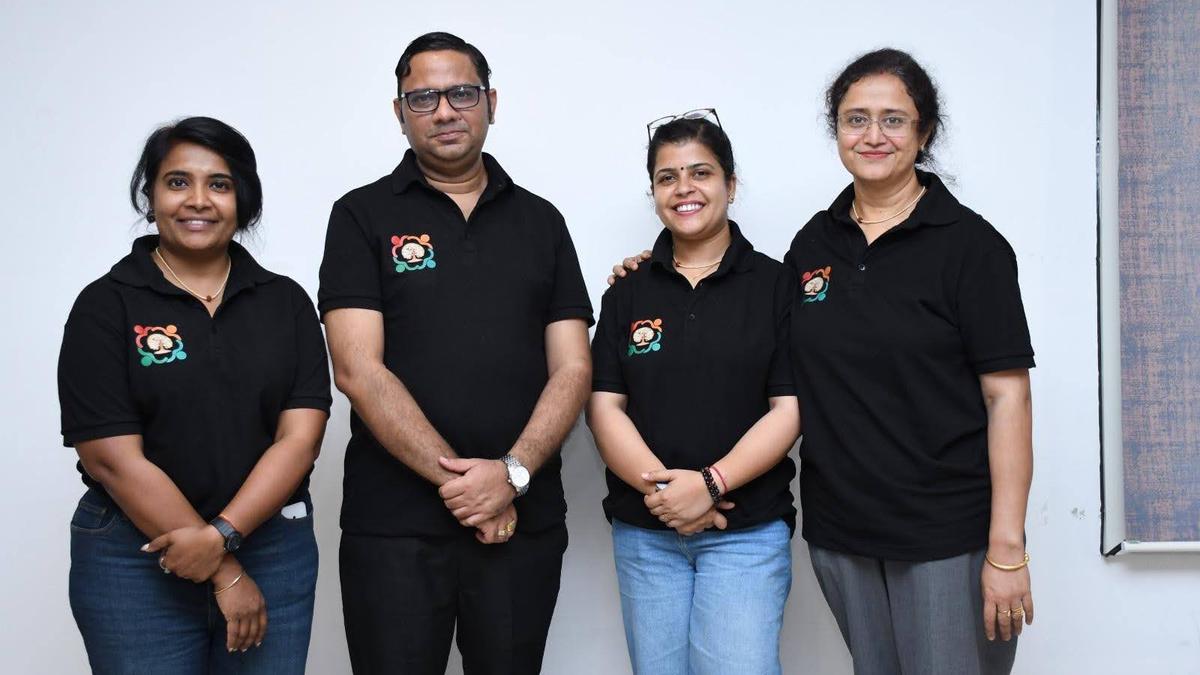
It is this oft-overlooked dimension of capacity building that four researchers have sought to address through a programme called ‘Building Opportunities & Driving Hope’ (BODH).

Making time

The initiative was born in September 2025 from the shared experiences of Veda Krishnan of the ICAR-Indian Agricultural Research Institute (IARI), New Delhi; Sriparna Chatterjee of CSIR-Institute of Minerals and Materials Technology, Bhubaneswar; Chandra Shekhar Sharma of IIT-Hyderabad; and Pooja Devi of CSIR-Central Scientific Instruments Organisation, Chandigarh, while working with the Indian National Young Academy of Sciences.

The four researchers, from diverse disciplines, had found that the Indian research ecosystem was preparing scientists for scientific work but less so for the institutional responsibilities they would face.

BODH has multiple capacity-building modules, catering to diverse stages and dimensions of researchers’ professional needs. For example, one, called ‘PRABODH’, is designed to help PhD scholars communicate their knowledge to various audiences, develop professional networks and collaborations, and explore alternative career pathways across academia, research organisations, industry, policy, scientific publishing, and communication. The programme also addresses how scholars can navigate stress, burnout, imposter syndrome, setbacks in research, and work-life balance.

According to Dr. Krishnan, the team does not charge for conducting BODH sessions. Instead, the host institution is expected to cover the speakers’ travel and boarding expenses. Altogether, she estimated, a 30-member session usually costs around Rs 3,000-5,000 per participant. Host institutions have usually mobilised these funds through research projects, strategic partners, funding agencies, industry, and CSR initiatives. The flexibility also means individual BODH programmes can be structured according to the needs at each institution and the funding norms there.

Professional journeys

A BODH session underway at ICAR-National Institute for Plant Biotechnology, New Delhi.

A BODH session underway at ICAR-National Institute for Plant Biotechnology, New Delhi.
| Photo Credit:
Special arrangement

The transition from researcher to research leader is not always an easy one. A smart scientist may know how to formulate a hypothesis or design an experiment but managing a laboratory involves a different set of competencies. They need to figure out how best to mentor a doctoral scholar who is struggling, how to handle disagreements in a research group, how a principal investigator should build a collaboration, how to communicate a difficult decision without damaging morale, and so on.

The founders of BODH recognised this gap through their own professional journeys. Their association with the Indian National Young Academy of Science, and for three of them with the Global Young Academy, exposed them to different approaches to leadership and mentoring. The experiences strengthened their conviction that India needed a leadership framework designed by scientists, for scientists, rooted in the realities of Indian academia. The idea then evolved through conversations at conferences, scientific meetings, airports, train journeys, and informal gatherings.

To achieve its goals, BODH uses an experiential, activity-based approach. Participants debate, negotiate, collaborate, communicate, solve problems, and reflect through situations inspired by real encounters in laboratories and universities. The objectives include teaching participants what good leadership looks like and to encourage them to examine their own behaviour and understand how their actions affect others.

They are also taken through ways to tackle uncertainty, failure, rejection, and other challenges that arise in a complex research environment, to improve their and their teams’ resilience, and to better manage collaborations.

Research is often portrayed as an individual intellectual pursuit but contemporary science is increasingly collaborative. Large research projects involve multidisciplinary teams, institutions, industry partners, and international collaborators. The ability to communicate, negotiate, empathise, and work across disciplines is therefore as important as technical expertise for India’s scientific leadership. 

Next generation of leaders

Within its first year, BODH has conducted ten leadership workshops involving more than 300 participants from over 70 institutions across India. Its programmes have reached faculty members, scientists, and research scholars at IIT-Hyderabad; IIT-Kharagpur; Indian Institute of Science Education and Research (IISER) Thiruvananthapuram; the Indian National Science Academy; ICAR-IARI; ICAR-National Institute for Plant Biotechnology, New Delhi; National Institute for Technology Raipur; Jawaharlal Nehru Technological University, Hyderabad; and Vellore Institute of Technology, Vellore.

The geographical and institutional diversity of these participants is important as India’s scientific ecosystem is expanding, albeit slowly, beyond a handful of premier institutions.

The team makes time for the programme on weekends and holidays, without affecting their official work. According to Dr. Krishnan, over the last year, the team has not taken any special leave or duty leave for BODH activities.

Beyond bringing their workshops to new centres, the team also envisages digital learning resources, facilitator manuals, leadership fellowships, scholarships for young researchers, women-in-STEM leadership programmes, and a nationwide mentorship network involving scientists across disciplines.

BODH is a reminder that scientific progress is ultimately a human enterprise. And as India seeks to establish itself as a leading knowledge economy, investing in infrastructure and technology will remain indispensable. But equal attention must be given to the people who lead research teams and shape institutional cultures.

Biju Dharmapalan is an adjunct faculty member at the National Institute of Advanced Studies, IISc campus, Bengaluru, and dean, Academic Affairs, Garden City University, Bengaluru. bijudharmapalan@gmail.com

Source link

Science

Post navigation

Previous Post: Apple Maps changes name of Lake Ontario to ‘Lake America’
Next Post: New senior citizens’ welfare department takes shape in Keralam

Related Posts

  • Simpler tests could slash biosimilar costs, widen patient access
    Simpler tests could slash biosimilar costs, widen patient access Science
  • Singapore to launch space agency in response to global investment surge
    Singapore to launch space agency in response to global investment surge Science
  • Private U.S. moon lander launched 52 years after last Apollo lunar mission
    Private U.S. moon lander launched 52 years after last Apollo lunar mission Science
  • ISRO captures signatures of recent solar eruptive events
    ISRO captures signatures of recent solar eruptive events Science
  • Countdown for India’s first solar observatory mission Aditya-L1 starts
    Countdown for India’s first solar observatory mission Aditya-L1 starts Science
  • Three astronauts return to Earth after a year in space. NASA’s Frank Rubio sets US space record
    Three astronauts return to Earth after a year in space. NASA’s Frank Rubio sets US space record Science

More Related Articles

Chinese spacecraft successfully lands on moon’s far side in growing space rivalry with US Chinese spacecraft successfully lands on moon’s far side in growing space rivalry with US Science
ISRO and ESA sign agreement for Earth Observation missions ISRO and ESA sign agreement for Earth Observation missions Science
Limestone, iron reveal puzzling extreme rain in Australia 100,000 years ago Limestone, iron reveal puzzling extreme rain in Australia 100,000 years ago Science
What is Bangladesh’s Padma Barrage? What is Bangladesh’s Padma Barrage? Science
Science for all newsletter 2024 Nobel Prize winners in science Science for all newsletter 2024 Nobel Prize winners in science Science
Why did metal-organic frameworks win the 2025 chemistry Nobel? Why did metal-organic frameworks win the 2025 chemistry Nobel? Science
SiteLock

Archives

  • September 2026
  • August 2026
  • July 2026
  • June 2026
  • May 2026
  • April 2026
  • March 2026
  • February 2026
  • January 2026
  • December 2025
  • November 2025
  • October 2025
  • September 2025
  • August 2025
  • July 2025
  • June 2025
  • May 2025
  • April 2025
  • March 2025
  • February 2025
  • January 2025
  • December 2024
  • November 2024
  • October 2024
  • September 2024
  • August 2024
  • July 2024
  • June 2024
  • May 2024
  • April 2024
  • March 2024
  • February 2024
  • January 2024
  • December 2023
  • November 2023
  • October 2023
  • September 2023
  • August 2023
  • July 2023
  • June 2023
  • May 2023
  • April 2023
  • March 2023
  • February 2023
  • January 2023
  • December 2022
  • November 2022
  • October 2022
  • September 2022
  • August 2022
  • July 2022
  • June 2022
  • May 2022

Categories

  • Business
  • Nation
  • Science
  • Sports
  • World

Recent Posts

  • The Hindu Lit For Life Unplugged: Author and lawyer Xerxes Ranina discusses his book Who Owns What? and the legal right behind creative work
  • KCL: Imran sparkles as Titans emerge champions in a gripping finale
  • 342 complete training at OTA; commissioned as officers in Indian Army
  • Kolkata school teacher booked for ‘forcing’ student to remove tilak
  • Restored Amma canteen in Arakkonam inaugurated

Recent Comments

  1. Arielliext on UP Teacher Who Asked Students To Slap Muslim Classmate
  2. KennethRab on UP Teacher Who Asked Students To Slap Muslim Classmate
  3. KennethRab on UP Teacher Who Asked Students To Slap Muslim Classmate
  4. Jamiegek on UP Teacher Who Asked Students To Slap Muslim Classmate
  5. Philipchoca on UP Teacher Who Asked Students To Slap Muslim Classmate
  • Alembic Pharma gets USFDA nod for Travoprost glaucoma drug
    Alembic Pharma gets USFDA nod for Travoprost glaucoma drug Business
  • RBI raises WMA limits of States/UTs by 28% to ₹60,118 crore
    RBI raises WMA limits of States/UTs by 28% to ₹60,118 crore Business
  • Access Denied Business
  • Voting Begins In UK, Rishi Sunak’s Fate On The Line
    Voting Begins In UK, Rishi Sunak’s Fate On The Line World
  • Government Makes ISI Mark Mandatory For Stainless Steel, Aluminium Utensils
    Government Makes ISI Mark Mandatory For Stainless Steel, Aluminium Utensils Nation
  • In Russia, Donald Trump’s Peace Promises Dismissed Ahead Of Inauguration
    In Russia, Donald Trump’s Peace Promises Dismissed Ahead Of Inauguration World
  • Why Trump’s Abraham Accords expansion push faces resistance
    Why Trump’s Abraham Accords expansion push faces resistance World
  • U.S. considers buying Chagos Islands: reports
    U.S. considers buying Chagos Islands: reports World

Editor-in-Chief:
Mohammad Ariff,
MSW, MAJMC, BSW, DTL, CTS, CNM, CCR, CAL, RSL, ASOC.
editor@artifex.news

Associate Editors:
1. Zenellis R. Tuba,
zenelis@artifex.news
2. Haris Daniyel
daniyel@artifex.news

Photograher:
Rohan Das
rohan@artifex.news

Artifex.News offers Online Paid Internships to college students from India and Abroad. Interns will get a PRESS CARD and other online offers.
Send your CV (Subjectline: Paid Internship) to internship@artifex.news

Links:
Associate Journalism
About Us
Privacy Policy

News Links:
Breaking News
World
Nation
Sports
Business
Entertainment
Lifestyle

Registered Office:
72/A, Elliot Road, Kolkata - 700016
Tel: 033-22277777, 033-22172217
Email: office@artifex.news

Editorial Office / News Desk:
No. 13, Mezzanine Floor, Esplanade Metro Rail Station,
12 J. L. Nehru Road, Kolkata - 700069.
(Entry from Gate No. 5)
Tel: 033-46011099, 033-46046046
Email: editor@artifex.news

Copyright © 2023 Artifex.News Newsportal designed by Artifex Infotech.