Skip to content
  • Facebook
  • X
  • Linkedin
  • WhatsApp
  • YouTube
  • Associate Journalism
  • About Us
  • Privacy Policy
  • 033-46046046
  • editor@artifex.news
Artifex.News

Artifex.News

Stay Connected. Stay Informed.

  • Breaking News
  • World
  • Nation
  • Sports
  • Business
  • Science
  • Entertainment
  • Lifestyle
  • Toggle search form
  • “I Was Shocked”: CSK Star On Captaincy Change From MS Dhoni, Says This About Ruturaj Gaikwad
    “I Was Shocked”: CSK Star On Captaincy Change From MS Dhoni, Says This About Ruturaj Gaikwad Sports
  • Slow Recovery As Dubai Airport, Roads Still Plagued By Floods
    Slow Recovery As Dubai Airport, Roads Still Plagued By Floods World
  • Britain-India Free Trade Talks Will Launch In 2025: UK PM Keir Starmer
    Britain-India Free Trade Talks Will Launch In 2025: UK PM Keir Starmer Nation
  • Govt to curtail IndiGo’s winter flight schedule, slots to be reallocated to other carriers: Aviation Minister
    Govt to curtail IndiGo’s winter flight schedule, slots to be reallocated to other carriers: Aviation Minister Business
  • Access Denied
    Access Denied Nation
  • Access Denied World
  • Access Denied World
  • Access Denied
    Access Denied Nation
Deaths in Brazil raise concerns about India’s dengue vaccine, DengiAll

Deaths in Brazil raise concerns about India’s dengue vaccine, DengiAll

Posted on June 14, 2026 By admin


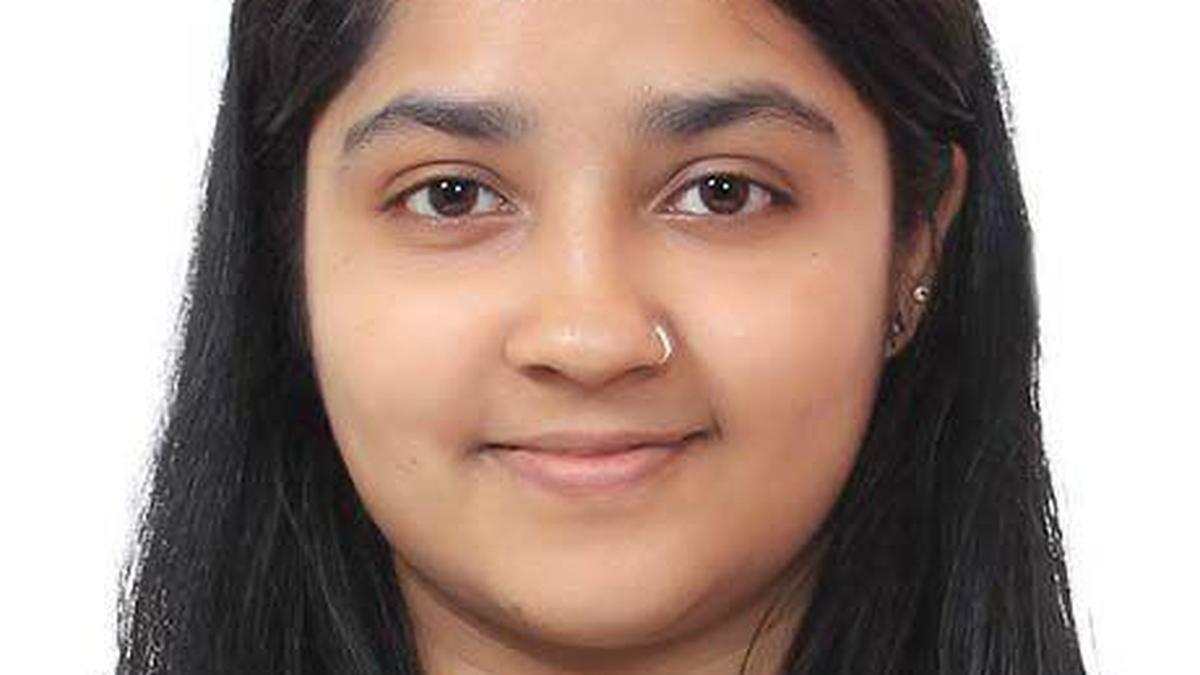
The recent death of two people in Brazil during its dengue vaccination campaign, leading to the shot’s suspension on June 8, is a crucial wake-up call for India. This is because the dengue vaccine in Brazil, Butantan-DV, is pretty similar, if not identical, to India’s soon-to-be-launched dengue vaccine, DengiAll.

Both the Brazilian and Indian vaccines have been several years in the making. Both are made up of live but weakened (attenuated) versions of dengue viruses (DENVs). And both vaccines are said to be tetravalent because each vaccine is in fact a physical mixture of four live, weakened DENVs.

Indeed, DENVs come in four versions, or serotypes: called DENV-1, -2, -3 and -4. All four serotypes are known to be prevalent in Brazil and India. Each DENV serotype has an outer shell adorned with specialised envelope proteins, called E proteins — akin to the spike protein of coronaviruses. Even though the four DENV serotypes are very similar, their E proteins are different enough to  warrant immunisation against each of the four serotypes.

Antibody-dependent enhancement

When weakened DENV is used in a vaccine, it will prompt several kinds of antibodies that can be grouped into two classes: type-specific antibodies and cross-reactive antibodies. The type-specific antibodies, often made in small amounts, are specific to unique regions on the E protein of a given serotype. That is, the type-specific antibodies recognise only one particular serotype and excel in blocking infections by that serotype alone.

On the other hand, the cross-reactive antibodies are made usually in large amounts and are specific to similar regions on the E proteins of all four serotypes. That is, they can recognise any of the four serotypes and block an infection — provided they are present in adequately high levels. When their levels decrease, the cross-reactive antibodies don’t just fail to block a new DENV infection: they enhance it, leading to a severe and potentially fatal form of dengue.

This phenomenon is called antibody-dependent enhancement (ADE). The risk of potential ADE during dengue vaccination is considered a serious adverse event. If untreated it can lead to death.

In Brazil’s dengue vaccination campaign, of 42 vaccine recipients who displayed serious side-effects, two people died and one had to receive intensive care. These side-effects included severe abdominal pain, persistent vomiting, and bleeding, none of which the phase 3 clinical trials revealed. These signs are disturbingly reminiscent of viral haemorrhagic fevers such as dengue in its severe form. Medical researchers should look into whether this could be due to ADE.

They should also clarify if DengiAll will manifest a similar risk when it is rolled out in India.

Issues with Dengvaxia

Butantan-DV and DengiAll are both based on the efforts of scientists at the U.S. National Institutes of Health (NIH). Over many years, they separately weakened each DENV serotype to make monovalent vaccines, assessed each one for its capacity to induce an immune response without causing disease, and finally mixed all four monovalent vaccine viruses to generate tetravalent vaccines. Two of them, called TV003 and TV005, and the monovalent vaccine viruses were licensed to Instituto Butantan in Brazil and Panacea Biotec in India, among others, for further development.

Butantan-DV is not the first dengue vaccine to be linked to such events. A little over a decade ago, Sanofi Pasteur developed the first tetravalent dengue vaccine to be licensed. It differed from the NIH’s TV003 and TV005 in that the four weakened serotypes were hybrid viruses, each covered on its surface with the E protein of one of the DENV serotypes (plus another protein).

This shot, called Dengvaxia, was given to more than 8 lakh children in the Phillipines, a dengue-endemic country like Brazil and India. Severe adverse events occurred three years after vaccination. Further study revealed Dengvaxia worked like a monovalent vaccine, provoking antibodies to only a single serotype, DENV-4.  That is, mixing four live yet weakened viruses to create a tetravalent vaccine didn’t automatically ensure tetravalent immunity. Why? There is no clear answer yet.

Taken together, the severe adverse events linked to Butantan-DV raise many questions. Is Butantan-DV really functionally tetravalent? Is there a possibility of viral interference compromising its functionality? Could ADE be the reason for the potentially fatal outcomes in two instances?

Gap in phase 3 trials

These questions are rendered more challenging by a lacuna in the vaccine efficacy data collected in the phase 3 trials. Reports in January 2024, November 2024, and March 2026 indicated that Butantan-DV’s efficacy against  DENV-3 and DENV-4 is unknown as these serotypes were not prevalent in Brazil at the time of the trials.

Panacea Biotec’s DengiAll phase 3 trials, together with the Indian Council of Medical Research, completed its enrollment target of 10,335 healthy volunteers in January this year. The trial began in August 2024; its participants will be followed for two years post-vaccination. Once all the data have been collected and analysed, the researchers (with the company) will approach the Indian drug regulator for market approval.

There is no solid reason to deny that DengiAll may not face the potentially fatal issues that have come up with Butantan-DV. However, India can proactively do some things to mitigate safety concerns ahead of DengiAll’s future rollout. First, Panacea must analyse a representative subset of sera from vaccinated volunteers for type-specific antibodies against all four serotypes. And the drug regulator must ensure such data is available and rules out potential risk of ADE.

Robust pharmacovigilance

Further, once DengiAll is launched, the regulator must implement a robust pharmacovigilance programme for an extended period of time. Vaccine recipients must be clinically monitored periodically and their blood must be collected at regular intervals to check for viruses, antibodies, and other parameters to implement remedial measures quickly. Continuous real-world monitoring is key to identifying rare or long-term adverse events.

The ADE concerns also apply to another tetravalent dengue vaccine, Qdenga, which is also a physical mix of four weakened versions of the DENV serotypes. Japan-based Takeda markets it and its India approval is imminent.

Brazilian authorities have stressed that the 42 cases of severe adverse events out of half-a-million vaccinated represent only 0.008%. There is no doubt that it is a small risk at the population level. At the individual level, however, even one life lost to a severe adverse event is one too many.

S. Swaminathan is retired professor of biology from BITS Pilani-Hyderabad and a former scientist in the area of dengue vaccinology at ICGEB, New Delhi.

Published – June 15, 2026 08:00 am IST


Source link

Science

Post navigation

Previous Post: Silt will be lifted from Vaigai dam in a phased manner, says Nirmalkumar
Next Post: FIFA World Cup 2026: Scotland vs Haiti Group C match in Boston

Related Posts

  • Kerala scientist bags Marie Skłodowska-Curie Postdoctoral Fellowship
    Kerala scientist bags Marie Skłodowska-Curie Postdoctoral Fellowship Science
  • Zombies in our genes helped us evolve, and could help battle cancers
    Zombies in our genes helped us evolve, and could help battle cancers Science
  • 85 confirmed cases of shigellosis reported till June in Kerala; preventive measures initiated
    85 confirmed cases of shigellosis reported till June in Kerala; preventive measures initiated Science
  • Aditya-L1: IIA-NASA collaborate to record spectroscopic observations of a CME in visible wavelength range for very first time
    Aditya-L1: IIA-NASA collaborate to record spectroscopic observations of a CME in visible wavelength range for very first time Science
  • SpaceX rocket stage believed to have slammed into Moon
    SpaceX rocket stage believed to have slammed into Moon Science
  • Space startup Agnikul raises ₹150 crore to fund reusable rockets
    Space startup Agnikul raises ₹150 crore to fund reusable rockets Science

More Related Articles

India is likely undercounting heat deaths, affecting its response to increasingly harsh heat waves India is likely undercounting heat deaths, affecting its response to increasingly harsh heat waves Science
Bird species exploded after dinos’ doom, largest yet bird genetics study says Bird species exploded after dinos’ doom, largest yet bird genetics study says Science
TB vaccine offers clue to retrain immune system against Alzheimer’s TB vaccine offers clue to retrain immune system against Alzheimer’s Science
Climate change is causing marine ‘coldwaves’ too, killing wildlife Climate change is causing marine ‘coldwaves’ too, killing wildlife Science
How did the Baltimore bridge disaster happen? | Explained How did the Baltimore bridge disaster happen? | Explained Science
Low-cost flexible biosensor for early heart attack detection developed by BITS–RMIT Univ Low-cost flexible biosensor for early heart attack detection developed by BITS–RMIT Univ Science
SiteLock

Archives

  • September 2026
  • August 2026
  • July 2026
  • June 2026
  • May 2026
  • April 2026
  • March 2026
  • February 2026
  • January 2026
  • December 2025
  • November 2025
  • October 2025
  • September 2025
  • August 2025
  • July 2025
  • June 2025
  • May 2025
  • April 2025
  • March 2025
  • February 2025
  • January 2025
  • December 2024
  • November 2024
  • October 2024
  • September 2024
  • August 2024
  • July 2024
  • June 2024
  • May 2024
  • April 2024
  • March 2024
  • February 2024
  • January 2024
  • December 2023
  • November 2023
  • October 2023
  • September 2023
  • August 2023
  • July 2023
  • June 2023
  • May 2023
  • April 2023
  • March 2023
  • February 2023
  • January 2023
  • December 2022
  • November 2022
  • October 2022
  • September 2022
  • August 2022
  • July 2022
  • June 2022
  • May 2022

Categories

  • Business
  • Nation
  • Science
  • Sports
  • World

Recent Posts

  • Davis Cup: Nagal falters as Korea end India’s historic Final 8 hopes with 3-1 win
  • Tirupattur TVK MLA’s win by a single vote: Madras High Court reserves orders on plea to reject election petition
  • Protesters form human chain at Kennedy Centre after Trump threat
  • PM Modi inaugurates NGT’s climate conference, highlights climate inequality
  • Drone owners rush to offload devices ahead of Beijing ban

Recent Comments

  1. AlvinNet on UP Teacher Who Asked Students To Slap Muslim Classmate
  2. AlvinNet on UP Teacher Who Asked Students To Slap Muslim Classmate
  3. Jamesslits on UP Teacher Who Asked Students To Slap Muslim Classmate
  4. MichaelClear on UP Teacher Who Asked Students To Slap Muslim Classmate
  5. Jamesslits on UP Teacher Who Asked Students To Slap Muslim Classmate
  • Janmashtami festival celebrated in crisis-hit Bangladesh
    Janmashtami festival celebrated in crisis-hit Bangladesh World
  • CBI Files Murder Charges Against 6, Minor In Manipur Horrific Video Case
    CBI Files Murder Charges Against 6, Minor In Manipur Horrific Video Case Nation
  • IPL 2024 Full Schedule : BCCI releases full schedule, Chennai to host final on May 26
    IPL 2024 Full Schedule : BCCI releases full schedule, Chennai to host final on May 26 Sports
  • Team India Stuck In Barbados Due To Hurricane Beryl: Report
    Team India Stuck In Barbados Due To Hurricane Beryl: Report Sports
  • “Hosh Mein Nahi Tha”: Neeeraj Chopra’s Honest Revelation Regarding Paris Olympics Javelin Final
    “Hosh Mein Nahi Tha”: Neeeraj Chopra’s Honest Revelation Regarding Paris Olympics Javelin Final Sports
  • Why do so many contemporary vaccines have low durability? | Explained
    Why do so many contemporary vaccines have low durability? | Explained Science
  • Access Denied Sports
  • Virat Kohli, RCB Craze Hits PSL As Fan’s “Jersey” Gesture Viral During Babar Azam’s Match
    Virat Kohli, RCB Craze Hits PSL As Fan’s “Jersey” Gesture Viral During Babar Azam’s Match Sports

Editor-in-Chief:
Mohammad Ariff,
MSW, MAJMC, BSW, DTL, CTS, CNM, CCR, CAL, RSL, ASOC.
editor@artifex.news

Associate Editors:
1. Zenellis R. Tuba,
zenelis@artifex.news
2. Haris Daniyel
daniyel@artifex.news

Photograher:
Rohan Das
rohan@artifex.news

Artifex.News offers Online Paid Internships to college students from India and Abroad. Interns will get a PRESS CARD and other online offers.
Send your CV (Subjectline: Paid Internship) to internship@artifex.news

Links:
Associate Journalism
About Us
Privacy Policy

News Links:
Breaking News
World
Nation
Sports
Business
Entertainment
Lifestyle

Registered Office:
72/A, Elliot Road, Kolkata - 700016
Tel: 033-22277777, 033-22172217
Email: office@artifex.news

Editorial Office / News Desk:
No. 13, Mezzanine Floor, Esplanade Metro Rail Station,
12 J. L. Nehru Road, Kolkata - 700069.
(Entry from Gate No. 5)
Tel: 033-46011099, 033-46046046
Email: editor@artifex.news

Copyright © 2023 Artifex.News Newsportal designed by Artifex Infotech.