
Skip to content
  • Facebook
  • X
  • Linkedin
  • WhatsApp
  • YouTube
  • Associate Journalism
  • About Us
  • Privacy Policy
  • 033-46046046
  • editor@artifex.news
Artifex.News

Artifex.News

Stay Connected. Stay Informed.

  • Breaking News
  • World
  • Nation
  • Sports
  • Business
  • Science
  • Entertainment
  • Lifestyle
  • Toggle search form
  • Great To See So Many Players From Afghanistan In IPL: Rashid Khan
    Great To See So Many Players From Afghanistan In IPL: Rashid Khan Sports
  • U.S.-Iran talks planned for June 19 are off: Switzerland
    U.S.-Iran talks planned for June 19 are off: Switzerland World
  • With more graduates in workforce, Tamil Nadu struggles with a skills gap
    With more graduates in workforce, Tamil Nadu struggles with a skills gap Business
  • Access Denied Sports
  • On building resilient telecom infrastructure | Explained
    On building resilient telecom infrastructure | Explained Business
  • Access Denied Sports
  • Access Denied
    Access Denied Nation
  • Former Canadian PM Mulroney, driver of U.S. free trade deal, dies aged 84
    Former Canadian PM Mulroney, driver of U.S. free trade deal, dies aged 84 World
What goes on behind the screen when you pay through UPI? | Explained

What goes on behind the screen when you pay through UPI? | Explained

Posted on September 1, 2026 By admin


The Unified Payments Interface (UPI) is India’s preeminent digital payments system. In July 2026 alone, it processed 2,366 crore transactions — or around 7,600 transactions per second — in total worth nearly ₹30 lakh crore. Across the 2025-26 financial year, UPI handled 24,160 crore transactions worth ₹314 lakh crore, accounting for 85% of the country’s digital payment transactions by volume. According to the International Monetary Fund, UPI also accounted for a stunning 49% of all real-time payments worldwide in 2025.

How does UPI work?

Say Selvi has an account in Violin Bank and Shankar has an account in Flute Bank. Selvi wants to send Shankar ₹100 via UPI. First, Selvi tells her UPI app — which could be Google Pay, PhonePe, etc. — whom she wants to pay. Obviously the app will not understand who ‘Shankar’ is. Instead, she will have to tell the app in a language the app understands.

In this language, Shankar’s identity has two parts: his unique name and his unique bank name. So it will be something like shankar@flutebank. This UPI ID will be connected to Shankar’s bank account. In technical terms, the ID is an alias of the account.

So when Selvi tells her UPI app that she needs to send money to shankar@flutebank, the app will know which account the money should go to.

Second, the app will send a payment request to the UPI system. UPI is operated by the National Payments Corporation of India (NPCI). It provides the switching and routing infrastructure that links the 730 or so participating banks, allowing users to transfer money between accounts at these banks.

The UPI system will respond to Selvi’s app’s request by asking Selvi to authenticate the transaction. This is like a confirmation: “Let me make sure you want this transaction to happen.” Selvi will do this by entering her UPI PIN. Now the system will know she has signed off on it.

The third step is for the actual transaction to happen. Selvi’s bank, which is Violin Bank, will check the transaction. This involves asking questions such as whether Selvi’s account is valid, has enough money, if the request is authentic, if the transaction limit has been reached, and if the transaction shows any signs of fraudulent activity.

If the check passes all tests, Violin Bank will let the UPI system know that it is ready to execute the transaction.

Fourth, the UPI system will route the transaction to Flute Bank, which is Shankar’s bank, and into the account associated with shankar@flutebank.

Fifth, Violink Bank will deduct ₹100 from Selvi’s account and Flute Bank will add ₹100 to Shankar’s account.

Sixth, and finally, Flute Bank will report the addition to the UPI system, which will then relay it to Violin Bank, and finally to the UPI app in Selvi’s hand.

How complex is the system?

This simplified picture is essentially what the UPI system makes possible. However, it is not complete. The system has more technical components to ensure that different banks can trust each transaction, update records correctly, and be able to respond in a predictable way when a transaction goes awry.

For a glimpse, to connect to Violin Bank — from where Selvi initiated the transaction — the UPI app (Google Pay, PhonePe, etc.) will communicate with TPAP/PSP infrastructure, which allows apps to interact with banking services. TPAP is a company that provides the app used to make UPI payments, e.g., PhonePe. And PSP is the bank or company that connects the app to the NPCI infrastructure.

For another, Violin Blank and Flute Bank will exchange multiple messages during the transaction, including to start payment, authenticate it, authorise it, confirm debit, confirm credit, and confirm status at each step.

And so on.

On the hardware side, UPI requires thousands of servers, which process transactions, store and use databases, facilitate API calls, run monitoring and security systems; high-speed network switches and routers, which connect banks and data centres; and redundant servers, cooling systems, networking equipment, and of course power supplies.

On the software side, the system is made possible by APIs, transaction switches and routers, databases, message queues, encryption and authentication services, fraud detectors, reconciliation software, and disaster recovery protocols. The banks and the apps also have software to connect their systems with the NPCI infrastructure.

The UPI ID

The UPI ID, e.g., shankar@flutebank or selvi@violinbank, is created and maintained by the respective bank, based on a rule the bank has.

For example, if two account holders have the same name, their IDs can be distinguished by a number — selvi1@violinbank and selvi2@violinbank. Users may also be able to customise their UPI IDs, e.g. selvithestar@violinbank.

Fundamentally, the UPI app knows that the string before the ‘@’ is the user account’s alias and the string after the ‘@’ is the bank’s identity. The latter tells the UPI system which service will know which account the former is an alias of.

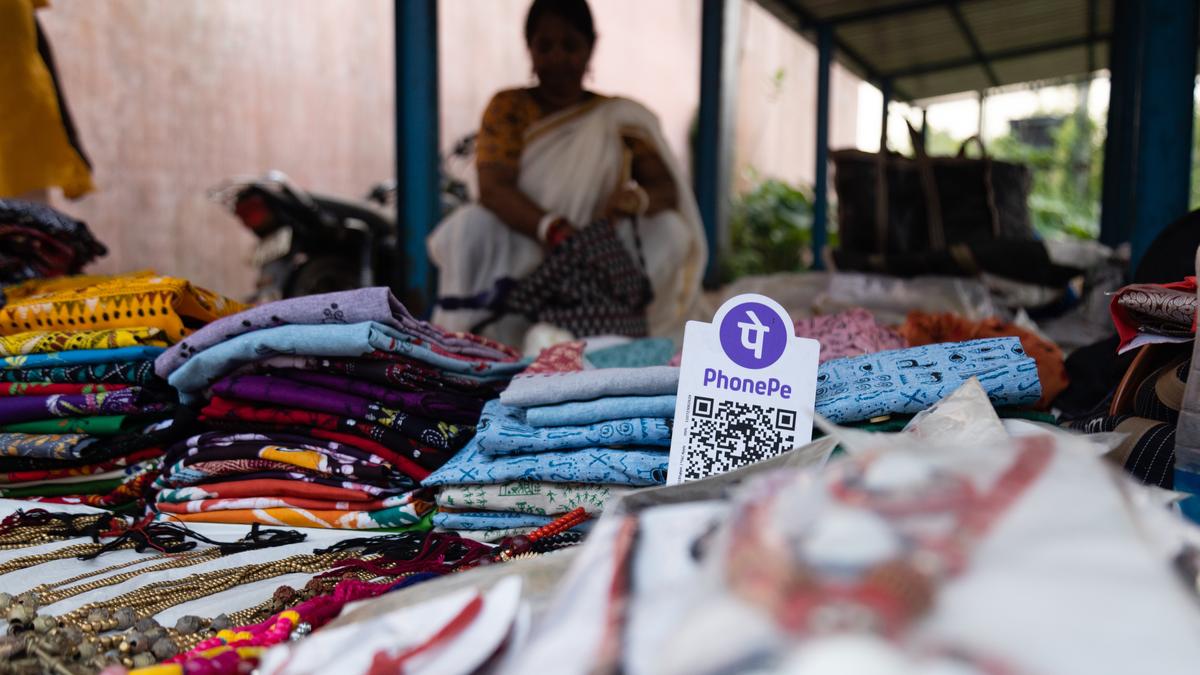
An individual user can have multiple UPI IDs because their bank account can have multiple aliases. These aliases can also be encoded in QR codes.

UPI — past, present, future

The NPCI built the UPI system with entrepreneur and Infosys co-founder Nandan Nilekani as an advisor and with the Reserve Bank of India (RBI) providing regulatory guidance. Its foundation was as an interoperable layer over the Immediate Payment Service (IMPS), which is a system to quickly transfer funds from one bank to another round the clock.

Then RBI Governor Raghuram Rajan piloted UPI in April 2016 with 21 banks, with the service also becoming available via the banks’ apps a couple months later. UPI 2.0 followed in mid-2018 with new features like linking overdraft accounts, adding mandates (authorising periodic transactions into the future), verifying invoices before payment, signed QR codes (to better verify merchants before transactions), and enhanced autopayments.

The UPI system crossed 100 crore transactions per month in October 2019.

NPCI International Payments, Ltd. (NIPL) is a wholly owned subsidiary of the NPCI whose job is to facilitate international adoption of India’s digital payments systems, especially UPI.

In 2021, NIPL and the Royal Monetary Authority of Bhutan enabled UPI in the kingdom — the first foreign adoption. Then, Singapore followed in 2021, the UAE in 2022, France, Mauritius, Sri Lanka, and Nepal in 2024, Qatar in 2025, and Cambodia, Greece, and the Maldives so far in 2026.

NIPL is reportedly also working on making UPI interoperable with the payment systems of Indonesia, Malaysia, and Thailand.



Source link

Science

Post navigation

Previous Post: Nepal flash floods aftermath LIVE: Nepal PM demands int’l climate action in wake of disaster
Next Post: ‘Wholewheat’ label on McVitie’s Marie biscuits misleading, rules CCPA

Related Posts

  • The Science Quiz | Yellow-coloured things
    The Science Quiz | Yellow-coloured things Science
  • How do hummingbirds drink nectar at frenetic speed?
    How do hummingbirds drink nectar at frenetic speed? Science
  • Chinese fossil reveals evolution of skin in feathered dinosaurs
    Chinese fossil reveals evolution of skin in feathered dinosaurs Science
  • Remembering Rosalind Franklin, whose photograph was crucial to discovering DNA’s structure
    Remembering Rosalind Franklin, whose photograph was crucial to discovering DNA’s structure Science
  • Solar Eclipse February 2026: Where, when and how to watch it in India?
    Solar Eclipse February 2026: Where, when and how to watch it in India? Science
  • A Coimbatore team is back from their first visit to Hanle Dark Sky Reserve in Ladakh
    A Coimbatore team is back from their first visit to Hanle Dark Sky Reserve in Ladakh Science

More Related Articles

Scientists propose warming up Mars using heat-trapping ‘glitter’ Scientists propose warming up Mars using heat-trapping ‘glitter’ Science
What caused Morocco’s earthquake? A geologist studying the Atlas mountains explains What caused Morocco’s earthquake? A geologist studying the Atlas mountains explains Science
Musk’s SpaceX testing breakthrough tech in risky spacewalk Musk’s SpaceX testing breakthrough tech in risky spacewalk Science
ISRO has a problem: too many rockets, too few satellites to launch | Analysis ISRO has a problem: too many rockets, too few satellites to launch | Analysis Science
Wuhan keen to shake off pandemic label five years on Wuhan keen to shake off pandemic label five years on Science
How AI is helping communities restore Madagascar’s ancient baobab forests How AI is helping communities restore Madagascar’s ancient baobab forests Science
SiteLock

Archives

  • September 2026
  • August 2026
  • July 2026
  • June 2026
  • May 2026
  • April 2026
  • March 2026
  • February 2026
  • January 2026
  • December 2025
  • November 2025
  • October 2025
  • September 2025
  • August 2025
  • July 2025
  • June 2025
  • May 2025
  • April 2025
  • March 2025
  • February 2025
  • January 2025
  • December 2024
  • November 2024
  • October 2024
  • September 2024
  • August 2024
  • July 2024
  • June 2024
  • May 2024
  • April 2024
  • March 2024
  • February 2024
  • January 2024
  • December 2023
  • November 2023
  • October 2023
  • September 2023
  • August 2023
  • July 2023
  • June 2023
  • May 2023
  • April 2023
  • March 2023
  • February 2023
  • January 2023
  • December 2022
  • November 2022
  • October 2022
  • September 2022
  • August 2022
  • July 2022
  • June 2022
  • May 2022

Categories

  • Business
  • Nation
  • Science
  • Sports
  • World

Recent Posts

  • Maharashtra draft electoral roll for all 288 Assembly constituencies out; check your name on the voter list
  • ‘Wholewheat’ label on McVitie’s Marie biscuits misleading, rules CCPA
  • What goes on behind the screen when you pay through UPI? | Explained
  • Nepal flash floods aftermath LIVE: Nepal PM demands int’l climate action in wake of disaster
  • Donald Trump vows to hit Iran ‘hard’ after first exchange of fire in weeks

Recent Comments

  1. WilliamGaf on UP Teacher Who Asked Students To Slap Muslim Classmate
  2. Gregoryhaw on UP Teacher Who Asked Students To Slap Muslim Classmate
  3. FrankKat on UP Teacher Who Asked Students To Slap Muslim Classmate
  4. Edwardnal on UP Teacher Who Asked Students To Slap Muslim Classmate
  5. WilliamGaf on UP Teacher Who Asked Students To Slap Muslim Classmate
  • Access Denied
    Access Denied Nation
  • S Jaishankar On Kartarpur Sahib Corridor Fees
    S Jaishankar On Kartarpur Sahib Corridor Fees Nation
  • Woman In Madhya Pradesh Gives Birth On Handcart, Newborn Dies
    Woman In Madhya Pradesh Gives Birth On Handcart, Newborn Dies Nation
  • Spain to put containment fence on Ceuta’s border with Morocco after frontier rush that killed 67
    Spain to put containment fence on Ceuta’s border with Morocco after frontier rush that killed 67 World
  • Access Denied World
  • Access Denied
    Access Denied Nation
  • Man Shares “Horror Story” On Air India Flight
    Man Shares “Horror Story” On Air India Flight Nation
  • Access Denied
    Access Denied Nation

Editor-in-Chief:
Mohammad Ariff,
MSW, MAJMC, BSW, DTL, CTS, CNM, CCR, CAL, RSL, ASOC.
editor@artifex.news

Associate Editors:
1. Zenellis R. Tuba,
zenelis@artifex.news
2. Haris Daniyel
daniyel@artifex.news

Photograher:
Rohan Das
rohan@artifex.news

Artifex.News offers Online Paid Internships to college students from India and Abroad. Interns will get a PRESS CARD and other online offers.
Send your CV (Subjectline: Paid Internship) to internship@artifex.news

Links:
Associate Journalism
About Us
Privacy Policy

News Links:
Breaking News
World
Nation
Sports
Business
Entertainment
Lifestyle

Registered Office:
72/A, Elliot Road, Kolkata - 700016
Tel: 033-22277777, 033-22172217
Email: office@artifex.news

Editorial Office / News Desk:
No. 13, Mezzanine Floor, Esplanade Metro Rail Station,
12 J. L. Nehru Road, Kolkata - 700069.
(Entry from Gate No. 5)
Tel: 033-46011099, 033-46046046
Email: editor@artifex.news

Copyright © 2023 Artifex.News Newsportal designed by Artifex Infotech.