

Skip to content
  • Facebook
  • X
  • Linkedin
  • WhatsApp
  • YouTube
  • Associate Journalism
  • About Us
  • Privacy Policy
  • 033-46046046
  • editor@artifex.news
Artifex.News

Artifex.News

Stay Connected. Stay Informed.

  • Breaking News
  • World
  • Nation
  • Sports
  • Business
  • Science
  • Entertainment
  • Lifestyle
  • Toggle search form
  • Devdutt Padikkal’s first salvo — a win for planning and preparation
    Devdutt Padikkal’s first salvo — a win for planning and preparation Sports
  • Access Denied
    Access Denied Nation
  • Water level in Mullaperiyar dam stands at 122.60 feet
    Water level in Mullaperiyar dam stands at 122.60 feet Nation
  • Access Denied World
  • Iran-Israel war LIVE: Trump says Iran doing "very poor job" of allowing oil through the Strait of Hormuz World
  • Sensex, Nifty trade higher on Federal Reserve rate cut hopes, prospects of U.S.–China deal
    Sensex, Nifty trade higher on Federal Reserve rate cut hopes, prospects of U.S.–China deal Business
  • PM Modi in Australia LIVE: PM invites Australian businesses to invest in India, seeks early conclusion of CECA
    PM Modi in Australia LIVE: PM invites Australian businesses to invest in India, seeks early conclusion of CECA World
  • “Was Dating An Actress…”: Yuvraj Singh’s Australia Tour Story Involves ‘Pink Slip-Ons’
    “Was Dating An Actress…”: Yuvraj Singh’s Australia Tour Story Involves ‘Pink Slip-Ons’ Sports
Climate change is denuding Indian languages

Climate change is denuding Indian languages

Posted on August 28, 2026 By admin


There is a word in the Nicobarese language that translates into “a calm sea”. Tamra, today, is however only used by the islands’ elders and is at risk of fading away from their language forever.

As seasons go awry, species go extinct, and livelihoods change, words and phrases in several Indian languages are at the precipice of vanishing altogether, according to a new analysis.

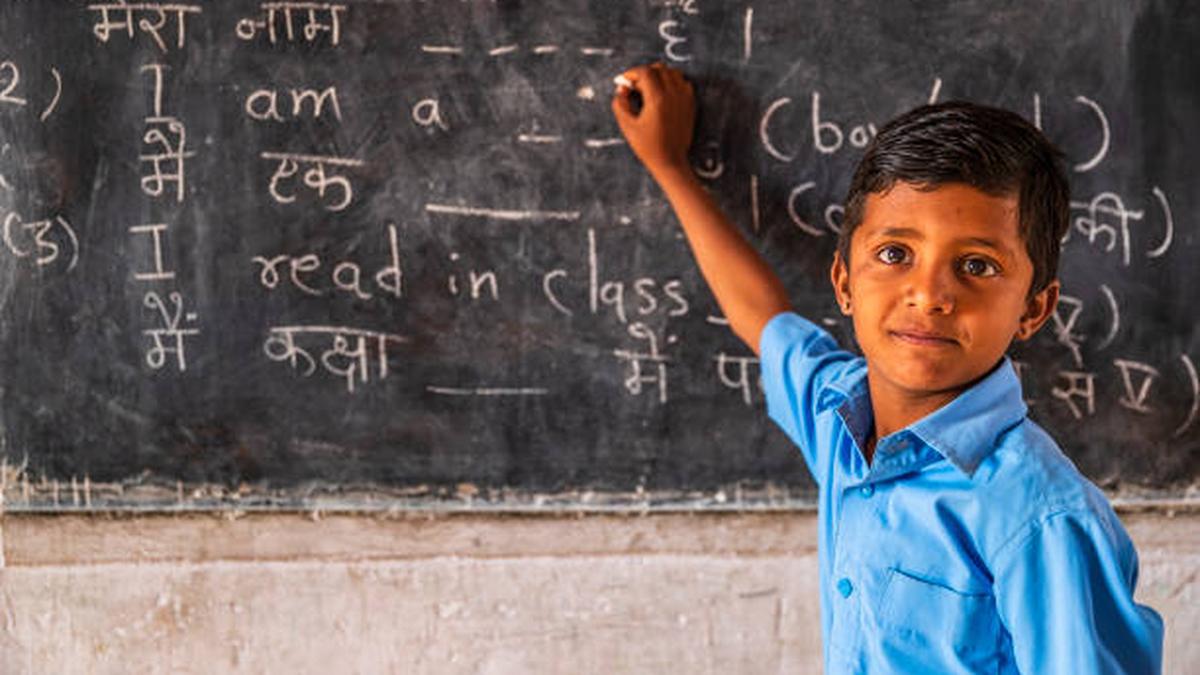
From Marwari to Maithili, Tulu to Tamil, there are words — evocative, nuanced, onomatopoeic, with much exactitude — that describe everything from wild birds and morphing skies to livelihoods.

Oos ki nami means “dew moisture” in Bundeli in Madhya Pradesh. Raunkha refers to the festive atmosphere during collective sowing in Haryanvi. There is even a term to describe “twilight on wetlands” in Assamese, beelor godhuli. In Khasi, spoken in Meghalaya, shyllien connotes the “pre-monsoon fragrance”.

The new analysis, by the ‘Losing Words, Losing Worlds’ initiative, found that as the environment changes, nearly a hundred words and terms tied to seasons, species, soils, tides, and the skies appear to be fading or have already been lost from 22 languages across India. The findings were drew on a survey of around 100 people conducted by Marisha Karwa, a journalist-turned-climate communicator, and 101Reporters, a pan-India network of grassroots reporters, during October and November 2025.

As weather patterns change, so does the way dew forms and the mahua flowers, and with that “entire systems of knowledge and ways of relating to the natural world” stand to be wiped out, the report read. “That which we cannot name, we cannot understand — or manage, or act on.”

The survey also revealed that everyone from farmers and fishers to forest-dependent people in 15 States believed that with the loss of vernacular words, ecological literacy is vanishing. The mainstream climate narrative in India is largely in English or has been transliterated from the English into local languages, Ms. Karwa said, adding that climate communication excludes a majority of India’s multilingual people.

Monsoon in a tree bark

Terms such as patar bhonra, which denotes the seasonal movement of wild bees in a local language in Chhattisgarh, capture “connections between atmospheric signals, biological behaviour, agricultural and fishing timing and cultural practice,” Ms. Karwa wrote.

Hyper-local and multi-sensory terms or words also integrate biological, atmospheric, and social signals. In Odisha’s forests, an elderly person told the reporters that they “could smell the monsoon arrival from tree bark”.

In Bihar, terms linked to the monsoon, such as jeth ke baadal – May clouds, signalling the sowing of rice sowing – “have been abandoned as their ecological referents have disappeared, including the bird species that served as monsoon indicators”.

Likewise, in Maharashtra, the shenvti hawa, the southern breeze that signals pomfret movement, “has become so unreliable that elderly fishermen have abandoned sea-based forecasting altogether, replacing it with phone messages from fish traders in Mumbai,” per the report.

Meanwhile, language is also adapting to climate change. Farmers, fishers, and forest communities described newly emerging environmental phenomena, like bina nishaan to connote unannounced rains; garmi ke baad seedha sardi, an abrupt heat to cold alluding to a vanished autumn; and bhaga jhadu, vanished rains. Conversely, the report noted that in Tamil Nadu, the purattasi mazhai – the September–October rains, critical for samba paddy and crab larval cycles – has failed in four of the last six years.

The vividly illustrated book The Lost Words by Robert Macfarlane and Jackie Morris, first published in 2017, is an ode to lost words in Britain. As its authors wrote: “Once upon a time, words began to vanish from the language of children… the words were those that children used to name the natural world around them.”

The authors had expressed hope that the book would conjure “lost words” such as “adder”, that conveyed “the echo of a snake or self-escape or a left-behind ghost; and “ivy,” which the authors describe as “a real high flyer/ Via a bark and stone I scale tree and spire/ You can call me ground cover; I say sky-wire.”

‘Interconnected challenge’

Mahesh Rangarajan, professor of environmental studies and history at Ashoka University, told The Hindu that while the new report is “preliminary”, it is still a “landmark” that reflects a complex set of responses to increasingly unpredictable weather patterns. Cultivators must now search for a term for the late onset of winter, or summer extremes, or changes in temperature that affect water bodies.

“Activities like sowing and harvesting, gathering flowers and cutting grass, are all changing and in unexpected ways,” he said, adding that the survey now shows the “way forward”.

Today, almost everyone is losing words: monsoon droughts, cloudbursts in flatlands and ‘false rains’ are experienced but “neither local languages nor English have precise words for them,” the survey reported noted.

Ms. Karwa said she hopes to collaborate with institutions, the government, and partners on the ground, along with committed funders keen to address climate as “an interconnected challenge”.

“The survey must be an annual affair at a deeper, pan-India scale, document native language environmental lexicon from people, folk tales, media and archival research,” she told The Hindu.

Published – August 29, 2026 08:00 am IST



Source link

Science

Post navigation

Previous Post: Accused in Saif Ali Khan attack case seeks to plead guilty
Next Post: WFI issues strict anti-doping advisory

Related Posts

  • The biology of belief, optimism, and good health
    The biology of belief, optimism, and good health Science
  • Science for all newsletter 2024 Nobel Prize winners in science
    Science for all newsletter 2024 Nobel Prize winners in science Science
  • Flosdorf, Mudd, and a way to handle blood
    Flosdorf, Mudd, and a way to handle blood Science
  • The Science Quiz | Chemical weapons of the Vietnam War
    The Science Quiz | Chemical weapons of the Vietnam War Science
  • What are Monte Carlo methods?
    What are Monte Carlo methods? Science
  • What is the secret to a great cup of tea?
    What is the secret to a great cup of tea? Science

More Related Articles

Chandrayaan-3 | Vikram generated halo on landing on moon Chandrayaan-3 | Vikram generated halo on landing on moon Science
Chang’e 6 | From the Moon’s far side Chang’e 6 | From the Moon’s far side Science
NASA capsule bearing asteroid sample in imminent return to Earth NASA capsule bearing asteroid sample in imminent return to Earth Science
Is India underestimating the cost of dealing with invasive species? Is India underestimating the cost of dealing with invasive species? Science
Entanglement breakthrough brings quantum computers closer Entanglement breakthrough brings quantum computers closer Science
As Trump floats buying Greenland, Arctic island still holds toxic US waste As Trump floats buying Greenland, Arctic island still holds toxic US waste Science
SiteLock

Archives

  • September 2026
  • August 2026
  • July 2026
  • June 2026
  • May 2026
  • April 2026
  • March 2026
  • February 2026
  • January 2026
  • December 2025
  • November 2025
  • October 2025
  • September 2025
  • August 2025
  • July 2025
  • June 2025
  • May 2025
  • April 2025
  • March 2025
  • February 2025
  • January 2025
  • December 2024
  • November 2024
  • October 2024
  • September 2024
  • August 2024
  • July 2024
  • June 2024
  • May 2024
  • April 2024
  • March 2024
  • February 2024
  • January 2024
  • December 2023
  • November 2023
  • October 2023
  • September 2023
  • August 2023
  • July 2023
  • June 2023
  • May 2023
  • April 2023
  • March 2023
  • February 2023
  • January 2023
  • December 2022
  • November 2022
  • October 2022
  • September 2022
  • August 2022
  • July 2022
  • June 2022
  • May 2022

Categories

  • Business
  • Nation
  • Science
  • Sports
  • World

Recent Posts

  • Donald Trump seeks to bring health-research funding under his control, Politico reports
  • Residents want dislodged railings along tracks on GST Road in East Tambaram fixed and opening on Sudhanandha Bharati Salai closed
  • The Hindu Foundation Day: revisiting the journey
  • Medians needed at sharp bends in Guindy – The Hindu
  • Why has the U.S. deployed ‘weapons’ in space? | Explained

Recent Comments

  1. DonaldFrosy on UP Teacher Who Asked Students To Slap Muslim Classmate
  2. DonaldFrosy on UP Teacher Who Asked Students To Slap Muslim Classmate
  3. YWgliuZUXRuWYumGOFzzpY on UP Teacher Who Asked Students To Slap Muslim Classmate
  4. AlvinNet on UP Teacher Who Asked Students To Slap Muslim Classmate
  5. AlvinNet on UP Teacher Who Asked Students To Slap Muslim Classmate
  • Virat Kohli Spotted In London After ODI Series Against Sri Lanka – Watch
    Virat Kohli Spotted In London After ODI Series Against Sri Lanka – Watch Sports
  • Kolhapur Crash Sets Off ‘Ghost Auto’ Run, Five Injured
    Kolhapur Crash Sets Off ‘Ghost Auto’ Run, Five Injured Nation
  • 50-Year-Old UP Man Sentenced To Life In Jail For Raping Infant
    50-Year-Old UP Man Sentenced To Life In Jail For Raping Infant Nation
  • French court frees Sarkozy from jail pending appeal
    French court frees Sarkozy from jail pending appeal World
  • Access Denied
    Access Denied Nation
  • Access Denied
    Access Denied Nation
  • Access Denied
    Access Denied Nation
  • Premier League: Chelsea’s Woes Mount After Bournemouth Stalemate
    Premier League: Chelsea’s Woes Mount After Bournemouth Stalemate Sports

Editor-in-Chief:
Mohammad Ariff,
MSW, MAJMC, BSW, DTL, CTS, CNM, CCR, CAL, RSL, ASOC.
editor@artifex.news

Associate Editors:
1. Zenellis R. Tuba,
zenelis@artifex.news
2. Haris Daniyel
daniyel@artifex.news

Photograher:
Rohan Das
rohan@artifex.news

Artifex.News offers Online Paid Internships to college students from India and Abroad. Interns will get a PRESS CARD and other online offers.
Send your CV (Subjectline: Paid Internship) to internship@artifex.news

Links:
Associate Journalism
About Us
Privacy Policy

News Links:
Breaking News
World
Nation
Sports
Business
Entertainment
Lifestyle

Registered Office:
72/A, Elliot Road, Kolkata - 700016
Tel: 033-22277777, 033-22172217
Email: office@artifex.news

Editorial Office / News Desk:
No. 13, Mezzanine Floor, Esplanade Metro Rail Station,
12 J. L. Nehru Road, Kolkata - 700069.
(Entry from Gate No. 5)
Tel: 033-46011099, 033-46046046
Email: editor@artifex.news

Copyright © 2023 Artifex.News Newsportal designed by Artifex Infotech.