





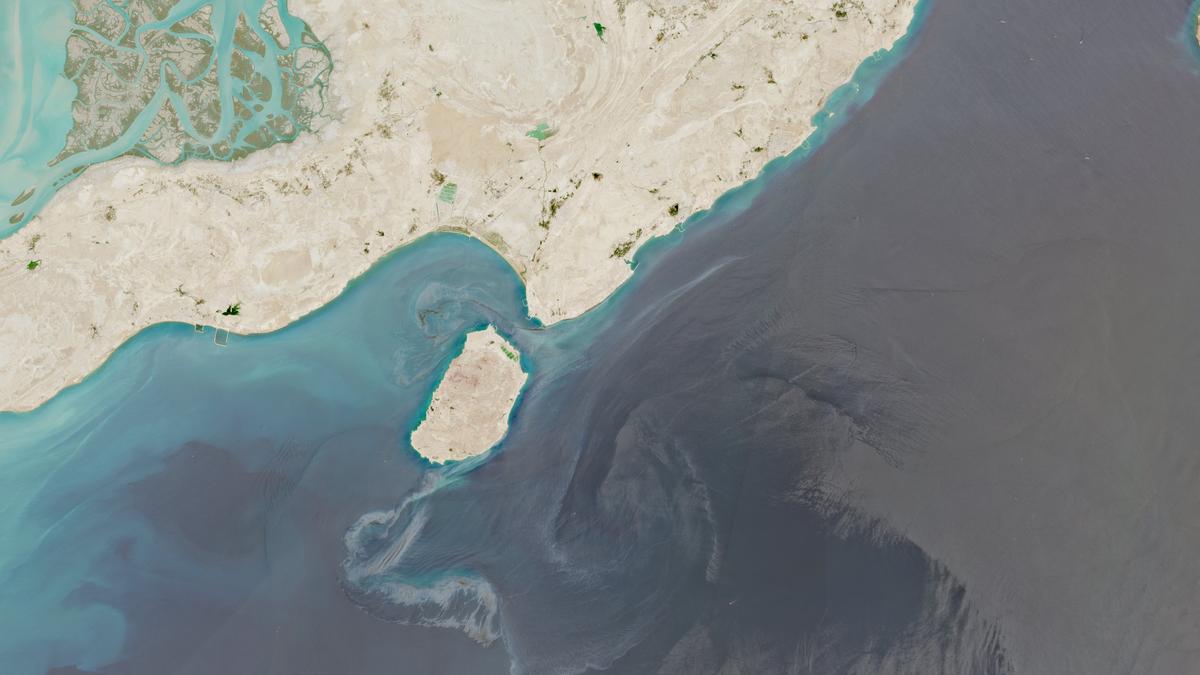
A satellite image shows Qeshm Island following an oil spill at sea, off the coast of Iran, on August 10, 2026.
| Photo Credit: REUTERS
The Hara forests are a vital ecological treasure of the Persian Gulf. Spanning the Strait of Hormuz, these mangrove forests consist mainly of grey mangrove trees (Avicennia marina), which have a special filtration system in their roots that allows them to thrive in saline conditions. The same roots also protect the coast against erosion and are voluminous carbon sinks, sequestering significantly more carbon than terrestrial forests.
The forests are a UNESCO Biosphere Reserve and serve as an important nursery for marine life as they shelter shrimp, crabs, and numerous fish species that sustain the region’s fisheries. Up from the water’s edge, the Hara forests’ canopy is also a major migratory hub for birds like the great stone-curlew and various herons. The mangroves are the backbone of the sustainable tourism programmes of Qeshm, an Iranian island in the Persian Gulf, and draw visitors to their labyrinthine waterways.
Protecting these forests is crucial for the lives and livelihoods of Qeshm’s local communities and for efforts to preserve the Gulf’s natural heritage. Environmentalists have said losing them would trigger a catastrophic collapse of the local food chain and coastal defenses.
Recent satellite images have revealed a major environmental threat to just these forests: an oil spill off Qeshm’s southern coast. Experts have identified the source to be a bulk carrier named Minoan Pioneer, which has been leaking heavy fuel oil after being struck by a projectile. The slick stretches 160 km long, with dark liquid already washing ashore. The ongoing West Asia conflict is also hindering cleanup efforts, leaving the mangroves at great risk of devastation.
Published – August 16, 2026 11:30 am IST