

Skip to content
  • Facebook
  • X
  • Linkedin
  • WhatsApp
  • YouTube
  • Associate Journalism
  • About Us
  • Privacy Policy
  • 033-46046046
  • editor@artifex.news
Artifex.News

Artifex.News

Stay Connected. Stay Informed.

  • Breaking News
  • World
  • Nation
  • Sports
  • Business
  • Science
  • Entertainment
  • Lifestyle
  • Toggle search form
  • Access Denied
    Access Denied Nation
  • BJP MLA Tapas Roy sworn in as Pro-tem Speaker of West Bengal Assembly
    BJP MLA Tapas Roy sworn in as Pro-tem Speaker of West Bengal Assembly Nation
  • Access Denied Sports
  • Access Denied Business
  • Morgan Stanley Looks To Expand In Asia As Markets Deregulate Business
  • Access Denied
    Access Denied Nation
  • Nepal protests: Semblance of normalcy as Army takes charge of security
    Nepal protests: Semblance of normalcy as Army takes charge of security World
  • Body Of Israeli Soldier Sergeant Oz Daniel Killed In October 7 Hamas Attack Held In Gaza: Army
    Body Of Israeli Soldier Sergeant Oz Daniel Killed In October 7 Hamas Attack Held In Gaza: Army World
Scientists turn to sharks for better hurricane predictions

Scientists turn to sharks for better hurricane predictions

Posted on August 10, 2026 By admin


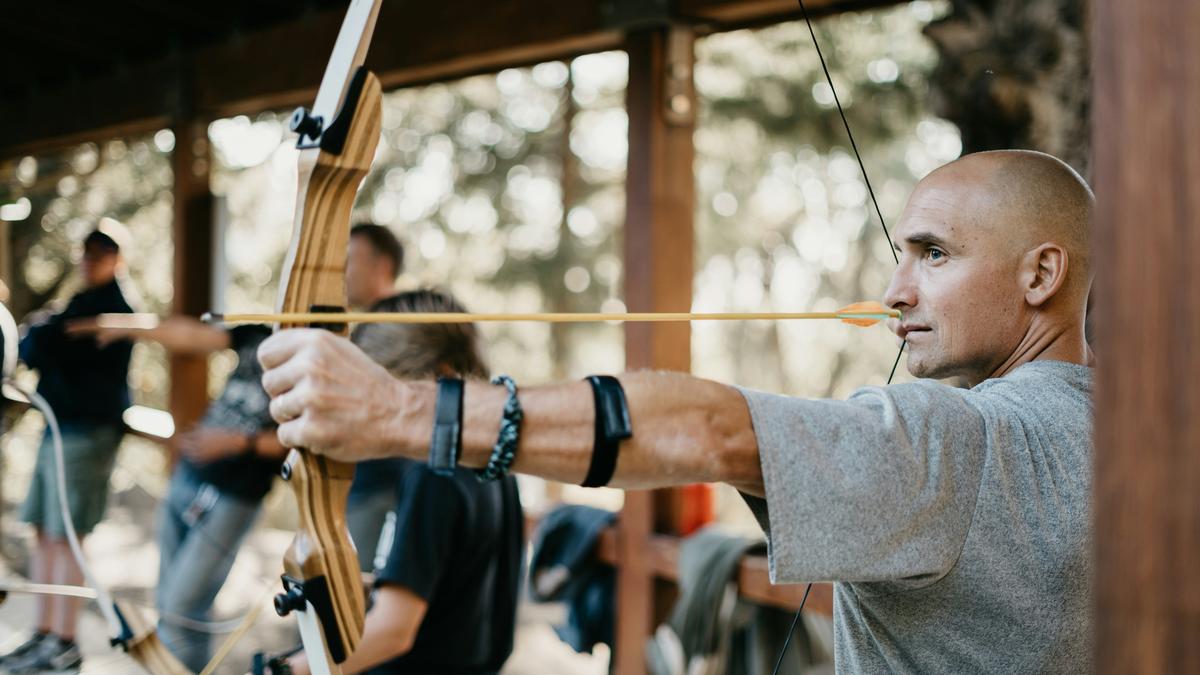
A hammerhead shark swims close to Wolf Island at Galapagos Marine Reserve August 19, 2013.
| Photo Credit: REUTERS

From the killer shark of Jaws to the tornado-tossed predators of the Sharknado movies, films long have portrayed sharks as objects ‌of summer fear. But when a shark cuts through the waters off the U.S. East Coast, ​it now may be doing more than hunting. It may also be gathering data that helps scientists understand ⁠the potential intensity of a hurricane before it makes landfall.

University of Delaware researchers are testing whether sharks can serve as mobile near-real-time ocean-data observers, carrying sensors that measure ocean conditions to inform oceanographic, atmospheric and climate models.

These CTD tags are small electronic devices that measure ocean electrical ‌conductivity — a metric closely related to salinity — as well as temperature and depth, as marine creatures to which they are attached swim and dive.

“Animal-borne sensors have been used successfully by oceanographers for years, particularly on ‌elephant seals in polar regions where scientific observations are scarce,” said Aaron Carlisle, principal investigator and a professor in ‌the university’s ⁠School of Marine Science and Policy.

Sharks offer a new opportunity in such research because they are ⁠abundant, widely distributed and easier to access than many protected marine mammals, Carlisle said.

Until now, shark tagging typically has tracked only where these fish travel and the habitats they use.

The University of Delaware researchers select sharks that can collect the measurements most useful for hurricane research, and favor species that ​surface often enough for their tags to transmit the ‌information to satellites. Previous analyses identified shortfin mako sharks, blue sharks, smooth hammerheads and juvenile great white sharks as strong candidates for such research in the North Atlantic.

“We are really most interested in the heat content of the top layer of the ocean, which is known as the mixed layer,” Carlisle said.

“This is the part of the water ‌column that really drives hurricane intensity — warmer mixed layer equals stronger hurricane — as it holds the heat that feeds ​hurricanes,” Carlisle added.

The tagging process begins in early May, when highly migratory species move closer to the coast from their winter habitats further out in the Atlantic, according to Caroline Wiernicki, a University of ⁠Delaware doctoral candidate in marine science.

Researchers head 50 to 65 km offshore aboard a research vessel, deploy baited lines and wait, typically two to three hours, for a shark to take the bait, Wiernicki said.

“The tags are attached to the ‌dorsal fin. Then every time the shark fins (swims) at the surface, the tag can communicate and transmit data to the orbiting network of satellite receivers,” Carlisle said.

The tagging process itself is operated “like a pit crew” in an auto race, Carlisle said, and usually takes less than five minutes.

The tagging is carried out under institutional animal care oversight to minimise impact on the sharks. The tags are attached using materials designed to corrode and fall off over time. Each animal also undergoes a health check before release, as a stressed or harmed shark may not behave naturally, potentially biasing the data, Carlisle said.

Published – August 10, 2026 01:53 pm IST


Source link

Science

Post navigation

Previous Post: Kerala cashew import scam: R. Chandrasekharan, K.A. Ratheesh move HC Division Bench against Single Judge order in contempt plea
Next Post: SUV allegedly driven on wrong route kills ex-serviceman in Hyderabad hit-and-run case, two injured

Related Posts

  • Why do we aim with one eye closed?
    Why do we aim with one eye closed? Science
  • Sweltering public hospitals turn into ‘death traps’ for poor communities
    Sweltering public hospitals turn into ‘death traps’ for poor communities Science
  • This worm develops food habits and its offspring ‘inherit’ them
    This worm develops food habits and its offspring ‘inherit’ them Science
  • To make sense of cosmic rays, CERN team tracks a fragile nucleus
    To make sense of cosmic rays, CERN team tracks a fragile nucleus Science
  • Multiple Indian payloads launched by Space X’s Falcon 9
    Multiple Indian payloads launched by Space X’s Falcon 9 Science
  • NASA overhauls Artemis moon programme with new docking test mission
    NASA overhauls Artemis moon programme with new docking test mission Science

More Related Articles

ISRO to launch 6,500 kg communication satellite built by U.S. in couple of months: Chairman ISRO to launch 6,500 kg communication satellite built by U.S. in couple of months: Chairman Science
ISRO hand-holding start-ups to foster space ecosystem ISRO hand-holding start-ups to foster space ecosystem Science
 The untapped potential of stem cells in menstrual blood  The untapped potential of stem cells in menstrual blood Science
COP30: a beginner’s guide on what to expect from the climate summit COP30: a beginner’s guide on what to expect from the climate summit Science
Russian space officials say air leak at International Space Station poses no danger to its crew Russian space officials say air leak at International Space Station poses no danger to its crew Science
The story and science behind Ferris wheels The story and science behind Ferris wheels Science
SiteLock

Archives

  • October 2026
  • September 2026
  • August 2026
  • July 2026
  • June 2026
  • May 2026
  • April 2026
  • March 2026
  • February 2026
  • January 2026
  • December 2025
  • November 2025
  • October 2025
  • September 2025
  • August 2025
  • July 2025
  • June 2025
  • May 2025
  • April 2025
  • March 2025
  • February 2025
  • January 2025
  • December 2024
  • November 2024
  • October 2024
  • September 2024
  • August 2024
  • July 2024
  • June 2024
  • May 2024
  • April 2024
  • March 2024
  • February 2024
  • January 2024
  • December 2023
  • November 2023
  • October 2023
  • September 2023
  • August 2023
  • July 2023
  • June 2023
  • May 2023
  • April 2023
  • March 2023
  • February 2023
  • January 2023
  • December 2022
  • November 2022
  • October 2022
  • September 2022
  • August 2022
  • July 2022
  • June 2022
  • May 2022

Categories

  • Business
  • Nation
  • Science
  • Sports
  • World

Recent Posts

    Recent Comments

    No comments to show.

    Editor-in-Chief:
    Mohammad Ariff,
    MSW, MAJMC, BSW, DTL, CTS, CNM, CCR, CAL, RSL, ASOC.
    editor@artifex.news

    Associate Editors:
    1. Zenellis R. Tuba,
    zenelis@artifex.news
    2. Haris Daniyel
    daniyel@artifex.news

    Photograher:
    Rohan Das
    rohan@artifex.news

    Artifex.News offers Online Paid Internships to college students from India and Abroad. Interns will get a PRESS CARD and other online offers.
    Send your CV (Subjectline: Paid Internship) to internship@artifex.news

    Links:
    Associate Journalism
    About Us
    Privacy Policy

    News Links:
    Breaking News
    World
    Nation
    Sports
    Business
    Entertainment
    Lifestyle

    Registered Office:
    72/A, Elliot Road, Kolkata - 700016
    Tel: 033-22277777, 033-22172217
    Email: office@artifex.news

    Editorial Office / News Desk:
    No. 13, Mezzanine Floor, Esplanade Metro Rail Station,
    12 J. L. Nehru Road, Kolkata - 700069.
    (Entry from Gate No. 5)
    Tel: 033-46011099, 033-46046046
    Email: editor@artifex.news

    Copyright © 2023 Artifex.News Newsportal designed by Artifex Infotech.