
Skip to content
  • Facebook
  • X
  • Linkedin
  • WhatsApp
  • YouTube
  • Associate Journalism
  • About Us
  • Privacy Policy
  • 033-46046046
  • editor@artifex.news
Artifex.News

Artifex.News

Stay Connected. Stay Informed.

  • Breaking News
  • World
  • Nation
  • Sports
  • Business
  • Science
  • Entertainment
  • Lifestyle
  • Toggle search form
  • Chinese leader Xi meets with U.S. national security adviser Jake Sullivan in a bid to improve ties
    Chinese leader Xi meets with U.S. national security adviser Jake Sullivan in a bid to improve ties World
  • Access Denied Sports
  • “Go Abroad, ISL Is Too Comfortable”: New Head Coach Manolo Marquez’s Advice To Indian Footballers
    “Go Abroad, ISL Is Too Comfortable”: New Head Coach Manolo Marquez’s Advice To Indian Footballers Sports
  • RBI To Allow Opening Of Rupee Account Outside India
    RBI To Allow Opening Of Rupee Account Outside India Nation
  • Australia bans neo-Nazi network under new law that criminalises hate groups
    Australia bans neo-Nazi network under new law that criminalises hate groups World
  • Rajeev Chandrasekhar Attacks Congress Over 1962 India-China War
    Rajeev Chandrasekhar Attacks Congress Over 1962 India-China War Nation
  • Big Blow To India’s World Test Championship Final Hopes If 2nd Test vs Bangladesh Is Washed Out
    Big Blow To India’s World Test Championship Final Hopes If 2nd Test vs Bangladesh Is Washed Out Sports
  • “Rs 25 Lakh Each”: BCCI Secretary Jay Shah Announces Mega Bonanza For IPL’s ‘Unsung Heroes’
    “Rs 25 Lakh Each”: BCCI Secretary Jay Shah Announces Mega Bonanza For IPL’s ‘Unsung Heroes’ Sports
How protein biosensors can shrink the timeline of medical emergencies

How protein biosensors can shrink the timeline of medical emergencies

Posted on July 14, 2026 By admin


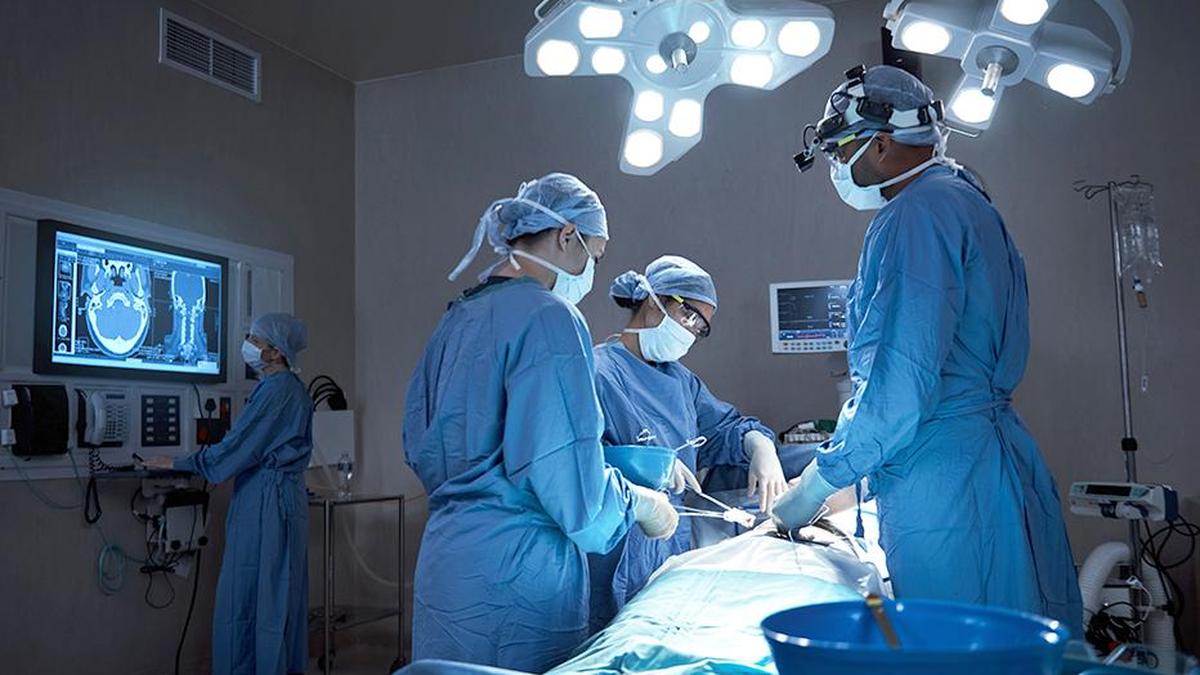
A patient arrives at a hospital showing signs of sepsis, a deadly condition where the immune system attacks its own body after an infection. Sepsis kills 11 million people every year. Doctors must treat it within hours to save lives, but standard blood tests take up to 48 hours for results.

Last year, researchers reported a sensor platform capable of detecting multiple immune proteins linked to sepsis from a blood sample in real time. It was also compact enough for bedside use. The device was a protein biosensor — and it was based on six decades of research and technological development to read the body’s molecular signals at a speed compatible with acute medical needs.

Early-warning system

Proteins are important diagnostic targets because they are involved in almost every biological process. At any given moment, thousands of them are circulating in the blood: they regulate inflammation, carry oxygen, signal between cells, and fight infection.

When something goes wrong, proteins often change first. Troponin levels in the blood rise within hours of a heart attack. Procalcitonin levels increase during bacterial infections. Certain cancer-associated proteins appear in blood long before a tumour is visible on any scan. If these protein levels are measured accurately and quickly, clinicians can gain time to optimise treatment before the disease becomes too severe.

Scientists conceived of protein biosensors when they were studying ways to monitor glucose. In 1962, the American biochemist Leland C. Clark, Jr. and microbiologist Champ Lyons described the first functional biosensor in the form of an electrode coated with an enzyme that reacted with glucose to produce a measurable electrical current.

Modern biosensor researchers continue to use this basic design, pairing a biological recognition element with a signal-converting transducer. However, glucose is a comparatively simpler target than proteins. Blood contains thousands of structurally diverse proteins at the same time. Identifying a single target requires a way to recognise molecules with extraordinary precision.

Antibodies provided the first viable solution to detect proteins in a targeted way. Since they are produced naturally by the immune system, they can be attached to sensor surfaces to capture and identify specific proteins. The flip side was that antibodies are expensive to produce and even small amounts of heat, movement or improper storage can render them useless.

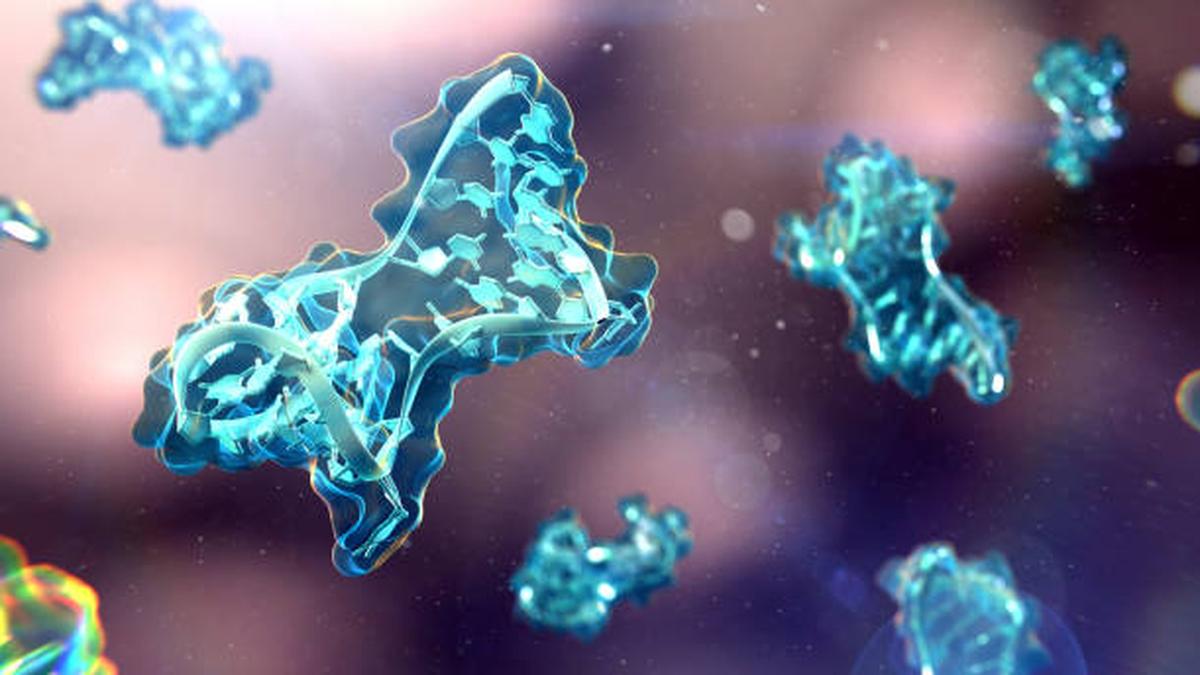
This pushed researchers towards aptamers — short, synthetic strands of DNA or RNA that bind to target proteins with high selectivity. They are also cheaper, more stable, and, unlike antibodies, can be produced entirely within a laboratory, sidestepping the biological systems that make antibody manufacturing difficult.

Over the last two decades, scientists have developed aptamers for hundreds of disease-relevant proteins and have become the recognition element of choice in advanced biosensor designs.

Current landscape

Today, protein biosensing lies at the intersection of chemistry, materials science, and electronics.

Nanotechnology significantly enhanced the sensitivity of biosensors by incorporating gold nanoparticles, carbon nanotubes, graphene, and materials called MXenes to build sensor surfaces. The high surface area of these nanomaterials gives more protein binding sites while their electrical properties generate stronger signals. Thus biosensors have become able to detect proteins even at low concentrations, when a disease is just setting in.

This nanotechnology infrastructure has more recently converged with biotechnological tools like CRISPR. Although best known for gene editing, when CRISPR enzymes are coupled with aptamers on a sensor’s surface, a target protein’s binding can be made to trigger a large and distinct signal. This approach has already been demonstrated to detect malaria, SARS-CoV-2, and many biomarkers of cancer.

Finally, the COVID-19 pandemic allowed these technologies’ developers to accelerate scaling, as the pandemic presented a strong demand for rapid, portable diagnostics.

The sepsis platform mentioned earlier paired a gold-silver alloy nanostructure with a machine-learning system trained to analyse complex signals. This setup could confirm an infection and also distinguish between disease stages to guide treatment decisions.

Healthcare workers are also applying multi-marker detection to pancreatic cancer, a disease with high mortality because it is currently usually detected only when it has become advanced. In a June 2025 review, University of Science and Technology Beijing researchers said several protein markers can now be simultaneously directed using a single platform, offering the best chance of improving early diagnosis.

Researchers are also exploring wearable monitoring. For example, in December 2025, a (separate) team from China reported an aptamer-coated microneedle array that could sample proteins through the skin of animals it was tested with. Their goal was to make a patch that could stick on the skin and monitor inflammatory or cardiac issues continuously and send data to a phone.

Scientists and engineers are also adapting this technology for environmental and industrial uses in the form of cell-free biosensors. Here, using isolated biological machinery like enzymes and regulatory molecules without maintaining live cells, these platforms can detect heavy metal contamination in water, trace antibiotic residues, identify foodborne pathogens in supply chains, and screen for biological threat agents.

Different future

The next step involves closed-loop systems — devices that can use artificial intelligence to interpret multi-protein sensor outputs and feed that information directly to automated therapeutic responses. This model could, in principle, trigger a drug delivery mechanism or adjust an ongoing infusion in response to real-time protein data. To this end, in November 2025, Turkish researchers published a proof-of-concept implantable sensor that used genetically engineered bacteria to detect target molecules in surrounding tissue and transmit data wirelessly from inside the body.

Several logistical hurdles remain before widespread clinical implementation. Biological recognition elements degrade over time, particularly due to heat. Baseline protein levels vary between individuals, complicating universal calibration. Many performant sensors are only laboratory prototypes, with no indications as to their scalability. Regulatory approval also requires extensive clinical validation, demanding substantial investments.

However, the field seems set to address them over time.

Manjeera Gowravaram has a PhD in RNA biochemistry and works as a freelance science writer.

Published – July 15, 2026 09:30 am IST


Source link

Science

Post navigation

Previous Post: How the Gaganyaan crew module is built to survive
Next Post: U.S. national held at Nepal border giving contradictory accounts, say officials

Related Posts

  • How India’s mixologists are curating history-inspired cocktail menus
    How India’s mixologists are curating history-inspired cocktail menus Science
  • What triggers the flowering of durians?
    What triggers the flowering of durians? Science
  • Study documents headaches experienced by astronauts in space
    Study documents headaches experienced by astronauts in space Science
  • How a wandering white shark’s epic journey could provide clues for protecting them
    How a wandering white shark’s epic journey could provide clues for protecting them Science
  • NASA’s LRO captures Chandrayaan-3 landing site on the Moon
    NASA’s LRO captures Chandrayaan-3 landing site on the Moon Science
  • Are we taller in the morning than when we go to bed?
    Are we taller in the morning than when we go to bed? Science

More Related Articles

Russian space agency chief blames decades of inactivity for Luna-25 lander’s crash on the moon Russian space agency chief blames decades of inactivity for Luna-25 lander’s crash on the moon Science
NASA astronaut Anil Menon, two others reach International Space Station NASA astronaut Anil Menon, two others reach International Space Station Science
Philippines pioneers coral larvae cryobank to protect threatened reefs Philippines pioneers coral larvae cryobank to protect threatened reefs Science
PM congratulates ISRO on successful launch of Aditya-L1 PM congratulates ISRO on successful launch of Aditya-L1 Science
Where does ‘us versus them’ bias in the brain come from? Where does ‘us versus them’ bias in the brain come from? Science
Echolocation: What goes around comes around Echolocation: What goes around comes around Science
SiteLock

Archives

  • July 2026
  • June 2026
  • May 2026
  • April 2026
  • March 2026
  • February 2026
  • January 2026
  • December 2025
  • November 2025
  • October 2025
  • September 2025
  • August 2025
  • July 2025
  • June 2025
  • May 2025
  • April 2025
  • March 2025
  • February 2025
  • January 2025
  • December 2024
  • November 2024
  • October 2024
  • September 2024
  • August 2024
  • July 2024
  • June 2024
  • May 2024
  • April 2024
  • March 2024
  • February 2024
  • January 2024
  • December 2023
  • November 2023
  • October 2023
  • September 2023
  • August 2023
  • July 2023
  • June 2023
  • May 2023
  • April 2023
  • March 2023
  • February 2023
  • January 2023
  • December 2022
  • November 2022
  • October 2022
  • September 2022
  • August 2022
  • July 2022
  • June 2022
  • May 2022

Categories

  • Business
  • Nation
  • Science
  • Sports
  • World

Recent Posts

  • Malabar pied hornbills sighted in Kannur
  • A trade deal that tests India’s competitive confidence
  • Neil MacRae on Netherlands women’s historic T20 World Cup journey and Associate cricket challenges
  • Telangana police’s fight against film piracy: From ‘Lenin’s success to arrests and 22,000 URL takedowns
  • Dani Olmo — Spain’s orchestrator

Recent Comments

  1. TimothyBlums on UP Teacher Who Asked Students To Slap Muslim Classmate
  2. Scottemove on UP Teacher Who Asked Students To Slap Muslim Classmate
  3. WilliamNer on UP Teacher Who Asked Students To Slap Muslim Classmate
  4. DavidQuera on UP Teacher Who Asked Students To Slap Muslim Classmate
  5. Traviswat on UP Teacher Who Asked Students To Slap Muslim Classmate
  • Girl, 3, Rescued 10 Days After Falling Into 700-Foot Borewell In Rajasthan
    Girl, 3, Rescued 10 Days After Falling Into 700-Foot Borewell In Rajasthan Nation
  • Access Denied
    Access Denied Nation
  • BSF Officer’s Calm Talk With Bangladesh Refugees
    BSF Officer’s Calm Talk With Bangladesh Refugees Nation
  • MS Dhoni Wins Hearts, Gives Autograph On Fan’s Bike – Video Goes Viral
    MS Dhoni Wins Hearts, Gives Autograph On Fan’s Bike – Video Goes Viral Sports
  • Access Denied
    Access Denied Nation
  • India vs Prime Minister XI: 1st Day’s Play Abandoned Due To Rain; Rohit Sharma, Shubman Gill Miss Pink Ball Game Time
    India vs Prime Minister XI: 1st Day’s Play Abandoned Due To Rain; Rohit Sharma, Shubman Gill Miss Pink Ball Game Time Sports
  • NUPPL’s Ghatampur plant Unit-2 begins commercial operations
    NUPPL’s Ghatampur plant Unit-2 begins commercial operations Business
  • US plans online portal to bypass content bans in Europe and elsewhere
    US plans online portal to bypass content bans in Europe and elsewhere World

Editor-in-Chief:
Mohammad Ariff,
MSW, MAJMC, BSW, DTL, CTS, CNM, CCR, CAL, RSL, ASOC.
editor@artifex.news

Associate Editors:
1. Zenellis R. Tuba,
zenelis@artifex.news
2. Haris Daniyel
daniyel@artifex.news

Photograher:
Rohan Das
rohan@artifex.news

Artifex.News offers Online Paid Internships to college students from India and Abroad. Interns will get a PRESS CARD and other online offers.
Send your CV (Subjectline: Paid Internship) to internship@artifex.news

Links:
Associate Journalism
About Us
Privacy Policy

News Links:
Breaking News
World
Nation
Sports
Business
Entertainment
Lifestyle

Registered Office:
72/A, Elliot Road, Kolkata - 700016
Tel: 033-22277777, 033-22172217
Email: office@artifex.news

Editorial Office / News Desk:
No. 13, Mezzanine Floor, Esplanade Metro Rail Station,
12 J. L. Nehru Road, Kolkata - 700069.
(Entry from Gate No. 5)
Tel: 033-46011099, 033-46046046
Email: editor@artifex.news

Copyright © 2023 Artifex.News Newsportal designed by Artifex Infotech.