


I wrote a book called Indian Genius: The Meteoric Rise of Indians in America. The subtitle captures the essence of the book. When I embarked on the project in 2021, it was virtually impossible to turn on CNN, read the Wall Street Journal, go to a hospital, attend a university, or browse a bookstore in America without encountering a sea of Indian names and faces.
During his tenure, President Barack Obama had appointed Dr. Vivek Murthy, an Indian American, as the surgeon general, and in 2021, President Joe Biden reappointed him. Two of the largest Fortune 500 companies — Microsoft and Google — were headed by CEOs born, raised, and educated through their undergraduate years in India. Headlines like ‘Indian Immigrants Are Tech’s New Titans’ were splashed across the press.
And, after the Mars rover Perseverance touched down on February 18, 2021, President Biden called Swati Mohan, a lead scientist at NASA, to congratulate her. “It’s amazing,” he said. “Indian-descent Americans are taking over the country — you, my vice-president [Kamala Harris], my speechwriter [Vinay Reddy]. You guys are incredible.” It felt like the apogee of the Indian American story.
Influential Indian-origin Americans: (L-R) Former U.S. vice-president Kamala Harris, Google CEO Sundar Pichai, journalist Fareed Zakaria, and former PepsiCo CEO Indra Nooyi.
| Photo Credit:
Getty Images
As America celebrates 250 years of independence this year, that story reads very differently — and, increasingly, so does the story of the country’s relationship with India itself. Both have deteriorated in tandem, and that is the real story of this anniversary year for the diaspora: not just a community feeling more vulnerable at home, but a homeland relationship souring at the same time, leaving Indian Americans squeezed from both directions.
Attack on diversity and inclusion
Emma Lazarus’s poem ‘The New Colossus’, inscribed on the Statue of Liberty, gave succour to generations of immigrants sailing into New York’s harbour: Give me your tired, your poor, your huddled masses yearning to breathe free… Every president, Republican or Democrat, since Franklin D. Roosevelt has reinforced that message in some form. Ronald Reagan, in his 1989 farewell address, described America as a shining city on a hill, teeming with people of all kinds living in harmony and peace.
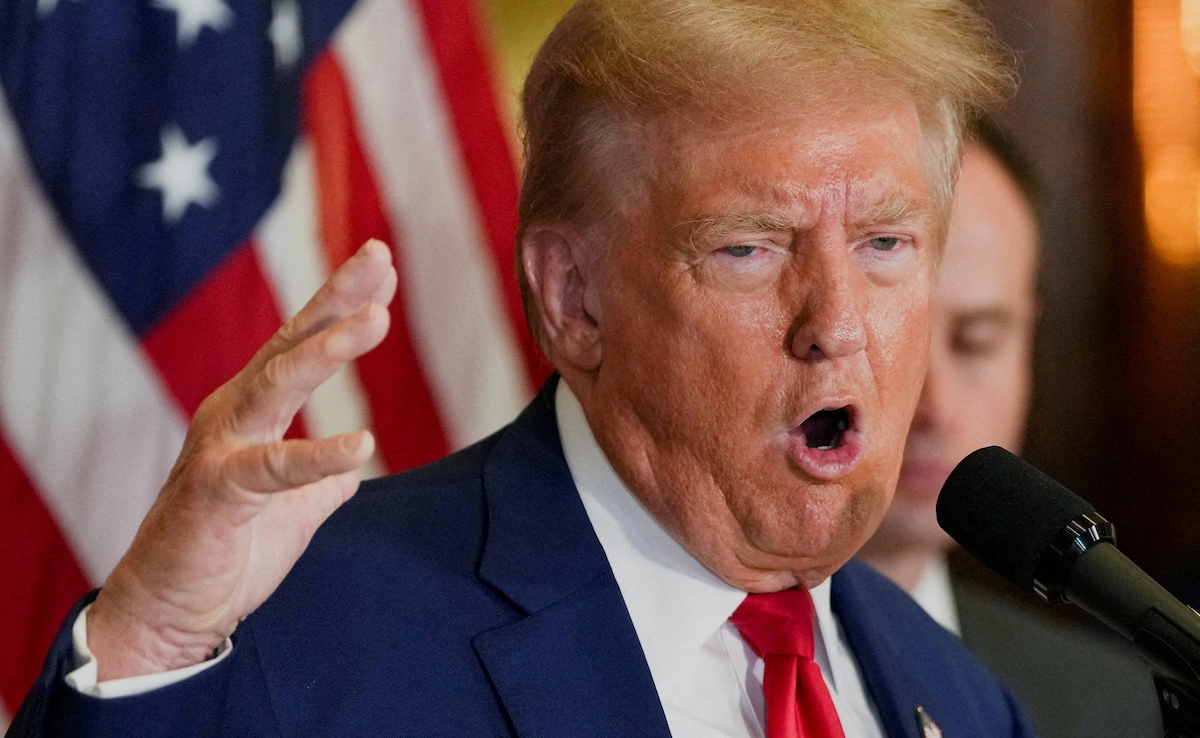
The Trump administration has jettisoned that inheritance. It has pursued an aggressive anti-immigration agenda and tried to end diversity and inclusion across universities and employment. It has signalled an explicit preference for white immigration, as when it offered visas to white South Africans on the unsubstantiated claim that they face discrimination in their own country. During a 2018 immigration meeting, Trump referred to Haiti, El Salvador and African nations as “shithole countries” and suggested that immigration from places such as Norway should be encouraged instead.

U.S. President Donald Trump (right) has pursued a more aggressive anti-immigration stance in his second term.
| Photo Credit:
umReuters
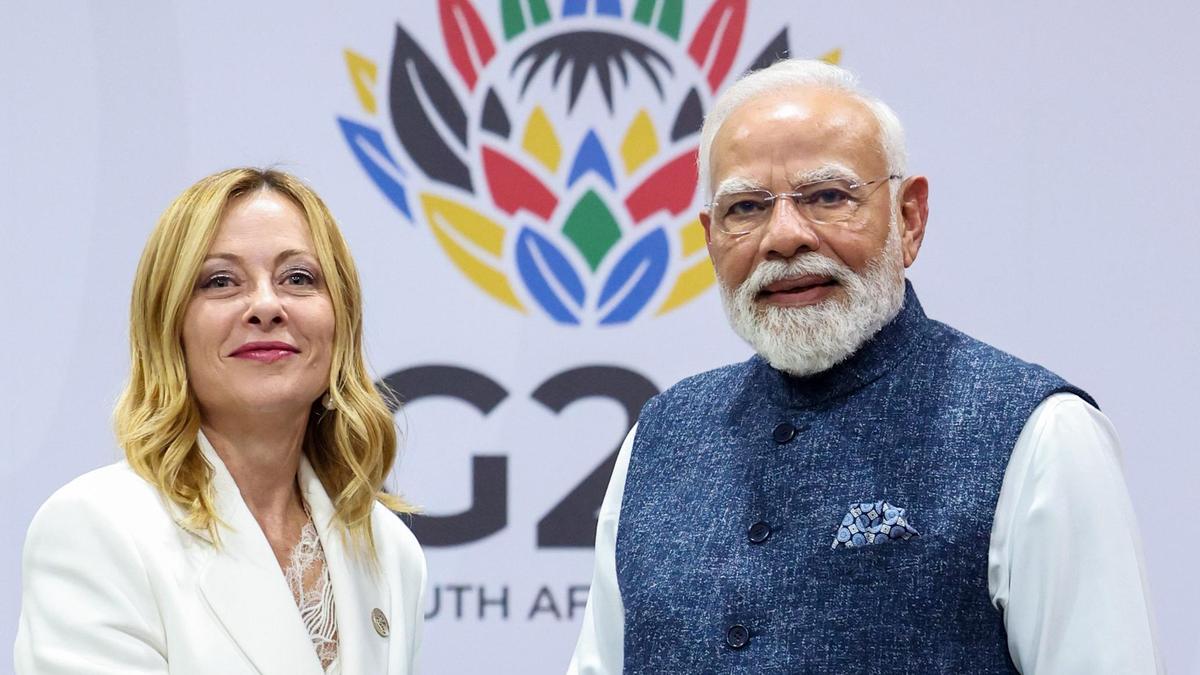
India has not been spared this turn. Trump reposted a podcaster’s remarks describing India and China as “hellholes”, with the commentator saying that “a baby here becomes an instant citizen, and then they bring the entire family in from China or India or some other hellhole on the planet”. India’s main Opposition party called the remarks “extremely insulting and anti-Indian,” and the silence from the Modi government in response only sharpened the sting for many in the diaspora who had assumed their country of origin carried some diplomatic weight in Washington.
This is not the first time eugenics-tinged thinking has contradicted America’s founding ideals. The Chinese Exclusion Act of 1882 barred Chinese immigrants from citizenship even though they had been recruited to build the railroads. The Depression of 1873-79 saw immigrants scapegoated for unemployment. Today, we see an echo of that in the backlash against H-1B visas, whose recipients are disproportionately Indian. The vitriol directed at Indians online has shocked many in a diaspora that had felt valued and respected. At a talk I gave in Silicon Valley, several entrepreneurs admitted to wondering whether investing their life’s work in America had been wise — and whether the country would still welcome their grandchildren.
Fraying diplomacy
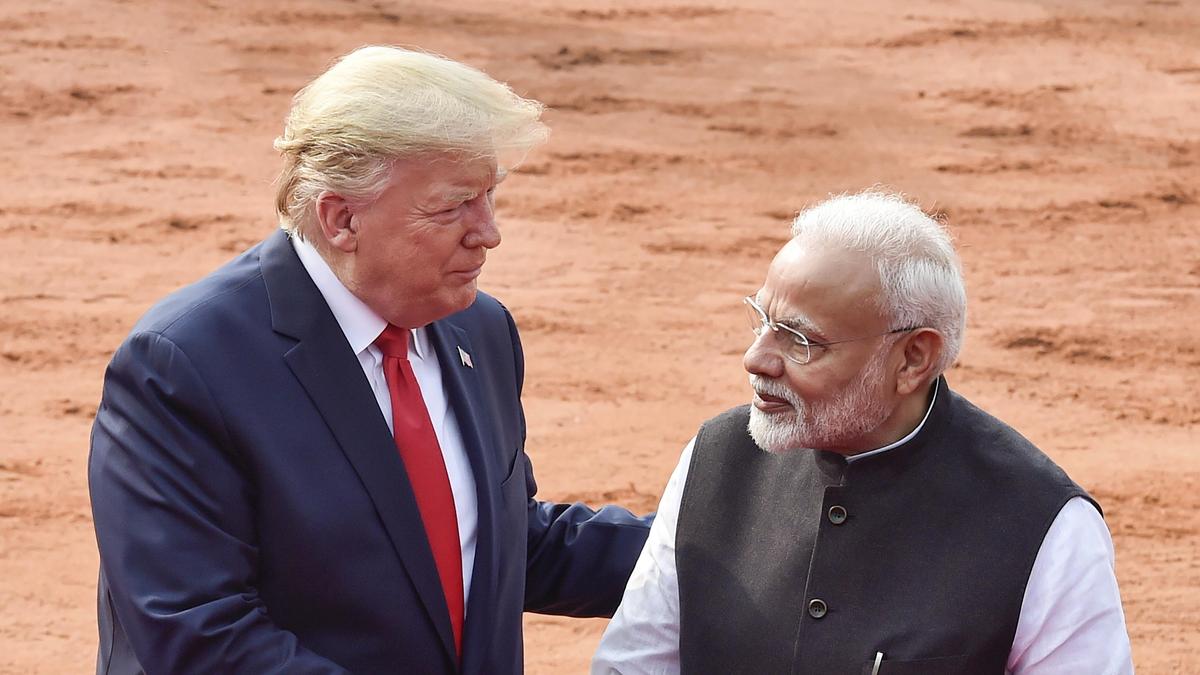
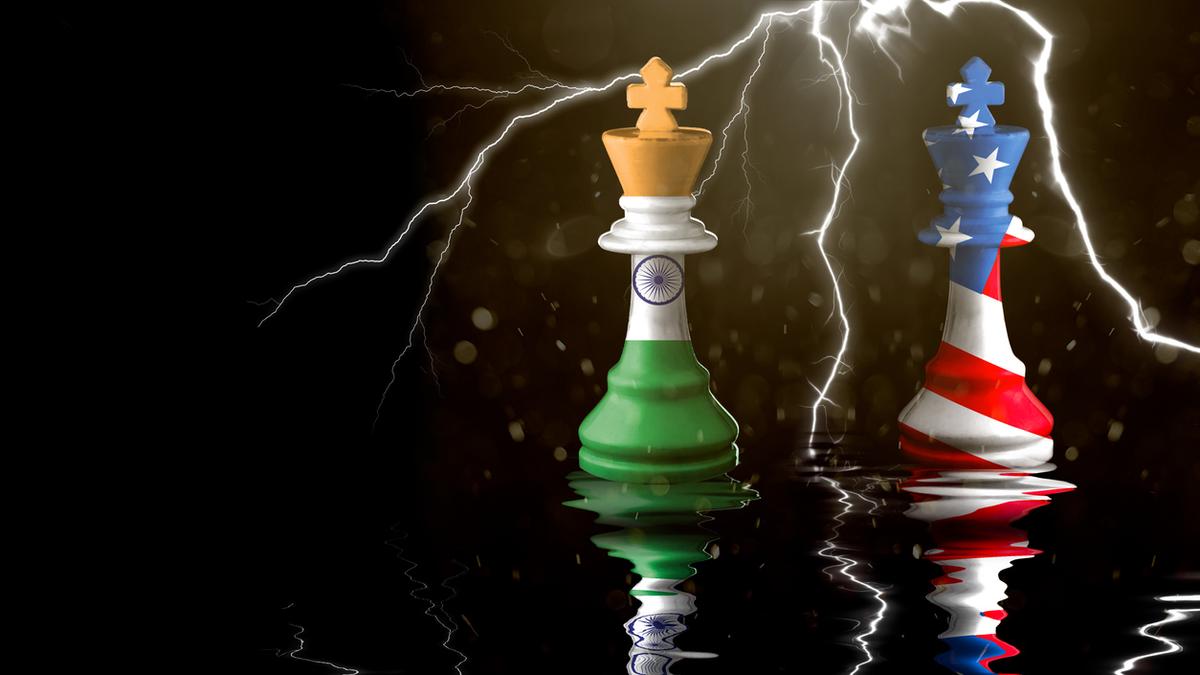
What makes this moment different from earlier waves of nativism is that the cooling has not stopped at the water’s edge. The year 2025 brought among the sharpest deteriorations in U.S.-India relations since 2001, driven by Trump’s tariffs and pressure over India’s purchases of Russian oil. Last year, more than a thousand Indians were deported on U.S. charter flights while handcuffed and shackled. It was a political embarrassment for the Modi government. Many Indians had expected a return to the warm Trump-Modi chemistry of his first term; instead, the partnership steadily declined and India found itself shoring up other relationships.
On August 6, 2025, Trump imposed 50% tariffs on India over its trade barriers and continued purchases of Russian oil — among the highest tariffs levied on any U.S. trading partner. He went on to describe the U.S.-India relationship “very one-sided” on social media, while his trade officials accused New Delhi of helping finance Russia’s war effort through its oil purchases. India denounced the measures as “unfair, unjustified and unreasonable,” insisting its energy policy reflected strategic autonomy rather than hostility towards Washington. Unwilling to strain the relationship further, Modi skipped an online BRICS leaders’ summit hosted by Brazil in September 2025 to discuss U.S. trade policies and tariffs, with his foreign minister participating instead.

Over the years, Indian Americans have become more influential across industries. (L-R, first row) Microsoft CEO Satya Nadella, actor-producer Mindy Kaling, New York mayor Zohran Mamdani, (second row) author Suketu Mehta, astronaut Sunita Williams, comedian Hasan Minhaj, (final row) model and TV host Padma Lakshmi, comedian Zarna Garg, and physician Siddhartha Mukherjee.
The damage was not merely rhetorical. Indian markets became the worst-performing among emerging economies in 2025, with foreign investors pulling out at record levels. India responded not by capitulating but by hedging: it signalled intent to diversify its partnerships, engaging more closely with Russia’s Putin and China’s Xi, and in January 2026, it signed a landmark Free Trade Agreement with the European Union.
Recently, there has been some thaw — Trump cut tariffs on Indian exports from 50% to 18% in February 2026 after Indian oil companies agreed to curtail Russian crude purchases. Working-level cooperation on defence has held up better than the political relationship; the two countries renewed their bilateral defence framework for another 10 years in October 2025. But the underlying trust between the two countries, painstakingly built up by former presidents Bill Clinton, George W. Bush, and Obama, has come under severe pressure over the past year.
For the diaspora, this dual deterioration — racial and geopolitical — lands differently than either development would on its own. It is one thing to feel that your adopted country has grown less welcoming to people who look like you. It is another to watch your country of origin be publicly demeaned by the same administration, with little pushback from your own government. Indian Americans have found themselves without a fully reliable advocate on either side of the relationship.

The demand-supply equation
It is worth remembering how this community got here in the first place, because the current backlash erases that history. Indian migration to the U.S. began in earnest after immigration laws were relaxed in 1965, driven as much by America’s own needs as by Indian ambition. In the early days of the Cold War, the U.S. military feared losing the space race to the Soviet Union after the success of Sputnik in 1957. They poured money into research, only to find a shortage of engineers; European migration had slowed just as India’s first IIT graduates were entering the workforce, and the match was a natural one.
In 1965, the Medicare Act made around 20 million Americans newly eligible for healthcare even as the Vietnam War pulled doctors into the field, and returning soldiers swelled hospital caseloads at home. India’s medical schools, with their English-speaking graduates, helped fill the gap; physicians Abraham Verghese and Deepak Chopra were among those who came during this period. Even today, around 40% of physicians in rural America and in hospitals serving low-income families are foreign-trained, many of them Indian.
The results of that 50-year partnership are extraordinary by any measure. In 1970, there were just 51,000 Indians in America; today there are over 5 million. They have the highest median household income of any ethnic group in the country — $151,200 versus $92,350 for white households, according to 2021-23 Census data. Around 60% of that population arrived after the 1990s tech boom, making it one of the fastest ascents of any immigrant community in American history.

Between home and homeland
At a town hall organised by Indiaspora, a diaspora network, prominent Indian Americans debate how to secure the community’s future: should they give more to charity, run for more public office (currently six Indian Americans sit in Congress), or find better ways to convey how many jobs Indian-led companies have created rather than taken? These questions feel more urgent than they did even three years ago.
Over the past 18 months, speaking to audiences across the country, I find that the doubling of the Indian American population has produced an Indian-majority presence in a handful of suburbs — and with it, new friction. An older white man in Seattle told me after a talk that while he respects the contribution Indians have made, he resents what he sees as a refusal to integrate: Indian families who don’t show up to community events, who have effectively taken over the local schools, who stick to themselves even on the playground. His grievance, he says, is cultural — the sense of being made unwelcome in his own town.
That insularity is not accidental. Many of the roughly 3 million Indian Americans who arrived on H-1B visas after 2000 remain deeply tied to India culturally and through family, and some have not decided whether they are staying for good. Several tell me their reasoning is almost strategic: to be able to re-enter Indian life seamlessly someday, it makes more sense for them to stay within Indian social and cultural circles rather than assimilate fully. They have not yet decided whether July 4 means more to them than August 15.
As both the welcome at home and the relationship with the homeland fray at once, that question — which date matters more — feels less like an abstraction and more like the defining dilemma of this anniversary year.
The writer is the author of Indian Genius: The Meteoric Rise of Indians in America (2024).