
Skip to content
  • Facebook
  • X
  • Linkedin
  • WhatsApp
  • YouTube
  • Associate Journalism
  • About Us
  • Privacy Policy
  • 033-46046046
  • editor@artifex.news
Artifex.News

Artifex.News

Stay Connected. Stay Informed.

  • Breaking News
  • World
  • Nation
  • Sports
  • Business
  • Science
  • Entertainment
  • Lifestyle
  • Toggle search form
  • Access Denied
    Access Denied Nation
  • Software engineer found dead at Nanakramguda apartment
    Software engineer found dead at Nanakramguda apartment Nation
  • Access Denied Business
  • Access Denied
    Access Denied Nation
  • Disgraced Hollywood producer Harvey Weinstein hospitalised
    Disgraced Hollywood producer Harvey Weinstein hospitalised World
  • Access Denied Business
  • Access Denied World
  • Software engineer found dead at Nanakramguda apartment
    BJP accuses govt. of ‘shirking responsibility’ on Hyderabad Metro Rail, Regional Ring Road Nation
The U.S.-Iran ‘peace deal’ confronts spoiler Israel

The U.S.-Iran ‘peace deal’ confronts spoiler Israel

Posted on June 16, 2026 By admin


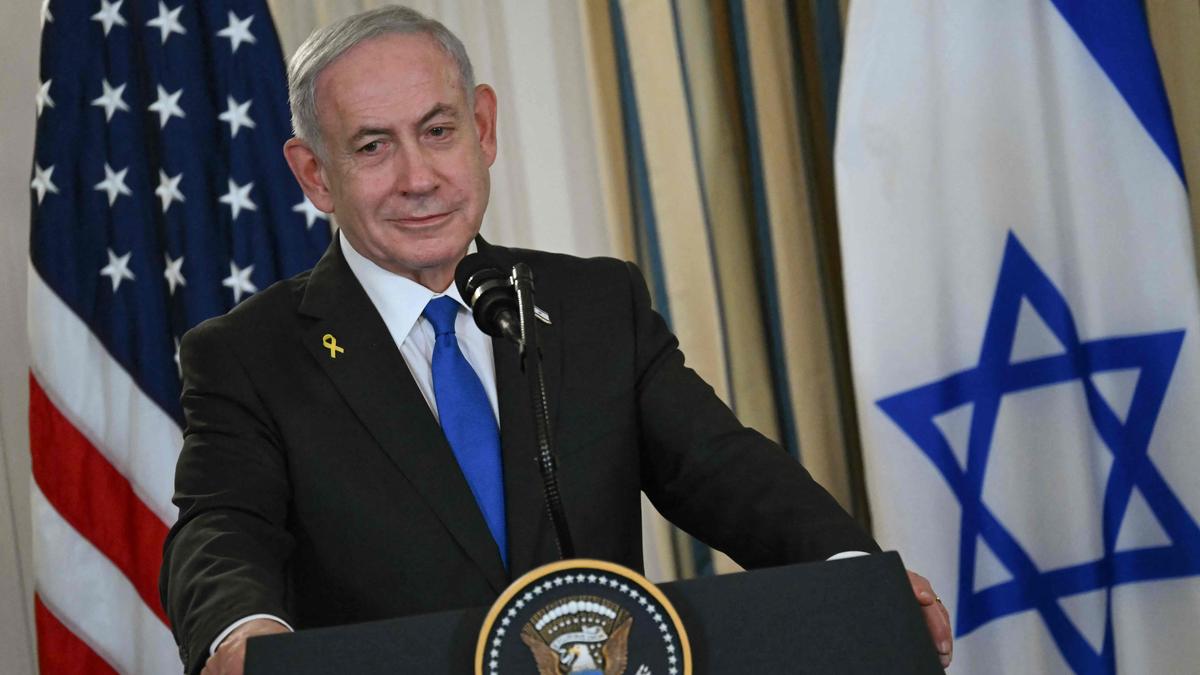
‘For decades, Israel has benefited strategically from the perception of Iran as the principal source of instability in West Asia’
| Photo Credit: AFP

The signing of a United States-Iran peace memorandum offers a rare opportunity to reduce tensions in one of the world’s most volatile regions. After decades marked by sanctions, proxy wars, covert operations, and periodic military confrontations, even a tentative framework for reconciliation between Washington and Tehran represents a significant diplomatic achievement. Yet, the prospects for transforming this memorandum into a permanent agreement depend not only on the willingness of the U.S. and Iran to compromise. They depend equally on whether Israel is prepared to accept a regional order in which Iran is no longer treated as a permanent enemy.

Israel’s long opposition

No country has done more over the past three decades to oppose U.S.-Iran rapprochement than Israel. Successive Israeli governments have portrayed Iran as an existential threat and have consistently sought to prevent any normalisation of relations between Tehran and Washington. While Israeli leaders justify this position in terms of national security, the persistence of their opposition suggests broader political and strategic motivations.

The historical record is revealing. The 2015 Joint Comprehensive Plan of Action (JCPOA) placed stringent restrictions on Iran’s nuclear programme and subjected it to one of the most intrusive inspection regimes ever implemented. International nuclear experts broadly agreed that the agreement significantly reduced the risk of Iran acquiring a nuclear weapon. Yet, Israel remained vehemently opposed to it.

What made Israel’s position particularly striking was that it opposed an agreement designed precisely to address the threat it claimed to fear most. The episode demonstrated that Israeli objections extended beyond the nuclear issue itself. What Israel appeared unwilling to accept was the broader implication of the agreement: the gradual reintegration of Iran into a regional order that Israel sought to dominate but would find it impossible to do if Iran was a part of it.

For decades, Israel has benefited strategically from the perception of Iran as the principal source of instability in West Asia. The Iranian threat has long served as a justification for deeper military cooperation with the U.S., expanding security ties with Arab states, and the diversion of international attention from the Palestinian issue. As long as Iran remained centre stage, scrutiny of Israeli policies in the occupied Palestinian territories remained secondary.

From Iran to Palestine

A successful U.S.-Iran rapprochement would fundamentally alter this equation. If Iran ceased to be seen as the region’s primary threat, international attention would inevitably shift back to the Palestinian issue — including the occupation, settlement expansion in the West Bank and the humanitarian crisis in Gaza. This concern has become more acute since the Gaza war, which has severely damaged Israel’s international standing and intensified global scrutiny of its policies towards Palestinians.

At the same time, the regional mood has shifted. Arab governments that once viewed confrontation with Iran as a strategic necessity have increasingly embraced de-escalation. Saudi Arabia’s restoration of diplomatic relations with Iran in 2023 signalled a growing recognition that endless rivalry has imposed enormous political and economic costs on the region. Many Arab states, especially in the Gulf, now see stability and economic development as more urgent priorities than perpetual confrontation with Tehran — a point driven home strongly by the recent conflict.

Israel finds itself increasingly at odds with this emerging regional consensus. While it continues to advocate a strategy centred on containing and isolating Iran, much of West Asia appears to be moving toward cautious engagement. A permanent U.S.-Iran agreement would reinforce this trend and further weaken the logic of confrontation.

Israel’s choice ahead

Nevertheless, Israel retains significant influence over U.S. policy through the American Israel Public Affairs Committee (AIPAC) and other channels, strong congressional support and deeply institutionalised security ties. This influence has often shaped American approaches towards Iran. The danger is that Israeli leaders may again seek to derail diplomacy through political pressure, demands for unattainable concessions or military actions that raise regional tensions and undermine negotiations. Israel’s continued strikes in Lebanon despite repeated rebukes from U.S. President Donald Trump are a clear indication of the preferences of Israel Prime Minister Benjamin Netanyahu’s government.

The fundamental issue, therefore, is whether Israel can adapt to a West Asia in which its security is no longer based on the isolation of Iran but on a broader framework of regional coexistence. The Netanyahu government’s record offers little reason for optimism, having consistently favoured military action over diplomatic compromise.

The future of the U.S.-Iran peace memorandum may therefore depend a great deal on Israel’s willingness to accept a changing regional landscape. If Israeli leaders continue to view any U.S.-Iran understanding as inherently unacceptable, they may succeed in obstructing a permanent agreement. But in doing so, they would be confronting a broader regional movement towards de-escalation at a moment when West Asia desperately needs it, potentially leading to Israel’s further isolation both regionally and internationally.

Mohammed Ayoob is University Distinguished Professor Emeritus of International Relations, Michigan State University, and the author most recently of From Regional Security to Global IR (2024)

Published – June 17, 2026 12:08 am IST



Source link

World Tags:2015 Joint Comprehensive Plan of Action, humanitarian crisis in gaza, intensified global scrutiny of Israel, International nuclear experts, Iran as existential threat, Iran as principal source of instability in West Asia, Israel’s international standing, normalisation of relations between Iran and U.S., Palestinian issue, sanctions proxy wars and covert operations, settlement expansion in West Bank, signing of a United States-Iran peace memorandum, Successive Israeli governments

Post navigation

Previous Post: Moving from war to deal in a deeply divided region
Next Post: PM Modi holds bilateral talks with leaders of U.K., UAE on the sidelines of G7 Summit

Related Posts

  • Thailand says ‘hostilities’ remain despite Cambodia peace pact
    Thailand says ‘hostilities’ remain despite Cambodia peace pact World
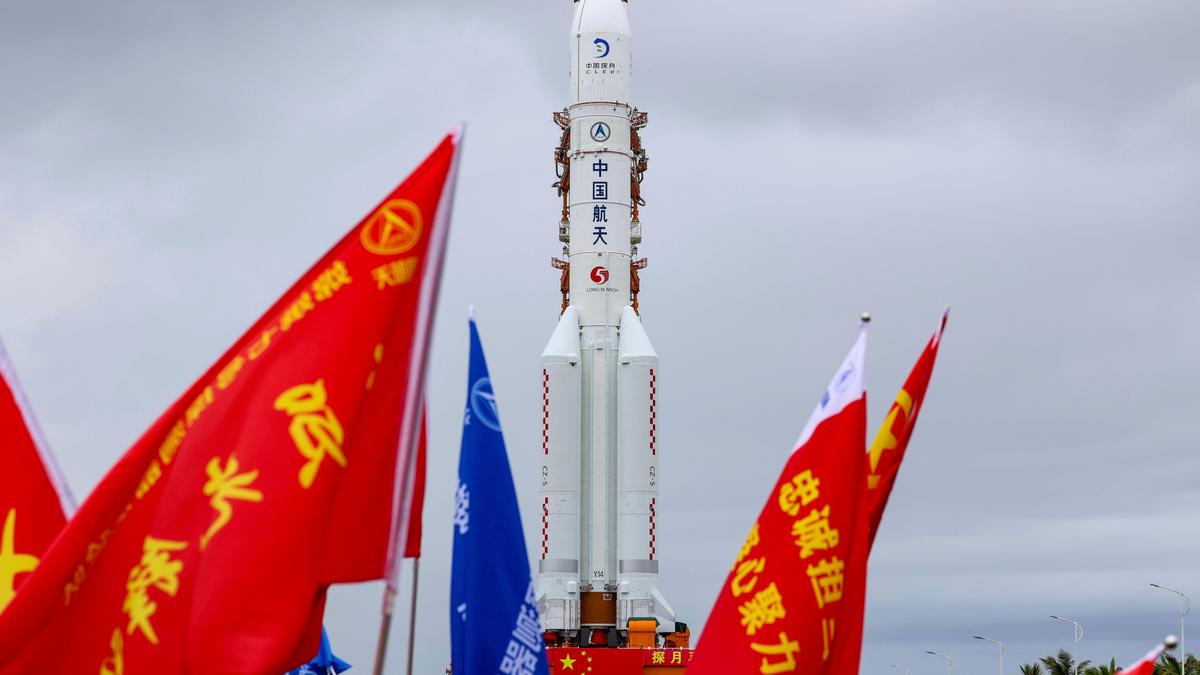
  • China abruptly postpones ambitious Chang’e-7 lunar mission launch
    China abruptly postpones ambitious Chang’e-7 lunar mission launch World
  • Senior Iran Military Unit General killed In Israeli Strike In Lebanon: Report
    Senior Iran Military Unit General killed In Israeli Strike In Lebanon: Report World
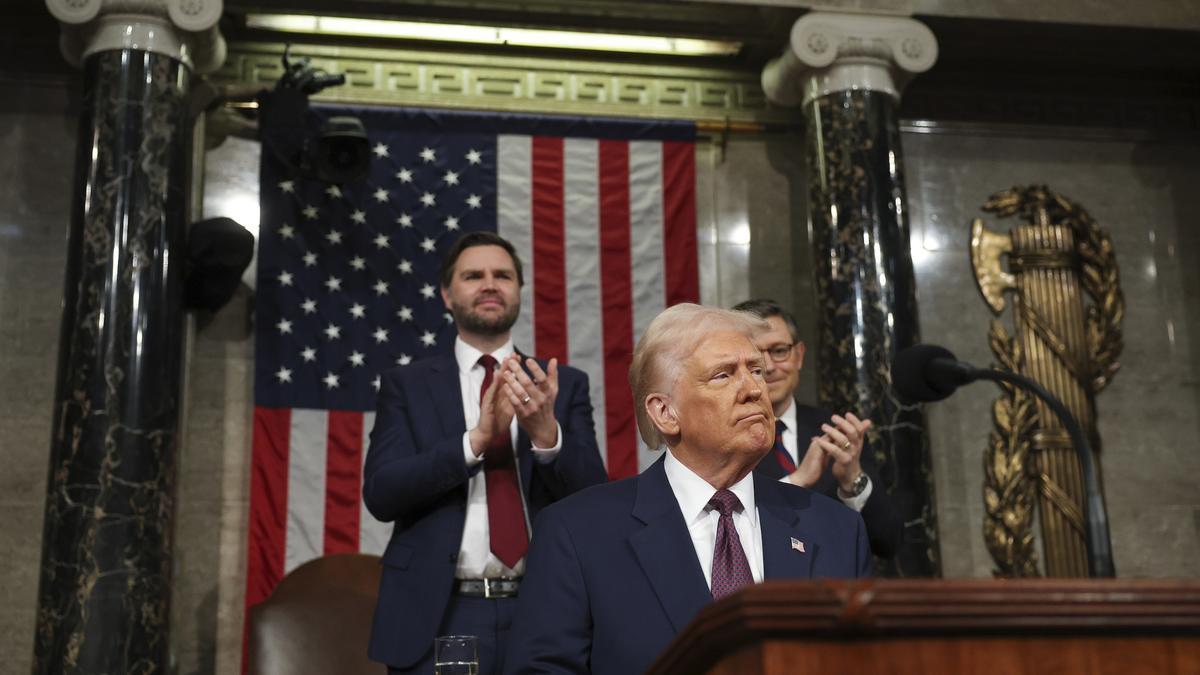
  • Trump invited to give State of the Union address on Feb. 24
    Trump invited to give State of the Union address on Feb. 24 World
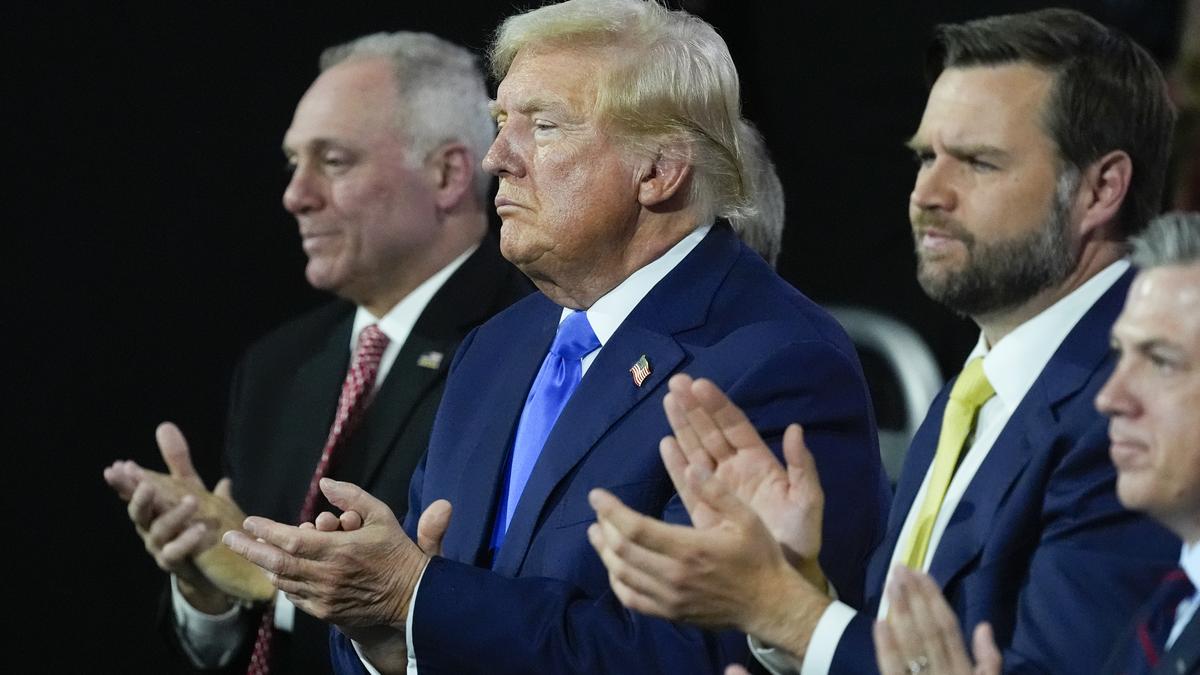
  • Republicans lean into Trump’s border message during a convention night focused on immigration
    Republicans lean into Trump’s border message during a convention night focused on immigration World
  • Iran launches new attacks at Gulf Arab countries as it keeps up pressure on region
    Iran launches new attacks at Gulf Arab countries as it keeps up pressure on region World

More Related Articles

Ukraine captures two North Korean soldiers in Kursk, Zelenskyy says Ukraine captures two North Korean soldiers in Kursk, Zelenskyy says World
Vietnam, China hold talks on calming South China Sea tensions Vietnam, China hold talks on calming South China Sea tensions World
Demand For Oil, Gas And Coal Will Peak This Decade, Warns Energy Agency Demand For Oil, Gas And Coal Will Peak This Decade, Warns Energy Agency World
Access Denied World
Trump indicates ‘wonderful trade deals’ for India and U.S. as he hosts PM Modi in Washington Trump indicates ‘wonderful trade deals’ for India and U.S. as he hosts PM Modi in Washington World
G20 Summit LIVE updates: PM Modi discusses investments in India’s digital ecosystem with South Africa-based Naspers; talks set to open today G20 Summit LIVE updates: PM Modi discusses investments in India’s digital ecosystem with South Africa-based Naspers; talks set to open today World
SiteLock

Archives

  • October 2026
  • September 2026
  • August 2026
  • July 2026
  • June 2026
  • May 2026
  • April 2026
  • March 2026
  • February 2026
  • January 2026
  • December 2025
  • November 2025
  • October 2025
  • September 2025
  • August 2025
  • July 2025
  • June 2025
  • May 2025
  • April 2025
  • March 2025
  • February 2025
  • January 2025
  • December 2024
  • November 2024
  • October 2024
  • September 2024
  • August 2024
  • July 2024
  • June 2024
  • May 2024
  • April 2024
  • March 2024
  • February 2024
  • January 2024
  • December 2023
  • November 2023
  • October 2023
  • September 2023
  • August 2023
  • July 2023
  • June 2023
  • May 2023
  • April 2023
  • March 2023
  • February 2023
  • January 2023
  • December 2022
  • November 2022
  • October 2022
  • September 2022
  • August 2022
  • July 2022
  • June 2022
  • May 2022

Categories

  • Business
  • Nation
  • Science
  • Sports
  • World

Recent Posts

  • Women stage silent demonstration at Kathipara against police action on anti-CEC protesters in Delhi
  • DGCA bans specific power banks on flights
  • Saudi Supreme Court sets aside Sri Lankan migrant worker’s death penalty
  • Nedumbassery accident: CPI(M) stages protest march to police station over ‘indifference’ in handling of case
  • Why CJI Surya Kant said ‘no’ to Rahul Gandhi’s request to meet | Explained

Recent Comments

  1. RobertTes on UP Teacher Who Asked Students To Slap Muslim Classmate
  2. Manuelret on UP Teacher Who Asked Students To Slap Muslim Classmate
  3. RobertTes on UP Teacher Who Asked Students To Slap Muslim Classmate
  4. RobertTes on UP Teacher Who Asked Students To Slap Muslim Classmate
  5. BrentWes on UP Teacher Who Asked Students To Slap Muslim Classmate
  • Botswana’s BDP party loses power in election, national newspaper reports
    Botswana’s BDP party loses power in election, national newspaper reports World
  • Pakistan vs Bangladesh 2nd Test Day 2 Live Updates: Pakistan Dealt Early Blow, Taskin Removes Shafique
    Pakistan vs Bangladesh 2nd Test Day 2 Live Updates: Pakistan Dealt Early Blow, Taskin Removes Shafique Sports
  • “Unfair For Me To…”: Washington Sundar’s Honest Comment After Picking 7/59 For India vs New Zealand
    “Unfair For Me To…”: Washington Sundar’s Honest Comment After Picking 7/59 For India vs New Zealand Sports
  • Access Denied Sports
  • Access Denied
    Access Denied Nation
  • Former India Cricketer Anshuman Gaekwad Dies After Long Battle With Cancer
    Former India Cricketer Anshuman Gaekwad Dies After Long Battle With Cancer Sports
  • Sri Lanka’s newly-elected Parliament to take up two key policy debates next week
    Sri Lanka’s newly-elected Parliament to take up two key policy debates next week World
  • Access Denied World

Editor-in-Chief:
Mohammad Ariff,
MSW, MAJMC, BSW, DTL, CTS, CNM, CCR, CAL, RSL, ASOC.
editor@artifex.news

Associate Editors:
1. Zenellis R. Tuba,
zenelis@artifex.news
2. Haris Daniyel
daniyel@artifex.news

Photograher:
Rohan Das
rohan@artifex.news

Associate Journalists
1. Subrata Paul - AN/2020/01
2. Quamruz Zaman - AN/2021/22
3. Ahmed Sha - AN/2021/035
4. Ajay Kumar Shaw - AN/2021/39
5. Tahqiqul Hoda - AN/2021/21

Artifex.News offers Online Paid Internships to college students from India and Abroad. Interns will get a PRESS CARD and other online offers.
Send your CV (Subjectline: Paid Internship) to internship@artifex.news

Links:
Associate Journalism
About Us
Privacy Policy

News Links:
Breaking News
World
Nation
Sports
Business
Entertainment
Lifestyle

Registered Office:
72/A, Elliot Road, Kolkata - 700016
Tel: 033-22277777, 033-22172217
Email: office@artifex.news

Editorial Office / News Desk:
No. 13, Mezzanine Floor, Esplanade Metro Rail Station,
12 J. L. Nehru Road, Kolkata - 700069.
(Entry from Gate No. 5)
Tel: 033-46011099, 033-46046046
Email: editor@artifex.news

Copyright © 2023 Artifex.News Newsportal designed by Artifex Infotech.