



Skip to content
  • Facebook
  • X
  • Linkedin
  • WhatsApp
  • YouTube
  • Associate Journalism
  • About Us
  • Privacy Policy
  • 033-46046046
  • editor@artifex.news
Artifex.News

Artifex.News

Stay Connected. Stay Informed.

  • Breaking News
  • World
  • Nation
  • Sports
  • Business
  • Science
  • Entertainment
  • Lifestyle
  • Toggle search form
  • Spanish residents appeal for help, 3 days after historic floods left at least 158 dead
    Spanish residents appeal for help, 3 days after historic floods left at least 158 dead World
  • Delhi Lt Governor Convenes Emergency Meeting Of Agencies Amid Heavy Rain
    Delhi Lt Governor Convenes Emergency Meeting Of Agencies Amid Heavy Rain Nation
  • Over 200 Former Republican Presidential Staffers Endorse Kamala Harris Over Donald Trump
    Over 200 Former Republican Presidential Staffers Endorse Kamala Harris Over Donald Trump World
  • Access Denied Sports
  • Israel hits back at UN report warning of Gaza famine
    Israel hits back at UN report warning of Gaza famine World
  • Arvind Kejriwal’s Wife Sunita To Lead AAP’s Poll Campaign In Delhi, Other States: Atishi
    Arvind Kejriwal’s Wife Sunita To Lead AAP’s Poll Campaign In Delhi, Other States: Atishi Nation
  • Private Hot Tubs On Cruises Pose Risk Of Legionnaires Disease, CDC Reports
    Private Hot Tubs On Cruises Pose Risk Of Legionnaires Disease, CDC Reports World
  • 3 Indian Cricketers Who Can Lose ‘Uncapped’ Status Ahead Of IPL 2025 Deadline
    3 Indian Cricketers Who Can Lose ‘Uncapped’ Status Ahead Of IPL 2025 Deadline Sports
How red moved through empires, trade networks, and industrial factories

How red moved through empires, trade networks, and industrial factories

Posted on June 1, 2026 By admin


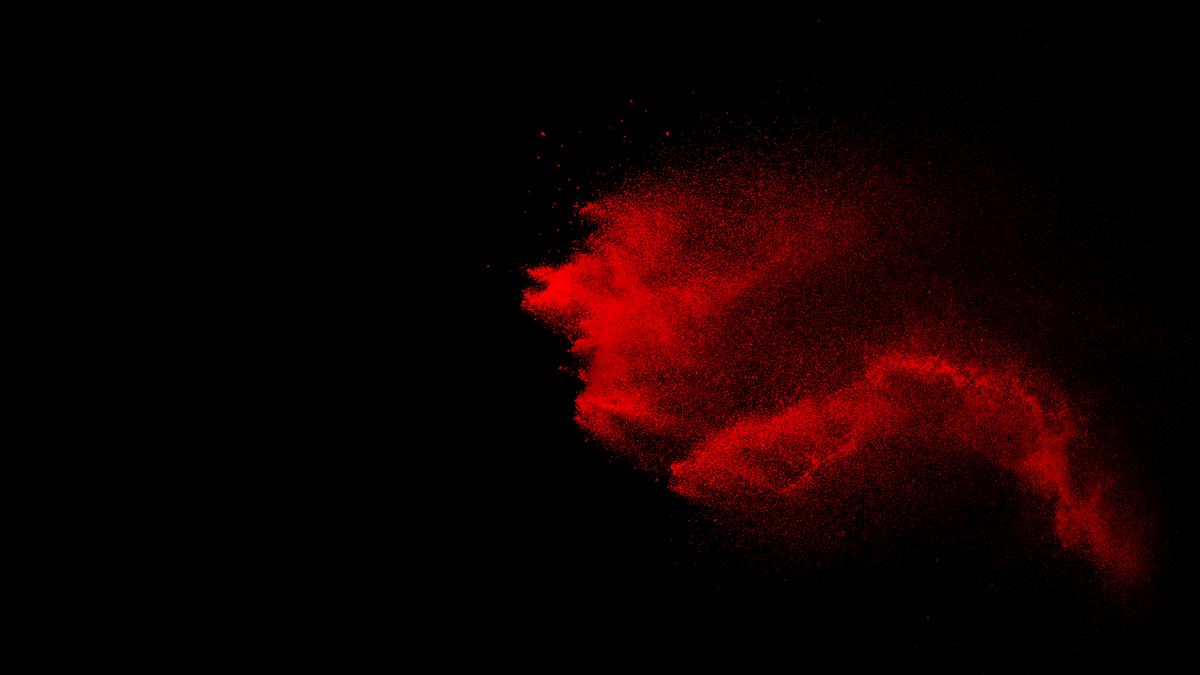
Red moved from earth, to organism, to laboratory — from ritual substance to industrial commodity
| Photo Credit: Getty Images

In 1799, during the storming of the fortress of Seringapatam, British troops broke through the defences of Srirangapatna and killed Tipu Sultan, the ruler of Mysore. The palace inventories compiled in the aftermath record jewels, weapons, manuscripts and textiles of startling colour. Officers wrote with particular fascination about the intensity of the dyed fabrics stored in the royal workshops.

At the same moment, the soldiers themselves wore uniforms dyed in equally vivid scarlet. The British redcoat marching through the palace and the Mysorean textile he admired were both products of a vast global system of dyes — insects raised in the Americas, plants cultivated in Asia, shellfish harvested along Mediterranean coasts.

Global red trade

In the Mediterranean world, the most famous red-purple dye was extracted from marine snails harvested along Levantine shores. Classical writers such as Pliny the Elder describe vats of crushed shells fermenting under the sun, releasing a colour so rare that Roman law eventually reserved it for imperial robes. The value of the dye lay not merely in its hue but in the difficulty of its production: thousands of mollusks sacrificed to colour a single garment. In the Americas, Indigenous farmers raised the cochineal insect on cactus paddles, harvesting the tiny bodies and drying them into a powder that produced a red of extraordinary intensity. A pound of red from these insects could produce enough red colour to run an entire factory. When Spanish ships began exporting cochineal to Europe in the sixteenth century, the dye rapidly became one of the most valuable commodities of the Atlantic world, rivaling silver in price and strategic importance.

Elsewhere, especially across Eurasia, dyers cultivated the roots of the madder plant, whose alizarin compounds could produce deep crimson lakes. These biological reds travelled astonishing distances. A single crimson cloak worn in London or Istanbul might contain colour drawn from insects cultivated in Oaxaca, plants grown in Central Asia, or mollusks harvested from Mediterranean shores. Colour, therefore, linked distant ecologies into networks of exchange long before industrial globalisation. Each red carried with it a geography.

Military power depended on these networks. By the eighteenth century, the scarlet coats of European regiments required reliable supplies of imported dyes. On battlefields clouded with gunpowder smoke, vivid uniforms helped commanders identify their troops and maintain order. The siege of Seringapatam unfolded within this global colour economy. Mysore’s textile workshops produced fabrics dyed through Indian Ocean trade networks that connected Persian, Southeast Asian and South Asian markets. British officers entering the palace encountered not simply decorative cloth but the material traces of a rival commercial system. Empires fought not only for territory but also for control of the commodities that coloured the world.

Imperial cloth

Yet even as imperial armies marched in crimson, the foundations of the dye trade were beginning to shift. For centuries, every brilliant red had depended on living organisms, whether it was roots pulled from soil, or insects harvested from cacti, or shellfish gathered along rocky coasts. In 1856, the English chemist William Henry Perkin inadvertently altered this relationship. While attempting to synthesise quinine in an experiment, he produced a purple residue that dyed silk with remarkable intensity. The compound, later marketed as mauveine, inaugurated the modern synthetic dye industry. Within a few decades, chemists learned to reproduce the molecular structures responsible for many natural colours. In 1869, industrial chemists succeeded in synthesising alizarin, which is the key red component of madder, making centuries of agricultural cultivation suddenly unnecessary.

The implications were profound. Madder fields across Europe collapsed almost overnight. Cochineal plantations faced competition from cheaper laboratory pigments. What had once required soil, insects, seasons and skilled cultivation could now be produced in factories wherever coal, glassware and chemical knowledge were available.

Red was becoming abstract. Red moved from earth, to organism, to laboratory — from ritual substance to industrial commodity. And as pigments entered the circuits of factories, markets and empires, the meanings attached to red also began to shift: from sacrifice and sovereignty to revolution, warning, and mass politics.

Synthetic shift

The colour remained the same to the eye, but the world that produced it, and the world that would perceive red as a phenomenon, had both fundamentally changed.

(Satwik Gade is a Chennai-based writer and illustrator. This article is part of a series on the history and development of colours)

Published – June 02, 2026 08:30 am IST


Source link

Science

Post navigation

Previous Post: New district and sessions court begins operation in Puttur
Next Post: Meghalaya and Nagaland CMs call for release of 20 hostages

Related Posts

  • Why mpox vaccines are only just arriving in Africa after two years
    Why mpox vaccines are only just arriving in Africa after two years Science
  • Why do fish in schools have an easier time swimming in rough waters?
    Why do fish in schools have an easier time swimming in rough waters? Science
  • Genome study reveals prehistoric Ethiopian origins of coffee
    Genome study reveals prehistoric Ethiopian origins of coffee Science
  • China’s Shenzhou-20 return mission delayed due to space debris impact
    China’s Shenzhou-20 return mission delayed due to space debris impact Science
  • Brains that don’t see in greyscale first over-rely on colours: Project Prakash study
    Brains that don’t see in greyscale first over-rely on colours: Project Prakash study Science
  • Katalin Kariko, scientific maverick who paved way for mRNA vaccines
    Katalin Kariko, scientific maverick who paved way for mRNA vaccines Science

More Related Articles

From refugee to Nobel: Yaghi hails science’s ‘equalising force’ From refugee to Nobel: Yaghi hails science’s ‘equalising force’ Science
ISRO set for a historic 100th launch from Sriharikota ISRO set for a historic 100th launch from Sriharikota Science
Half Tibetan, half North Indian: a lost Himalayan people emerges from a Ladakh cave Half Tibetan, half North Indian: a lost Himalayan people emerges from a Ladakh cave Science
Union Budget 2026: push for technology, planetary science in space programme Union Budget 2026: push for technology, planetary science in space programme Science
Did an ancient Vaigai flood contribute to Keezhadi’s abandonment? Did an ancient Vaigai flood contribute to Keezhadi’s abandonment? Science
Does prenatal Zika infection have long-term immune consequences in children? Does prenatal Zika infection have long-term immune consequences in children? Science
SiteLock

Archives

  • September 2026
  • August 2026
  • July 2026
  • June 2026
  • May 2026
  • April 2026
  • March 2026
  • February 2026
  • January 2026
  • December 2025
  • November 2025
  • October 2025
  • September 2025
  • August 2025
  • July 2025
  • June 2025
  • May 2025
  • April 2025
  • March 2025
  • February 2025
  • January 2025
  • December 2024
  • November 2024
  • October 2024
  • September 2024
  • August 2024
  • July 2024
  • June 2024
  • May 2024
  • April 2024
  • March 2024
  • February 2024
  • January 2024
  • December 2023
  • November 2023
  • October 2023
  • September 2023
  • August 2023
  • July 2023
  • June 2023
  • May 2023
  • April 2023
  • March 2023
  • February 2023
  • January 2023
  • December 2022
  • November 2022
  • October 2022
  • September 2022
  • August 2022
  • July 2022
  • June 2022
  • May 2022

Categories

  • Business
  • Nation
  • Science
  • Sports
  • World

Recent Posts

  • Free mega medical camp promotes Health and Legal awareness in Gajuwaka
  • After October 1, only smaller 5 or 10 kg LPG refills await non-eKYC households
  • Six companies line up IPOs worth ₹3,825 crore amid brisk primary market activity
  • Pakistan forces kill five terrorists, rescue 23 abductees in Balochistan
  • Asian Games 2026: Smriti Mandhana surpasses Suzie Bates to become women’s T20I cricket’s leading run-scorer

Recent Comments

  1. Glennalbub on UP Teacher Who Asked Students To Slap Muslim Classmate
  2. PhilipLog on UP Teacher Who Asked Students To Slap Muslim Classmate
  3. DennisDum on UP Teacher Who Asked Students To Slap Muslim Classmate
  4. DonaldFrosy on UP Teacher Who Asked Students To Slap Muslim Classmate
  5. DonaldFrosy on UP Teacher Who Asked Students To Slap Muslim Classmate
  • Gopalapuram junction lacks ‘overseers’ at crucial hour
    Gopalapuram junction lacks ‘overseers’ at crucial hour Nation
  • Access Denied Sports
  • Centre imposes 40% duty on onion exports, to offload stocks
    Centre imposes 40% duty on onion exports, to offload stocks Business
  • NASA loses contact with MAVEN, which reached Mars with Mangalyaan
    NASA loses contact with MAVEN, which reached Mars with Mangalyaan Science
  • Access Denied
    Access Denied Nation
  • Out Or Six? Chris Woakes Controversially Denied ‘World Class’ Catch Of Pakistan’s Salman Agha: Watch
    Out Or Six? Chris Woakes Controversially Denied ‘World Class’ Catch Of Pakistan’s Salman Agha: Watch Sports
  • Access Denied Business
  • Access Denied World

Editor-in-Chief:
Mohammad Ariff,
MSW, MAJMC, BSW, DTL, CTS, CNM, CCR, CAL, RSL, ASOC.
editor@artifex.news

Associate Editors:
1. Zenellis R. Tuba,
zenelis@artifex.news
2. Haris Daniyel
daniyel@artifex.news

Photograher:
Rohan Das
rohan@artifex.news

Artifex.News offers Online Paid Internships to college students from India and Abroad. Interns will get a PRESS CARD and other online offers.
Send your CV (Subjectline: Paid Internship) to internship@artifex.news

Links:
Associate Journalism
About Us
Privacy Policy

News Links:
Breaking News
World
Nation
Sports
Business
Entertainment
Lifestyle

Registered Office:
72/A, Elliot Road, Kolkata - 700016
Tel: 033-22277777, 033-22172217
Email: office@artifex.news

Editorial Office / News Desk:
No. 13, Mezzanine Floor, Esplanade Metro Rail Station,
12 J. L. Nehru Road, Kolkata - 700069.
(Entry from Gate No. 5)
Tel: 033-46011099, 033-46046046
Email: editor@artifex.news

Copyright © 2023 Artifex.News Newsportal designed by Artifex Infotech.