



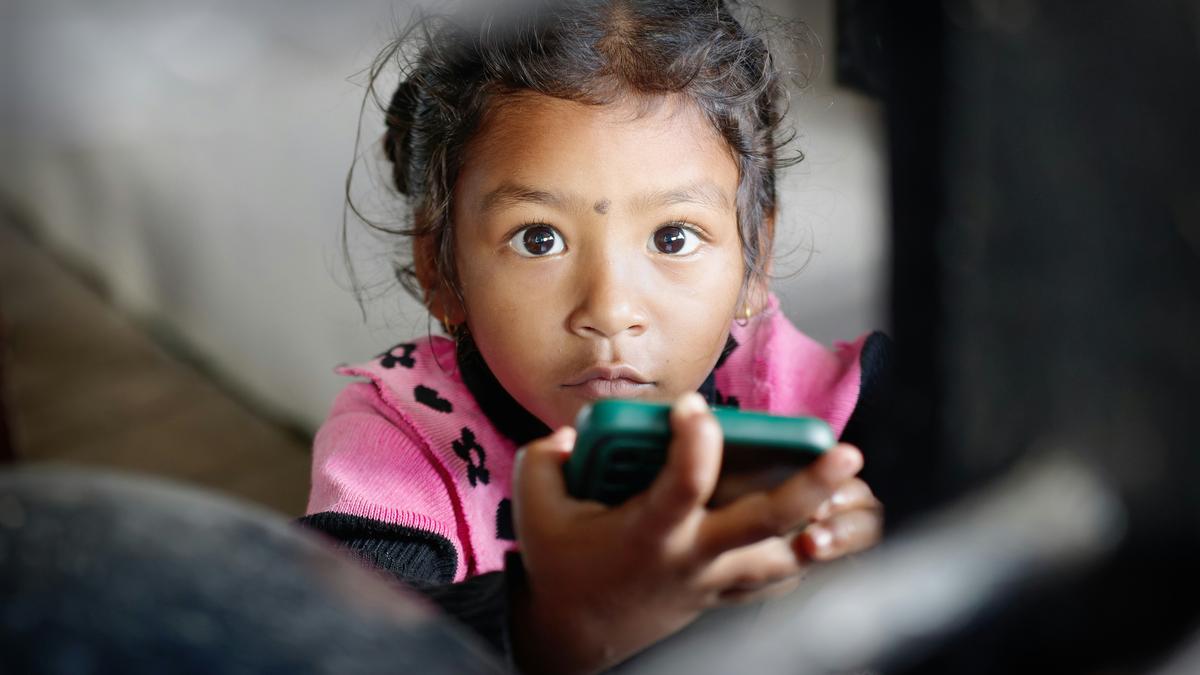
Be it our phones, tablets or our laptops — everyday, we interact with various digital devices designed to make our lives easier. Especially since the pandemic, even children have been exposed to this electric world at a very young age. Earlier, parents would desperately brandish toys to distract crying children, now they tamp down tantrums using YouTube videos.
“Vision is very, very powerful for the human experience,” said Melissa Greenberg, a clinical psychologist at Princeton Psychotherapy Centre in New Jersey. “So kids get really drawn in to the visual stimulation. And then, throughout childhood, they just miss opportunities to interact with the world through their other senses.”
Paediatricians and psychologists are increasingly concerned about how children may miss out on real-world interactions with people and objects if they’re exposed to screens from an early age. This could affect their ability to develop healthy relationships with people around them as they grow older. And not just very young children: even older kids’ or adolescents’ lives can bear the brunt of increased screen and social media usage in the form of poorer emotional regulation, detachment from reality, loss of focus, and a host of other mental health problems.
Dr. Greenberg also draws her insights from her personal life, with two children aged 6 and 8. Having raised them through the pandemic, she understands the perils of isolation and the importance of interacting with others. Many parents, including herself, were in a difficult situation because of the constant social distancing, so they may have handed tablets to children without thinking too deeply about it, she said.
“We’re not in the pandemic anymore, but I think parents find themselves in these positions where they’re exhausted or they are also dependent on screens,” she explained. “And they need their kid to be entertained for a few minutes, and they just hand them something.”
But unknowingly, they may end up opening their kids’ eyes to a whole other online world — without a clear picture of everything they might get access to and how it will shape them.
Grow up to feel uncomfortable
To build some safeguards after the pandemic, the American Academy of Paediatrics recommended that children below the age of 2 should have very limited screen time, unless it’s for video calls. This is primarily because those early years are when children are still developing their senses. Overwhelming them with visual stimuli — even if unintentionally — can skew their sense of the world and affect their interactions with others. Hunching over phones can also affect kids’ posture.
“If you’re looking at a screen, you’re not doing all of the other things that babies should be doing, [like] crawling, touching, exploring the world around them,” Dr. Greenberg said. “So I don’t know that the screen itself is the problem; it’s the opportunity cost of babies exploring their environments — that is how they learn about the world around them.”
Some kids experience the consequences of being absorbed in a digital screen later as well, as they get a bit older, enter adolescence or become teenagers. With more time online, some children grow up to feel uncomfortable with in-person interactions as well. One recent study in the Journal of the American Medical Association on U.S. youth reported that teenagers spend an average of about 8.5 hours a day on screen-based entertainment.

“You go into a cafeteria in a school… 15 years ago it would have been chaotic and loud and everyone’s playing and moving around. Now you walk in and everyone’s like this,” she said, mimicking being hunched over a phone. “They’re all quiet.”
Just like with toddlers, this could also lead to missed opportunities of meaningful social interactions with peers at a young age. Being unable to develop proper social skills could strain relationships with friends and family, with lifelong repercussions for mental health.
Drastic consequences
At times, the mental health issues can take a darker turn. Some kids have unfettered access to phones even before they’re eight years old, which, according to recent research, could lead to issues such as hallucinations, feelings of aggression towards other people, diminished self-worth, and even suicidal thoughts as they grow older. The data, based on self-reported assessments from several thousands of people worldwide, suggest that for each year younger than 13 that children get their phones, the more their mental health issues increase as they enter adulthood.
An extreme case of phone addiction transpired recently in Ghaziabad in Uttar Pradesh. Three minor sisters aged 12 to 16 years had dropped out of school in 2020 and were addicted to social media, cartoons, and TV shows on their parents’ phones. When their parents restricted their phone use and threatened to get them married, the sisters killed themselves by jumping off their balcony in the wee hours of February 4. In the note they left behind, the girls described how banning them from the online shows made them feel lonely. This isn’t an isolated incident: multiple instances of teens killing themselves when told to stay away from phones suggests an alarming rise in digital addiction.
One reason for such drastic consequences could be that kids are being brought up by technology instead of human beings, Tara Thiagarajan, who led the research correlating age of phone access to mental health issues and is the founder of Sapien Labs, a non-profit organisation studying how the human mind is changing over time across the world, said.
Take the case of a child at a table with their family in a restaurant. This situation has opportunities for simple social interactions. In a previous era, the child might’ve been reaching for things, trying things, and saying things to the others. Some people might reprimand; others might coo at the actions.
Such interactions teach children how to read other people’s body language from a young age and how to conduct themselves in a group setting, including getting themselves heard, holding conversations, and managing conflicts. Dr. Thiagarajan said growing up in a world dominated by online interactions prevents children from learning these social skills and interferes with their ability to develop a good intuition of other people’s personalities.

Although engaging in video calls with other people is better than watching videos, one can end up missing larger environmental cues, per Dr. Greenberg. Some subtle cues can slide through unnoticed on a video call, like noticing someone’s nervousness by how they’re tapping their feet.
Aspects like the tone of voice, facial expressions, body language, and other non-verbal cues may either be warped or absent altogether in digital exchanges, which can affect children’s abilities to form lasting inter-personal relationships. “You’re becoming adept at technology, but you can no longer manage in a human world,” said Dr. Thiagarajan, of children growing up in a society undergoing rapid “technologisation”.
“When most of what goes on in your mind is from the screen, you’ve lost, to a large degree, your awareness of the physical environment around you. That’s what creates these feelings of detachment from reality, and also the hallucinations.”
‘It’s not just about your kids’
In another meta-analysis of 117 previously published studies, Michael Noetel at the University of Queensland and his colleagues reported similar findings: that increased screen time leads to more socioemotional problems in children. Tracking nearly 3 lakh kids over time, they found “screens and emotional problems feed into each other like a vicious cycle,” according to Dr. Noetel. “Kids who spend more time on screens are more likely to develop anxiety, depression, aggression, and attention problems. But it works the other way too: kids who are already struggling emotionally turn to screens to cope.”
Because anxious kids tend to use their phone more, Dr. Greenberg said that it is tricky to tease apart correlation from causation vis-à-vis screen use. But she noted that increased cell phone usage and social media exposure could exacerbate existing conditions. “Anecdotally speaking, everyone I work with feels better when they spend less time on their devices,” she said.
To prevent children from getting addicted, parents should ensure that their kids use phones for a limited time, based on what is recommended for their age group, according to Dr. Noetel.
“Children who stayed within guidelines showed almost no increased risk. Guidelines recommend under an hour for preschoolers, under two hours for older kids,” he said. “Problems appeared when children regularly exceeded these limits.”

Even if parents limit screen use, Dr. Greenberg said that the question of whether kids should have access to phones at night, or when they are alone in their rooms, should also be addressed. “When a child is doing something privately on a device unsupervised, no matter how many parental controls you might set, they may access things that are really inappropriate,” she said. “Because of the way that the algorithms work, you really never know what might pop up next on your kids’ feed.”
Dr. Thiagarajan explained how the internet should have more water-tight gateways that prevent children from accessing dangerous content, which could include porn sites or violent videos.
Dr. Greenberg also emphasized how each kid is different: some may be able to give up their screen time readily but some may be more drawn to the digital world, and thus could find it more difficult to limit their online activities. Her own kids are like that, she admitted, and they are most likely in the majority. “If you have a kid who has a harder time putting it away, that doesn’t mean you should just let them continue to have it,” she said. “It means you really need to work with them to figure out how to manage the impulses so that they develop good habits around putting it away.”
Dr. Greenberg also pointed out that parents should be careful about their own screen use around their kids: “They should be aware that their kids are always watching and learning from them and observing their habits, and that that’s a really important factor in how you’re managing screens with your kids,” she said. “It’s not just about your kids; it’s also about you.”
Rohini Subrahmanyam is a freelance journalist in Bengaluru.