



Skip to content
  • Facebook
  • X
  • Linkedin
  • WhatsApp
  • YouTube
  • Associate Journalism
  • About Us
  • Privacy Policy
  • 033-46046046
  • editor@artifex.news
Artifex.News

Artifex.News

Stay Connected. Stay Informed.

  • Breaking News
  • World
  • Nation
  • Sports
  • Business
  • Science
  • Entertainment
  • Lifestyle
  • Toggle search form
  • Access Denied Sports
  • Pakistan To Appoint 3 Separate Captains? Reports Says “Things Not So Simple…”
    Pakistan To Appoint 3 Separate Captains? Reports Says “Things Not So Simple…” Sports
  • Access Denied Sports
  • Post Amit Mishra’s “Fame And Power” Dig At Virat Kohli, Punjab Kings Star’s Big Revelation
    Post Amit Mishra’s “Fame And Power” Dig At Virat Kohli, Punjab Kings Star’s Big Revelation Sports
  • Coal Ministry launch 15th round of commercial mine auctions
    Coal Ministry launch 15th round of commercial mine auctions Business
  • 12 Killed In Rain-related Incidents In Uttar Pradesh In Last 24 Hours
    12 Killed In Rain-related Incidents In Uttar Pradesh In Last 24 Hours Nation
  • “Try To Avoid…”: Rahul Dravid Reveals Reason For Not Showing His T20 World Cup Celebration To Sons
    “Try To Avoid…”: Rahul Dravid Reveals Reason For Not Showing His T20 World Cup Celebration To Sons Sports
  • Taiwan’s legislature passes changes seen as favouring China, reducing President’s power
    Taiwan’s legislature passes changes seen as favouring China, reducing President’s power World
World Soil Day: Grassland soils, not trees, anchor India’s climate resilience

World Soil Day: Grassland soils, not trees, anchor India’s climate resilience

Posted on December 5, 2025 By admin


“Wastelands”. That’s how India’s biodiverse semi-arid grasslands and savannas have been undervalued ever since the British colonial era. For the masters, the woody forests of the subcontinent fuelled industrialisation, while the grassy biomes served no purpose in their timber-driven colonisation.

Much of post-independence policy and jurisprudence drew heavily from the erstwhile rulers and “wastelands” made their way into land records and government policy. In 1985, a National Wastelands Development Board was created to bring a more scientific basis “to identify, classify and develop the wastelands” towards more productive uses. Ravines, scrub lands, degraded scrub forests, degraded pastures, grazing lands, barren rocky areas, glaciers and snow-covered mountains, along with mining or industrial wasteland and degraded plantation land, were all classified as wastelands.

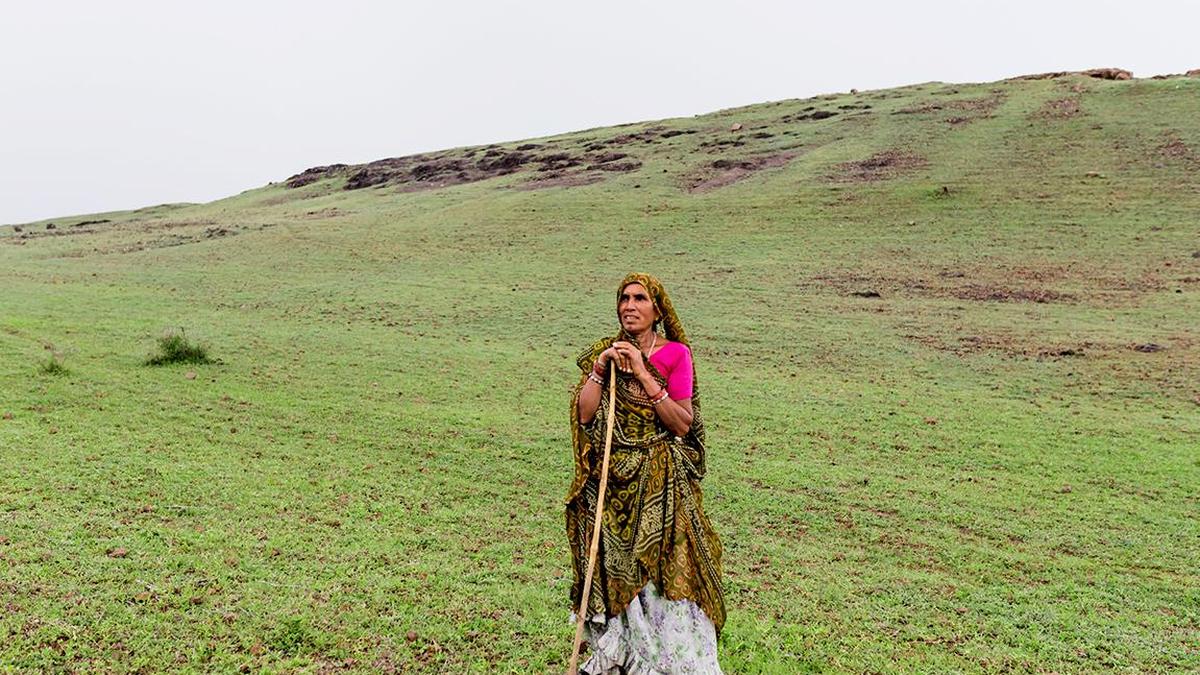
For decades, studies have shown that far from being a wasteland, these savanna grasslands are flourishing ecosystems that not only harbour unique biodiversity but also provide livelihoods to millions of pastoral communities. Take Maharashtra, for instance. The State’s livestock economy was valued at over ₹59,000 crore in 2018-2019, and that’s just one year.

What lies beneath

Grasslands play a crucial role in building and maintaining healthy soils, primarily through their deep, fibrous root systems that stabilise the ground, enhance soil structure, and promote long-term carbon storage. Unlike forests, where most biomass is above ground, grassland productivity is concentrated below ground, creating dense root mats that improve water infiltration, reduce erosion, and buffer soils against drought. These roots continually deposit organic matter, enriching soils with stable carbon compounds that can persist for centuries. Grassland soils also support diverse microbial and fungal communities that drive nutrient cycling and maintain soil fertility. When grasslands are degraded, converted, or afforested, these below-ground processes are disrupted, leading to compaction, erosion, loss of soil organic carbon, and reduced ecosystem resilience.

As the climate crisis worsened, the importance of carbon sequestration in ecosystems moved to the forefront of global discussions. Research began pouring in from around the world, showing that grasslands hold enormous potential for carbon sequestration. Thus, in addition to their role as an abode of diverse wildlife and their socio-economic importance, we now know that grasslands store a huge amount of below-ground carbon, which remains undisturbed even by fire.

A pioneering initiative in Solapur’s semi-arid grasslands signalled a shift in the Maharashtra State forest department’s perception of these ecosystems. The Compensatory Afforestation Fund Management and Planning Authority (CAMPA) that manages funds collected for the conversion of forest land to non-forest for developmental works, decided to use a part of this for restoring degraded grasslands.

CAMPA authority of the Maharashtra forest department restored degraded patches of grassland in the Malshiras forest range of Solapur district over several years. Native grasses such as Dicanthium annulatum, Chrysopogon fulvus and Cenchrus setigerus were raised in a nursery and then later planted in situ after the first monsoon showers.

Subsequently, a study was conducted by researchers from Ashoka Trust for Research in Ecology and Environment, Bengaluru and The Grasslands Trust, in partnership with the forest department to understand the impacts of these restoration activities on soil, including carbon sequestration. This study compared restored plots of different ages (one, two and three years) to an unrestored site, and to an undisturbed old-growth grassland. The study revealed that the restored grasslands showed a significant increase in the soil organic carbon (SOC) at the treatment sites compared to the control sites.

After two years, the restored sites showed an increase of 21% SOC compared to the untreated site, and a massive 50% greater than the untreated by the third year. These findings highlight how grassland restoration from the CAMPA funds paves the way for India to meet its climate goals.

Another recently published study by researchers at ATREE has documented the remarkable carbon sequestration potential of the Banni Grassland in the Kutch district of Gujarat. Once celebrated as the largest tropical grassland in Asia, Banni suffered decades of policy missteps that promoted large-scale planting of the invasive mesquite (Neltuma juliflora). This rapidly transformed vast open savannas into dense, impenetrable thickets, degrading both ecology and pastoral livelihoods.

The study reveals a striking pattern: restored grassland patches, locally known as wada, store the highest levels of soil organic carbon (SOC), followed by wetlands and dense woodlands. The lowest SOC values were found in mixed woodland stands and saline grasslands. What makes Banni especially noteworthy is that these restored patches were revived by the community itself — first by removing Prosopis and allowing native perennial grasses to regenerate

Carbon-rich and arid

The Maldhari pastoralists manage these areas through rotational grazing, controlled harvest of standing biomass, and careful monitoring of grass recovery. Across its four major land-use types, Banni stores 27 metric tonnes of carbon up to 30 cm soil depth, with an average SOC density of around 120 tonnes of carbon per hectare. This places Banni among the most carbon-rich arid ecosystems globally, demonstrating that healthy grasslands, not invasive trees, underpin true climate resilience in drylands.

Banni also shows the way forward: restoring native grasses, removing invasive woody cover, and placing pastoralist communities at the centre of governance. Participatory, community-led grassland management is not just a restoration method—it is the restoration outcome.

The Intergovernmental Panel on Climate Change (IPCC) reminds us that soils hold twice as much carbon as the atmosphere and all living biomass combined. In an era of rising temperatures and more frequent forest fires, the relative stability of SOC in grasslands—protected beneath the soil surface—is an advantage we urgently need to recognise.

On World Soil Day 2025, Banni and Malshiras teaches us a profound lesson: our strongest climate solutions lie beneath our feet. The deep roots of native grasses have been storing carbon for millennia, long before the word “sequestration” entered our vocabulary. India’s climate-resilient future will not be achieved merely by planting trees; in many places, especially in our drylands, it will come from restoring ecosystems where the soil still remembers how to breathe.

Tushar Pathade is a policy analyst and Abi T. Vanak is director, Centre for Policy Design at the Ashoka Trust for Research in Ecology and the Environment, Bengaluru.

Published – December 05, 2025 06:00 am IST



Source link

Science

Post navigation

Previous Post: Access Denied
Next Post: Access Denied

Related Posts

  • Bakelite, the first synthetic plastic
    Bakelite, the first synthetic plastic Science
  • COP29: What are the key issues at the UN climate summit in Baku?
    COP29: What are the key issues at the UN climate summit in Baku? Science
  • Academics warn new science papers are being generated with AI chatbots
    Academics warn new science papers are being generated with AI chatbots Science
  • Sci five | The Hindu Science Quiz: on bones
    Sci five | The Hindu Science Quiz: on bones Science
  • Remembering Dhirendra Sharma, quintessential dissenter and academic-activist
    Remembering Dhirendra Sharma, quintessential dissenter and academic-activist Science
  • NASA astronauts won’t say which one of them got sick after almost eight months in space
    NASA astronauts won’t say which one of them got sick after almost eight months in space Science

More Related Articles

How Sunita Williams ended up stranded in space: The unexpected ordeal How Sunita Williams ended up stranded in space: The unexpected ordeal Science
Science This Week | CSIR announces Bhatnagar prize winners, NASA names chief of UFO research and more Science This Week | CSIR announces Bhatnagar prize winners, NASA names chief of UFO research and more Science
Is Mars tectonically more active than previously thought? Is Mars tectonically more active than previously thought? Science
NISAR mission launch highlights: GSLV-F 16 successfully places NISAR satellite in orbit NISAR mission launch highlights: GSLV-F 16 successfully places NISAR satellite in orbit Science
What are the Lagrange points and why is Aditya-L1 headed to one? | Explained What are the Lagrange points and why is Aditya-L1 headed to one? | Explained Science
Tiny carbon ‘flowers’ turn light to heat at unrivalled efficiency, IIT team finds Tiny carbon ‘flowers’ turn light to heat at unrivalled efficiency, IIT team finds Science
SiteLock

Archives

  • May 2026
  • April 2026
  • March 2026
  • February 2026
  • January 2026
  • December 2025
  • November 2025
  • October 2025
  • September 2025
  • August 2025
  • July 2025
  • June 2025
  • May 2025
  • April 2025
  • March 2025
  • February 2025
  • January 2025
  • December 2024
  • November 2024
  • October 2024
  • September 2024
  • August 2024
  • July 2024
  • June 2024
  • May 2024
  • April 2024
  • March 2024
  • February 2024
  • January 2024
  • December 2023
  • November 2023
  • October 2023
  • September 2023
  • August 2023
  • July 2023
  • June 2023
  • May 2023
  • April 2023
  • March 2023
  • February 2023
  • January 2023
  • December 2022
  • November 2022
  • October 2022
  • September 2022
  • August 2022
  • July 2022
  • June 2022
  • May 2022

Categories

  • Business
  • Nation
  • Science
  • Sports
  • World

Recent Posts

  • PM Modi’s ‘warning’ on economy | What it means | Talking Politics
  • Trump-Xi meeting was ‘good’, says White House
  • Farooq Abdullah backs RSS leader Dattatreya Hosabale’s call for dialogue with Pakistan
  • As Puducherry orders closure of Smart City Development Limited, experts urge its repurposing
  • Drug ban low, WTC high, now IPL blitz: Rabada reflects on roller-coaster 12 months

Recent Comments

  1. JamesHeR on UP Teacher Who Asked Students To Slap Muslim Classmate
  2. RafaelNar on UP Teacher Who Asked Students To Slap Muslim Classmate
  3. CarlosExorb on UP Teacher Who Asked Students To Slap Muslim Classmate
  4. Robertfloup on UP Teacher Who Asked Students To Slap Muslim Classmate
  5. Davidcag on UP Teacher Who Asked Students To Slap Muslim Classmate
  • India’s solar energy agency changes bidding policy after Adani bribery allegations, says source
    India’s solar energy agency changes bidding policy after Adani bribery allegations, says source Business
  • Access Denied Business
  • Britain summons Chinese ambassador over Hong Kong spying charge
    Britain summons Chinese ambassador over Hong Kong spying charge World
  • Access Denied
    Access Denied Nation
  • Mumbai Metro Services To Be Partially Suspended After 6 pm Today For Security Reasons
    Mumbai Metro Services To Be Partially Suspended After 6 pm Today For Security Reasons Nation
  • Access Denied Business
  • DMK Trying To Divert Attention From Misdeeds: BJP On “Sanatana” Remark
    DMK Trying To Divert Attention From Misdeeds: BJP On “Sanatana” Remark Nation
  • Kerala for All conclave LIVE: Two-day conclave that focuses on inclusive and accessible tourism kicks off
    Kerala for All conclave LIVE: Two-day conclave that focuses on inclusive and accessible tourism kicks off Nation

Editor-in-Chief:
Mohammad Ariff,
MSW, MAJMC, BSW, DTL, CTS, CNM, CCR, CAL, RSL, ASOC.
editor@artifex.news

Associate Editors:
1. Zenellis R. Tuba,
zenelis@artifex.news
2. Haris Daniyel
daniyel@artifex.news

Photograher:
Rohan Das
rohan@artifex.news

Artifex.News offers Online Paid Internships to college students from India and Abroad. Interns will get a PRESS CARD and other online offers.
Send your CV (Subjectline: Paid Internship) to internship@artifex.news

Links:
Associate Journalism
About Us
Privacy Policy

News Links:
Breaking News
World
Nation
Sports
Business
Entertainment
Lifestyle

Registered Office:
72/A, Elliot Road, Kolkata - 700016
Tel: 033-22277777, 033-22172217
Email: office@artifex.news

Editorial Office / News Desk:
No. 13, Mezzanine Floor, Esplanade Metro Rail Station,
12 J. L. Nehru Road, Kolkata - 700069.
(Entry from Gate No. 5)
Tel: 033-46011099, 033-46046046
Email: editor@artifex.news

Copyright © 2023 Artifex.News Newsportal designed by Artifex Infotech.