



Skip to content
  • Facebook
  • X
  • Linkedin
  • WhatsApp
  • Associate Journalism
  • About Us
  • Privacy Policy
  • 033-46046046
  • editor@artifex.news
Artifex.News

Artifex.News

Stay Connected. Stay Informed.

  • Breaking News
  • World
  • Nation
  • Sports
  • Business
  • Science
  • Entertainment
  • Lifestyle
  • Toggle search form
  • Indian Consulate In Seattle Hosts Business Forum Ahead Of Visit By Trade Mission From Washington State Business
  • Access Denied Sports
  • U.S.-Israel-Iran war: List of countries allowed to cross the Strait of Hormuz
    U.S.-Israel-Iran war: List of countries allowed to cross the Strait of Hormuz World
  • Supreme Court Orders Separate Toilets For Trans People, Specially Abled In All Courts
    Supreme Court Orders Separate Toilets For Trans People, Specially Abled In All Courts Nation
  • 6 Die In Stampede At Tirupati During Distribution Of Tokens To Offer Prayers
    6 Die In Stampede At Tirupati During Distribution Of Tokens To Offer Prayers Nation
  • Sensex, Nifty end flat after hitting record high levels
    Sensex, Nifty end flat after hitting record high levels Business
  • “Will Miss You Gabbar”: Internet Reacts As Shikhar Dhawan Announces Retirement
    “Will Miss You Gabbar”: Internet Reacts As Shikhar Dhawan Announces Retirement Sports
  • Women’s organisations seek focus on increasing female workforce participation in Union budget
    Women’s organisations seek focus on increasing female workforce participation in Union budget Business
Science for all newsletter Milkweed is a toxic treat for monarch butterflies

Science for all newsletter Milkweed is a toxic treat for monarch butterflies

Posted on March 26, 2026 By admin


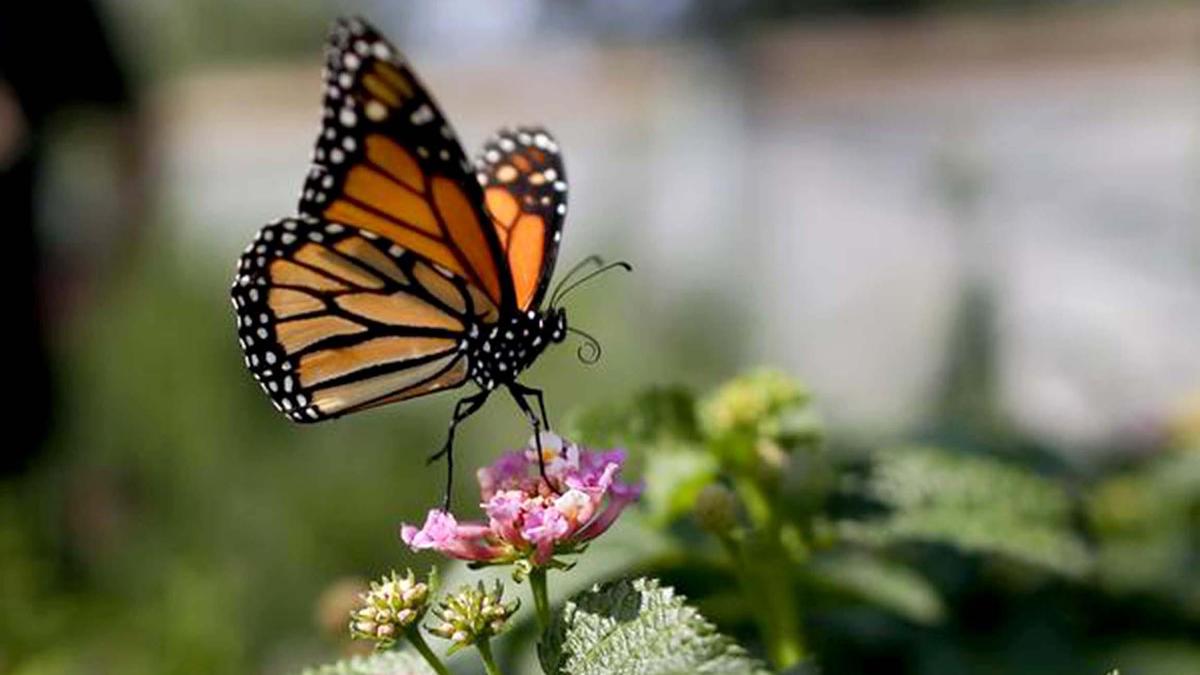
A steroidal cocktail of chemicals in the plant both nurtures and negatively impacts monarch caterpillars.
| Photo Credit: AP

Canopied with vibrant little star-shaped flowers, the tropical milkweed shrub is a favourite of millions of migrating monarch butterflies in America, which lay their eggs on them, feed on their leaves and stems as caterpillars, and then as strikingly patterned butterflies, feast on the flowers’ nectar, among other plants.

The plant does more for the monarch than feed it: it makes the caterpillars and butterflies toxic to predators thanks to the chemicals in its sap. As with many other plants, milkweed toxins evolved as a chemical defense against herbivores.

A new study now finds that ‘cardenolide’ (a type of steroid) mixtures in milkweed is a toss-up for monarch caterpillars: it reduces growth and sequestration (storage) while helping the creatures fend off enemies. 

Although the benefits of plant defensive chemistry are well established, why plants produce such a diversity of compounds has long been a mystery, said the paper. “Are individual compounds targeting different plant attackers, or do mixtures act as a more effective defense than individual compounds alone?,” the authors pondered.

They found that there is a cocktail of cardenolide toxins that are involved in this relationship, including some rare nitrogen- and sulfur-containing containing cardenolides, which seem to slow down growth, feeding and sequestration, making it a trade-off for the monarch.

The scientists tested the effects of the diversity of phytochemicals (compounds produced by plants to defend against pathogens, herbivores, and stress) on the monarch caterpillar, with a special focus on cardenolide toxins. They found that the nitrogen- and sulphur-containing cardenolides in milkweed reduced caterpillar performance and sequestration more than other related cardenolides.

“Coevolution,” that is, when two or more species reciprocally affect each other’s evolution, can produce highly specialised defense molecules such as nitrogen- and sulphur-cardenolides in milkweed that adversely affect sequestering in herbivores, said the paper.

Similar dynamics likely shape many predator-milkweed and butterfly-milkweed plant relationships in India, Aswathi Asokan, a nature educator and naturalist, who keenly follows the life-cycle of butterflies, told The Hindu. We have our own species of milkweed plants in India, such as Calotropis gigantea, along with the tropical milkweed that serve as host plants for various species of our own milkweed butterflies, she said.

“A comparable example could be of butterflies, such as the plain tiger and striped tiger, and their long-standing relationship with milkweed plants.” These toxin-producing plants and butterflies are in a “long-term evolutionary negotiation,” said Ms. Asokan, adding that “plants keep diversifying their chemical defenses, while their consumers, such as butterflies, evolve ways to tolerate and repurpose these toxins to their benefit.”

From the Science Pages

Question Corner

Flora and fauna

Published – March 24, 2026 04:28 pm IST


Source link

Science

Post navigation

Previous Post: The Indian scientist couple history forgot — and the new study bringing their ‘Jeewanu’ back to life
Next Post: Access Denied

Related Posts

  • As West Asia war threatens gas supply, remembering a gas grid India never built
    As West Asia war threatens gas supply, remembering a gas grid India never built Science
  • Offshore wind set to triple by 2030 despite U.S. slowdown, says report
    Offshore wind set to triple by 2030 despite U.S. slowdown, says report Science
  • SpaDeX docking: Spacecrafts are at distance of 1.5 km, to come closer on January 11
    SpaDeX docking: Spacecrafts are at distance of 1.5 km, to come closer on January 11 Science
  • GSAT-7R will strengthen Indian Navy’s surveillance and communication in the Indian Ocean Region
    GSAT-7R will strengthen Indian Navy’s surveillance and communication in the Indian Ocean Region Science
  • Exploring the ‘wonderful world’ of symplectic geometry to solve problems in mechanics
    Exploring the ‘wonderful world’ of symplectic geometry to solve problems in mechanics Science
  • Mitochondria keep your brain cells alive − helping them run smoothly may protect against Parkinson’s disease
    Mitochondria keep your brain cells alive − helping them run smoothly may protect against Parkinson’s disease Science

More Related Articles

Why do clouds have different shapes? Why do clouds have different shapes? Science
Tobacco control laws are out of step with smokeless tobacco Tobacco control laws are out of step with smokeless tobacco Science
How can small-scale farmers benefit from trees on farms? How can small-scale farmers benefit from trees on farms? Science
How charge-coupled devices revolutionised digital imaging How charge-coupled devices revolutionised digital imaging Science
Bacteria can talk to each other and are multilingual, says biologist Bacteria can talk to each other and are multilingual, says biologist Science
ISRO’s Aditya-L1 decodes how solar storms impact Earth’s magnetic field ISRO’s Aditya-L1 decodes how solar storms impact Earth’s magnetic field Science
SiteLock

Archives

  • March 2026
  • February 2026
  • January 2026
  • December 2025
  • November 2025
  • October 2025
  • September 2025
  • August 2025
  • July 2025
  • June 2025
  • May 2025
  • April 2025
  • March 2025
  • February 2025
  • January 2025
  • December 2024
  • November 2024
  • October 2024
  • September 2024
  • August 2024
  • July 2024
  • June 2024
  • May 2024
  • April 2024
  • March 2024
  • February 2024
  • January 2024
  • December 2023
  • November 2023
  • October 2023
  • September 2023
  • August 2023
  • July 2023
  • June 2023
  • May 2023
  • April 2023
  • March 2023
  • February 2023
  • January 2023
  • December 2022
  • November 2022
  • October 2022
  • September 2022
  • August 2022
  • July 2022
  • June 2022
  • May 2022

Categories

  • Business
  • Nation
  • Science
  • Sports
  • World

Recent Posts

  • Access Denied
  • Access Denied
  • Access Denied
  • Russia to impose temporary gasoline export ban amid Iran war
  • Access Denied

Recent Comments

  1. Arthuremums on UP Teacher Who Asked Students To Slap Muslim Classmate
  2. Ronaldsek on UP Teacher Who Asked Students To Slap Muslim Classmate
  3. CoreyNog on UP Teacher Who Asked Students To Slap Muslim Classmate
  4. Arthuremums on UP Teacher Who Asked Students To Slap Muslim Classmate
  5. Lorenopize on UP Teacher Who Asked Students To Slap Muslim Classmate
  • Amit Panghal In Focus As Indian Boxers Fight In Final Qualifiers For Paris Olympics
    Amit Panghal In Focus As Indian Boxers Fight In Final Qualifiers For Paris Olympics Sports
  • Access Denied Sports
  • “Only 19 Indians Remain In Russian Armed Forces”: Centre
    “Only 19 Indians Remain In Russian Armed Forces”: Centre World
  • Riding on festive demand, passenger vehicle sales soar to record high in October
    Riding on festive demand, passenger vehicle sales soar to record high in October Business
  • In BJP’s Rekha Gupta Pick, A Trend From The Past And Hint For Future?
    In BJP’s Rekha Gupta Pick, A Trend From The Past And Hint For Future? Nation
  • India On US Campus Protests
    India On US Campus Protests Nation
  • Rupee rises 4 paise to settle at 83.01 against U.S. dollar
    Rupee rises 4 paise to settle at 83.01 against U.S. dollar Business
  • Rising temperatures are leading to torrential rains in the Himalayas
    Rising temperatures are leading to torrential rains in the Himalayas Science

Editor-in-Chief:
Mohammad Ariff,
MSW, MAJMC, BSW, DTL, CTS, CNM, CCR, CAL, RSL, ASOC.
editor@artifex.news

Associate Editors:
1. Zenellis R. Tuba,
zenelis@artifex.news
2. Haris Daniyel
daniyel@artifex.news

Photograher:
Rohan Das
rohan@artifex.news

Artifex.News offers Online Paid Internships to college students from India and Abroad. Interns will get a PRESS CARD and other online offers.
Send your CV (Subjectline: Paid Internship) to internship@artifex.news

Links:
Associate Journalism
About Us
Privacy Policy

News Links:
Breaking News
World
Nation
Sports
Business
Entertainment
Lifestyle

Registered Office:
72/A, Elliot Road, Kolkata - 700016
Tel: 033-22277777, 033-22172217
Email: office@artifex.news

Editorial Office / News Desk:
No. 13, Mezzanine Floor, Esplanade Metro Rail Station,
12 J. L. Nehru Road, Kolkata - 700069.
(Entry from Gate No. 5)
Tel: 033-46011099, 033-46046046
Email: editor@artifex.news

Copyright © 2023 Artifex.News Newsportal designed by Artifex Infotech.