





Skip to content
  • Facebook
  • X
  • Linkedin
  • WhatsApp
  • Associate Journalism
  • About Us
  • Privacy Policy
  • 033-46046046
  • editor@artifex.news
Artifex.News

Artifex.News

Stay Connected. Stay Informed.

  • Breaking News
  • World
  • Nation
  • Sports
  • Business
  • Science
  • Entertainment
  • Lifestyle
  • Toggle search form
  • Rupee hits record low as U.S. trade stalemate drags on, outflows pinch
    Rupee hits record low as U.S. trade stalemate drags on, outflows pinch Business
  • “If You Don’t Pick Me…”: KKR CEO Reveals Venkatesh Iyer’s ‘Ultimatum’ Behind Rs 23.75 Crore Bid
    “If You Don’t Pick Me…”: KKR CEO Reveals Venkatesh Iyer’s ‘Ultimatum’ Behind Rs 23.75 Crore Bid Sports
  • Haryana man ‘hired’ by Russian Army dies
    Haryana man ‘hired’ by Russian Army dies World
  • Hockey India League: Harmanpreet Singh Scores As Soorma Club Beat Kalinga Lancers In Seven-Goal Thriller
    Hockey India League: Harmanpreet Singh Scores As Soorma Club Beat Kalinga Lancers In Seven-Goal Thriller Sports
  • Access Denied
    Access Denied Nation
  • What explains SpaceX, Blue Origin stepping up their moon plans? | Explained
    What explains SpaceX, Blue Origin stepping up their moon plans? | Explained Science
  • Access Denied World
  • Over 400 More People Arrested In Assam For Child Marriage: Himanta Biswa Sarma
    Over 400 More People Arrested In Assam For Child Marriage: Himanta Biswa Sarma Nation
Cholesterol makes cells’ nuclei squishy, helping melanoma spread

Cholesterol makes cells’ nuclei squishy, helping melanoma spread

Posted on March 16, 2026 By admin


Melanoma is one of the most dangerous common skin cancers. It starts in melanocytes, the skin cells that make melanin, the pigment that gives skin its colour.

Cancer doesn’t appear overnight. A normal cell becomes cancerous in steps, as its DNA and its gene-control systems pick up changes over time. These changes push the cell to do three things: divide too much, avoid being destroyed by the immune system, and spread into other parts of the body. This spread is called metastasis, and it is what makes many cancers deadly.

Researchers want to know which changes matter most because those changes can become targets for treatment.

Becoming squishy

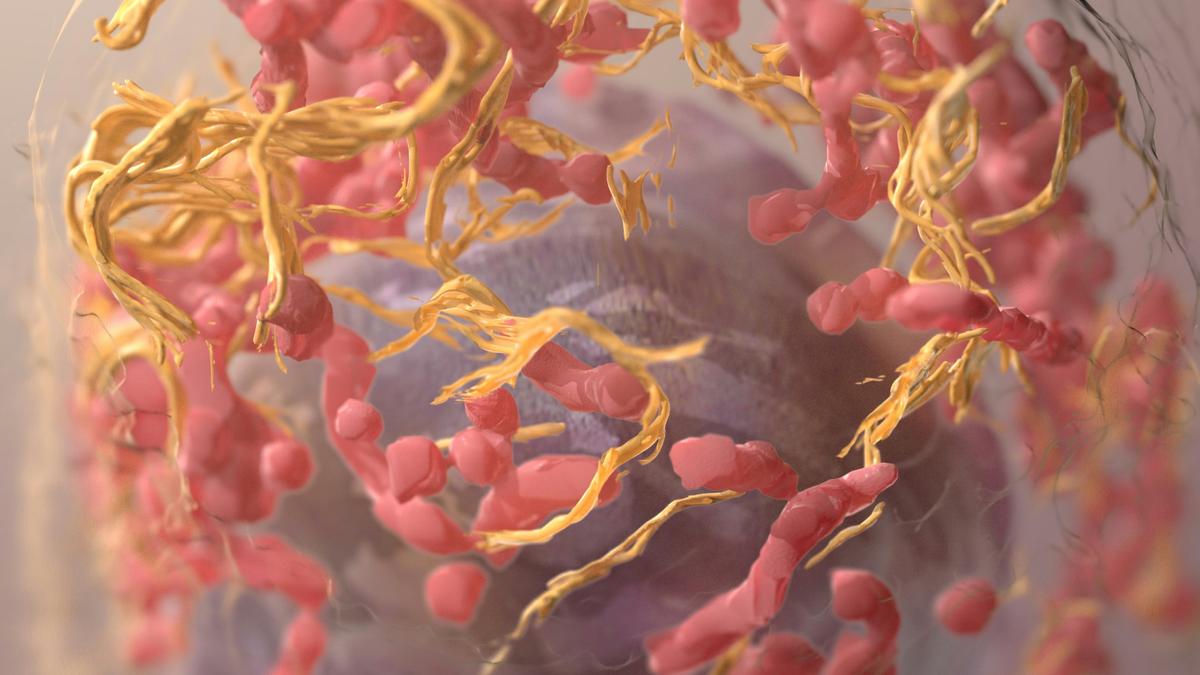
A recent study led by scientists at the U.S. National Institutes of Health reported an unexpected driver of cancer spread: cholesterol in the membrane around the cell nucleus. The nucleus is the cell’s control room, where most of the DNA is stored. It’s wrapped in a thin nuclear envelope, like a flexible shell.

The team found this pattern in melanoma and also in breast and prostate cancers. When cholesterol levels in the nuclear envelope were high, the nucleus became easier to deform. In other words, it became more squishy. This is important because cancer cells often have to squeeze through tight gaps between other cells to spread. A squishier nucleus makes that squeezing easier, so the cancer can invade new tissues more successfully.

High cholesterol did something else, too: it made the nuclear envelope more fragile. Fragile envelopes were more likely to tear in small, local spots. When a tear happens, the DNA inside can be exposed to forces that damage it. Damaged DNA can lead to new mutations, and some of those new mutations can make the cancer even more aggressive.

When the researchers lowered cholesterol levels in cancer cells, the cells became less invasive and less aggressive.

These findings also help explain an earlier observation: people with melanoma who were taking statins — drugs that lower cholesterol in the blood — seemed to show slower progression, on average, than people who were not.

Too much LBR

A big question arose: how did the cancer cells raise cholesterol in the nuclear envelope?

The study pointed to a protein called the lamin B receptor (LBR). Think of LBR as a tool with two parts sitting in the inner nuclear membrane. One part helps attach DNA (packed with proteins) to the inner surface of the nucleus. The other part helps the cell make cholesterol.

In many melanoma samples, the researchers found that cells produced too much LBR. When LBR levels were high, the cellular cholesterol levels rose as well, and the nucleus became both more deformable and more fragile. When the team reduced the LBR levels, the nuclear envelope became tougher and less easily deformed.

Curiously, if the researchers used a version of LBR that couldn’t do its cholesterol-making job, then boosting the LBR didn’t produce the same fragile, squishy nucleus. This suggested the cholesterol-making function was central to the effect.

The team also tested what happened when they removed cholesterol directly from cell membranes: the nuclear membranes became much less fragile than in untreated cells. This fit the idea that cholesterol was changing the physical properties of the nuclear envelope.

A treatment target

The researchers then asked a bigger question: could this process start early in cancer development? If high LBR and high cholesterol appear early, then repeated small tears in the nuclear envelope could increase DNA damage over time. More DNA damage could then raise the chances of new mutations, leading to the cancer becoming more malignant.

The team engineered melanoma cells in two versions: one set with normal LBR levels and the other where LBR had been silenced (i.e. which lacked LBR). They injected these cells into mice. Tumours from the control cells showed more ruptured nuclear envelopes than tumours made from LBR-silenced cells. This supported the idea that LBR could help melanoma invade and spread in a living organism.

Finally, the researchers checked patient data in the real world. In one large melanoma dataset, called TCGA-SKCM, patients whose tumours showed higher LBR expression early tended to have worse outcomes. Put together, the evidence suggested that LBR could be a useful therapeutic target for slowing cancer metastasis.

“The finding that LBR-mediated cholesterol production causes nuclear envelope fragility is intriguing in the context of cancer, as high cholesterol has been associated with tumour development and immune cell invasion in melanoma,” the researchers wrote in their paper. “Furthermore, epidemiological studies have shown that long-term statin use to decrease serum cholesterol is associated with decreased cancer progression and severity in many cancer subtypes, including melanoma.”

“Increased cholesterol synthesis driven by upregulated LBR could serve as a metabolic enhancer,” the authors continued, “increasing tumor cells’ ability to proliferate and cope with nutrient-deprived conditions. Together, our findings suggest that LBR could be a prognostic indicator in early melanoma disease progression, and could serve as a drug target to prevent metastatic dissemination of melanoma, thereby improving prognosis for patient survival.”

Curiosity-driven

Scientists first discovered LBR’s cholesterol-related role more than 25 years ago in research that had nothing to do with cancer. In the 1970s and 1980s, researchers studying fungi identified genes involved in making sterols — which are cholesterol-like molecules in fungi.  In the 1990s, when scientists compared DNA sequences, they noticed that a human gene, LBR, resembled a  sterol-making gene in fungi.

That raised a curious question: could the human gene replace the broken fungal gene? It could. That experiment was early evidence that LBR is an enzyme that processes sterol.

Years later, that basic biology link helped researchers connect LBR to nuclear cholesterol and the spread of cancer. It’s a clean example of how “why does this work this way?” research can eventually matter to medicine, even when no one can predict the connection in advance.

D.P. Kasbekar is a retired scientist.

Published – March 18, 2026 07:15 am IST



Source link

Science

Post navigation

Previous Post: Watch: Allies reluctant as Trump urges ships to secure Strait of Hormuz
Next Post: Dhoni offers a pragmatic advice to CSK rookie Prashant

Related Posts

  • Science quiz: On vexillography – The Hindu
    Science quiz: On vexillography – The Hindu Science
  • Did ‘puppy dog eyes’ expression evolve exclusively in dogs due to domestication?
    Did ‘puppy dog eyes’ expression evolve exclusively in dogs due to domestication? Science
  • Drought, degrading land take centrestage at UN talks in Riyadh
    Drought, degrading land take centrestage at UN talks in Riyadh Science
  • Geroscience: the science related to aging
    Geroscience: the science related to aging Science
  • Study reveals how new species evolve without geographic barriers 
    Study reveals how new species evolve without geographic barriers  Science
  • Earth’s oldest, tiniest creatures are poised to be climate change winners
    Earth’s oldest, tiniest creatures are poised to be climate change winners Science

More Related Articles

Why is India on the U.S. blacklist on fentanyl? | Explained Why is India on the U.S. blacklist on fentanyl? | Explained Science
What is Theremin? What is Theremin? Science
Dengue early warning system predicts risk two months in advance Dengue early warning system predicts risk two months in advance Science
The pitfalls of climate alarmism The pitfalls of climate alarmism Science
South Africa petrochem unit world’s single largest greenhouse gas source South Africa petrochem unit world’s single largest greenhouse gas source Science
Why do some people believe the whole universe is a simulation? Why do some people believe the whole universe is a simulation? Science
SiteLock

Archives

  • March 2026
  • February 2026
  • January 2026
  • December 2025
  • November 2025
  • October 2025
  • September 2025
  • August 2025
  • July 2025
  • June 2025
  • May 2025
  • April 2025
  • March 2025
  • February 2025
  • January 2025
  • December 2024
  • November 2024
  • October 2024
  • September 2024
  • August 2024
  • July 2024
  • June 2024
  • May 2024
  • April 2024
  • March 2024
  • February 2024
  • January 2024
  • December 2023
  • November 2023
  • October 2023
  • September 2023
  • August 2023
  • July 2023
  • June 2023
  • May 2023
  • April 2023
  • March 2023
  • February 2023
  • January 2023
  • December 2022
  • November 2022
  • October 2022
  • September 2022
  • August 2022
  • July 2022
  • June 2022
  • May 2022

Categories

  • Business
  • Nation
  • Science
  • Sports
  • World

Recent Posts

  • Assam study sheds new light on sun’s surface tremors
  • Access Denied
  • Iran says nuclear doctrine unlikely to change, Hormuz Strait needs new protocol
  • Access Denied
  • Access Denied

Recent Comments

  1. WilliamTancy on UP Teacher Who Asked Students To Slap Muslim Classmate
  2. Michaelnar on UP Teacher Who Asked Students To Slap Muslim Classmate
  3. DouglasPlamp on UP Teacher Who Asked Students To Slap Muslim Classmate
  4. WilliamTancy on UP Teacher Who Asked Students To Slap Muslim Classmate
  5. Jerrybed on UP Teacher Who Asked Students To Slap Muslim Classmate
  • Rupee rises 4 paise to 83.01 against US dollar in early trade
    Rupee rises 4 paise to 83.01 against US dollar in early trade Business
  • India backing high risk, high impact R&D projects: PM Modi
    India backing high risk, high impact R&D projects: PM Modi Science
  • Cabinet nod for setting up 12 industrial cities to boost manufacturing; outlay ₹28,602 crore
    Cabinet nod for setting up 12 industrial cities to boost manufacturing; outlay ₹28,602 crore Business
  • America Sees Its Future With India, Says US Envoy Eric Garcetti
    America Sees Its Future With India, Says US Envoy Eric Garcetti Nation
  • India’s space startup calls off maiden rocket launch for a fourth time
    India’s space startup calls off maiden rocket launch for a fourth time Science
  • Access Denied Sports
  • King Charles III ends silence on U.K. far-right riots
    King Charles III ends silence on U.K. far-right riots World
  • Israel hands Trump another international award, after Nobel snub
    Israel hands Trump another international award, after Nobel snub World

Editor-in-Chief:
Mohammad Ariff,
MSW, MAJMC, BSW, DTL, CTS, CNM, CCR, CAL, RSL, ASOC.
editor@artifex.news

Associate Editors:
1. Zenellis R. Tuba,
zenelis@artifex.news
2. Haris Daniyel
daniyel@artifex.news

Photograher:
Rohan Das
rohan@artifex.news

Artifex.News offers Online Paid Internships to college students from India and Abroad. Interns will get a PRESS CARD and other online offers.
Send your CV (Subjectline: Paid Internship) to internship@artifex.news

Links:
Associate Journalism
About Us
Privacy Policy

News Links:
Breaking News
World
Nation
Sports
Business
Entertainment
Lifestyle

Registered Office:
72/A, Elliot Road, Kolkata - 700016
Tel: 033-22277777, 033-22172217
Email: office@artifex.news

Editorial Office / News Desk:
No. 13, Mezzanine Floor, Esplanade Metro Rail Station,
12 J. L. Nehru Road, Kolkata - 700069.
(Entry from Gate No. 5)
Tel: 033-46011099, 033-46046046
Email: editor@artifex.news

Copyright © 2023 Artifex.News Newsportal designed by Artifex Infotech.