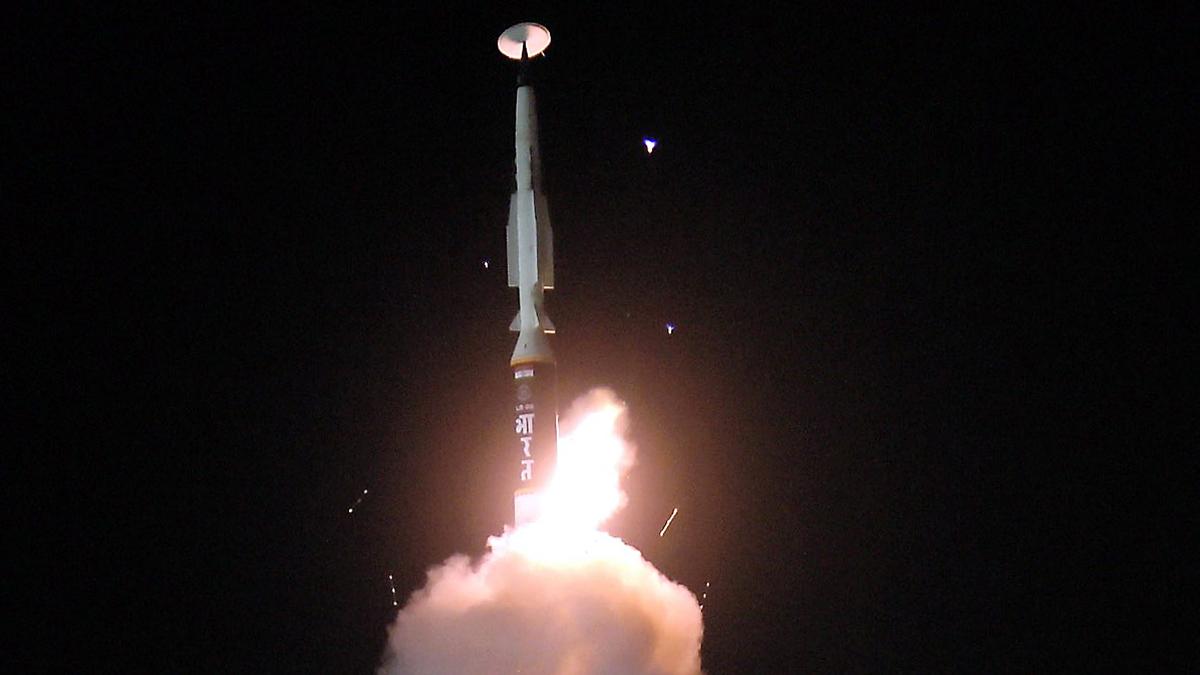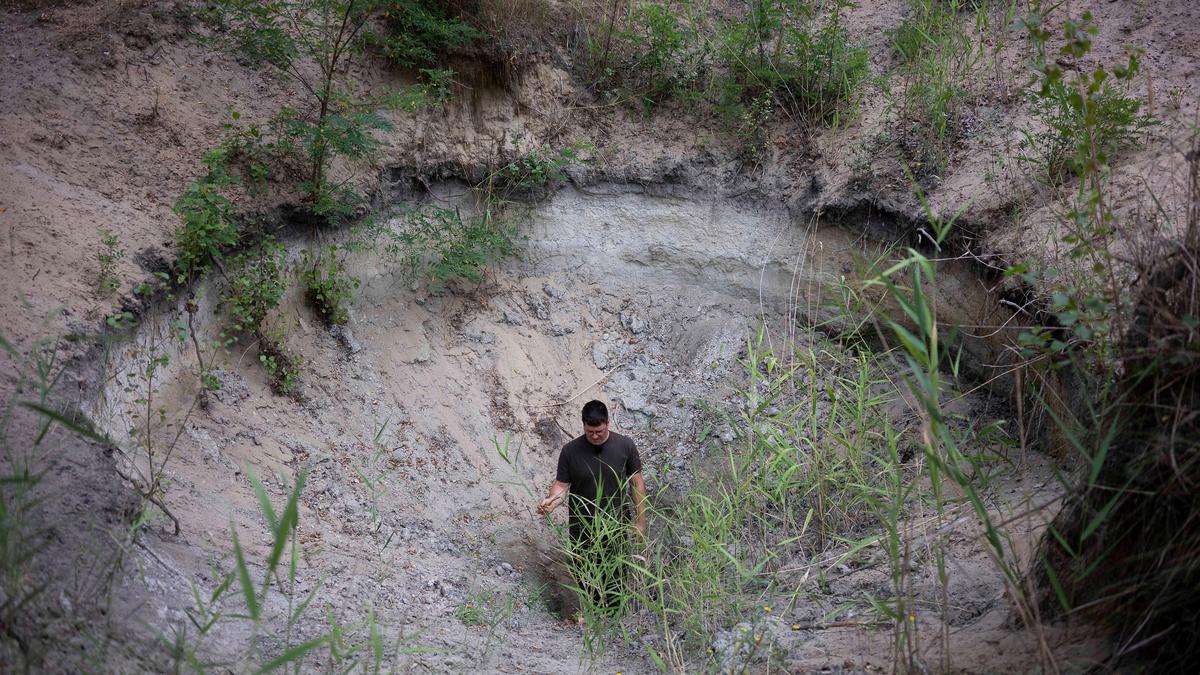



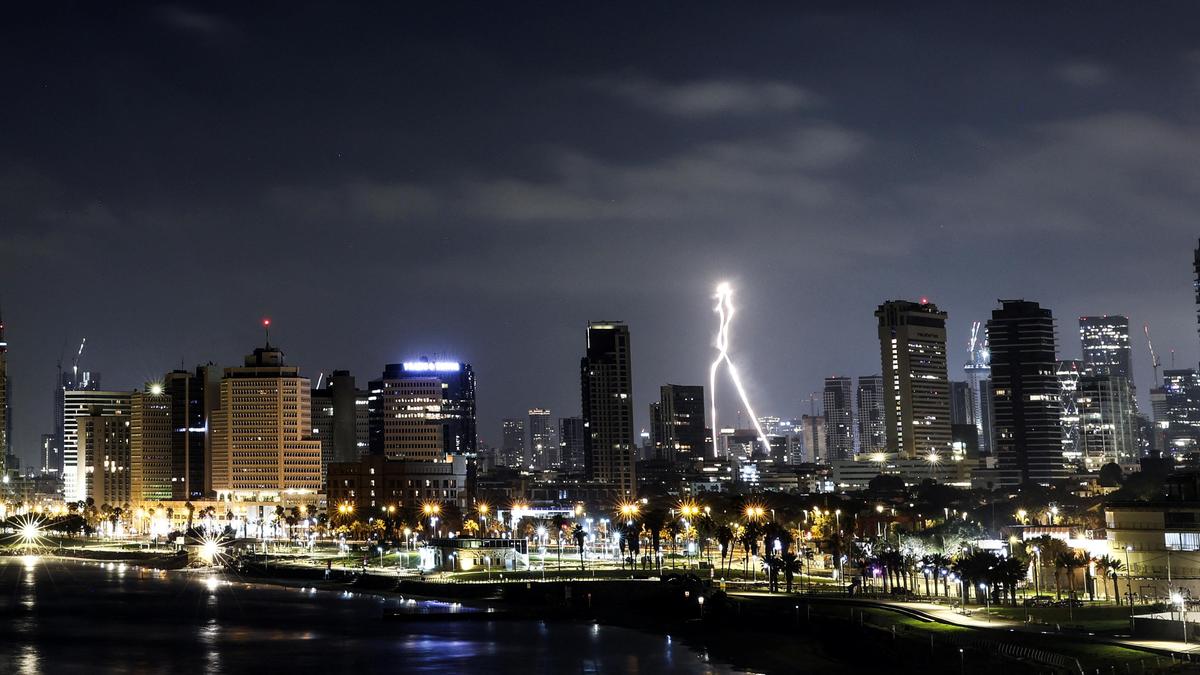
The outbreak of fresh hostilities between the U.S.-led coalition, including Israel and the United Arab Emirates, and Iran seems to have triggered a newly integrated regional air defence network different from the one these actors deployed during their brief yet intense conflict in June last year.
The Twelve-Day War in 2025 was until then the most significant test of the Integrated Air and Missile Defence, with the alliance faced with having to blunt retaliation by Iran that included more than 500 ballistic missiles and over twice as many ‘suicide drones’. This time, with the theatre of conflict including the Persian Gulf, the U.A.E. has brought to bear its South Korean defence system together with the debut of U.S. systems that were only prototypes last year.
While many of these systems showcase new abilities, they also highlight the U.S.’ and Israel’s need to ‘ration’ them to keep costs down and ensure they’re still available should the conflict drag on.

What is missile defence?
Missile defence refers to a military system that finds and destroys incoming missiles before they hit their targets. These systems use sensors — including satellites in earth orbit and radar stations on the ground — to watch the sky and, when they spot an enemy missile, track its speed and direction.
Then, military command centres use powerful computers and military personnel to receive the data from the sensors and based on that calculate which targets the missile endangers and which response is most suitable. One important kind of response is the interceptor — which is a missile that flies towards the incoming threat with the purpose of destroying it.

In addition to saving lives and property, missile defence can discourage enemies from starting conflicts that could require missiles, since the interceptors could render them ineffective, as well as give leaders more time to deliberate.
How an interceptor works
Let’s use the example of the U.S. Patriot system, which consists of several components connected by cables or wireless data links.
Its radar unit remains stationary on the ground rather than spinning, like the radar you see in airports. It steers thousands of radio beams across the sky to scan for objects. When these beams hit an aircraft or incoming missile, they bounce back to the radar and a computer analyses the returning signals to estimate the object’s speed, location, altitude, and direction.

If the object is deemed to be a threat, a connected computer can concentrate the radar’s energy at that point in the sky. Such focused tracking is called a lock, and in this condition the radar will update the target’s position continuously.
Meanwhile, the computers at the Engagement Control Station (ECS), a mobile command centre operated by soldiers, calculate the trajectory of the object and determine when to fire a counter-measure. When the system commands a launch, a signal goes to a launcher truck, which ignites the rocket motor of an interceptor. As the interceptor lifts off, the ground radar will continue to track both the target and the missile simultaneously. The ECS will compare the positions of both objects and send commands to the interceptor to guide it through the air.
In the final seconds of flight, the interceptor will use its onboard seeker — a component that acts like its driver — to find the target. Since interceptors often move at multiple times the speed of sound, seekers have to be very precise. The interception itself can happen in one of two ways. Older missiles use a proximity fuse that senses when the target is nearby and blows up a powerful warhead, destroying the object with shrapnel. Newer interceptors are hit-to-kill: the missile steers itself directly into the body of the target, using the kinetic energy of the collision to shatter it.
The radar observes the impact to confirm the target has been destroyed before resetting to engage the next threat.
How effective are interceptors?
The efficacy of an interceptor varies depending on the target.
The short-range rockets that Israel uses as part of its ‘Iron Dome’ system is effective against simple, slow-moving rockets, with the country reporting 80-97% success rates in recent conflicts.
The U.S. Patriot system on the other hand deals with targets moving much faster and is less successful in absolute terms. For example, in May 2023, about a year after Russia’s invasion of Ukraine had begun, Patriot had 100% success against six Russian Kinzhal hypersonic missiles on one night over Kyiv and more than 60% against the Iskander-M ballistic missiles.
After that, Russia modified Iskander-M to release decoys and make sharp turns through the air just before it strikes. Russia has also been launching larger groups of missiles and drones at once. So even if a Patriot battery has a high success rate, it only carries a limited number of interceptors. Altogether, its rate has reportedly dropped to around 10% since.
According to the Center for Arms Control and Non-Proliferation, “The only program designed to protect the entire United States homeland from a long-range missile attack is the GMD [Ground-based Midcourse Defence] program. GMD has a failing test record: a success rate of just 55% in highly scripted tests, including three misses in the last six tries.”
A narrow gulf
In the ongoing conflict, the U.A.E. has activated a missile defence involving the South Korean Cheongung II missiles while the alliance has been using the Terminal High Altitude Area Defence (THAAD) and the Patriot batteries supplied by the U.S. The U.A.E. acquired Cheongung from South Korea to intercept low-flying Iranian cruise missiles and tactical ballistic missiles over the Gulf. These missiles use a hit-to-kill technology similar to the U.S. Patriot system but are also optimised for threats in the Persian Gulf.
A missile launched from coastal Iran can reach the U.A.E. within minutes. Older versions of Patriot used radars that scanned for objects in a 120° cone. If a threat came from outside this cone, the battery had to physically rotate, losing precious seconds. Cheongung II however uses a ‘Vertical Launch System’ fit with a rotating multi-function radar that can fire in 360° without moving the launcher.
Missiles called “skimmers” can fly just above the surface of the Gulf’s waters to stay under the radar’s view, so the Cheongung II missile is also equipped with a radar in its nose, which it turns on in the final seconds of flight to not have to depend on the ground radar as it approaches impact.
Expensive shots
While the U.S. relied heavily on its expensive Patriot defence system during the June 2025 conflict, it has deployed its new Indirect Fire Protection Capability to protect bases in the U.A.E. and Kuwait. This system uses AIM-9X Sidewinder missiles as interceptors and helps with rationing Patriot.
Patriot’s cost is relevant because Iran’s strategy, called a saturation attack, has been to fire a flurry of cheap missiles to exhaust the alliance’s interceptors. The system’s PAC-3 Missile Segment Enhancement (MSE) interceptors however cost around $4 million per shot.

The U.S. Navy has deployed SM-6 missiles in their ‘dual’ configuration, in which they can intercept ballistic missiles in their terminal phase as well as Iranian fast-attack craft.
Finally, after Israel introduced it during the Twelve-Day War, the country’s ‘Iron Beam’ high-energy laser has become the primary defence against drone swarms. As with the U.S. and Patriot, Iron Beam is reportedly allowing Israel to ration its Arrow 3 and Stunner.
Missile defence in 2025
During the Twelve-Day War, the first line of defence comprised the Israeli Arrow 3 system and U.S. Navy destroyers with SM-3 missiles. Arrow 3 engaged medium-range ballistic missiles in space, before they reentered the atmosphere, although the intensity of the barrage rapidly depleted Israeli stockpiles by the second week of the conflict. Likewise U.S. destroyers in the Red and the Mediterranean Seas recorded the heaviest use of the SM-3 missiles in combat until then.
The endo-atmospheric defence system used U.S. THAAD batteries and Israel’s legacy Arrow 2 system. Then came Israel’s David Sling with its Stunner interceptors, with Patriot forming the last line.
Against the ‘suicide drones’, the alliance used the ‘Iron Dome’ and its Tamir interceptors and ‘Iron Beam’, with help from air to air missiles fired by the U.S. Air Force and Navy, the Royal Air Force, and France’s Rafales.
As of January this year, an important focus area for the U.S. and its allies was to replenish the expended munitions. The U.S. Department of Defence has already quadrupled production orders for THAAD and PAC-3 MSE interceptors and has accelerated the deployment of directed-energy systems to naval vessels.
This said, “Production of all munitions—interceptors for THAAD, Patriot, Arrow, David’s Sling, and Iron Dome…—is far slower than current combat use or anticipated future high-intensity war requirements,” Charles Corcoran and Ari Cicurel wrote in RealClearDefence in January 2026. Maj. Gen. Corcoran is a former chief of staff of the U.S. Air Forces Central Command and Cicurel is the associate director of foreign policy at the Jewish Institute for National Security of America.
They added that “Replenishing THAAD shortages … will take at least 1.5 years at current production capacity” and that U.S. manufacturing has “not scaled for high-tempo operations in decades”.
Iran’s capabilities
Iran’s most advanced interceptor is an upgraded version of the Bavar-373 system using the Sayyad-4B missile, reportedly designed to intercept targets at ranges exceeding 300 km. Iran also recently unveiled its Arman Ballistic Missile Defence system, which it has said is optimised to intercept short- to medium-range ballistic missiles with 360° radar coverage.
To counter cruise missiles as well as F-35 and F-15 fighter jets, the military is using the Sevom-e-Khordad missile system. It’s highly mobile, which means it can fire from one place and quickly relocate to another, making it harder for U.S. forces to destroy its radars. Iran is reportedly using Sayyad-3 missiles with this system to protect its Natanz and Isfahan nuclear facilities.
With reports of strikes near the offices of Ayatollah Ali Khamenei and other government compounds in Tehran, Iran is also using the Russia-made Tor-M1 short-range missiles to intercept precision-guided bombs and the Majid and Azarakhsh systems to counter low-flying drones and cruise missiles.
This said, reports of explosions in Tehran and Isfahan indicate the U.S. and Israeli barrage could be overwhelming Iran’s interceptors with sheer volume. This is possible because once a battery fires one batch of around six missiles, it needs to reload, leaving the site defenseless until then. The Bavar-373 system’s purported ability to detect stealth aircraft has also been in question since the alliance has struck targets in Tehran.