
Skip to content
  • Facebook
  • X
  • Linkedin
  • WhatsApp
  • YouTube
  • Associate Journalism
  • About Us
  • Privacy Policy
  • 033-46046046
  • editor@artifex.news
Artifex.News

Artifex.News

Stay Connected. Stay Informed.

  • Breaking News
  • World
  • Nation
  • Sports
  • Business
  • Science
  • Entertainment
  • Lifestyle
  • Toggle search form
  • T20 World Cup 2024: From best bowling average to most boundaries, a look at records broken
    T20 World Cup 2024: From best bowling average to most boundaries, a look at records broken Sports
  • Access Denied
    Access Denied Nation
  • Access Denied Sports
  • Barnier voted out in no-confidence motion: Three charts to explain France’s political uncertainty
    Barnier voted out in no-confidence motion: Three charts to explain France’s political uncertainty World
  • Klaasen – The Hindu
    Klaasen – The Hindu Sports
  • Access Denied World
  • BCCI vs BCB: Cricket is collateral damage in a game of political expediency
    BCCI vs BCB: Cricket is collateral damage in a game of political expediency Sports
  • Access Denied World
World Ocean Day 2024: Understand the Indian Ocean and you’ll understand much about earth

World Ocean Day 2024: Understand the Indian Ocean and you’ll understand much about earth

Posted on June 8, 2024 By admin


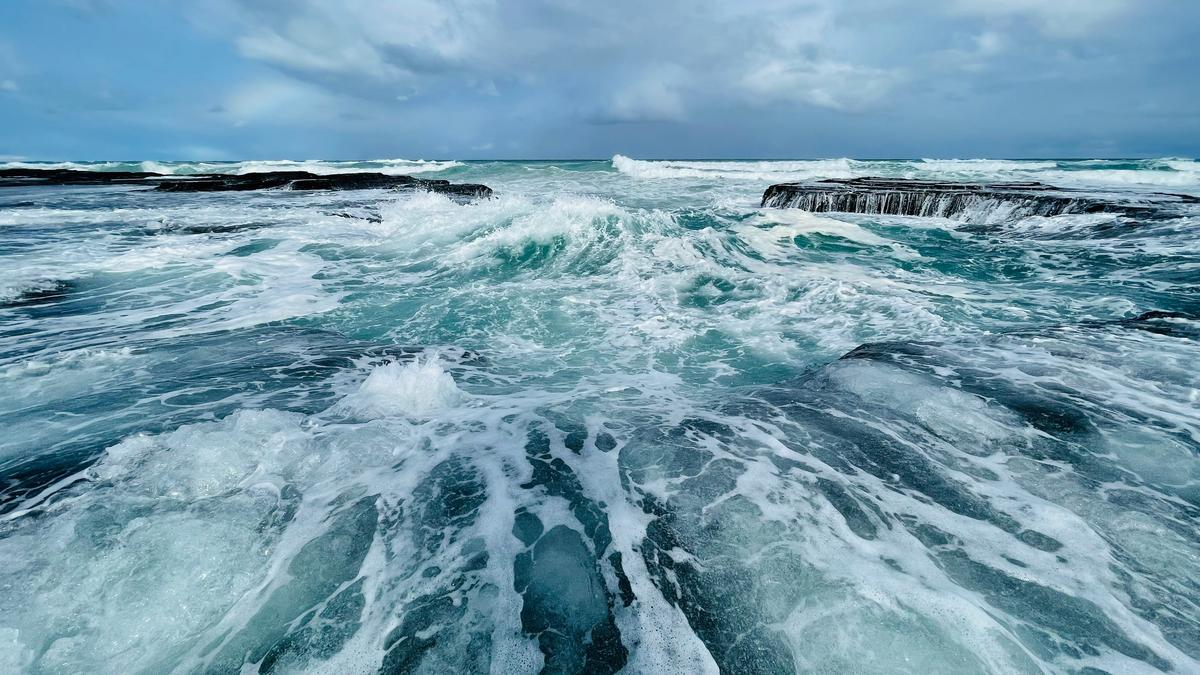
On World Oceans Day (June 8), we can take in the wonders of the smallest of the three major oceans right in our front yard. The Indian Ocean has been getting a lot of attention recently for its rapid warming and the outsized influence it continues to have on its peers.

As it happens, the Indian Ocean is critical today to understand the earth’s overall ocean response to increasing greenhouse gases and global warming.

Home to the deadliest storms

The Indian Ocean is famous for its dramatic monsoon winds and the bountiful rain it brings on the Indian subcontinent. The winds and the rain have evoked prose and poetry for millennia. More than a billion people depend on the moisture it supplies to quench their thirst, to replenish fisheries, and to produce food and energy.

The warm summer months are characterised by the rapid warming of the Arabian Sea and the Bay of Bengal as well as the southern tropical Indian Ocean. The winds begin to turn around from a land-to-ocean direction during winter to an ocean-to-land direction as summer commences.

The scorching heat on the subcontinent also comes with the threat of pre-monsoon cyclones. The North Indian Ocean doesn’t generate as many cyclones as the Pacific or the Atlantic Oceans, but the numbers and their rapid intensification have been growing ominously. The relatively small North Indian Ocean ensures cyclones don’t grow into the sort of hot powerhouses hurricanes and typhoons can be. But also the developing countries along the rim of South Asia, East Africa, and West Asia are sitting ducks in their path. Thus, cyclones tend to be the deadliest storms by mortality.

The warm ocean supports fisheries, big and small, and fish such as anchovies, mackerel, sardines, and tuna. Dolphins are a tourist attraction; some whales have also been sighted in the Arabian Sea. Tourists also flock to popular beaches and the corals from Lakshadweep to the Andaman-Nicobar Islands, all the way down to Reunion Island off Madagascar.

A unique configuration

The northern boundary of the Indian Ocean is closed off by the Asian landmass, minus tiny connections to the Persian Gulf and the Red Sea.

The southern Indian Ocean is also different from the other oceans thanks to two oceanic tunnels that connect it to the Pacific and the Southern Oceans.

Through the first tunnel — the Indonesian seas — the Pacific Ocean dumps up to 20 million cubic metres of water every second into the eastern Indian Ocean. These waters also transport a substantial amount of heat. They stay mostly in the top 500 m and move through the Indian Ocean towards Madagascar. The Pacific waters, called the Indonesian Throughflow, wander around the Indian Ocean and affect the circulation, temperature, and salinities.

The other tunnel connects the Indian Ocean to the Southern Ocean with two-way traffic. Colder, saltier and thus heavier waters flow into the Indian Ocean from the Southern Ocean below a depth of about 1 km. Due to the closed northern boundary, the waters slowly mix upward, and with the waters coming from the Pacific. The waters in the top 1 km eventually exit to the south.

The mix of heat and water masses in the Indian Ocean confer some mighty abilities to affect the uptake of heat in the world’s oceans.

The little ocean that could

The Indian Ocean is a warm bathtub despite the underwater tunnels because it is heavily influenced by the Pacific Ocean through an atmospheric bridge as well. The atmospheric circulation, dominated by a massive centre of rainfall over the Maritime Continent, creates mostly sinking air over the Indian Ocean. The atmosphere also warms the Indian Ocean year after year.

The Indian Ocean thus gains heat that it must get rid of via the waters moving south. With global warming, the Pacific has been dumping some additional heat in the Indian Ocean. The cold water coming in from the Southern Ocean is also not as cold as before.

The net result: the Indian Ocean is among the fastest warming oceans, with dire consequences for heat waves and extreme rain over the Indian subcontinent. Marine heat waves are also a major concern now for corals and fisheries.

The warming Indian Ocean is affecting the wind circulation in a way that’s also affecting the amount of heat the Pacific is able to take up. The Pacific Ocean takes up heat in its cold, eastern tropical region, and this is crucial to determine the rate of global warming. The Indian Ocean is thus playing a role in how well the Pacific can control global warming.

The other region where the ocean can draw down the heat and lock it away in deeper waters is in the North Atlantic. This is where surface waters become so dense that they sink like a rock into the depths. If the sinking of the water slows due to global warming — which seems to be the case — the heat doesn’t sink away from the surface as quickly as it used to.

Indeed, researchers have found that the Indian Ocean’s warming is actually helping accelerate the sinking of the heat, thus modulating global warming directly!

This is why, despite being the smallest tropical ocean, the Indian Ocean’s influence has become impossible to understate. Recall that the oceans take up over 90% of the additional heat more greenhouse gases in the atmosphere are trapping.

A hand in human evolution

If this isn’t wondrous enough, the reconfiguration of the Indian Ocean may have played a role in the evolution of our ancestors as well.

Until about three million years ago, Australia and New Guinea were well south of the equator and the Indian Ocean was directly connected to the Pacific Ocean. And this Indo-Pacific Ocean was in a warm state known as a ‘permanent El Niño’ — a state that was associated with permanently plentiful rain and lush green forests over East Africa. Today, this part of Africa is arid.

The northward drift of Australia and New Guinea, which is still ongoing, separated the Indian and the Pacific Oceans around three million years ago. As a result, the eastern Pacific Ocean became cooler and the El Niño went from a permanent state to an episodic one, like the ones we’ve been seeing.

This transition aridified East Africa, turning its rainforests into grasslands and savannahs. Researchers have also hypothesised that these changes forced our ancestors, such as chimpanzees and gorillas, to move farther and run faster. In the rainforests, they had an abundance of food and hiding places and didn’t have to.

If these hypotheses are borne out, it’s possible the transformation also had a hand in the birth of bipedal movement — the ability to walk on two legs — which is much more efficient than moving on all four across larger distances.

The storied history of our neighbourhood ocean is thus a worthy thing to celebrate — and study — on World Oceans Day.

The author is a professor, IIT Bombay, and emeritus professor, University of Maryland.


Source link

Science Tags:Indian Ocean, indian ocean news today, monsoon in chennai, monsoon in maharashtra, world ocean day 2024, World Oceans Day

Post navigation

Previous Post: Elon Musk congratulates PM Modi on election win, says he looks to do ‘exciting work’ in India
Next Post: More aquatic animals were farmed than fished in 2022, for the first time ever

Related Posts

  • How dual-use satellites are blurring the lines of modern space war
    How dual-use satellites are blurring the lines of modern space war Science
  • IIA researchers find evidence of interaction between a radio jet and interstellar gas
    IIA researchers find evidence of interaction between a radio jet and interstellar gas Science
  • UN holds emergency talks over sky-high costs for COP30 climate summit
    UN holds emergency talks over sky-high costs for COP30 climate summit Science
  • ‘Kerala yet to receive Linezolid, Cycloserine MDR-TB drugs’
    ‘Kerala yet to receive Linezolid, Cycloserine MDR-TB drugs’ Science
  • Lumpy skin disease vaccine developed by Bharat Biotech group firm with ICAR gets CDSCO licence
    Lumpy skin disease vaccine developed by Bharat Biotech group firm with ICAR gets CDSCO licence Science
  • New study finds how calcium and pH regulate ovarian cancer spheroids
    New study finds how calcium and pH regulate ovarian cancer spheroids Science

More Related Articles

X chromosome revival in older women ups autoimmune disease risk X chromosome revival in older women ups autoimmune disease risk Science
Earth’s orbits are filling up because governance hasn’t kept pace Earth’s orbits are filling up because governance hasn’t kept pace Science
Geographers uncover why some rivers stay single while others split Geographers uncover why some rivers stay single while others split Science
Loggerhead turtles use geomagnetic field to navigate large distances Loggerhead turtles use geomagnetic field to navigate large distances Science
IIT-Gn team builds precise sieve for industry with molecular ‘donuts’ IIT-Gn team builds precise sieve for industry with molecular ‘donuts’ Science
India’s ‘One Nation, One Subscription’ plan | Explained India’s ‘One Nation, One Subscription’ plan | Explained Science
SiteLock

Archives

  • May 2026
  • April 2026
  • March 2026
  • February 2026
  • January 2026
  • December 2025
  • November 2025
  • October 2025
  • September 2025
  • August 2025
  • July 2025
  • June 2025
  • May 2025
  • April 2025
  • March 2025
  • February 2025
  • January 2025
  • December 2024
  • November 2024
  • October 2024
  • September 2024
  • August 2024
  • July 2024
  • June 2024
  • May 2024
  • April 2024
  • March 2024
  • February 2024
  • January 2024
  • December 2023
  • November 2023
  • October 2023
  • September 2023
  • August 2023
  • July 2023
  • June 2023
  • May 2023
  • April 2023
  • March 2023
  • February 2023
  • January 2023
  • December 2022
  • November 2022
  • October 2022
  • September 2022
  • August 2022
  • July 2022
  • June 2022
  • May 2022

Categories

  • Business
  • Nation
  • Science
  • Sports
  • World

Recent Posts

  • Learn from Sri Lanka’s experience on impact of fertilizer supply chains: experts
  • Sewage pollution of Cooum, groundwater depletion raise alarm
  • Device with low-grade explosives found inside private hospital in Pune; ATS joins probe
  • Punjab Kings seeks turnaround against Mumbai Indians
  • Around 83% of candidates lost their deposit in Tamil Nadu polls, says ECI

Recent Comments

  1. RichardClage on UP Teacher Who Asked Students To Slap Muslim Classmate
  2. JeffryFok on UP Teacher Who Asked Students To Slap Muslim Classmate
  3. DerrickSef on UP Teacher Who Asked Students To Slap Muslim Classmate
  4. Leonardren on UP Teacher Who Asked Students To Slap Muslim Classmate
  5. NathanQuins on UP Teacher Who Asked Students To Slap Muslim Classmate
  • WPL 2026: Giants break MI jinx, seal spot in Eliminator
    WPL 2026: Giants break MI jinx, seal spot in Eliminator Sports
  • Kremlin welcomes end to ‘direct threat’ label in U.S. national security strategy: report
    Kremlin welcomes end to ‘direct threat’ label in U.S. national security strategy: report World
  • Access Denied World
  • Access Denied Sports
  • “In The Name Of Globalisation, We Actually Hollowed Out…”: S Jaishankar
    “In The Name Of Globalisation, We Actually Hollowed Out…”: S Jaishankar Nation
  • PIL filed in Madras High Court against sale of IPL tickets in black
    PIL filed in Madras High Court against sale of IPL tickets in black Sports
  • Access Denied Sports
  • Illegal Casino Operating In Gurugram Society Flat Busted, 6 Arrested: Cops
    Illegal Casino Operating In Gurugram Society Flat Busted, 6 Arrested: Cops Nation

Editor-in-Chief:
Mohammad Ariff,
MSW, MAJMC, BSW, DTL, CTS, CNM, CCR, CAL, RSL, ASOC.
editor@artifex.news

Associate Editors:
1. Zenellis R. Tuba,
zenelis@artifex.news
2. Haris Daniyel
daniyel@artifex.news

Photograher:
Rohan Das
rohan@artifex.news

Artifex.News offers Online Paid Internships to college students from India and Abroad. Interns will get a PRESS CARD and other online offers.
Send your CV (Subjectline: Paid Internship) to internship@artifex.news

Links:
Associate Journalism
About Us
Privacy Policy

News Links:
Breaking News
World
Nation
Sports
Business
Entertainment
Lifestyle

Registered Office:
72/A, Elliot Road, Kolkata - 700016
Tel: 033-22277777, 033-22172217
Email: office@artifex.news

Editorial Office / News Desk:
No. 13, Mezzanine Floor, Esplanade Metro Rail Station,
12 J. L. Nehru Road, Kolkata - 700069.
(Entry from Gate No. 5)
Tel: 033-46011099, 033-46046046
Email: editor@artifex.news

Copyright © 2023 Artifex.News Newsportal designed by Artifex Infotech.