Skip to content
  • Facebook
  • X
  • Linkedin
  • WhatsApp
  • YouTube
  • Associate Journalism
  • About Us
  • Privacy Policy
  • 033-46046046
  • editor@artifex.news
Artifex.News

Artifex.News

Stay Connected. Stay Informed.

  • Breaking News
  • World
  • Nation
  • Sports
  • Business
  • Science
  • Entertainment
  • Lifestyle
  • Toggle search form
  • Access Denied Business
  • Cyclone Dana Nears Odisha, West Bengal, Schools Shut, Over 150 Trains Cancelled
    Cyclone Dana Nears Odisha, West Bengal, Schools Shut, Over 150 Trains Cancelled Nation
  • Why Gold, Silver Price Crash Is Linked To Trump’s Fed Pick Kevin Warsh Business
  • Tax cut won’t mitigate high prices for cancer, rare diseases medicines, say patient advocacy groups
    Tax cut won’t mitigate high prices for cancer, rare diseases medicines, say patient advocacy groups Business
  • Big Blow For PCB, 3 Demands To Be Rejected By Jay Shah-Led ICC: Tri-Series With India And…
    Big Blow For PCB, 3 Demands To Be Rejected By Jay Shah-Led ICC: Tri-Series With India And… Sports
  • Russia strikes across Ukraine as peace prospects flounder
    Russia strikes across Ukraine as peace prospects flounder World
  • Access Denied World
  • Access Denied
    Access Denied Nation
How the next major breakthrough in cancer could come from India

How the next major breakthrough in cancer could come from India

Posted on March 2, 2026 By admin


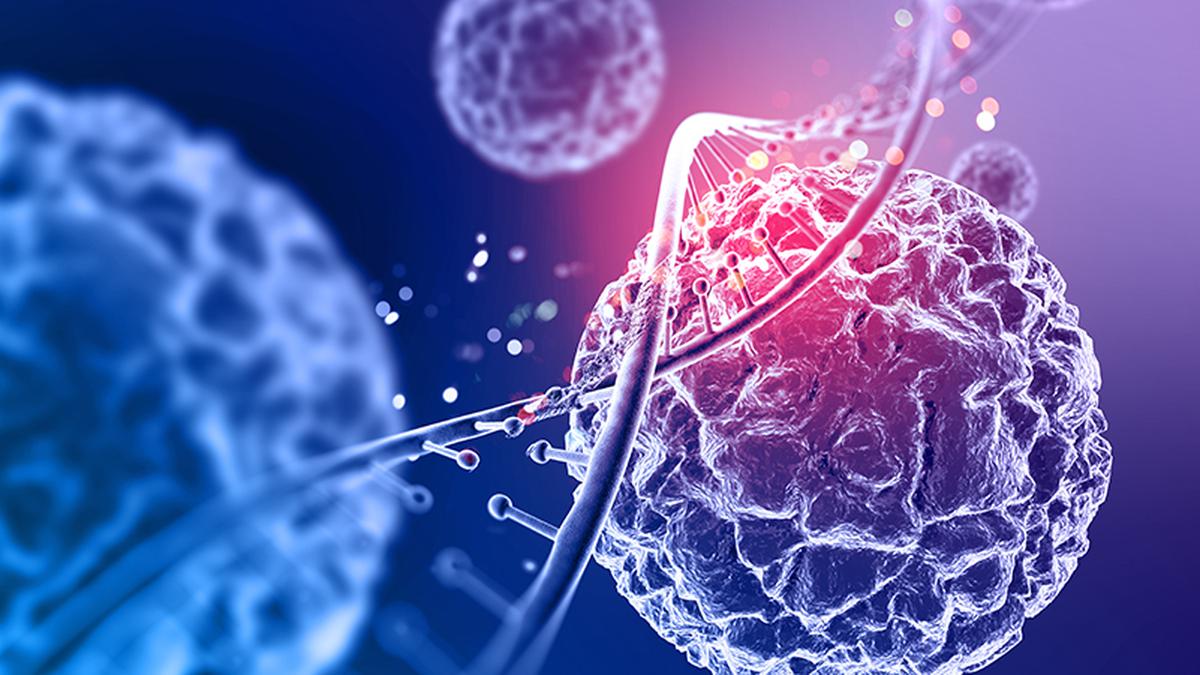
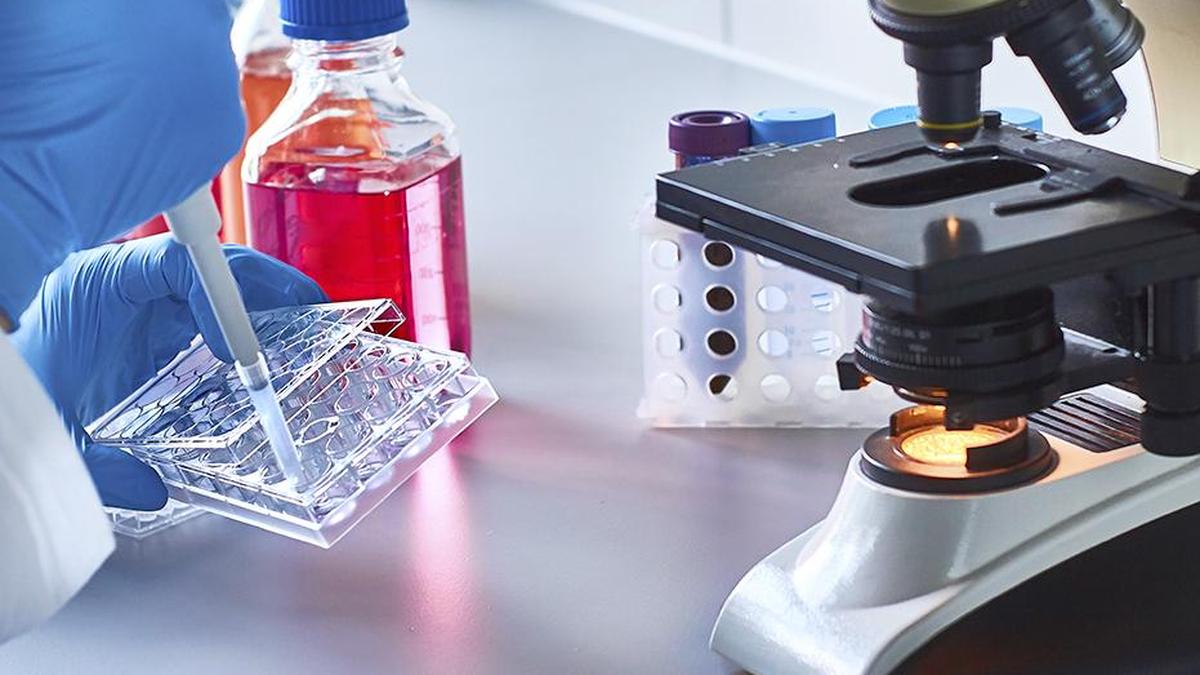
Modern cancer research is closely linked to the study of genes, with a particular focus on variants. Image used for representational purposes only
| Photo Credit: Getty Images/iStockphoto

According to a World Health Organization (WHO) report, nearly 20 million new cancer cases were recorded in 2022, with the figure projected to surpass 35 million annually by 2050. The surge in India is just as stark. While the Indian Council of Medical Research has estimated the incidence of cancer in 2024 at 1.5 million, WHO projections indicate the country will have nearly 2.5 million cases by 2045. Unlike epidemics, cancer incidence has been rising steadily for five decades worldwide, fuelled by ageing populations, urban lifestyles and environmental exposures. And at these levels, cancer has become a structural health challenge. But there’s also opportunity within that challenge — perhaps a new frontier in cancer detection, classification and management. And that opportunity might lie in India.

What we can learn

History provides context: India’s polio immunisation drive led to us becoming polio-free in 2014. It also led to enhanced eradication efforts globally, including in Africa. Around the same time, Indian pharmaceutical firms extended access to HIV/AIDS treatment through mass production of affordable antiretroviral generics, which greatly expanded coverage across Africa and other low- and middle-income nations. The lesson is not that these diseases mirrored cancer; it’s that scale and adaptive policy can create global effects. A scale like that needs to be demanded for cancer now.

Modern cancer research is closely linked to the study of genes, with a particular focus on variants. Each tumour type is associated with specific variant, and scientists examine these in detail to identify patterns across multiple patients. With big pools of genetic information analysed in concert, researchers can figure out which genes are repeated, how they influence the cancer, and which treatments are more likely to succeed. The more diverse and larger the dataset, the higher the accuracy of such deductions. India is home to one of the most genetically diverse populations in the world. Its National Cancer Registry Programme started in 1982, with some shortcomings, gathers information from a large number of population- and hospital-based registries across the country. Simultaneously, lower next-generation sequencing (NGS) costs lead to more cost-effective genetic sampling than in most Western systems.

And, again, the global context matters. Within the U.S. and some European regions, the biomedical research landscape is struggling with shrinking grant cycles and growing operational costs. China, by contrast, has increased domestic cancer research in the past decade. But its internal and now geopolitical scepticism has added a layer of complexity to any global collaboration. This makes room for India to be a trusted collaborator in the same way that it has been a collaborator for the pharma space, especially for low- and middle-income countries (LMICs) who have often been overlooked in genomic studies.

Policy shifts

However, potential alone does not generate breakthroughs. Our overall policy has started to treat cancer as a public health priority, a step in the right direction. Budget 2025–26 expanded funding for cancer care centres, lowered customs duties on cancer drugs and invested in digital health systems. Programmes such as Ayushman Bharat are increasing access to cancer treatments. India’s medical tourism industry is expected to surpass USD 12 billion by 2026, and oncology is one of the fastest-growing fields. Hundreds of thousands of foreign patients arrive in India annually for sophisticated cancer treatment at prices significantly lower than in a number of Western countries. This, in the long run, has resulted in Indian cancer centres having extensive experiences in a diverse range of genetic backgrounds and disease presentations. With robust ethical frameworks these gathered insights can enhance our knowledge of genomic variations and global relevance for research out of India.

Regulation must evolve, too. The Central Drugs Standard Control Organisation’s January 2026 oncology device classification identifies 75+ cancer-related devices categorised primarily into radiation systems, surgical instruments, and therapeutic equipment. This is relevant. However, the other key consideration which is gaining prominence to informed treatment decisions for cancer in a global context, is comprehensive genomic profiling. To keep this in perspective, the U.S. Food and Drug Administration has approved a range of NGS–based cancer diagnostics that point patients toward targeted therapies. If India is to be an avenue leader in data-driven oncology, then regulatory regimes need to formalise a setting in which the frameworks can accommodate platforms beyond therapeutics.

The next leap in oncology

Cancer is the second-leading cause of death worldwide, and the cancer burden is increasing in all countries. The next big breakthroughs might not be a new miracle drug or gene therapy; it might be better detection tools, clearer methods for predicting risk and broader genetic insights. A country that learns fast from its data will form the future of oncology. When India considers this innovation, it can start to help shape the evidence that drives global cancer care. We have the scale. Now we need to design systems to match it.

(Vikas Pawar is part of Hyderabad-based Exsegen Genomics, a company focused on cancer diagnostics. vikaspawar@exsegen.com)

Published – March 02, 2026 09:34 pm IST



Source link

Science

Post navigation

Previous Post: Access Denied
Next Post: Access Denied

Related Posts

  • Brown, botany, and Brownian motion
    Brown, botany, and Brownian motion Science
  • NISAR mission will showcase Indian space engineering on global scale: ex-ISRO scientist
    NISAR mission will showcase Indian space engineering on global scale: ex-ISRO scientist Science
  • Microneedle patch reverses hair loss caused by autoimmune disease
    Microneedle patch reverses hair loss caused by autoimmune disease Science
  • Ethanol fuel plan cuts imports, worries motorists. What does science say?
    Ethanol fuel plan cuts imports, worries motorists. What does science say? Science
  • China’s heatwaves threaten to dry up supply of yummy hairy crabs
    China’s heatwaves threaten to dry up supply of yummy hairy crabs Science
  • How skuas, frigatebirds, and gulls are helping spread avian influenza
    How skuas, frigatebirds, and gulls are helping spread avian influenza Science

More Related Articles

Micrographia: Hooke’s monumental masterpiece – The Hindu Micrographia: Hooke’s monumental masterpiece – The Hindu Science
How the Widal test is clouding India’s sense of its typhoid problem | Explained How the Widal test is clouding India’s sense of its typhoid problem | Explained Science
Cholesterol makes cells’ nuclei squishy, helping melanoma spread Cholesterol makes cells’ nuclei squishy, helping melanoma spread Science
ISRO assesses Dharali damage post flash flood ISRO assesses Dharali damage post flash flood Science
Brumation: Winter is coming for reptiles Brumation: Winter is coming for reptiles Science
Researchers identify key genetic factors causing oral cancer early among Indian tobacco chewers Researchers identify key genetic factors causing oral cancer early among Indian tobacco chewers Science
SiteLock

Archives

  • May 2026
  • April 2026
  • March 2026
  • February 2026
  • January 2026
  • December 2025
  • November 2025
  • October 2025
  • September 2025
  • August 2025
  • July 2025
  • June 2025
  • May 2025
  • April 2025
  • March 2025
  • February 2025
  • January 2025
  • December 2024
  • November 2024
  • October 2024
  • September 2024
  • August 2024
  • July 2024
  • June 2024
  • May 2024
  • April 2024
  • March 2024
  • February 2024
  • January 2024
  • December 2023
  • November 2023
  • October 2023
  • September 2023
  • August 2023
  • July 2023
  • June 2023
  • May 2023
  • April 2023
  • March 2023
  • February 2023
  • January 2023
  • December 2022
  • November 2022
  • October 2022
  • September 2022
  • August 2022
  • July 2022
  • June 2022
  • May 2022

Categories

  • Business
  • Nation
  • Science
  • Sports
  • World

Recent Posts

  • Assam ships first legal agarwood chips to West Asia
  • How the anti-defection law is going to operate in the AIADMK case?
  • ATS questions 57 in Maharashtra over alleged gangster network links
  • Nicobarese oppose proposal for three wildlife sanctuaries
  • Visakhapatnam Collector calls for inter-departmental synergy to boost investments

Recent Comments

  1. Stevemonge on UP Teacher Who Asked Students To Slap Muslim Classmate
  2. RichardClage on UP Teacher Who Asked Students To Slap Muslim Classmate
  3. StevenLek on UP Teacher Who Asked Students To Slap Muslim Classmate
  4. Leonardren on UP Teacher Who Asked Students To Slap Muslim Classmate
  5. NathanQuins on UP Teacher Who Asked Students To Slap Muslim Classmate
  • Access Denied Business
  • Monetary policy stance may have slowed demand: Finance Ministry
    Monetary policy stance may have slowed demand: Finance Ministry Business
  • Powerful quake and aftershocks rock Indonesia’s Bali and Java islands; no casualties reported
    Powerful quake and aftershocks rock Indonesia’s Bali and Java islands; no casualties reported World
  • Access Denied
    Access Denied Nation
  • Access Denied Business
  • Access Denied Sports
  • More Than 300 Flights Delayed At Delhi Airport Due To Low Visibility
    More Than 300 Flights Delayed At Delhi Airport Due To Low Visibility Nation
  • Access Denied Sports

Editor-in-Chief:
Mohammad Ariff,
MSW, MAJMC, BSW, DTL, CTS, CNM, CCR, CAL, RSL, ASOC.
editor@artifex.news

Associate Editors:
1. Zenellis R. Tuba,
zenelis@artifex.news
2. Haris Daniyel
daniyel@artifex.news

Photograher:
Rohan Das
rohan@artifex.news

Artifex.News offers Online Paid Internships to college students from India and Abroad. Interns will get a PRESS CARD and other online offers.
Send your CV (Subjectline: Paid Internship) to internship@artifex.news

Links:
Associate Journalism
About Us
Privacy Policy

News Links:
Breaking News
World
Nation
Sports
Business
Entertainment
Lifestyle

Registered Office:
72/A, Elliot Road, Kolkata - 700016
Tel: 033-22277777, 033-22172217
Email: office@artifex.news

Editorial Office / News Desk:
No. 13, Mezzanine Floor, Esplanade Metro Rail Station,
12 J. L. Nehru Road, Kolkata - 700069.
(Entry from Gate No. 5)
Tel: 033-46011099, 033-46046046
Email: editor@artifex.news

Copyright © 2023 Artifex.News Newsportal designed by Artifex Infotech.