



Skip to content
  • Facebook
  • X
  • Linkedin
  • WhatsApp
  • Associate Journalism
  • About Us
  • Privacy Policy
  • 033-46046046
  • editor@artifex.news
Artifex.News

Artifex.News

Stay Connected. Stay Informed.

  • Breaking News
  • World
  • Nation
  • Sports
  • Business
  • Science
  • Entertainment
  • Lifestyle
  • Toggle search form
  • Access Denied Sports
  • Agnikul eyes satellite launches by 2025: start-up CEO Ravichandran
    Agnikul eyes satellite launches by 2025: start-up CEO Ravichandran Science
  • Indian Shuttler B Sai Praneeth Retires From International Badminton
    Indian Shuttler B Sai Praneeth Retires From International Badminton Sports
  • Ex-Champion Andy Murray Out Of Wimbledon After Back Surgery
    Ex-Champion Andy Murray Out Of Wimbledon After Back Surgery Sports
  • Ola Ordered To Pay Rs 5 Lakh Compensation In Sex Harassment Case Involving Cab Driver
    Ola Ordered To Pay Rs 5 Lakh Compensation In Sex Harassment Case Involving Cab Driver Nation
  • Why is NATO’s Steadfast Defender 2024 military exercise significant? | Explained
    Why is NATO’s Steadfast Defender 2024 military exercise significant? | Explained World
  • Access Denied
    Access Denied Nation
  • Bangladesh hosts military production team from Pakistan
    Bangladesh hosts military production team from Pakistan World
Can India eliminate malaria by 2030? | Explained

Can India eliminate malaria by 2030? | Explained

Posted on January 25, 2026 By admin


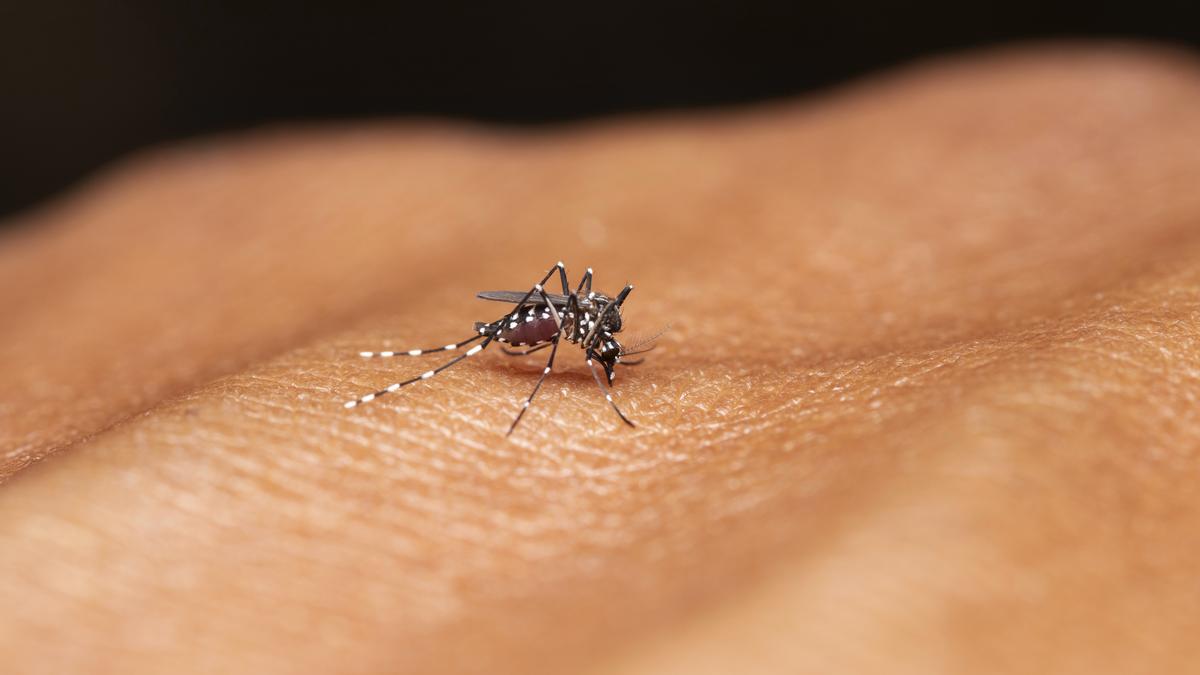
The story so far: In 2016, under its National Framework for Malaria Elimination in India (2016-2030), India set an ambitious target to eliminate malaria (zero indigenous cases) by 2030, with an interim milestone of interrupting indigenous transmission across the entire country, including all high-transmission States and Union Territories (UT), by 2027. By the end of 2025, the Ministry of Health and Family Welfare (MOHFW) reported that robust surveillance and sustained interventions had led to 160 districts across 23 States and UTs reporting zero indigenous malaria cases from 2022 to 2024. This was seen as a significant milestone as it meant that the country was getting closer to completely eliminating malaria.

How is prevalence of the disease measured?

According to the World Health Organization (WHO), a country is granted a certification of malaria elimination when “the chain of local transmission of all human malaria parasites has been interrupted nationwide for at least three consecutive years, and that a fully functional surveillance and response system is in place to prevent re-establishment of indigenous transmission”. As of mid-2025, 47 countries or territories have been officially certified malaria-free by the WHO.

Where does India stand?

The World Malaria Report 2025 notes that India made significant progress in reducing malaria incidence and mortality in its high-endemic States, officially exiting the WHO “High Burden to High Impact” Group, in 2024. Malaria cases reduced by around 80% from 2015 to 2023 in the country. In 2024, India accounted for 73.3% of the 2.7 million estimated malaria cases in the WHO South-East Asia Region. While localised transmission driven by population movement and cross-border importation remain as key challenges, India is on track to achieve the WHO Global Technical Strategy (GTS) for malaria 2016-2030 target of at least a 75% reduction in incidence by 2025 (compared with a 2015 baseline), having already achieved reductions exceeding 70% by 2024, the World Malaria Report added.

If Tamil Nadu is taken as an example, data from the State’s Directorate of Public Health and Preventive Medicine show a steady decline in malaria cases, from 5,587 in 2015 to 321 in 2025. Since 2023, 33 of 38 districts have reported zero indigenous cases, placing them in “Category O” (prevention of re-establishment phase). The remaining five districts, including the capital Chennai, are classified as “Category I” (Elimination phase) where the Annual Parasite Incidence (API) is less than one case per 1,000 population at risk (API is the number of confirmed new malaria cases registered in a specific year, expressed per 1,000 individuals under surveillance, for a given country, territory, or geographic area).

How is India working to eliminate malaria?

The country has put in place two national plans to guide and accelerate malaria elimination — the National Framework for Malaria Elimination in India (2016-2030), which outlines the vision, goals, and targets for a phased malaria elimination, and the National Strategic Plan (NSP) for Malaria Elimination (2023-2027) that builds upon earlier frameworks. According to the NSP, transforming malaria surveillance as a core intervention for malaria elimination, ensuring universal access to malaria diagnosis, treatment by enhancing and optimising case management by “testing, treating and tracking” and ensuring universal access to malaria prevention by enhancing and optimising vector control are among the key strategies.

In Tamil Nadu, measures to detect malaria are being carried out intensively in government hospitals and primary health centres. Larval control measures are implemented alongside. One of the key focus areas is to monitor migrant workers. Intensive surveillance is being taken up among workers coming from malaria-prone neighbouring States.

What are the challenges?

One of the challenges is migration from malaria-endemic neighbouring States that poses a risk of reintroduction in low-transmission areas. Urban areas, according to NSP, pose a different set of challenges for malaria elimination. Special focus is given to challenging malaria paradigms such as in urban, forest, tribal, project/and border areas, hard to reach areas and migrant populations, it said.

Acknowledging that the WHO South-East Asia Region has made major progress towards malaria elimination, achieving reductions in both incidence and mortality over the past two decades, the World Malaria Report stated that significant challenges remain. Persistent Plasmodium vivax transmission, which accounts for nearly two-thirds of regional cases, continues to complicate elimination efforts. Localised transmission in India and Nepal, driven by population movement and cross-border importation, points to the need for targeted subnational and regional coordination, it added. Other strategies by India include drug resistance monitoring, insecticide resistance monitoring and ensuring compliance with the 14 days of radical treatment for Plasmodium vivax cases.

The World Malaria Report 2025 has also highlighted the growing threat of antimalarial drug resistance. As the WHO noted: “Partial resistance to artemisinin derivatives — the backbone of malaria treatments after failures of chloroquine and sulfadoxine-pyrimethamine — has now been confirmed or suspected in at least eight countries in Africa, and there are potential signs of declining efficacy of some of the drugs that are combined with artemisinin.”

With the government focusing on achieving zero indigenous cases by 2027 and ensuring prevention of malaria re-establishment, measures to strengthen the surveillance system and diagnostic capacities, and intensifying control measures in high burden districts, are pivotal.

What is the road ahead?

In its annual report of 2024-2025, the MOHFW said that in 2023, 34 States/UTs achieved an annual parasite incidence of less than one except in two States, Tripura (5.69) and Mizoram (14.23).

T. Jacob John, senior virologist, said the most important aspect in this phase is the accuracy of data. Next, to ensure that private practitioners report cases, strict public health surveillance is needed. “All doctors should mandatorily report even suspected cases of malaria,” he added.

T.S. Selvavinayagam, former Director of Public Health and Preventive Medicine, Government of Tamil Nadu, said malaria in urban areas continues to be a challenge. “Urban areas or larger metropolitan cities such as Chennai face challenges due to rapid urbanisation, growing infrastructure and a large number of apartment complexes where water storage conditions need to be looked at. Here, the government alone cannot play a role but needs measures at the individual household level as the source is clean water,” he said.

Published – January 25, 2026 05:32 am IST


Source link

Science Tags:India eliminate malaria by 2030, malaria elimination, malaria global elmination, malaria india target

Post navigation

Previous Post: Grateful to ICC for T20 World Cup invite, preparing to arrive in India immediately: Cricket Scotland CEO
Next Post: Access Denied

Related Posts

  • Why human-rating matters as India prepares for Gaganyaan
    Why human-rating matters as India prepares for Gaganyaan Science
  • In our fight against climate change, could rivers and seas turn the tide?
    In our fight against climate change, could rivers and seas turn the tide? Science
  • Does seeking social proximity improve flight routes among pigeons?
    Does seeking social proximity improve flight routes among pigeons? Science
  • Is the shallow pool in Paris really slowing Olympic swimmers down?
    Is the shallow pool in Paris really slowing Olympic swimmers down? Science
  • Nanometre ‘tank’ of helium reveals weird waves never seen before
    Nanometre ‘tank’ of helium reveals weird waves never seen before Science
  • New research shows most space rocks crashing into Earth come from a single source
    New research shows most space rocks crashing into Earth come from a single source Science

More Related Articles

In Meghalaya, superstitions add to reasons delaying cancer care In Meghalaya, superstitions add to reasons delaying cancer care Science
IIT Bombay researchers develop GPS-free control scheme for autonomous drone swarms IIT Bombay researchers develop GPS-free control scheme for autonomous drone swarms Science
Watch | Data Point: How tough is it to land Chandrayaan-3’s Vikram lander on the moon? Watch | Data Point: How tough is it to land Chandrayaan-3’s Vikram lander on the moon? Science
WHO terms pathogens that transmit through air ‘infectious respiratory particles’ or IRPs WHO terms pathogens that transmit through air ‘infectious respiratory particles’ or IRPs Science
Can ‘good sounds’ help coral islands recover from bleaching? Can ‘good sounds’ help coral islands recover from bleaching? Science
From refugee to Nobel: Yaghi hails science’s ‘equalising force’ From refugee to Nobel: Yaghi hails science’s ‘equalising force’ Science
SiteLock

Archives

  • January 2026
  • December 2025
  • November 2025
  • October 2025
  • September 2025
  • August 2025
  • July 2025
  • June 2025
  • May 2025
  • April 2025
  • March 2025
  • February 2025
  • January 2025
  • December 2024
  • November 2024
  • October 2024
  • September 2024
  • August 2024
  • July 2024
  • June 2024
  • May 2024
  • April 2024
  • March 2024
  • February 2024
  • January 2024
  • December 2023
  • November 2023
  • October 2023
  • September 2023
  • August 2023
  • July 2023
  • June 2023
  • May 2023
  • April 2023
  • March 2023
  • February 2023
  • January 2023
  • December 2022
  • November 2022
  • October 2022
  • September 2022
  • August 2022
  • July 2022
  • June 2022
  • May 2022

Categories

  • Business
  • Nation
  • Science
  • Sports
  • World

Recent Posts

  • When Ajit Pawar Had Sinking Feeling On Board A Helicopter In 2024 And Started Chanting God’s Name
  • Small plane crashes in rural area of Colombia, killing 15 people including congressman
  • Access Denied
  • The Doomsday Clock shows the danger, but not a way-out for the world
  • Can international patent law handle a permanent space presence?

Recent Comments

  1. Jeffreytat on UP Teacher Who Asked Students To Slap Muslim Classmate
  2. Jeffreytat on UP Teacher Who Asked Students To Slap Muslim Classmate
  3. Jeffreytat on UP Teacher Who Asked Students To Slap Muslim Classmate
  4. Jeffreytat on UP Teacher Who Asked Students To Slap Muslim Classmate
  5. SilviaPyclE on UP Teacher Who Asked Students To Slap Muslim Classmate
  • Mohammed Shami Shatters Massive World Record In Champions Trophy 2025, Become 1st Player In History To…
    Mohammed Shami Shatters Massive World Record In Champions Trophy 2025, Become 1st Player In History To… Sports
  • Access Denied World
  • “Told Team I’ll Be Back In 5 Days But…”: Hardik Pandya’s Stunning World Cup Injury Tale
    “Told Team I’ll Be Back In 5 Days But…”: Hardik Pandya’s Stunning World Cup Injury Tale Sports
  • Iran President-Elect Masoud Pezeshkian Reiterates Support For Hezbollah
    Iran President-Elect Masoud Pezeshkian Reiterates Support For Hezbollah World
  • Centre hikes LPG subsidy for Ujjwala beneficiaries to ₹300 per cylinder
    Centre hikes LPG subsidy for Ujjwala beneficiaries to ₹300 per cylinder Business
  • Israel kills at least 50 in Gaza, tanks deepen raid in the north
    Israel kills at least 50 in Gaza, tanks deepen raid in the north World
  • Government talks big on gender budget, delivers little
    Government talks big on gender budget, delivers little Business
  • Opposition Questions Special Parliament Session Timing, Cites Ganesh Chaturthi
    Opposition Questions Special Parliament Session Timing, Cites Ganesh Chaturthi Nation

Editor-in-Chief:
Mohammad Ariff,
MSW, MAJMC, BSW, DTL, CTS, CNM, CCR, CAL, RSL, ASOC.
editor@artifex.news

Associate Editors:
1. Zenellis R. Tuba,
zenelis@artifex.news
2. Haris Daniyel
daniyel@artifex.news

Photograher:
Rohan Das
rohan@artifex.news

Artifex.News offers Online Paid Internships to college students from India and Abroad. Interns will get a PRESS CARD and other online offers.
Send your CV (Subjectline: Paid Internship) to internship@artifex.news

Links:
Associate Journalism
About Us
Privacy Policy

News Links:
Breaking News
World
Nation
Sports
Business
Entertainment
Lifestyle

Registered Office:
72/A, Elliot Road, Kolkata - 700016
Tel: 033-22277777, 033-22172217
Email: office@artifex.news

Editorial Office / News Desk:
No. 13, Mezzanine Floor, Esplanade Metro Rail Station,
12 J. L. Nehru Road, Kolkata - 700069.
(Entry from Gate No. 5)
Tel: 033-46011099, 033-46046046
Email: editor@artifex.news

Copyright © 2023 Artifex.News Newsportal designed by Artifex Infotech.