Skip to content
  • Facebook
  • X
  • Linkedin
  • WhatsApp
  • YouTube
  • Associate Journalism
  • About Us
  • Privacy Policy
  • 033-46046046
  • editor@artifex.news
Artifex.News

Artifex.News

Stay Connected. Stay Informed.

  • Breaking News
  • World
  • Nation
  • Sports
  • Business
  • Science
  • Entertainment
  • Lifestyle
  • Toggle search form
  • Access Denied
    Access Denied Nation
  • Watch: What’s strategic autonomy and why is it important for India?
    Watch: What’s strategic autonomy and why is it important for India? World
  • Access Denied
    Access Denied Nation
  • Access Denied Sports
  • Zelensky fires bodyguard chief after assassination plot foiled
    Zelensky fires bodyguard chief after assassination plot foiled World
  • India Predicted XI vs England, 4th T20I: Rinku Singh’s Comeback Likely, To Replace This Star
    India Predicted XI vs England, 4th T20I: Rinku Singh’s Comeback Likely, To Replace This Star Sports
  • Sane says Kroos control can help Germany ‘hurt’ Spain at Euros
    Sane says Kroos control can help Germany ‘hurt’ Spain at Euros Sports
  • “They Can’t Play In All Formats…”: Sri Lanka Legend’s Massive Take On Jasprit Bumrah
    “They Can’t Play In All Formats…”: Sri Lanka Legend’s Massive Take On Jasprit Bumrah Sports
India’s space programme, a people’s space journey

India’s space programme, a people’s space journey

Posted on December 31, 2025 By admin


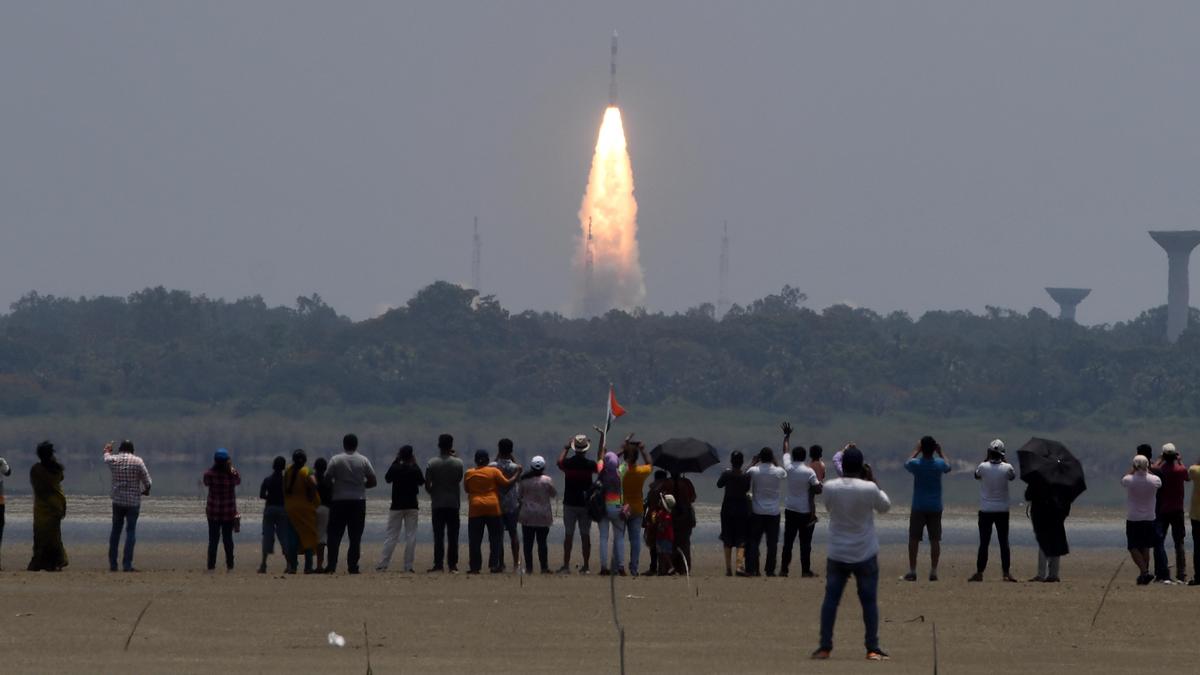
India’s space journey has evolved beyond a string of spectacular missions. It has the national pulse and is a source of daily inspiration. In June 2025, when Group Captain Shubhanshu Shukla displayed the Tricolour aboard the International Space Station (ISS) and spoke to Prime Minister Narendra Modi, it was a moment of pride for every Indian. The Prime Minister called it a “defining chapter” of Amrit Kaal (‘era of nectar’), and for many, that moment felt like India’s ascent was a part of their own heartbeat. It was not just science. It was identity being reshaped through vision and purposeful programmes.

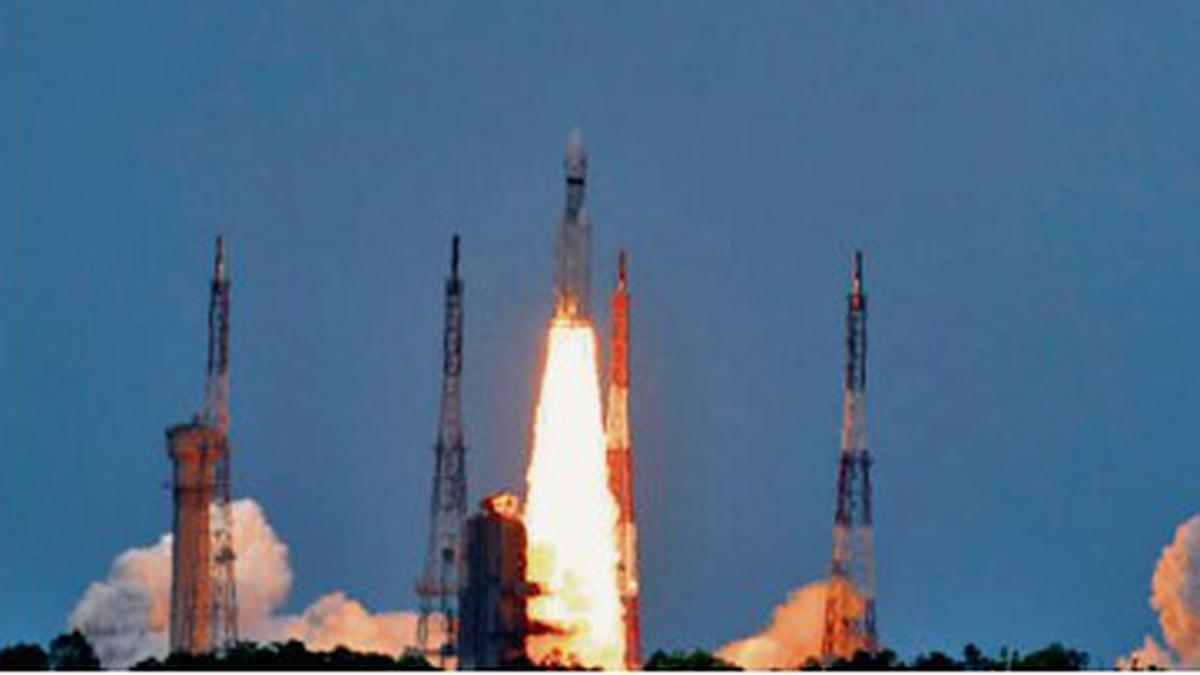
That same spirit has been echoed earlier, on August 23, 2023, when Chandrayaan-3 made India the first nation to land near the lunar south pole. “India is now on the Moon,” declared Mr. Modi — words which rippled through classrooms, villages and living rooms alike. India’s lunar programme has been truly path breaking: Chandrayaan-1 (2008) confirmed the presence of water molecules; Chandrayaan-2 (2019) mapped the moon with high precision and prepared the ground for Chandrayaan-3 (2023), which achieved the world’s first soft landing near the south pole. When the Vikram lander and Pragyan rover explored the lunar surface for a full moon day, this led children to draw depictions of lunar landscapes in notebooks, it left researchers feeling vindicated, and inspired citizens who saw India’s story in space as also their own future.

India has become a trusted global partner in space. Over 400 foreign satellites have been launched aboard Indian rockets. In 2014, India became the first Asian nation and only the fourth in the world to reach Mars orbit — and on its maiden attempt, with the Mars Orbiter Mission (Mangalyaan). The Aditya-L1 mission (2023), built through multi-institutional collaboration, is providing unprecedented insights into the sun’s corona and its impact on space weather. XPoSat (2024) is studying black holes, while SpaDeX (2024) has demonstrated in-orbit docking for future space stations and lunar missions.

A new space vision

These milestones are reshaping policy, culture, and aspiration. The road map is bold: continuation of the Gaganyaan programme for human spaceflight, Chandrayaan-4 and 5 for deeper lunar exploration, a dedicated Venus mission, a Bharatiya Antariksh Station (BAS) by 2035, and an Indian human landing on the Moon by 2040. These are not distant dreams but national goals, aligned with the spirit of Amrit Kaal.

The Prime Minister has called for building a pool of 40 to 50 trained astronauts for future missions. On National Space Day 2025 (August 23), he urged young citizens to see themselves as participants in India’s human space programme. Gaganyaan, with an approved outlay of over ₹20,000 crore, is advancing steadily. Four Indian Air Force test pilots are undergoing training, and a series of uncrewed and crewed flights will culminate in India’s first indigenous human space mission, presently targeted for 2027.

Space technology today is woven into the fabric of governance and daily life. Satellites deliver disaster warnings, guide fishermen, assess crop yields and insurance claims, enhance railway safety, and power the geospatial backbone of the PM Gati Shakti programme. Space is no longer a distant luxury but a democratic utility — accessible to every citizen.

At the same time, space exploration fuels Science, Technology, Engineering and Mathematics (STEM) education, advanced research, and workforce development. Future-ready technologies in space operations autonomy, robotics, in-space manufacturing, surveillance and interplanetary travel are being developed, ensuring that India retains leadership in this strategic frontier.

The transformation of India’s space sector is deliberate and ambitious. The opening of the field to private players, creating a thriving ecosystem of more than 350 startups building satellites, launch vehicles, and ground systems. The space budget has nearly tripled — from ₹5,615 crore in 2013-14 to ₹13,416 crore in 2025-26 — and has been augmented by nearly ₹5,000 crore in user funds. India’s space economy, currently valued at $8 billion, is projected to grow to $44 billion in the years ahead, creating jobs, industries and innovations that orbit around this sector.

Inspiring the next generation

The Prime Minister has challenged the ecosystem to deliver five space unicorns within the next five years and to scale up annual launches, nearly ten-fold, to 50 a year. With private participation, India is advancing technologies related to semi-cryogenics, electric propulsion, quantum communication and in-orbit servicing.

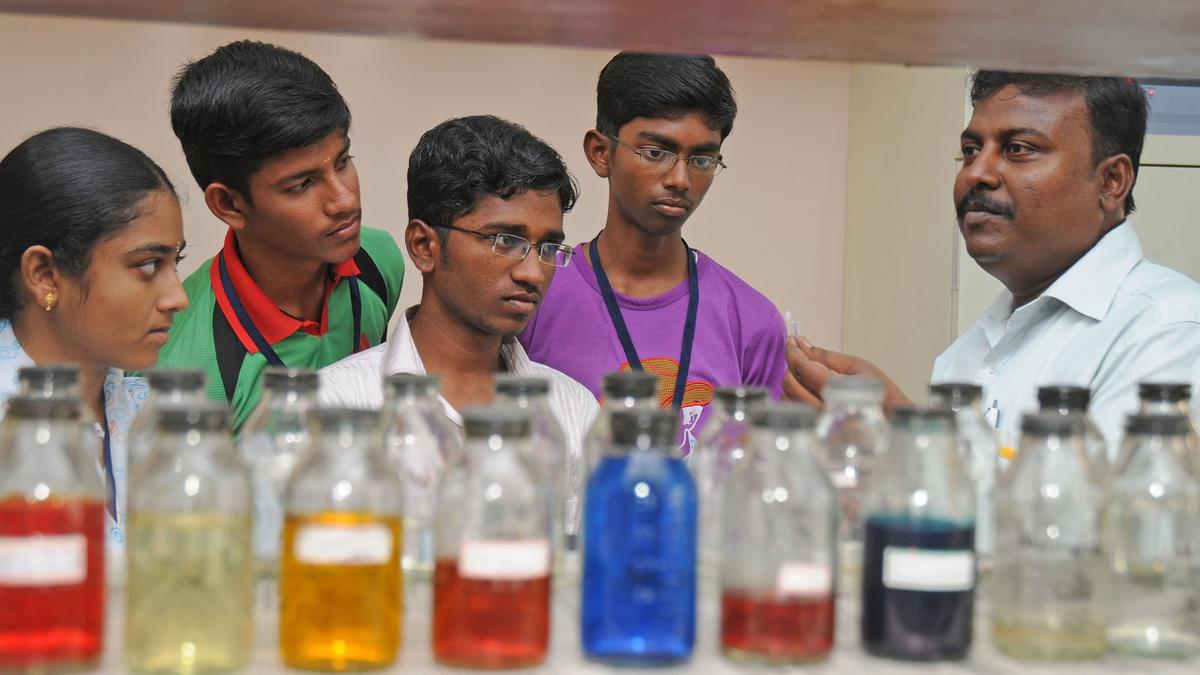
Youth are at the heart of this vision. The International Olympiad on Astronomy and Astrophysics hosted in India (August 2025) drew nearly 300 participants from over 60 countries, with Indian students winning medals. Initiatives such as the ISRO Robotics Challenge and Indian Space Hackathon/Bharatiya Antariksh Hackathon are bringing school and college students into direct contact with rovers, satellites and rockets, building confidence that the laboratories and launchpads of tomorrow are theirs to claim.

At the policy level, the National Meet 2.0 held just before National Space Day produced 5,000-plus pages of documentation across 300 user interactions. This 15-year road map aligns every mission with the vision of Viksit Bharat 2047.

Global collaborations and leadership

Space has been consistently projected as a global commons, where India’s leadership translates into shared progress. The South Asia Satellite has provided neighbours with communication capacity, while during India’s G-20 Presidency in 2023, India announced a “G20 satellite” for climate and environmental monitoring with data shared with all nations. Collaborative missions such as NASA-ISRO Synthetic Aperture Radar (NISAR) with the National Aeronautics and Space Administration (NASA), Thermal infraRed Imaging Satellite for High-resolution Natural resource Assessment (TRISHNA) with CNES (French space agency), Lunar Polar Exploration (LUPEX) with Japan Aerospace Exploration Agency (JAXA), and India’s participation in the European Space Agency (ESA)’s Proba-3 demonstrate India’s rise as a global partner, guided by the ethos of Vasudhaiva Kutumbakam (‘the world is one family’).

India’s space journey is more than rockets and satellites. It is about a nation discovering new ways to see itself. The salute of Shubhanshu Shukla aboard the ISS, the landing of Chandrayaan-3, 350 startups from small towns designing space systems, young students competing in Olympiads, and satellites quietly serving national security and citizen services are all part of the same story.

In this Amrit Kaal, India is not simply participating in the space age. It is shaping it. With ambition, confidence, and purpose, Bharat looks to the stars knowing that the horizon belongs to it too.

S. Somanath was former Secretary, Department of Space, and Chairman of the Indian Space Research Organisation (ISRO). He is now Distinguished Visiting Professor, Indian Institute of Science (IISc), Bengaluru, and Adviser (Space Technology), Government of Andhra Pradesh. The views expressed are personal

Published – January 01, 2026 12:16 am IST


Source link

Science Tags:Aditya-L1 mission, Bharatiya Antariksh Station, Chandrayaan-3 and lunar south pole, Gaganyaan programme for human spaceflight, India as trusted global partner in space, India’s space journey, International Olympiad on Astronomy and Astrophysics, International Space station, ISRO Robotics Challenge and Indian Space Hackathon/Bharatiya Antariksh Hackathon, Japan Aerospace Exploration Agency, Lunar Polar Exploration, mars orbiter mission, NASA-ISRO Synthetic Aperture Radar, National Aeronautics and Space Administration, national space day, Science Technology Engineering and Mathematics, space budget, Thermal infraRed Imaging Satellite for High-resolution Natural resource Assessment, Vikram lander and Pragyan rover

Post navigation

Previous Post: Smriti’s record-breaking year to remember
Next Post: Rashid Khan to lead Afghanistan’s cricketers at T20 World Cup

Related Posts

  • Science for all newsletter how do lidocaine ointments work? 
    Science for all newsletter how do lidocaine ointments work?  Science
  • Glitch in protein synthesis could affect tumour growth: IISc study
    Glitch in protein synthesis could affect tumour growth: IISc study Science
  • What caused Morocco’s earthquake? A geologist studying the Atlas mountains explains
    What caused Morocco’s earthquake? A geologist studying the Atlas mountains explains Science
  • Tech developed by Indian talent abroad being bought back by domestic industry from foreign markets, says Pradhan
    Tech developed by Indian talent abroad being bought back by domestic industry from foreign markets, says Pradhan Science
  • This century, heat waves are moving slower and lasting longer
    This century, heat waves are moving slower and lasting longer Science
  • Hyderabad: Ocean research, resilience in focus as IIOSC-2025 opens in INCOIS
    Hyderabad: Ocean research, resilience in focus as IIOSC-2025 opens in INCOIS Science

More Related Articles

Roundworms do inherit info on threats to avoid, but with a catch Roundworms do inherit info on threats to avoid, but with a catch Science
What is helium and why is it used in rockets? What is helium and why is it used in rockets? Science
Why is hantavirus drawing global attention? | Explained Why is hantavirus drawing global attention? | Explained Science
What is space-based solar power? What is space-based solar power? Science
How quantum algorithms solve problems that classical computers can’t How quantum algorithms solve problems that classical computers can’t Science
Anthropocene epoch declaration unlikely soon, but the idea lives on | Explained Anthropocene epoch declaration unlikely soon, but the idea lives on | Explained Science
SiteLock

Archives

  • May 2026
  • April 2026
  • March 2026
  • February 2026
  • January 2026
  • December 2025
  • November 2025
  • October 2025
  • September 2025
  • August 2025
  • July 2025
  • June 2025
  • May 2025
  • April 2025
  • March 2025
  • February 2025
  • January 2025
  • December 2024
  • November 2024
  • October 2024
  • September 2024
  • August 2024
  • July 2024
  • June 2024
  • May 2024
  • April 2024
  • March 2024
  • February 2024
  • January 2024
  • December 2023
  • November 2023
  • October 2023
  • September 2023
  • August 2023
  • July 2023
  • June 2023
  • May 2023
  • April 2023
  • March 2023
  • February 2023
  • January 2023
  • December 2022
  • November 2022
  • October 2022
  • September 2022
  • August 2022
  • July 2022
  • June 2022
  • May 2022

Categories

  • Business
  • Nation
  • Science
  • Sports
  • World

Recent Posts

  • IPL 2026 | Rahul and Kuldeep shine in Delhi Capitals’ win
  • Rahul and Kuldeep shine in Delhi Capitals’ win
  • ‘Tactical’ relations with other countries will not come at the ‘expense’ of India ties: Marco Rubio
  • BJP names 5 candidates for Legislative Council polls
  • JMM, Cong. bid to divide society, undermine tribal rights won’t succeed: BJP

Recent Comments

  1. GeraldChunc on UP Teacher Who Asked Students To Slap Muslim Classmate
  2. Marcusprefe on UP Teacher Who Asked Students To Slap Muslim Classmate
  3. RobertNeali on UP Teacher Who Asked Students To Slap Muslim Classmate
  4. Jamessor on UP Teacher Who Asked Students To Slap Muslim Classmate
  5. RolandArogs on UP Teacher Who Asked Students To Slap Muslim Classmate
  • Hamas Hands Over Dead Israeli Hostages In Black Coffins
    Hamas Hands Over Dead Israeli Hostages In Black Coffins World
  • Access Denied
    Access Denied Nation
  • Paris Paralympics: Indian Recurve Archer Pooja Jatyan Enters Quarterfinals
    Paris Paralympics: Indian Recurve Archer Pooja Jatyan Enters Quarterfinals Sports
  • Access Denied Business
  • India vs Australia Live Score Ball by Ball, India vs Australia, 2023 Live Cricket Score Of Today's Match on NDTV Sports
    India vs Australia Live Score Ball by Ball, India vs Australia, 2023 Live Cricket Score Of Today's Match on NDTV Sports Sports
  • Ten-Time Nagaland MLA Noke Wangnao Dies At 87
    Ten-Time Nagaland MLA Noke Wangnao Dies At 87 Nation
  • Access Denied
    Access Denied Nation
  • Trump Team Weighs Direct Talks With North Korea’s Kim In New Diplomatic Push, Sources Say
    Trump Team Weighs Direct Talks With North Korea’s Kim In New Diplomatic Push, Sources Say World

Editor-in-Chief:
Mohammad Ariff,
MSW, MAJMC, BSW, DTL, CTS, CNM, CCR, CAL, RSL, ASOC.
editor@artifex.news

Associate Editors:
1. Zenellis R. Tuba,
zenelis@artifex.news
2. Haris Daniyel
daniyel@artifex.news

Photograher:
Rohan Das
rohan@artifex.news

Artifex.News offers Online Paid Internships to college students from India and Abroad. Interns will get a PRESS CARD and other online offers.
Send your CV (Subjectline: Paid Internship) to internship@artifex.news

Links:
Associate Journalism
About Us
Privacy Policy

News Links:
Breaking News
World
Nation
Sports
Business
Entertainment
Lifestyle

Registered Office:
72/A, Elliot Road, Kolkata - 700016
Tel: 033-22277777, 033-22172217
Email: office@artifex.news

Editorial Office / News Desk:
No. 13, Mezzanine Floor, Esplanade Metro Rail Station,
12 J. L. Nehru Road, Kolkata - 700069.
(Entry from Gate No. 5)
Tel: 033-46011099, 033-46046046
Email: editor@artifex.news

Copyright © 2023 Artifex.News Newsportal designed by Artifex Infotech.