

Skip to content
  • Facebook
  • X
  • Linkedin
  • WhatsApp
  • YouTube
  • Associate Journalism
  • About Us
  • Privacy Policy
  • 033-46046046
  • editor@artifex.news
Artifex.News

Artifex.News

Stay Connected. Stay Informed.

  • Breaking News
  • World
  • Nation
  • Sports
  • Business
  • Science
  • Entertainment
  • Lifestyle
  • Toggle search form
  • Horror Start For Carlos Alcaraz In ATP Finals, Loses To Casper Ruud After 34 Unforced Errors
    Horror Start For Carlos Alcaraz In ATP Finals, Loses To Casper Ruud After 34 Unforced Errors Sports
  • Dodda Ganesh Appointed Kenyan Cricket Team’s Head Coach
    Dodda Ganesh Appointed Kenyan Cricket Team’s Head Coach Sports
  • Premier League: Manchester City Crush Manchester United As Liverpool Show Support For Absent Luis Diaz
    Premier League: Manchester City Crush Manchester United As Liverpool Show Support For Absent Luis Diaz Sports
  • Arun Kumar, Special Protection Group’s Longest Serving Chief, Dies At 61
    Arun Kumar, Special Protection Group’s Longest Serving Chief, Dies At 61 Nation
  • Access Denied Business
  • Notre-Dame Cathedral Holds First Mass After Five-Year Long Restoration
    Notre-Dame Cathedral Holds First Mass After Five-Year Long Restoration World
  • 7 Kg Cocaine Worth Rs 70 Crore Seized At Mumbai Airport: Officials
    7 Kg Cocaine Worth Rs 70 Crore Seized At Mumbai Airport: Officials Nation
  • Smoke rises in Yemeni port of Mukalla following Saudi-led coalition strike
    Smoke rises in Yemeni port of Mukalla following Saudi-led coalition strike World
Rhino dehorning brings poaching in African reserves crashing down

Rhino dehorning brings poaching in African reserves crashing down

Posted on December 18, 2025 By admin


Once upon a time, the thunder of footsteps from lakhs of mighty rhinoceroses echoed across the savannahs, grasslands, and tropical forests of Africa and Asia — but things have gotten pretty quiet lately. As of 2024, fewer than 28,000 rhinos remain on the planet, all five species combined.

Relentless poaching has been a major threat to the survival of rhinos around the world. Greater Kruger, the southern African reserves protecting the world’s largest rhino population, alone lost 1,985 black and white rhinos between 2017 and 2023. That’s nearly 6.5% of the rhino population disappearing each year, despite an investment of $74 million in anti-poaching strategies, including ranger patrols, trained tracking dogs, AI-powered detection cameras, and aerial surveillance.

One approach that has shown promise is dehorning rhinos. An international team of researchers collected data over seven years from 11 reserves in the South African portion of the Greater Kruger region and found that dehorning significantly reduced poaching incidents by removing the primary incentive for poachers.

Nelson Mandela University senior lecturer and study member Tim Kuiper explained that the idea for their project arose from an urgent need on the ground. Managers and rangers in nature reserves, particularly those surrounding Kruger National Park, recognised that despite their ongoing efforts, they were losing rhinos at an alarming rate.

“The managers, rangers and scientists came together and asked a bold question: why are we still losing so many rhinos? What can we do differently?,” he said.

The team found that dehorning 2,284 rhinos across eight reserves resulted in a sudden 78% drop in poaching, achieved with just 1.2% of the total anti-poaching budget. The findings were published in Science in June.

Illegal rhino horns

Rhinoceroses are the world’s second-largest land mammals after elephants. They adorn themselves with majestic horns made of not bone but keratin — the same fibrous protein found in hair, nails, hooves, and in the scales of many members of the animal kingdom.

The rhino horn isn’t a weapon for hunting; rhinos are primarily vegetarians. Instead, the animals use their horns to dig to access edible plants and roots. The horn also serves as a powerful symbol of virility, as females usually prefer those with the largest horns as mates.

Unfortunately for these creatures, some people also perceive rhino horns as status symbols with which to display wealth and success. The result is a multi-hundred-million-dollar global black market driven by high demand and high prices.

Apart from being a trophy, rhino horns have been used in traditional medicine in Asian countries, especially Vietnam and China, for more than 2,000 years. Exponents of these traditions believe the horn treats everything from fever and gout to more mystical issues like possession. There is no scientific evidence that the horns can heal, however.

A 2022 report by the Wildlife Justice Commission found that the wholesale trade in raw rhino horns between 2012 and 2022 generated between $874 million and $1.13 billion in gross illicit income. A single horn’s price ranges from around $3,382 to $22,257 per kilogram, depending on a horn’s place of origin, type (front or back), labour expenses, and the delivery address.

Why poachers kill

The researchers behind the new study said the strong demand for rhino horns combined with poverty in many local communities creates powerful financial pressures that drive people to risk everything, sometimes their lives, to poach or to support poachers.

To remove a rhino’s horn without causing harm, conservationists and veterinarians sedate, blindfold, and fit the animal with earplugs to reduce stress. Using a saw, they cut 90-93% of the horn, then cut above the germinal layer, which is the living tissue at the horn’s base, essential for regrowth. After trimming, the remaining stump is smoothed and coated with a pine tar substance to prevent drying out or infection.

Poachers often operate under intense pressure, and killing the rhino allows them to remove the entire horn quickly and without resistance. Since every milligram of horn is valuable, leaving behind 10% still attached to the skull isn’t an option. They would prefer to take it all.

Dehorning against poaching

To assess the effectiveness of dehorning in reducing poaching, the researchers analysed quarterly data from 2017 to 2023 across 11 wildlife reserves. Using a hierarchical Bayesian regression model, a powerful statistical tool and a quasi-experimental method that included both abrupt and staggered implementation, they compared reserves that dehorned rhinos with those that didn’t, tracking changes in poaching before and after the intervention.

Reserves that removed the horns reported a 75% drop in poaching compared to pre-dehorning levels. In the seven reserves that implemented abrupt dehorning — within just one to two months — poaching fell off even more sharply, by 78%. At an individual level, dehorned rhinos faced a 95% lower risk of being poached compared to those with intact horns, highlighting the strong deterrent effect of dehorning.

In another striking finding, while efforts to detect and arrest poachers remain a crucial part of the anti-poaching toolkit, they were not found to be as effective at actually deterring poachers. The researchers said this could be because systemic issues and corruption create loopholes that traffickers can exploit to avoid detection. Weak criminal justice systems also make it worse, often allowing poachers to escape with little or no meaningful punishment.

Conservation with locals

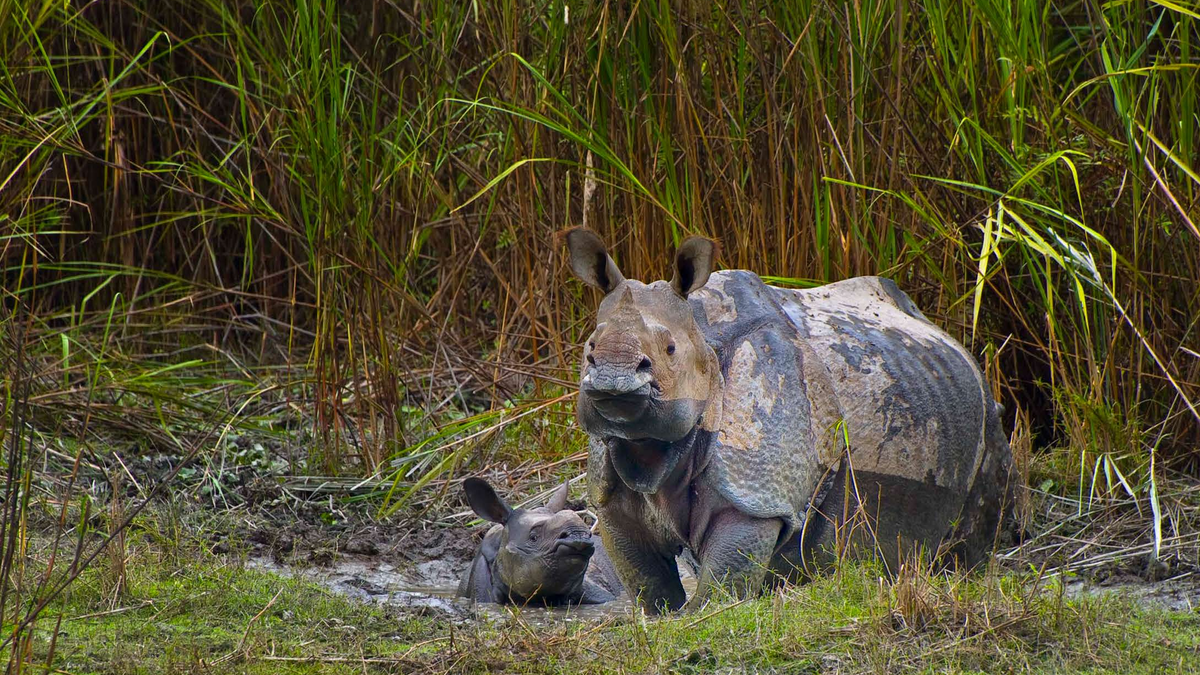
Kaziranga National Park in Assam, home to one of the largest populations of greater one-horned rhinos, has also suffered poaching.

Bibhab Kumar Talukdar, an International Union for Conservation of Nature awardee and rhino conservationist, said that while poaching still claims over 400 rhinos a year, India and Nepal lose only one or two over the last three years.

Kaziranga’s success has been attributed to smart patrolling and active community engagement. Partnerships of local communities and park authorities have helped mitigate human-wildlife conflict.

“So why should India or Nepal need dehorning?” Mr. Talukdar asked.

This required extensive groundwork, involving more than 1,000 hours in workshops and discussions with reserve staff and rangers on how to collect and interpret data. The labour-intensive nature of such research highlights the need to involve those on the ground in conservation efforts. Rangers in particular are often locals and possess regional ecological knowledge, but this resource remains underutilised.

Kuiper said rangers are the frontline defenders of conservation. Their welfare — including fair pay, training, and safety — must be prioritised alongside interventions, as lasting success depends on supporting the people who implement these strategies.

The researchers noted that while dehorning might not be a silver bullet, as poachers may still target rhinos for the small horn remnants, it shows strong potential as a long-term strategy. They believe that the study’s findings can help governments and wildlife protection agencies make informed decisions about resource allocation and the effectiveness of interventions.

Sanjukta Mondal is a chemist-turned-science-writer with experience in writing popular science articles and scripts for STEM YouTube channels.


Source link

Science

Post navigation

Previous Post: Access Denied
Next Post: Access Denied

Related Posts

  • How David Attenborough inspired Indians to see nature differently
    How David Attenborough inspired Indians to see nature differently Science
  • How curiosity-driven research in a worm won four Nobel Prizes
    How curiosity-driven research in a worm won four Nobel Prizes Science
  • Exceptional new fish fossil sparks rethink of how earth’s geology drives evolution
    Exceptional new fish fossil sparks rethink of how earth’s geology drives evolution Science
  • Team at Kolkata institute engineers bacteria to solve maths problems
    Team at Kolkata institute engineers bacteria to solve maths problems Science
  • OpenAI identifies security issue involving third-party tool, says user data was not accessed
    OpenAI identifies security issue involving third-party tool, says user data was not accessed Science
  • IN-SPACe announces pre-incubation programme for space startups
    IN-SPACe announces pre-incubation programme for space startups Science

More Related Articles

ISRO conducts first Earth-bound manoeuvre of Aditya-L1  ISRO conducts first Earth-bound manoeuvre of Aditya-L1  Science
Sci-Five | The Hindu Science Quiz: On Penguins Sci-Five | The Hindu Science Quiz: On Penguins Science
How India established its first research station in Antarctica How India established its first research station in Antarctica Science
The fallacy of natural birth: Safeguarding mothers and newborns in modern times The fallacy of natural birth: Safeguarding mothers and newborns in modern times Science
Astronomers spot asteroid that may be heading for the earth Astronomers spot asteroid that may be heading for the earth Science
Scientists make plans to keep spacefarers from contaminating other worlds Scientists make plans to keep spacefarers from contaminating other worlds Science
SiteLock

Archives

  • May 2026
  • April 2026
  • March 2026
  • February 2026
  • January 2026
  • December 2025
  • November 2025
  • October 2025
  • September 2025
  • August 2025
  • July 2025
  • June 2025
  • May 2025
  • April 2025
  • March 2025
  • February 2025
  • January 2025
  • December 2024
  • November 2024
  • October 2024
  • September 2024
  • August 2024
  • July 2024
  • June 2024
  • May 2024
  • April 2024
  • March 2024
  • February 2024
  • January 2024
  • December 2023
  • November 2023
  • October 2023
  • September 2023
  • August 2023
  • July 2023
  • June 2023
  • May 2023
  • April 2023
  • March 2023
  • February 2023
  • January 2023
  • December 2022
  • November 2022
  • October 2022
  • September 2022
  • August 2022
  • July 2022
  • June 2022
  • May 2022

Categories

  • Business
  • Nation
  • Science
  • Sports
  • World

Recent Posts

  • ‘Take action to remove deceased Gruha Lakshmi beneficiaries’
  • Hanuman Jayanti: Muslim residents offer buttermilk to Hindu devotees in Kadapa days after clashes
  • Government raises gold and silver tariffs to 15% to curb imports, support rupee
  • Trump’s proposed ‘Golden Dome’ estimated to cost $1.2 trillion, far more than he initially said
  • Iran-Israel war LIVE: Trump says stopping Iran's nuclear program outweighs Americans' economic pain

Recent Comments

  1. Jesusetexy on UP Teacher Who Asked Students To Slap Muslim Classmate
  2. JeffryFok on UP Teacher Who Asked Students To Slap Muslim Classmate
  3. StanleyPeapy on UP Teacher Who Asked Students To Slap Muslim Classmate
  4. RonaldLam on UP Teacher Who Asked Students To Slap Muslim Classmate
  5. RaymondKiree on UP Teacher Who Asked Students To Slap Muslim Classmate
  • At least two dead, 12 missing after a fishing boat sinks off South Korea’s Jeju island
    At least two dead, 12 missing after a fishing boat sinks off South Korea’s Jeju island World
  • Praveen Nettaru murder case: NIA conducts searches at 16 locations across Karnataka
    Praveen Nettaru murder case: NIA conducts searches at 16 locations across Karnataka Nation
  • Access Denied World
  • Anna Sebastian Perayil, EY India: “Getting Hardly Any Sleep, Unable To Eat Proper Food”: EY Employee’s Father
    Anna Sebastian Perayil, EY India: “Getting Hardly Any Sleep, Unable To Eat Proper Food”: EY Employee’s Father Nation
  • Access Denied World
  • IPL 2024 Playoffs: How SRH Can Knock Out CSK Or RCB With Win Over GT
    IPL 2024 Playoffs: How SRH Can Knock Out CSK Or RCB With Win Over GT Sports
  • Ukraine Marks 1,000 Days Of Russian Invasion, Eyes End To War Next Year
    Ukraine Marks 1,000 Days Of Russian Invasion, Eyes End To War Next Year World
  • Bangladesh opposition leader Khaleda Zia at ‘high risk of death’: doctors
    Bangladesh opposition leader Khaleda Zia at ‘high risk of death’: doctors World

Editor-in-Chief:
Mohammad Ariff,
MSW, MAJMC, BSW, DTL, CTS, CNM, CCR, CAL, RSL, ASOC.
editor@artifex.news

Associate Editors:
1. Zenellis R. Tuba,
zenelis@artifex.news
2. Haris Daniyel
daniyel@artifex.news

Photograher:
Rohan Das
rohan@artifex.news

Artifex.News offers Online Paid Internships to college students from India and Abroad. Interns will get a PRESS CARD and other online offers.
Send your CV (Subjectline: Paid Internship) to internship@artifex.news

Links:
Associate Journalism
About Us
Privacy Policy

News Links:
Breaking News
World
Nation
Sports
Business
Entertainment
Lifestyle

Registered Office:
72/A, Elliot Road, Kolkata - 700016
Tel: 033-22277777, 033-22172217
Email: office@artifex.news

Editorial Office / News Desk:
No. 13, Mezzanine Floor, Esplanade Metro Rail Station,
12 J. L. Nehru Road, Kolkata - 700069.
(Entry from Gate No. 5)
Tel: 033-46011099, 033-46046046
Email: editor@artifex.news

Copyright © 2023 Artifex.News Newsportal designed by Artifex Infotech.